
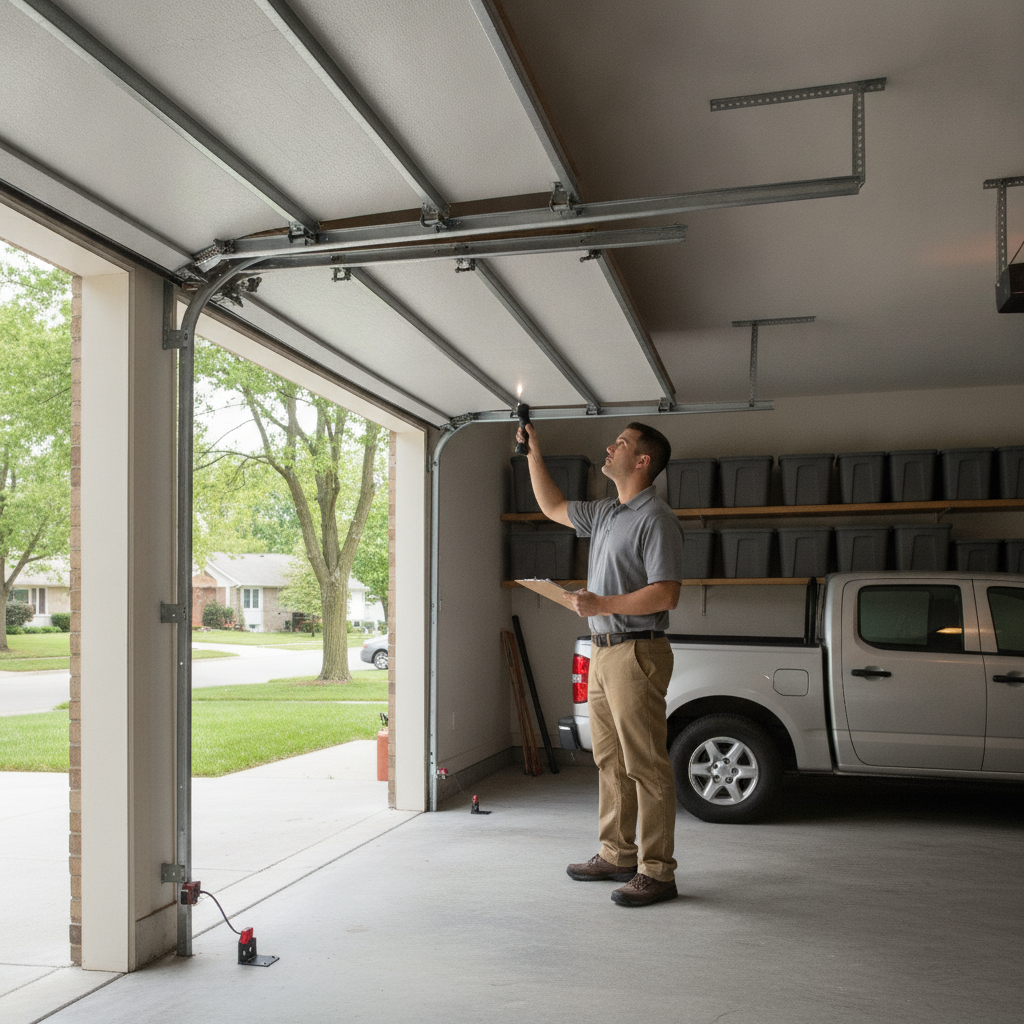
For most homes, garage door maintenance should be scheduled at least once a year. If your door is used many times a day, serves a rental property, supports a business, or is older, a professional inspection every six months may be a better fit. In between service visits, homeowners can make simple visual and operational checks to catch early warning signs before they become bigger problems.
A garage door is one of the largest moving systems in a home. It depends on springs, cables, rollers, tracks, hinges, safety sensors, and an opener working together. Because some parts are under high tension, maintenance is partly a homeowner observation task and partly a job for a trained garage door technician.
Recommended Garage Door Maintenance Intervals
A good maintenance schedule depends on use, age, environment, and the condition of the door. However, these general intervals work well for many Indianapolis and Central Indiana homes:
- Monthly: Make basic visual checks and listen for unusual sounds during normal operation.
- Every few months: Check weather seals, photo-eye safety sensors, remote function, and obvious hardware looseness.
- Once a year: Schedule professional garage door maintenance for a full inspection, lubrication, balance evaluation, and safety review.
- Every six months: Consider professional service for high-use doors, commercial doors, rental properties, older systems, or doors exposed to heavy moisture, dirt, or temperature swings.
- Any time something changes: Arrange an inspection if the door becomes noisy, crooked, slow, heavy, jerky, or unreliable.
Annual service is often enough for a typical residential door that operates smoothly. Meanwhile, a busy household may open and close the door several times each day. As a result, rollers, hinges, springs, and opener components can wear faster.
Seasonal changes can also matter in Indiana. Cold weather may make old rollers, stiff seals, and weak opener components more noticeable. Spring and fall are practical times to schedule service because the system is being prepared for temperature changes.
Safe Homeowner Checks Between Service Visits
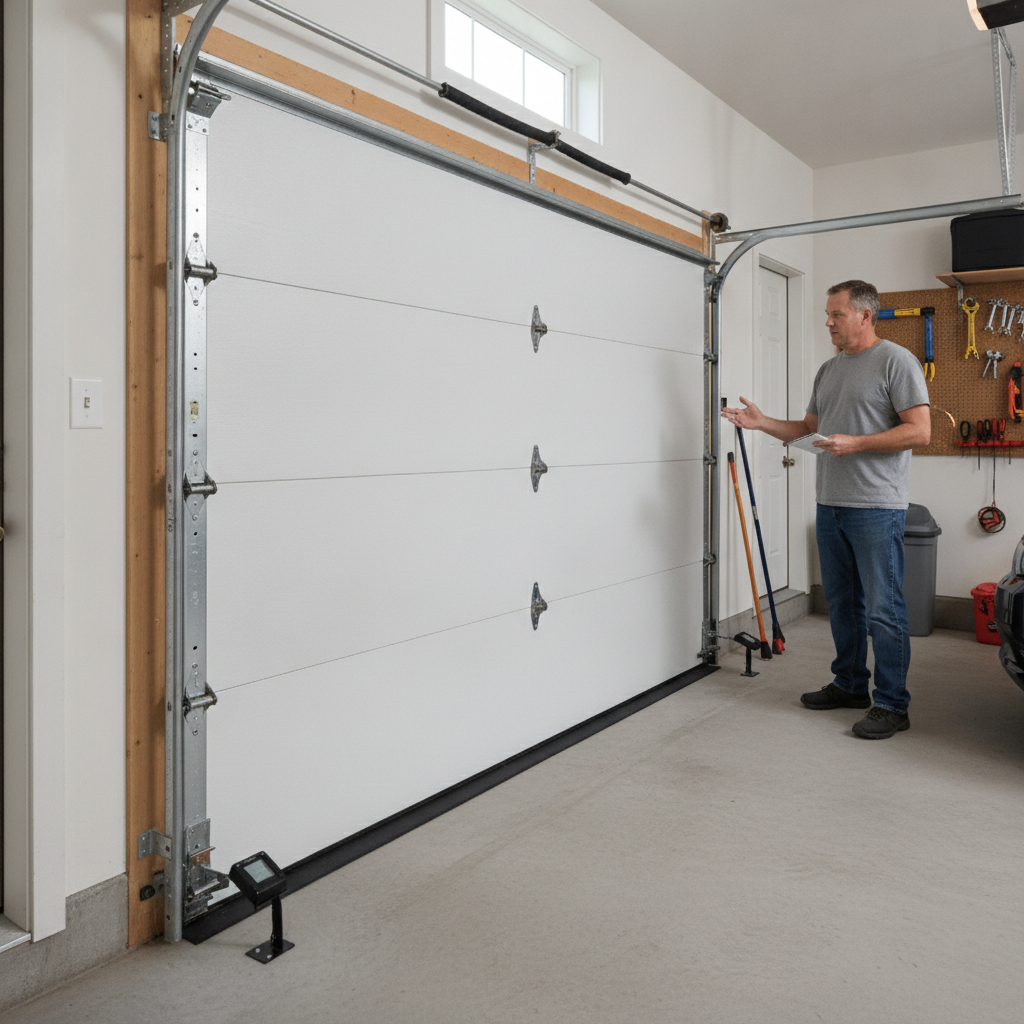
Homeowners do not need to take apart the garage door system to help maintain it. The safest checks are visual, simple, and do not involve high-tension parts. If something looks damaged or unstable, stop using the door and call a professional.
Once a month, stand inside the garage with the door closed and look over the system. You can check for:
- Frayed or loose-looking cables
- Rollers that appear cracked, tilted, or missing pieces
- Hinges that look bent or separated from the door
- Tracks that appear shifted, dented, or blocked
- Gaps, cracking, or brittleness in the bottom weather seal
- Rust, heavy dirt, or obvious wear around moving parts
- Door sections that look cracked, bowed, or damaged
You can also listen while the door operates. Squeaking, grinding, popping, scraping, or sudden rattling may point to wear, poor alignment, dry rollers, opener strain, or another issue. A little sound is normal, but a new or worsening noise should not be ignored.
Also test the opener controls, wall button, keypad, and remotes as you normally use them. If the door refuses to open, reverses unexpectedly, or only works sometimes, start with safe checks such as power, remote batteries, and sensor alignment. For more detail on safe troubleshooting, see this guide on what to do when a garage door will not open.
What Professional Garage Door Maintenance Includes
A professional maintenance visit is more detailed than a quick homeowner check. A technician can inspect parts that affect safety, balance, and long-term performance. The goal is to find wear early, reduce strain, and confirm that the door and opener are working as intended.
Professional garage door maintenance may include checking:
- Door balance and spring condition
- Torsion springs or extension springs for visible wear
- Garage door cables and drums
- Rollers, hinges, bearings, and brackets
- Track alignment and fasteners
- Opener rail, chain, belt, or drive system
- Photo-eye safety sensors and auto-reverse function
- Weather seals and bottom seal condition
- Overall door movement, noise, and vibration
Technicians also know which parts should be lubricated and which parts should not. For example, proper lubrication can help rollers, hinges, and bearings move more smoothly. However, applying the wrong product in the wrong place can attract dirt or interfere with normal operation.
Door balance is especially important. A properly balanced door should not place excessive strain on the opener. If the opener seems to be working harder than it used to, the issue may be the door, the opener, or both. If you are already dealing with frequent opener problems, this article on when to replace a garage door opener explains signs that the opener may be nearing the end of its useful service life.
Why Preventive Service Is Worth Scheduling
Preventive service is not only about avoiding breakdowns. It also helps protect the door, opener, and nearby property. A garage door that runs smoothly usually puts less stress on connected parts. Therefore, small corrections can sometimes help prevent larger repair needs later.
Routine maintenance can help with:
- Safety: A technician can identify worn cables, weak springs, loose hardware, or sensor issues that may create risk.
- Reliability: Preventive checks reduce the chance of being surprised by a stuck or uneven door.
- Opener performance: A balanced, smooth-moving door helps the opener do its job with less strain.
- Weather protection: Seals and weatherstripping help limit drafts, moisture, leaves, and pests.
- Noise reduction: Worn rollers, dry hinges, loose hardware, and track issues can all make a door louder.
- Longer system life: Maintenance cannot stop normal wear, but it can help parts operate under better conditions.
For landlords and property managers, preventive maintenance also supports tenant convenience. A garage door problem can block a vehicle inside or leave a space unsecured. Regular inspections help identify issues before they disrupt use of the property.
Commercial and high-use doors may need more frequent attention because they cycle more often. A door at a small business, warehouse, or multi-tenant property may see more daily use than a typical home door. As a result, parts can wear faster even when the system appears to be working normally.
Signs You Should Not Wait for the Next Maintenance Visit
Some problems should be inspected promptly rather than saved for the next scheduled tune-up. Garage doors can be heavy, and several components are under tension. If the door appears unstable, do not keep testing it to see if the problem improves.
Stop operating the door and keep people and pets away if you notice:
- A broken spring or a loud bang from the spring area
- Loose, hanging, or frayed cables
- A door that is crooked, jammed, or off track
- A door section that is bent or badly damaged
- The door dropping quickly or feeling unusually heavy
- The opener straining, shaking, or pulling unevenly
- Rollers that have come out of the track
- Any part of the door hanging or unsupported
Do not try to adjust springs, remove cables, repair bottom brackets, or force a stuck door open or closed. These parts can be dangerous without the right tools and training. Also, avoid standing under an unstable door or placing hands near tracks, rollers, or hinges while someone operates the opener.
If the door is noisy but still operating smoothly, you can make a note of when the sound occurs. For example, note whether it happens at the start of travel, near the top, near the floor, or only in cold weather. That information can help a technician narrow down the cause during inspection.
Frequently Asked Questions
Is annual garage door maintenance enough?
Annual maintenance is enough for many residential garage doors in normal use. However, high-use doors, older doors, rental properties, and commercial doors may benefit from service every six months.
Can I lubricate my own garage door?
Some basic lubrication may be safe if you follow the door and opener manufacturer’s instructions. Do not loosen, adjust, remove, or repair springs, cables, bottom brackets, or other high-tension parts.
What happens if I skip maintenance?
The door may still work for a while, but wear can go unnoticed. Loose hardware, dry rollers, weak springs, bad seals, or opener strain may lead to noise, unreliable operation, or repair needs.
When to Schedule Professional Help
Schedule professional service if your garage door has not been inspected in the past year, if it is used heavily, or if you notice unusual noise, uneven movement, damaged hardware, or opener strain. Preventive care is especially helpful before winter, after an impact, or when a property changes tenants.
If you are unsure whether your garage door needs a tune-up or repair, Ultimate Garage Doors can inspect the system and explain practical options. To get started, request a free garage door estimate for maintenance, repair, or professional service in the Indianapolis area.