
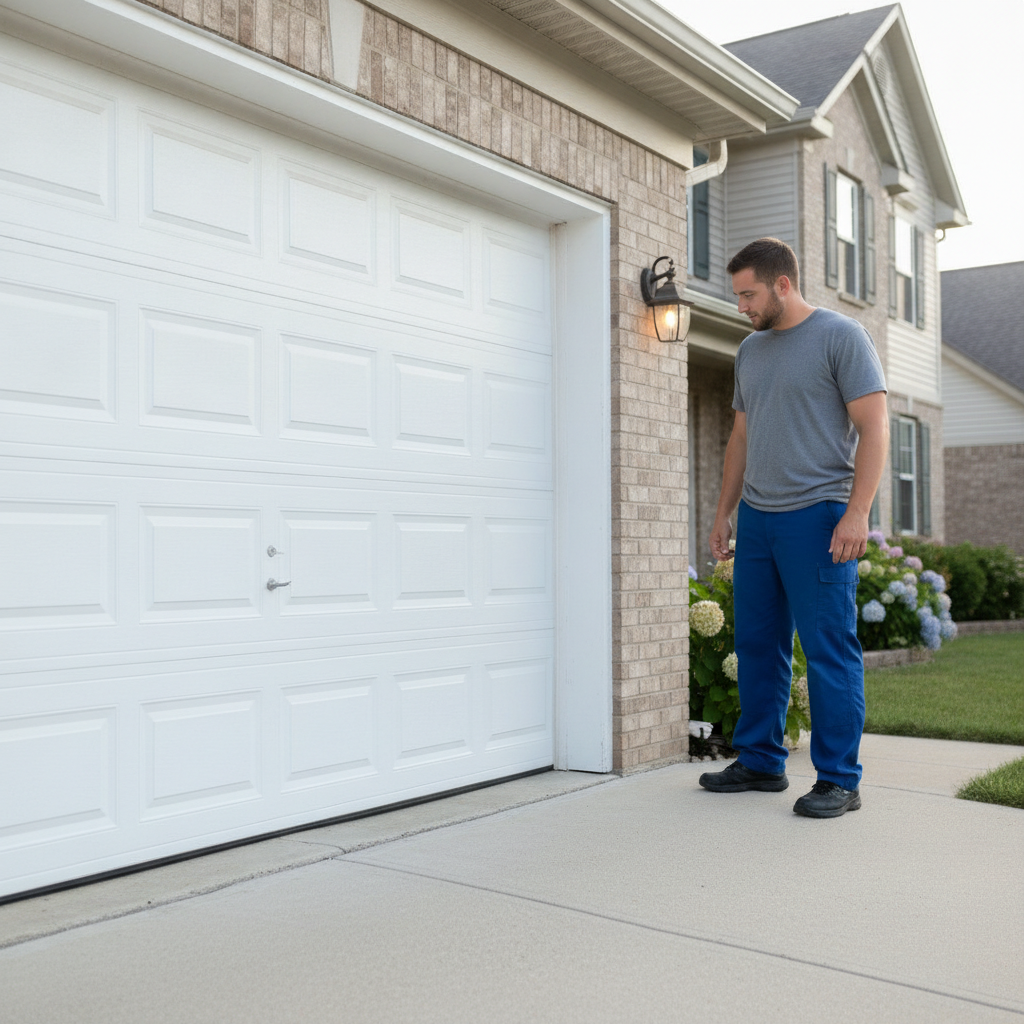
If your garage door bounces after closing, the opener is usually reacting to resistance or stopping in the wrong place. The door may reach the floor, compress the bottom seal, and then reverse. It may also touch down, lift a few inches, or shake and remain closed. Common causes include close limit settings, force settings, floor obstructions, worn seals, sensor issues, and binding door hardware.
The most helpful clue is what happens right before the bounce. A door that reverses before touching the floor points to a different problem than one that hits the floor and then pops back up. Because several issues can look similar, it is best to start with safe observations and avoid forcing the door to close.
What Bouncing Means and Why the Opener Reacts
Automatic garage door openers monitor travel and resistance. Travel tells the opener how far the door should move. Resistance tells the opener whether the door may have hit something or is struggling to move. If either signal seems wrong, the opener may stop or reverse as a safety response.
That safety response is important, but it can also react to ordinary problems. A stiff bottom seal, gravel near the threshold, a slightly low close limit, or cold-weather resistance can make the opener think the door has met an obstruction. The right fix depends on whether the opener is set incorrectly, the floor area is blocked, or the door itself is not moving smoothly.
Limit and Force Settings Are Common Causes
The down limit, also called the close travel limit, tells the opener where the fully closed position is. If that setting is too far down, the opener may keep pushing after the door has already reached the floor. The result can look like a bounce, flex, or full reversal.
This can happen after opener installation, opener repair, bottom seal replacement, concrete changes, or normal vibration over time. Even a small adjustment can matter because the opener expects the floor to be at a specific point. Some openers allow basic limit changes from the wall console or motor unit, but the exact process varies by manufacturer.
The force setting is related but different. It controls how much resistance the opener will tolerate before stopping or reversing. If the close force is set too low, normal resistance from the seal, rollers, tracks, or weather may trigger a reversal even when the path looks clear.
However, increasing force is not a cure-all. A garage door opener should never be adjusted to overpower a door that is binding, crooked, or unbalanced. Too much force can damage parts and reduce the safety response built into the opener. If the door is jerking, scraping, hanging unevenly, or making loud noises, have the system inspected before changing settings.
Floor Obstructions, Weather Seals, and Sensors
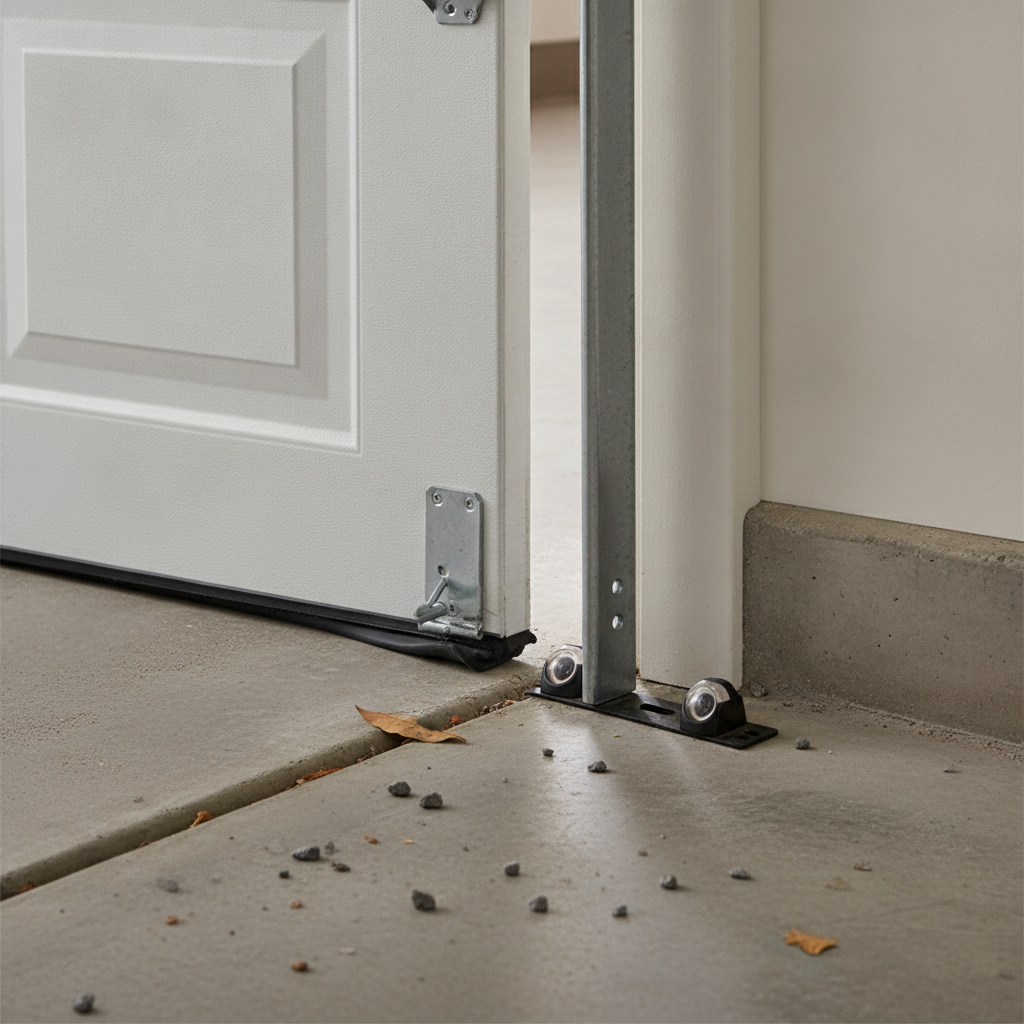
Before assuming the opener is faulty, look at the area where the bottom of the door meets the floor. Small objects can create enough resistance to trigger a bounce or reversal. Leaves, gravel, a garden hose, stored items, ice buildup, mud, or a raised threshold can interfere with the last inch of travel.
These are safe checks most homeowners can make without touching high-tension parts. Keep the door open while you inspect the floor area, and stay clear of the door path while it is moving. Look for debris along the threshold, an item leaning into the track, uneven concrete under one side of the door, or ice packed near the seal.
The bottom weather seal can also cause trouble. If the seal is too thick, curled, hardened, torn, or folded under itself, the opener may feel extra resistance at the end of travel. If the seal is flattened or recently replaced, the door may sit differently than it did before, which can affect the close limit. The goal is firm contact with the floor, not the opener driving the door hard into the concrete.
Safety sensors, also called photo eyes, sit near the bottom of the tracks and send an invisible beam across the opening. Sensor problems usually cause the door to reverse before it fully closes, but the symptom can seem like a bounce if the reversal happens close to the floor. Dirty lenses, bumped brackets, direct sunlight, loose wiring, or stored items near the sensors can interrupt the beam.
You can safely wipe the sensor lenses with a soft cloth, remove objects from the beam path, and check whether the indicator lights appear steady or blinking according to your opener model. If your issue is not a bounce but a door moving unexpectedly at other times, this guide on why a garage door opens by itself covers separate causes involving remotes, wall controls, wiring, and opener logic.
Door Balance, Tracks, and Hardware Resistance
Sometimes the opener is reacting correctly because the garage door is not moving smoothly. A healthy door should travel evenly in its tracks and close without one side dragging. Worn rollers, loose hinges, bent tracks, damaged sections, or balance problems can add resistance near the floor and cause the opener to reverse.
Be especially careful if the door looks crooked, hangs at an angle, or has a loose cable. Stop operating it, keep people and pets away, and do not stand under the door. Springs, cables, and bottom brackets are high-tension parts and should be handled only by a qualified garage door technician.
A crooked door can create bouncing, reversing, scraping, and gaps at the floor. If the movement looks uneven, this related article about a crooked garage door while opening explains possible causes and why continued operation can make damage worse.
Also listen for new sounds. Grinding, popping, scraping, or a loud snap can indicate a mechanical issue rather than a simple opener setting. Avoid repeated test cycles if the door sounds strained. Each cycle can stress the opener and may worsen damage to tracks, rollers, cables, hinges, or door sections.
Safe Checks Before You Call for Service
You can gather useful information without taking apart the door or adjusting dangerous parts. Start by watching where the reversal begins. Note whether the door reverses before touching the floor, right at contact, or after compressing the bottom seal.
- Clear the floor and threshold. Remove debris, tools, ice, stored items, and anything near the door path.
- Inspect the bottom seal visually. Look for folding, cracking, stiffness, or a section catching on the floor.
- Check sensor visibility. Make sure the photo eyes are clean, facing each other, and not blocked.
- Watch the door from a safe distance. Look for uneven movement, shaking, scraping, or one side reaching the floor first.
- Stop if the door looks unstable. Do not operate a crooked, hanging, off-track, or damaged door.
Do not attempt to repair springs, cables, bottom brackets, or other high-tension parts. Also avoid holding the wall button to force the door closed. If the opener is reversing, it may be responding to a real safety or mechanical problem.
Frequently Asked Questions
Is it dangerous if my garage door bounces after closing?
It can be. A simple obstruction or limit issue may be minor, but bouncing can also point to binding hardware, poor balance, or damaged parts. Stop using the door if it looks uneven, unstable, or off track.
Can I adjust the garage door opener limits myself?
Some opener manuals include homeowner limit adjustments. If the door is noisy, crooked, heavy, or repeatedly reversing, have the full system inspected before changing settings.
Why does my garage door bounce more in cold weather?
Cold weather can stiffen rubber seals, affect lubrication, and slightly change how metal parts move. That added resistance may cause an opener to reverse near the floor.
When Professional Help Makes Sense
Call a professional if the door keeps bouncing after you clear the floor, if the opener reverses repeatedly, or if the door moves unevenly. You should also stop using the door if you see loose cables, a broken spring, bent tracks, damaged sections, or any sign the door is unstable.
Ultimate Garage Doors LLC helps homeowners and property owners in Indianapolis and surrounding Central Indiana diagnose opener, sensor, seal, and door balance problems. If your garage door will not close correctly or continues to bounce at the floor, request a garage door estimate and have the system checked by a trained technician.