
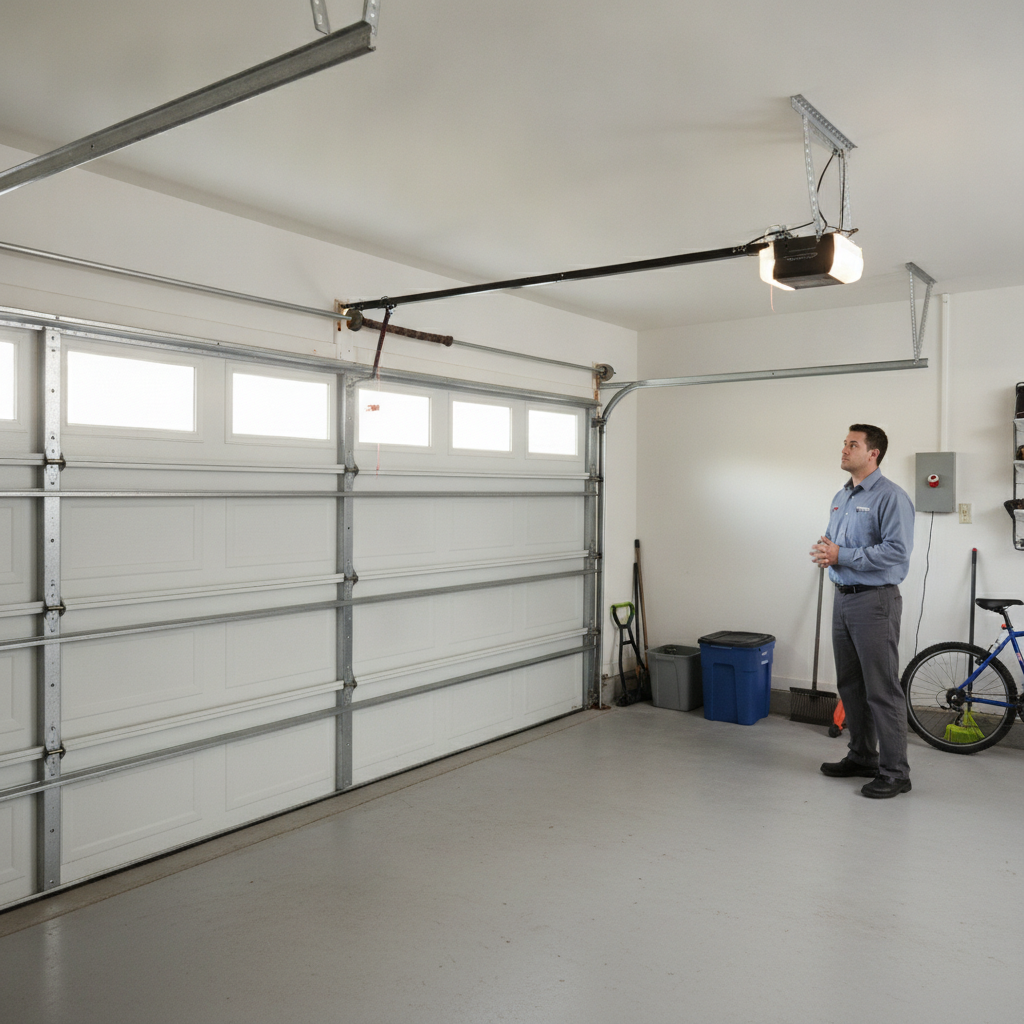
If your garage door will not open, start with simple, low-risk checks: power to the opener, remote batteries, the wall button, safety sensors, the manual lock, and anything blocking the door path. If the door is crooked, hangs unevenly, or you see broken springs, cables, or a section that’s badly damaged, stop and call a professional.
First steps to try safely
These basic checks require no tools and can quickly rule out common causes:
- Power and outlet. Confirm the opener is plugged in and the outlet is energized. Check for a tripped circuit breaker or GFCI.
- Wall control vs. remote. If the wall switch works but the remote does not, replace the remote batteries or reprogram the remote. If neither works, the opener or wiring may be at fault.
- Manual lock or obstruction. Some doors have an internal slide lock—ensure it’s disengaged. Clear boxes, ice, or debris from the threshold and tracks.
- Listen to the opener. Humming, clicking, grinding, or silence are clues about electrical or mechanical fault.
If the opener runs but the door does not move, stop pressing the button. Repeat attempts can worsen damage, especially if a high-tension part has failed.
Safe homeowner checks (don’t touch high-tension parts)
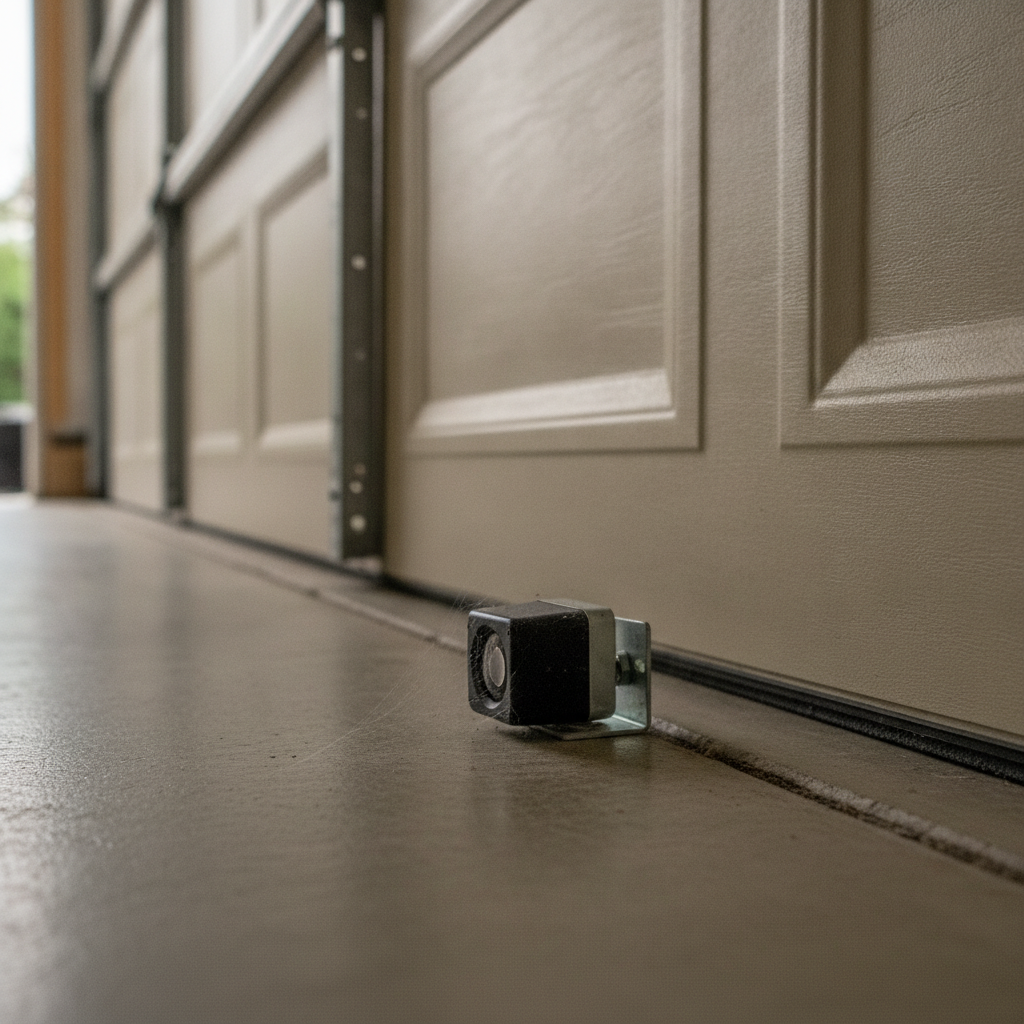
Safe checks mean observing and testing only low-risk items. Never adjust springs, cables, or bottom brackets—these parts store dangerous tension.
Inspect the safety sensors near the bottom of each track. These photo-eye sensors must be clean and aligned; dirt, spider webs, or misalignment can prevent movement. Look for damaged sensor wiring but do not attempt repairs beyond clearing dust.
From a safe distance, scan the tracks for obvious dents, loose hardware, or objects lodged in the path. Do not reach into the track while the opener is active and do not try to hammer a bent track back by yourself.
Cold weather can cause the bottom seal to freeze to the floor or create ice at the threshold. Carefully clear visible ice—do not force the opener to break the seal free.
Common causes and clues
Several issues can produce similar symptoms; use clues from sound and movement to narrow possibilities.
- If the door starts and stops or moves slowly: possible door imbalance, worn rollers, track resistance, or an opener nearing the end of its life. For more on speed issues, see why a garage door is slow to open.
- If the opener motor runs but the door stays down: the trolley, drive gear, belt or chain, spring system, or emergency release may be disconnected or failed.
- If the door opens a few inches and stops: a broken spring or severe imbalance is likely—do not continue operating the door.
Problems that require a professional
Stop using the door and keep people and pets away if any of these appear:
- A loud bang followed by failure to open
- Visible gap in a torsion spring or a hanging extension spring
- Loose, frayed, broken, or tangled cables
- A door that is crooked, hanging on one side, or rollers that have come out of the track
- Bent, cracked, or crushed door sections
- A door that feels extremely heavy when lifted slightly by hand
Springs and cables counterbalance the door and store dangerous energy. Cable replacement, spring adjustment or replacement, and off-track repairs are hazardous and should only be done by trained technicians. If you observe cable damage, review the signs in this guide to garage door cables needing repair and arrange professional service rather than attempting a DIY fix.
If you need to get a vehicle out
If the door is visibly unstable, crooked, or shows spring or cable damage, do not try to lift it. If the door appears balanced and undamaged, you may use the emergency release (usually a red cord on the opener rail) only when the door is fully closed and stable. After disconnecting, lift from the handle area and stop if the door feels unusually heavy or binds—these are signs of a balance or spring problem and require a technician.
Preventing future problems
Regular attention reduces surprises. Watch the door weekly, listen for new noises, keep the path and tracks clear, replace remote batteries before they fail, keep sensor lenses clean, and schedule professional maintenance if movement becomes uneven or noisier than usual. A technician can check balance, springs, cables, rollers, hinges, tracks, and opener components during a service visit.
Frequently Asked Questions
Why does my garage door opener run but the door does not move?
The opener may be running without engaging the trolley, or a broken gear, disconnected emergency release, spring, or cable issue may be preventing movement. Stop operating the opener and call a technician.
Can I open a garage door with a broken spring?
No. A broken spring leaves the door uncounterbalanced and extremely heavy; attempting to open it risks injury and further damage. Wait for a professional.
Why will my garage door only open a few inches?
This symptom often indicates a broken spring, imbalance, or a problem with the opener’s drive or force settings. Because different faults look similar, have a technician inspect it.
When to call a garage door professional
Call a professional if the door is uneven, off track, unusually heavy, or shows signs of broken springs or cables, or if the opener strains, clicks repeatedly, or runs without moving the door. Ultimate Garage Doors serves Indianapolis and Central Indiana with repair, spring replacement, cable service, and opener work. If safe checks don’t restore operation, contact Ultimate Garage Doors to schedule an inspection before further damage occurs.