
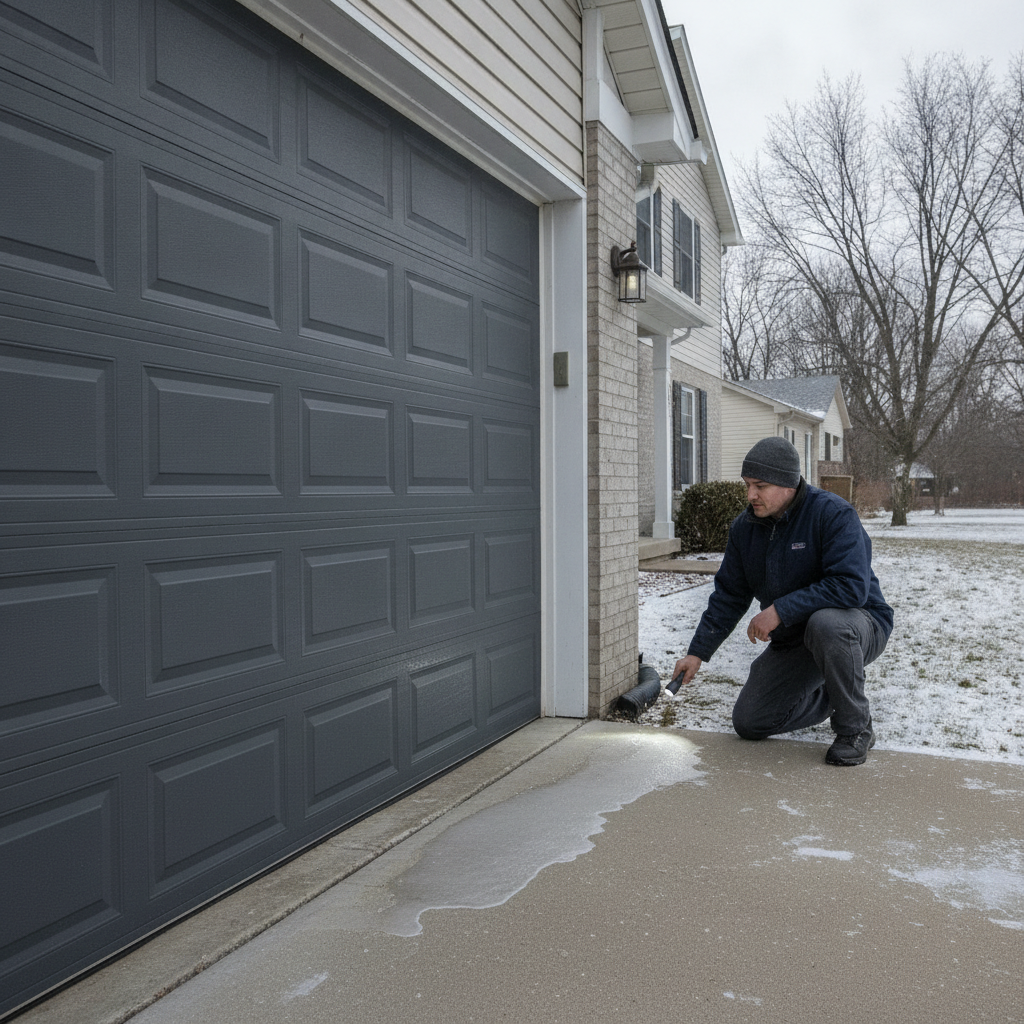
Cold weather affects garage doors in several ways, especially during Indiana winters. Freezing temperatures can make metal parts contract, stiffen weather seals, thicken grease, and expose weak springs or opener problems. As a result, a door that worked normally in October may become noisy, slow, uneven, or stuck once temperatures drop.
Some winter garage door issues are minor and easy to observe. However, problems involving springs, cables, an off-track door, or a door that looks crooked should be handled by a trained technician. These parts can carry significant tension and can be dangerous if handled incorrectly.
How Cold Weather Affects Garage Doors in Indiana
Garage doors are built to move in many weather conditions, but they still respond to temperature changes. In Central Indiana, winter often brings freezing nights, moisture, snow, and rapid temperature swings. Those conditions can affect the door, opener, and hardware at the same time.
Cold air causes many metal components to contract slightly. That small movement can make existing alignment issues more noticeable. Moisture can also freeze around the bottom seal or collect in tracks. Meanwhile, old lubricant may become thick, which adds resistance as the door opens and closes.
Because a garage door system relies on several parts working together, one winter problem can create another. For example, a stiff roller can make the opener work harder. A frozen seal can make the door seem stuck. A weak spring may struggle more in cold weather because the door requires extra force to move.
Springs, Cables, and Door Balance in Freezing Weather
Garage door springs help counterbalance the weight of the door. Most residential systems use torsion springs mounted above the door or extension springs along the horizontal tracks. These springs are under high tension, so they should not be adjusted, removed, or replaced by a homeowner.
Cold weather does not automatically break springs, but it can make an aging or worn spring more likely to fail. Metal becomes less forgiving in freezing conditions. If a spring already has metal fatigue, rust, or heavy wear, a cold snap may be the point where it finally gives out.
Warning signs may include:
- A loud bang from the garage
- A door that will not lift more than a few inches
- A visible gap in a torsion spring
- A door that feels extremely heavy when disconnected from the opener
- Cables that appear loose, tangled, or out of place
If you notice these signs, stop using the door and keep people and pets away. Do not pull on the door, stand beneath it, or try to repair the spring or cables. Several issues can create similar symptoms, so a professional inspection is the safest way to identify the cause.
Tracks, Rollers, Seals, and Ice Buildup
Tracks guide the door as it moves. Rollers travel inside those tracks, while hinges allow the door sections to bend along the curved portion of the track. During winter, these parts may become noisier or less smooth because of dirt, hardened lubricant, ice, or slight metal movement.
A small amount of cold-weather noise can be normal. However, scraping, grinding, popping, or jerky movement should not be ignored. If the door appears crooked, one side seems to lag, or rollers look like they are leaving the track, stop operating the door. You can review common causes of a crooked garage door, but an unstable or off-track door needs professional service.
Weather seals also take a beating in Indiana winters. The bottom seal helps close the gap between the door and the floor. Side and top seals help block wind, rain, and snow. In freezing temperatures, rubber and vinyl can stiffen, crack, or stick to ice on the garage floor.
If the bottom seal freezes to the concrete, do not force the opener to pull the door free. That can damage the opener, door sections, or hardware. Instead, inspect from a safe distance and clear snow or ice around the exterior side of the door if you can do so without pulling on the door.
Garage Door Openers and Safety Sensors in Winter
Garage door openers can also struggle in cold weather. The opener motor is designed to move a balanced door, not lift the door’s full weight by itself. If cold temperatures make the door harder to move, the opener may run slower, reverse unexpectedly, or stop before the door fully opens.
Thickened grease, dirty rollers, stiff hinges, and a poorly balanced door can all increase resistance. Therefore, a slow opener is not always an opener problem. The door itself may be creating the load. If your door has become noticeably sluggish, these possible causes of a garage door slow to open can help you understand what may be happening.
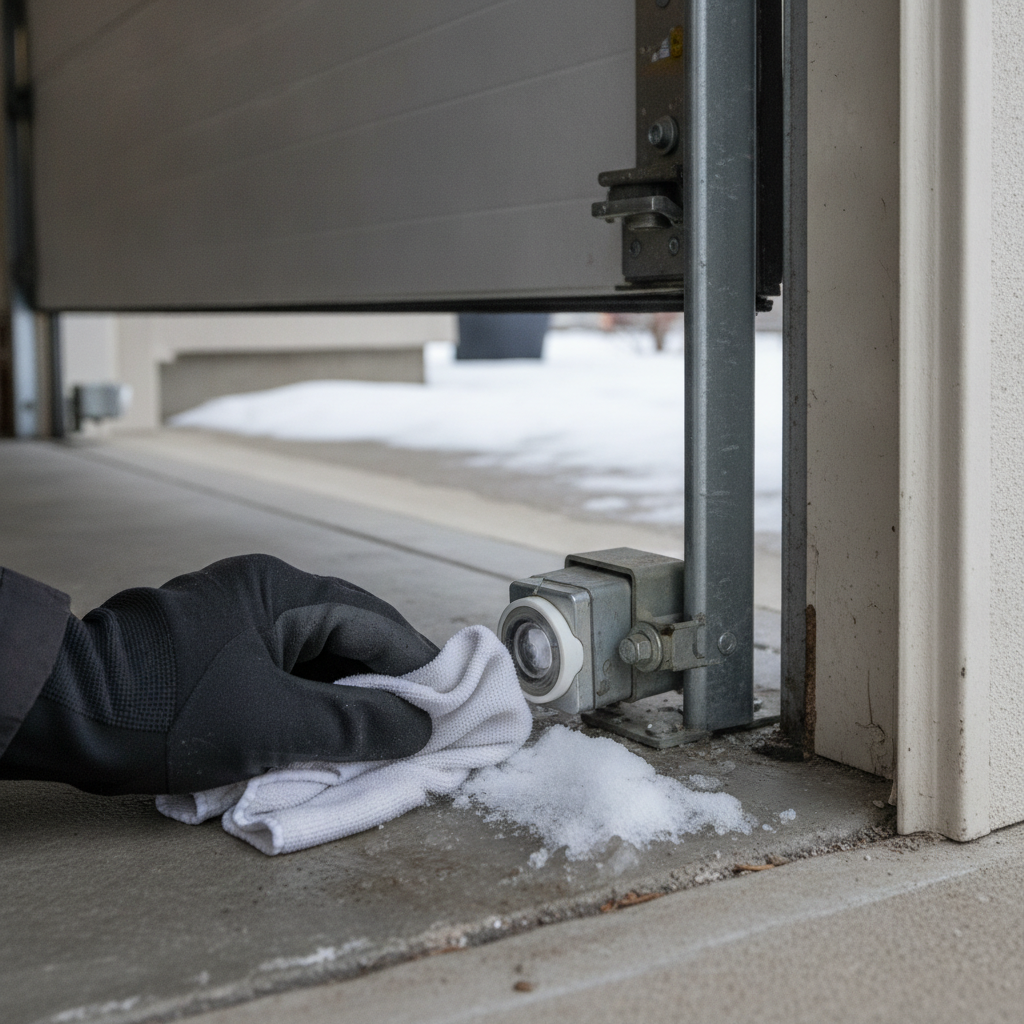
Safety sensors can also cause winter frustrations. These sensors sit near the bottom of the door tracks and send an invisible beam across the door opening. If snow, slush, dirt, or condensation blocks the beam, the opener may refuse to close the door or may reverse after starting.
Homeowners can safely check whether sensor lenses are clean and aligned by sight. Also look for loose storage items, shovels, or snow buildup near the sensor path. Avoid bypassing sensors, because they are an important safety feature.
Safe Winter Checks for Homeowners
You can make several safe observations before calling for service. These checks do not require tools, spring adjustments, or contact with high-tension parts. They simply help you describe the problem more clearly.
- Look at the bottom seal. Check for cracking, gaps, or ice holding the seal to the floor.
- Listen during operation. Note grinding, squeaking, banging, or uneven movement.
- Check the tracks visually. Look for obvious debris, ice, or bent areas without touching or forcing anything.
- Watch the door’s movement. Stop using it if one side rises faster than the other.
- Inspect the sensor area. Remove snow or objects blocking the sensor beam if it is safe to do so.
- Use the wall button once. Repeatedly running the opener can make damage worse if the door is frozen or binding.
Preventive maintenance can reduce many winter problems. A technician can inspect springs, rollers, cables, hinges, tracks, seals, and opener settings before small issues become larger repairs. This is especially helpful for older doors or rental properties that see frequent use.
However, do not attempt to lubricate or adjust parts if the door is hanging, crooked, off track, or supported by damaged cables. In those cases, the safest choice is to stop using the system and arrange professional service.
Frequently Asked Questions
Can cold weather make a garage door spring break?
Cold weather can contribute to spring failure when a spring is already worn, rusty, or fatigued. Springs are high-tension parts, so any suspected spring problem should be handled by a trained garage door technician.
Why does my garage door stick to the floor in winter?
The bottom seal may freeze to the concrete when moisture collects and temperatures drop. Do not force the opener if the door is frozen shut, because that can damage the door or opener.
Is it normal for a garage door opener to run slower in winter?
A slight change may happen in cold weather, but a major slowdown can point to stiff hardware, poor door balance, thick lubricant, or opener strain. The cause should be checked if it continues.
When Professional Winter Garage Door Help Makes Sense
Winter garage door problems are easier to manage when they are addressed early. Call a professional if the door is crooked, stuck, off track, unusually heavy, making loud noises, or refusing to open or close correctly. You should also stop using the door if you suspect a broken spring, loose cable, or damaged bottom bracket.
Ultimate Garage Doors LLC helps homeowners, property managers, and local businesses in Indianapolis and surrounding Central Indiana with garage door repair, opener issues, weather seals, maintenance, and replacement needs. If cold weather has made your garage door unreliable, request a free garage door estimate and get professional guidance before the problem gets worse.