

If your garage door opens a few inches then stops, the system is usually sensing too much resistance or struggling with a failed part. Common causes include a broken spring, opener protection, binding rollers, damaged tracks, or a cable problem. Because some parts are under high tension, stop forcing the door and make a few careful observations before deciding whether to call a technician.
This symptom can happen suddenly, especially during cold Central Indiana weather or after normal wear finally catches up with the door. The opener may sound like it is working, but the door barely moves. In other cases, the door rises a short distance and drops back down. The details matter because several problems can look similar from the outside.
Why a Garage Door Opens a Few Inches Then Stops
A garage door opener is designed to guide and control the door, not carry the full weight by itself. The door should be balanced by springs, supported by cables, and able to move smoothly through the tracks. If one of those parts stops doing its job, the opener may shut down to protect the motor or prevent unsafe movement.
Most modern openers have built-in force limits. If the motor senses that the door is unusually heavy or jammed, it may stop after only a few inches. That does not always mean the opener is bad. Often, the opener is reacting to another problem in the door system.
Possible causes include:
- A broken torsion spring or extension spring
- A spring that has weakened over time
- Loose, frayed, or damaged garage door cables
- Bent tracks or rollers that no longer move freely
- A damaged door section that is rubbing
- Opener force settings, travel limits, or internal protection features
- Cold weather making stiff parts harder to move
Broken or Weak Springs Are a Common Cause
Garage door springs counterbalance the weight of the door. A residential door can be too heavy for safe manual lifting without working springs. If a spring breaks, the opener may lift the door a few inches and then stop because the load is too great.
A torsion spring usually sits above the garage door opening on a metal shaft. Extension springs are mounted along the horizontal tracks on some systems. Both types store a large amount of tension. Homeowners should never try to adjust, remove, wind, unwind, or replace garage door springs.
Signs that a spring may be involved include:
- A loud bang from the garage, followed by a door that will not open normally
- A visible gap in a torsion spring above the door
- The opener runs, but the door only rises slightly
- The door feels extremely heavy after the opener is disconnected
- The top section bends or strains as the opener pulls
If you suspect a broken spring, stop operating the door. Keep people and pets away from the opening, and do not stand beneath the door. A trained technician can safely test the balance and replace the correct spring type.
Opener Protection Can Stop the Door
The garage door opener may also be doing exactly what it is supposed to do. When the opener detects resistance, it may stop to avoid burning out the motor or pulling the door out of alignment. This can happen when the door is too heavy, jammed, frozen to the floor, or binding in the tracks.
Opener settings can also play a role. Force settings control how much resistance the opener will tolerate. Travel limits tell the opener where to stop in the open and closed positions. If these settings are off, the opener may stop early or behave inconsistently. However, settings should not be increased just to overpower a struggling door. That can hide a mechanical problem and create a safety risk.
Problems during opening are different from closing issues, but both can involve sensors, resistance, and opener logic. If your door also reverses while closing, the guide to garage door reversing problems explains related causes such as safety sensors and closing resistance.
Also listen to the opener when the door stops. A humming motor, repeated clicking, or straining sound may point to a mechanical load problem. A door that stops quietly at the same spot every time may need opener adjustment or track inspection.
Track, Roller, and Cable Resistance
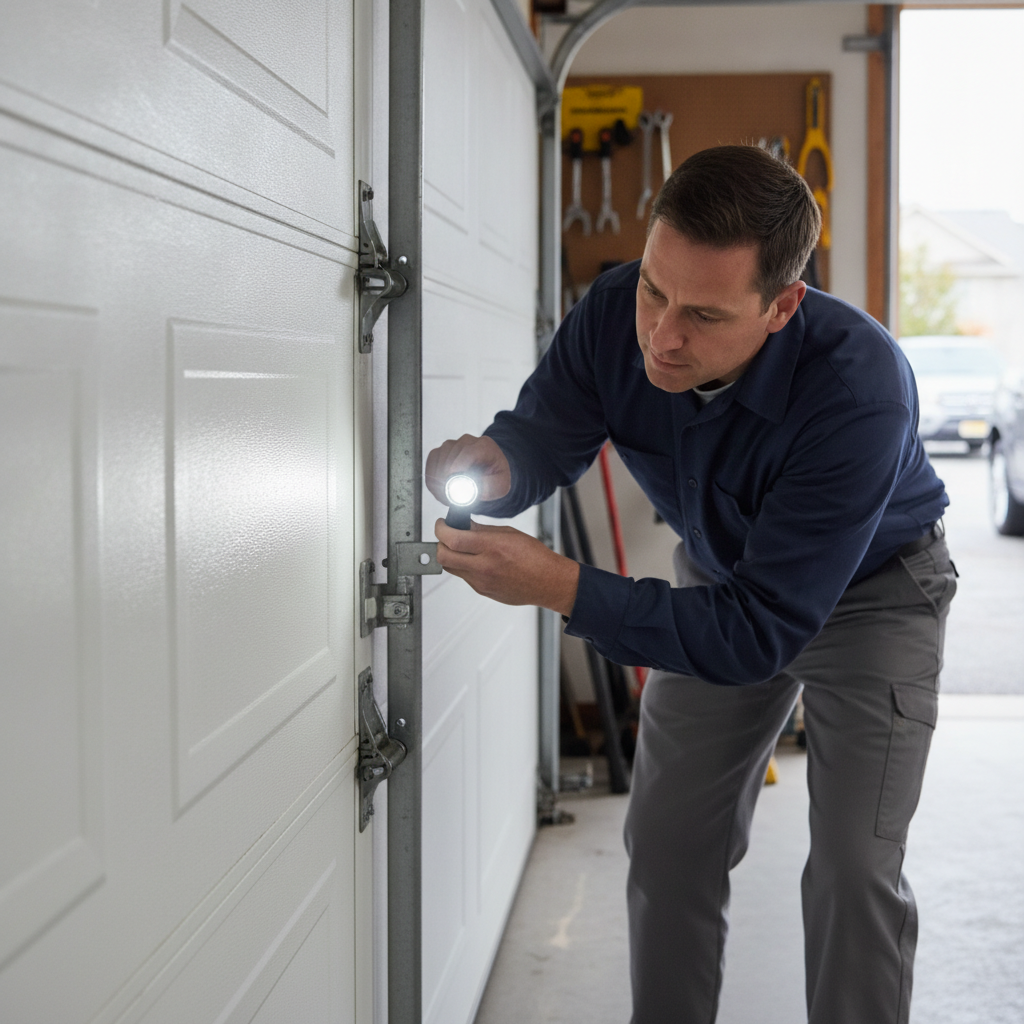
A door that opens a few inches and stops may be binding somewhere in the track system. Tracks guide the rollers as the door moves. If a track is bent, loose, dirty, or out of alignment, the rollers may catch. As a result, the opener senses extra resistance and stops.
Rollers can also wear out. Metal rollers may become noisy or rough, while nylon rollers can crack or lose smooth movement. Hinges between the door sections can loosen or shift, causing one section to drag. Even a small obstruction in the track can create enough resistance to stop the door.
Cables are another major part of the lifting system. If a cable comes off the drum, frays, stretches, or wraps unevenly, the door may rise crooked or bind quickly. Cable problems often appear alongside spring issues because the system loses balance. For more detail on warning signs, review these garage door cable repair signs.
Do not try to repair or reattach cables yourself. Garage door cables connect to high-tension parts, including springs and bottom brackets. If the door looks crooked, hangs on one side, or has a loose cable, stop using it and keep the area clear.
Safe Troubleshooting Before You Call
You can make a few safe checks without touching high-tension parts. These observations can help you describe the problem clearly when scheduling service. If the door looks unstable, off-track, crooked, or damaged, skip troubleshooting and call a professional.
Safe checks include:
- Look for obvious obstructions. Check the floor area, tracks, and doorway for items blocking movement.
- Check whether the door is frozen to the floor. In winter, ice can hold the bottom seal down. Do not force the opener if the seal is stuck.
- Observe the springs from a distance. Look for a visible gap in the spring, but do not touch it.
- Watch whether the door rises evenly. A tilted or crooked door can signal cable, track, or spring trouble.
- Listen to the opener. Straining, grinding, or humming can help identify the type of issue.
- Check the opener release only if the door is closed. If the door is fully closed and stable, you may disconnect the opener to see whether the door feels unusually heavy. Do not do this if a spring appears broken or the door is partly open.
If the door feels very heavy, will not stay balanced, or moves unevenly, stop using the system. The goal is observation, not repair. Do not adjust springs, remove bottom brackets, pull on loose cables, or force the door past a stuck point.
What a Technician Will Inspect
A garage door technician will look beyond the opener. Since the opener may only be reacting to another fault, the mechanical door system needs attention first. This usually includes checking door balance, spring condition, cable alignment, rollers, hinges, tracks, brackets, and the opener’s settings.
The technician may test whether the door moves smoothly by hand after the opener is safely disconnected. They may also inspect the opener rail, trolley, gear assembly, force settings, and travel limits. If a part is worn or broken, the repair recommendation should match the actual condition of the door.
In some cases, the solution may be straightforward, such as replacing worn rollers or correcting an opener setting. In other cases, a broken spring, damaged cable, bent track, or compromised door section may require more involved repair. A professional inspection helps avoid replacing the opener when the real problem is mechanical resistance.
Frequently Asked Questions
Can I keep pressing the opener button to get the door open?
No. Repeatedly running the opener can strain the motor and may make a damaged door less stable. If the door stops after a few inches, stop using it until the cause is identified.
Does this always mean my garage door opener is broken?
Not always. The opener may be protecting itself because the door is too heavy, stuck, or binding. Springs, cables, rollers, and tracks can all create similar symptoms.
Is it safe to open the door manually?
Only if the door is fully closed, stable, and there are no signs of broken springs, loose cables, or track damage. If the door feels heavy or uneven, stop and call a professional.
When Professional Help Is the Safer Choice
Call a qualified garage door technician if the door opens only a few inches, looks crooked, has a broken spring, shows loose cables, or appears to be off-track. You should also get help if the opener strains, the door feels unusually heavy, or the problem keeps returning after basic checks.
Ultimate Garage Doors LLC helps homeowners and property owners in Indianapolis and surrounding Central Indiana diagnose opener problems, spring failures, cable issues, track resistance, and related garage door concerns. If your door is not moving safely, avoid forcing it and contact Ultimate Garage Doors LLC for professional assistance.