
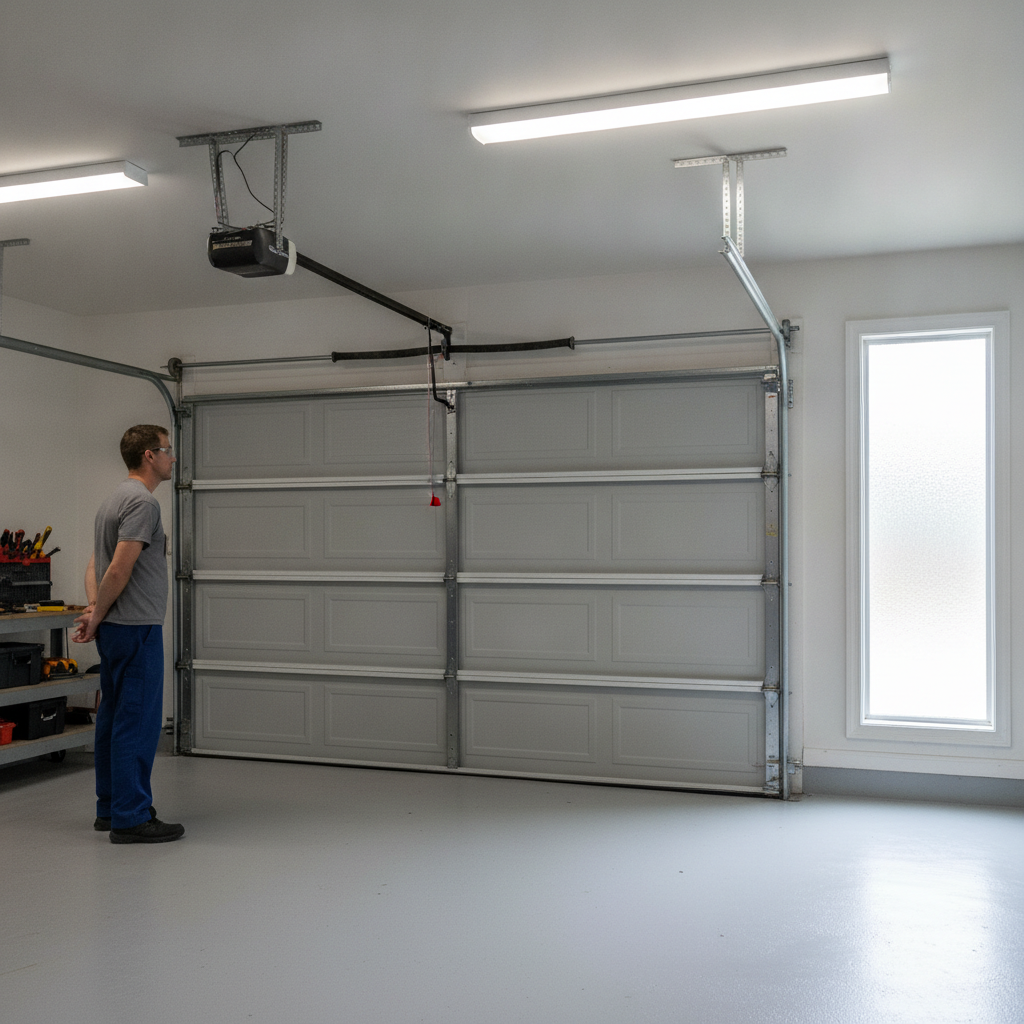
If your garage door closes too fast, stop using it until you understand the risk. A fast-dropping or slamming garage door often points to lost spring tension, cable failure, opener setting problems, or a door balance issue. Because springs and cables carry heavy tension, this is not a safe do-it-yourself repair. Keep people, pets, and vehicles away from the door and avoid standing beneath it.
A properly working garage door should move smoothly and at a controlled speed. It should not free-fall, slam into the floor, or feel unusually heavy. In Central Indiana homes, temperature changes, wear, rust, and daily use can all contribute to parts weakening over time.
Why a Fast-Closing Garage Door Is a Safety Concern
A garage door is one of the heaviest moving systems in a home. The opener may seem like the part doing the work, but the spring system carries most of the door’s weight. When the spring system, cables, rollers, or opener settings are not working correctly, the door may move faster than it should.
A door that drops quickly can damage the door panels, opener, tracks, floor, and nearby belongings. More importantly, it can seriously injure someone in its path. Treat sudden speed changes as a warning sign rather than a minor annoyance.
Common Reasons a Garage Door Closes Too Fast
Several different faults can make a door close too quickly. Some are related to the counterbalance system, while others involve the opener or door hardware. A professional inspection is usually needed because similar symptoms can come from different parts.
Spring tension loss
Garage door springs are designed to balance the weight of the door. Most residential systems use either torsion springs mounted above the door or extension springs located along the horizontal tracks. When these springs lose tension or break, the door can become much heavier than normal.
If the springs are no longer supporting the door correctly, gravity takes over. The door may drop faster than expected, slam shut, or strain the opener. You may also notice a loud bang if a spring breaks, although spring problems are not always obvious.
Do not attempt to adjust, wind, unwind, remove, or replace garage door springs. These parts store high tension and can cause severe injury if handled incorrectly.
Cable failure or cable misalignment
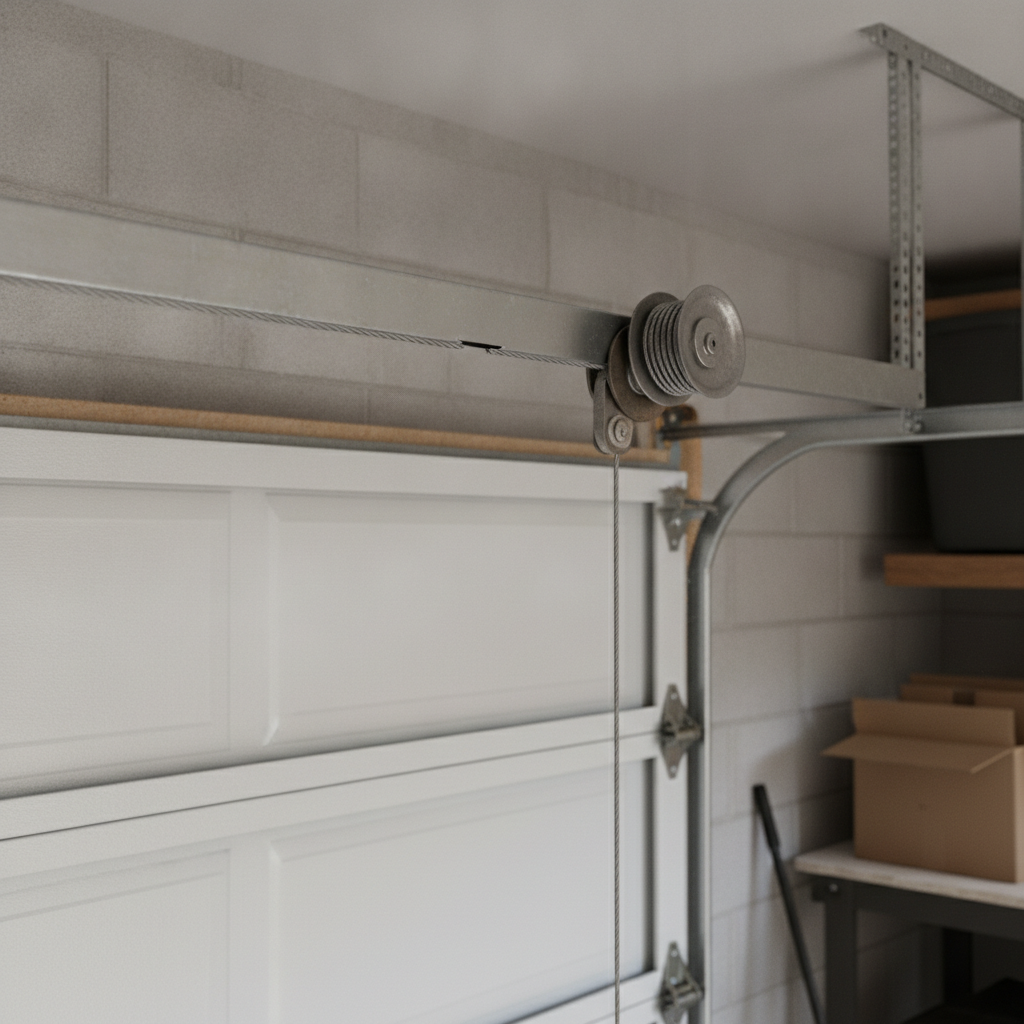
Garage door cables work with the springs to lift and lower the door evenly. If a cable frays, snaps, slips off a drum, or becomes uneven, one side of the door may lose support. The door may close too fast, hang crooked, jerk, or bind in the tracks.
A damaged cable is an urgent safety issue. Avoid pulling on the door, forcing it open, or using the opener repeatedly. Also avoid touching bottom brackets, because they are connected to high-tension cable hardware.
Garage door opener force or travel settings
The opener controls movement, but it should not be used to compensate for a poorly balanced door. Some openers have force settings and travel limits that tell the motor how far and how hard to move the door. If these settings are incorrect, the door may close too aggressively or fail to stop as expected.
However, opener settings are not the first thing to blame. If the door is heavy because of spring or cable trouble, changing opener settings can hide the real problem and increase strain on the system. If your opener has other symptoms, such as starting and stopping during travel, the causes may overlap with issues described in doors that open only a few inches.
Worn rollers, hinges, or track problems
Rollers, hinges, and tracks help guide the door. When rollers wear out, tracks shift, or hinges loosen, the door may not move smoothly. In some cases, the door may bind briefly and then drop quickly once it breaks free.
This can feel like the door is accelerating at random points. You may hear popping, scraping, rattling, or grinding. These sounds are clues that the door should be inspected before more parts are damaged.
Safe Observations You Can Make Before Calling
You should not repair springs, cables, or high-tension hardware yourself. However, you can make a few safe observations from a distance. These details can help a technician understand what may be happening.
- Watch the door from inside the garage, away from its path. Do not stand under the door or place anything in the opening.
- Look for a crooked door. If one side is lower than the other, stop using the system.
- Check for visible loose or frayed cables. Do not touch them.
- Listen for new noises. A bang, snap, scrape, or heavy thud can point to a mechanical issue.
- Notice whether the opener strains. A humming, jerking, or struggling motor may be reacting to a heavy door.
- Look for gaps in a torsion spring. A visible separation in the spring coil can indicate a break.
If the door is partly open, crooked, hanging, or unstable, leave it alone. Do not pull the emergency release cord on a door that may fall. That cord disconnects the opener from the door, and an unbalanced door may drop suddenly.
How This Differs From a Door That Reverses
A door that closes too fast is different from a door that starts down and then reverses back up. Reversing often involves safety sensors, travel limits, force settings, obstructions, or opener logic. A fast-closing door more often suggests a balance, spring, cable, or control problem.
Still, symptoms can overlap. An opener may reverse because it senses resistance from a binding track, while a failing spring may make the door heavy enough to confuse the opener’s safety system. If your main issue is the door changing direction before reaching the floor, review the common causes of a garage door that reverses before closing.
Both problems deserve attention because they affect safe door movement. The safest approach is to stop repeated testing and have the system checked, especially if the door slams, drops, or looks uneven.
What Not to Do If the Door Slams Shut
It is natural to want to test the door again to see if the problem repeats. However, repeated operation can make a damaged system worse. If a spring or cable is failing, each cycle adds stress.
Avoid these actions:
- Do not stand under the door to watch it move.
- Do not hold the door up by hand.
- Do not force a crooked or stuck door open or closed.
- Do not adjust spring tension or cable drums.
- Do not remove bottom brackets or loosen cable hardware.
- Do not increase opener force to overpower a heavy door.
If the door has already slammed down, inspect only from a safe distance. Keep children and pets away from the garage door area. If your vehicle is trapped inside, it is still safer to wait for a qualified technician than to force an unstable door.
How a Technician Diagnoses the Problem
A trained garage door technician will look at the full system instead of guessing from one symptom. The inspection may include the spring system, lift cables, drums, tracks, rollers, hinges, opener arm, opener settings, safety sensors, and door balance.
The technician may also check whether the door moves evenly and whether the opener is being asked to lift too much weight. Because the opener should guide a balanced door, excessive motor strain can be a sign of a separate mechanical problem.
Possible repairs depend on the diagnosis. The solution may involve spring replacement, cable repair, roller replacement, track adjustment, opener setting correction, hardware tightening, or another repair. In some cases, a damaged or aging door may need replacement, but that should be determined after an inspection.
Frequently Asked Questions
Can I keep using my garage door if it only closes fast sometimes?
No. Intermittent fast closing can still point to a failing spring, cable, roller, or opener control issue. Stop using the door until it is inspected.
Is the garage door opener responsible for holding the door up?
No. The springs and counterbalance system support most of the door’s weight. The opener moves the door, but it should not carry a heavy, unbalanced door.
Why did my garage door suddenly slam shut?
A sudden slam may happen when a spring breaks, a cable fails, or the door loses balance. Several faults can look similar, so a technician should diagnose it.
When to Get Professional Help
Call for professional help if your garage door drops quickly, slams shut, hangs crooked, has loose cables, or feels unusually heavy. These symptoms involve parts that can be under significant tension, so safe repair requires the right tools and training.
Ultimate Garage Doors LLC helps homeowners and property owners in Indianapolis and surrounding Central Indiana with garage door repair, opener issues, spring replacement, cable repair, and safety inspections. If your door is closing too fast or feels unsafe, stop using it and request a free garage door estimate before operating it again.