
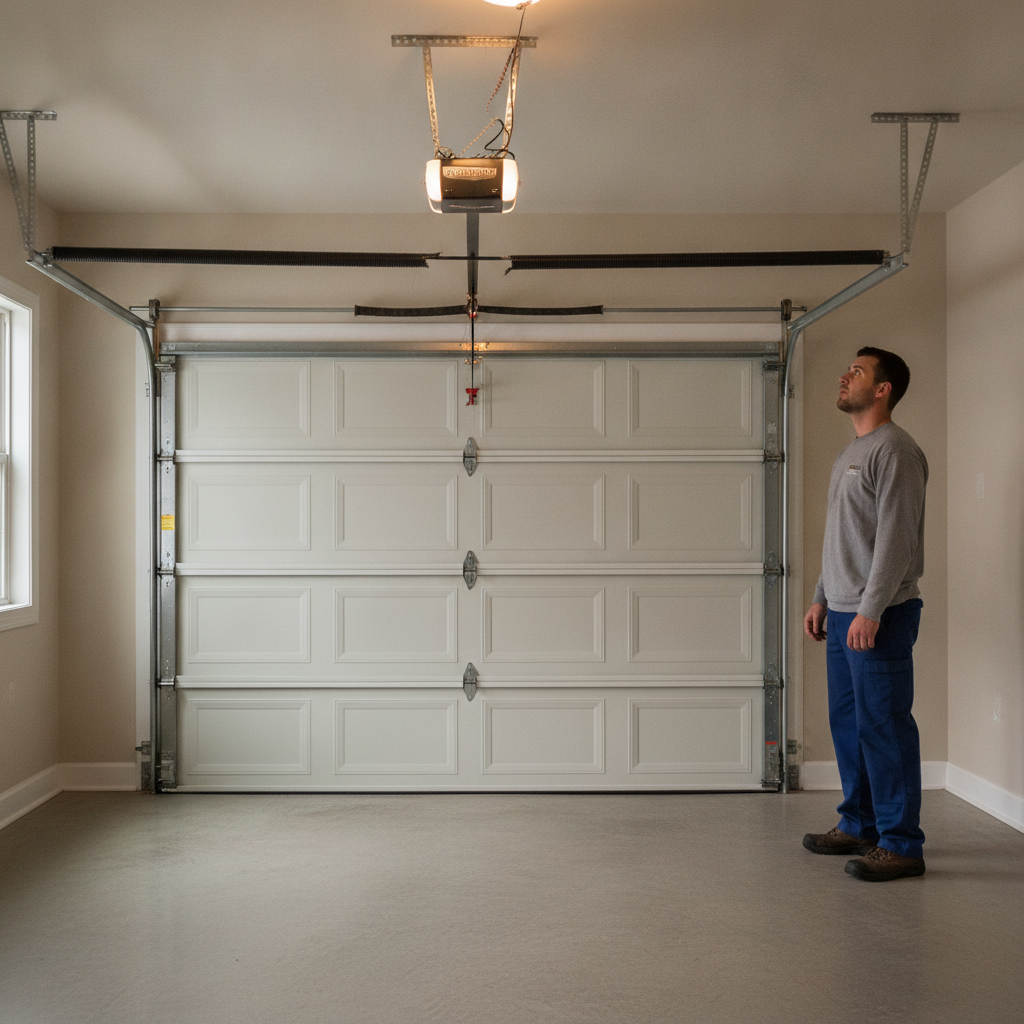
If you are trying to open a garage door with a broken spring, the safest answer is usually no. A broken spring means the door has lost the part that carries most of its weight, so forcing it open can damage the door, opener, tracks, cables, and anyone nearby. In most cases, the safer choice is to stop using the door and contact a trained garage door technician.
This situation is common in Indianapolis and throughout Central Indiana, especially as older springs reach the end of their service life. However, it can feel confusing because the door may look normal from the outside. The problem is hidden in how the door is balanced.
Why a Garage Door Becomes So Heavy With a Broken Spring
A garage door spring does not simply help the door move. It counterbalances the weight of the door. That means the spring stores and releases tension so the door can be lifted with much less effort.
Most residential garage doors weigh far more than people expect. The opener is not designed to lift that full weight by itself. Instead, the opener guides a properly balanced door while the spring system does the heavy lifting.
When a spring breaks, the balance changes immediately. The door may feel glued to the floor, or it may lift only a few inches before stopping. If the door is already open, it may become unstable because the spring can no longer help control the weight.
There are two common spring systems: torsion springs and extension springs. Torsion springs sit above the door opening, while extension springs stretch along the sides of the door track. If you want a clearer explanation of how the two systems differ, this overview of torsion and extension springs explains the basic design differences.
Signs Your Garage Door Spring May Be Broken
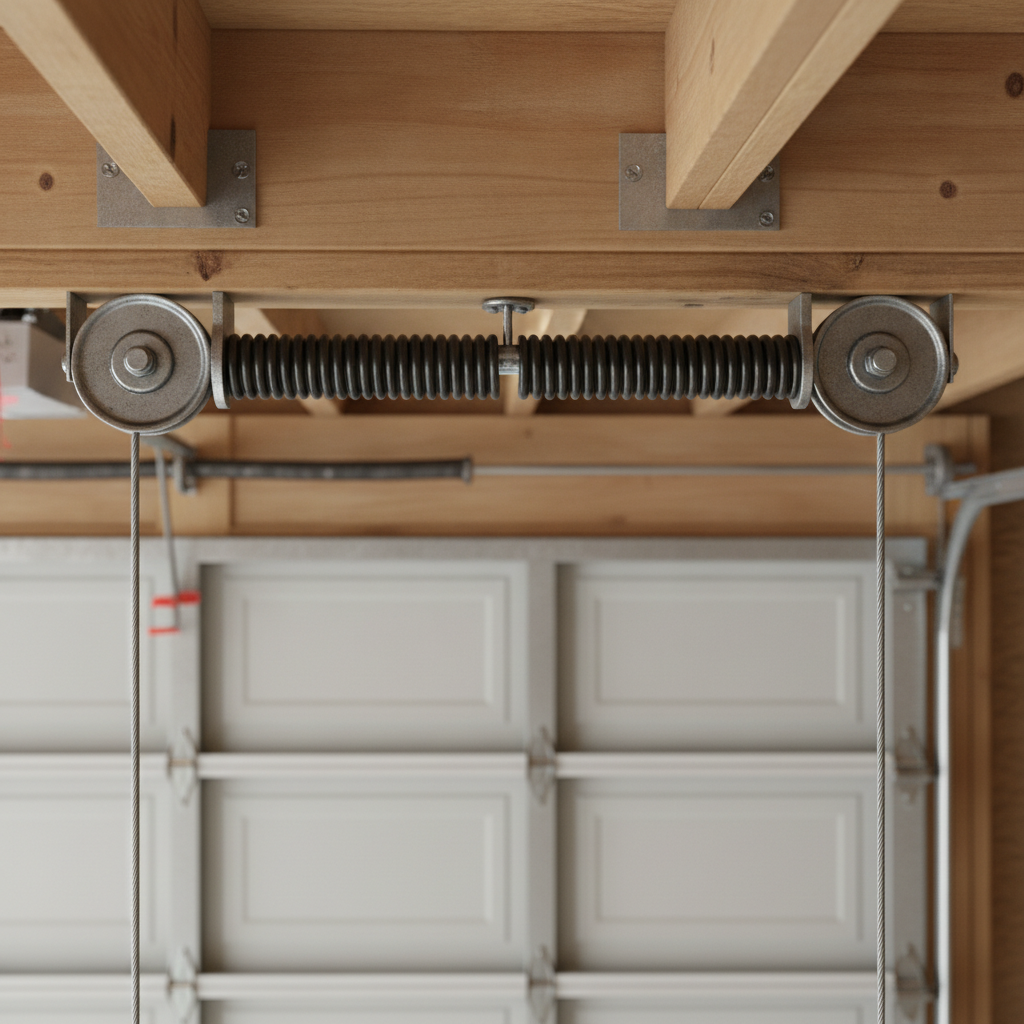
A broken spring is often noticeable, but not always from the driveway. Several garage door problems can create similar symptoms, so a professional inspection is the best way to confirm the cause. Still, homeowners can make a few safe observations without touching high-tension parts.
Common signs include:
- The garage door will not open, even though the opener runs.
- The door opens a few inches and then stops.
- You heard a loud bang from the garage.
- The door feels much heavier than normal when lifted slightly.
- One section of a torsion spring appears separated or has a visible gap.
- The door looks crooked, uneven, or unstable.
- Loose cables are hanging near the sides of the door.
- The opener strains, hums, or reverses before the door opens fully.
Do not touch the springs, cables, drums, or bottom brackets. These parts can remain under tension even after a spring breaks. Also, avoid standing under the door to inspect it. Make observations from a safe distance with the door fully closed if possible.
Why Forcing the Door Open Is Risky
Trying to force a garage door open after a spring breaks can create several problems. The most obvious risk is injury. A door that has lost its counterbalance can drop suddenly, especially if someone loses their grip or the door shifts in the tracks.
The garage door opener can also be damaged. Many homeowners press the opener remote again and again, hoping the motor will push through the problem. However, the opener is not built to lift the door’s full dead weight. As a result, the motor, rail, trolley, sprocket, or drive system may fail.
Forcing the door may also damage other hardware. For example, cables can loosen or jump off drums. Rollers may bind in the tracks. Hinges can bend. Meanwhile, the door sections themselves can buckle if too much force is applied unevenly.
If the door is crooked, hanging, off-track, or partly open, the risk increases. Stop operating the door, keep people and pets away, and do not try to pull it into place. A crooked door can shift suddenly because the weight is no longer moving evenly through the spring and cable system.
What to Do Instead of Opening It by Force
The safest alternative is to leave the garage door closed until it can be inspected. If you have another entrance to the home, use that door. If your vehicle is inside the garage, avoid rushing the situation. A trapped vehicle is frustrating, but a damaged or falling garage door is a much larger problem.
If the door is fully closed, do not keep pressing the opener. Unplugging or leaving the opener alone can prevent accidental operation while you wait for service. If the door is open or partly open, stay out from under it and keep the area clear.
Safe steps for homeowners are limited to observation and prevention:
- Stop using the wall button, keypad, remote, or app controls.
- Keep children, pets, and vehicles away from the door area.
- Look for obvious gaps in the spring only from a safe distance.
- Do not pull emergency release cords if the door is open or unstable.
- Do not try to lift, brace, clamp, or force the door.
- Call a qualified garage door professional for diagnosis and repair.
Some homeowners wonder if several people can lift the door manually. That is not recommended. Garage doors are awkward, heavy, and difficult to control without a working counterbalance system. The door may also bind in the tracks, causing it to tilt or drop.
Can the Opener Lift a Garage Door With a Broken Spring?
In most cases, the opener should not be used when a spring is broken. A garage door opener is designed for controlled movement, not brute lifting power. If the spring system is not supporting the door, the opener is being asked to do a job it was never meant to do.
You may notice the opener humming, the rail flexing, or the door moving only slightly. These are warning signs. Continuing to run the opener can turn a spring repair into a spring and opener repair.
Also, some openers include force settings and safety features that stop the door when resistance is detected. These features help prevent some problems, but they do not make it safe to operate a door with a broken spring. The underlying weight and tension issue remains.
If the opener has already strained or stopped during the failure, mention that to the technician. The spring system should be inspected first, and then the opener can be checked for related damage.
How Professionals Handle Broken Garage Door Springs
A trained technician will evaluate the full door system, not just the broken spring. This matters because cables, rollers, bearings, drums, hinges, and tracks all work together. If one part failed, other parts may have been stressed before or during the break.
Spring replacement requires proper tools, correct spring sizing, and safe handling of high tension. The replacement spring must match the door’s weight, height, drum setup, and spring system. An incorrect spring can leave the door too heavy, too light, or unsafe to operate.
After replacing the spring, the technician should check door balance. A balanced door should move smoothly and stay controlled through its travel. The opener should only be reconnected and tested after the door operates properly by hand.
Springs also have a limited lifespan based on use, condition, and environment. If you are unsure whether your springs are near the end of their cycle life, this guide on how long garage door springs last explains the factors that affect wear.
Frequently Asked Questions
Can I manually lift a garage door with a broken spring?
It is not recommended. Without a working spring, the door can be extremely heavy and hard to control. Lifting it manually can lead to injury or more damage.
Is it safe to use the emergency release cord?
Do not use the emergency release if the door is open, partly open, crooked, or unstable. Releasing the opener can allow the door to move unexpectedly.
Will replacing one broken spring fix the whole problem?
Sometimes, but not always. A technician should inspect the full spring system, cables, opener, and door balance because related parts may also be worn or damaged.
When to Call a Garage Door Professional
Call a professional if your garage door spring is broken, the door feels unusually heavy, the opener strains, or the door looks crooked or unstable. Stop operating the door, keep people and pets away, and avoid standing beneath it.
Ultimate Garage Doors LLC helps homeowners and property owners in Indianapolis and Central Indiana with spring replacement, door balance issues, opener concerns, and related garage door repairs. If you suspect a broken spring, request professional garage door service so the door can be inspected safely before further damage occurs.