
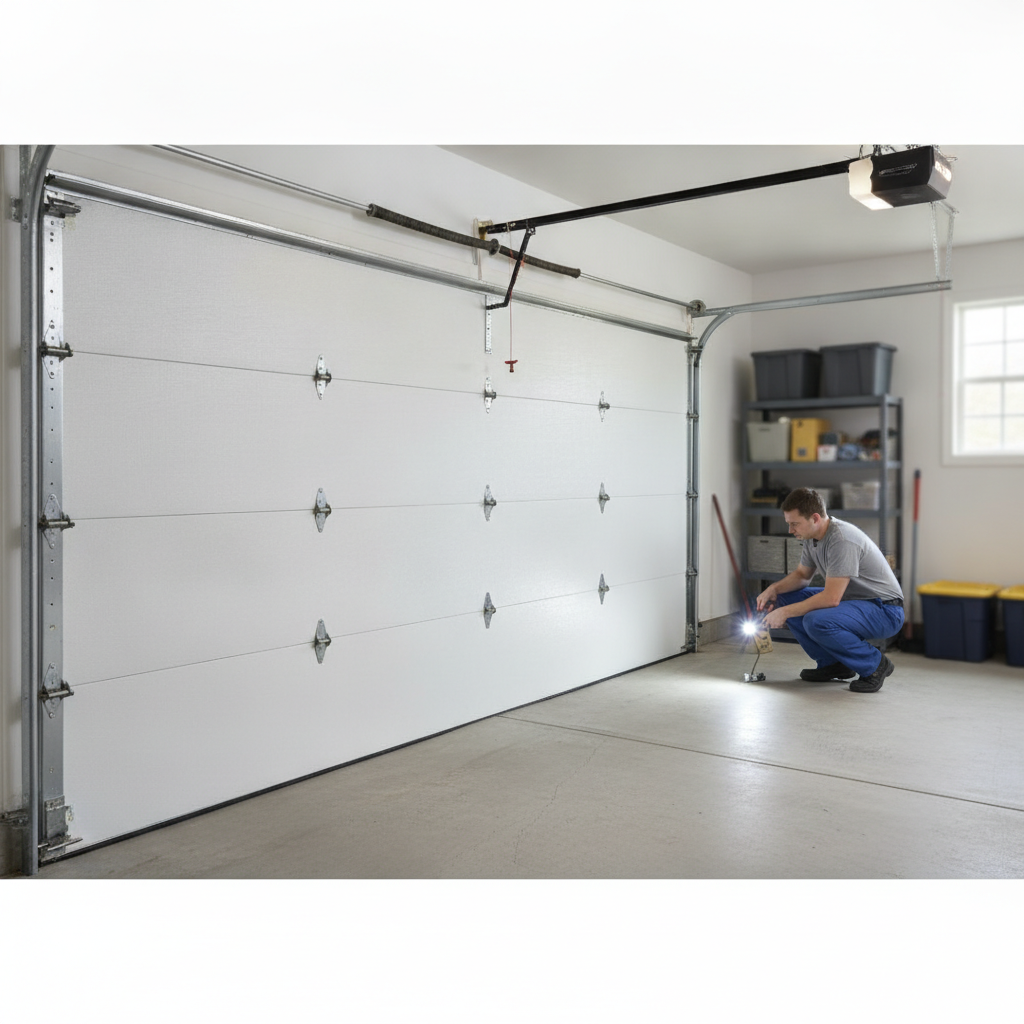
If your garage door sensor works intermittently, the problem usually comes from something interrupting the safety beam or weakening the sensor connection. Common causes include dirty lenses, direct sunlight, loose low-voltage wiring, vibration from daily door movement, poor alignment, or electronics inside the sensor beginning to fail. The door may close normally one time, then reverse or refuse to close the next, which makes the issue frustrating to pin down.
Garage door safety sensors are important because they help prevent the door from closing on a person, pet, vehicle, or object. However, several small problems can create similar symptoms. A careful visual check can help you understand what may be happening, but electrical diagnosis and replacement are best handled by a trained garage door technician.
How Garage Door Sensors Are Supposed to Work
Most modern residential garage doors use two safety sensors near the bottom of the door tracks. One sensor sends an invisible beam across the door opening. The other receives that beam. If the beam is blocked, misaligned, or not detected, the opener should stop the door from closing or reverse it back open.
These sensors are often called photo eyes. They are part of the opener safety system, but they are not the same thing as the opener’s force setting or travel limits. If you want a deeper explanation of how these systems differ, this overview of photo eyes and auto-reverse explains what garage door owners should know.
When everything is working correctly, the sensor indicator lights usually stay steady. Exact light behavior varies by opener brand, but flickering, dim, or inconsistent lights can point to alignment, wiring, power, or sensor problems.
Why a Garage Door Sensor Works Intermittently
An intermittent sensor problem often means the system is right on the edge of working. A small shift, vibration, light change, or weak connection may be enough to make it fail one moment and work the next. Here are the most common causes.
- Dirty sensor lenses: Dust, pollen, spider webs, grass clippings, and road grime can cover the sensor lens. The beam may still pass through sometimes, but not consistently. This is especially common in garages that face busy streets, alleys, or dusty driveways.
- Loose or damaged wiring: Safety sensors use low-voltage wiring that runs from the opener to each sensor. If a wire is loose, pinched, chewed, corroded, or poorly connected, vibration can briefly break the signal. As a result, the opener may think the beam is blocked.
- Vibration from door movement: Each opening and closing cycle creates vibration through the tracks, brackets, and opener rail. Over time, that movement can loosen sensor brackets or slightly shift the photo eyes out of alignment.
- Direct sunlight: Strong sunlight can interfere with the receiving sensor, especially when the sun shines directly into the lens. This may happen only at certain times of day, which makes the sensor seem random.
- Failing sensor electronics: Sensors can weaken internally due to age, moisture exposure, temperature swings, or impact. If the internal electronics are failing, the lights may flicker or the door may behave differently from one cycle to the next.
Intermittent operation does not always mean the sensors are completely bad. However, if cleaning and basic visual checks do not help, the system may need professional testing. Sensors are small parts, but they play a large role in safe opener operation.
Safe Checks You Can Make Before Calling for Service
Homeowners can make a few safe observations without taking anything apart. These checks may help you identify an obvious issue. However, do not bypass the sensors, tape them together, or defeat the safety system to keep the door running.
- Look for objects in the path: Remove boxes, tools, bikes, leaves, or anything else near the sensor beam.
- Clean the lenses gently: Wipe each lens with a soft, dry cloth. Avoid harsh chemicals because they may cloud the lens.
- Watch the indicator lights: See whether the sensor lights are steady, flickering, dim, or turning off when the door moves.
- Check for loose brackets: If a sensor looks crooked or has been bumped, it may not be aimed correctly.
- Notice the time of day: If the issue happens mostly in the morning or afternoon, sunlight may be interfering with the receiving eye.
- Look for visible wire damage: Check only what you can see safely. Do not pull wiring, open the opener housing, or attempt electrical repairs.
If the door is stuck open and you need to close it, follow the instructions in your opener owner’s manual. Do not stand under a moving door, and do not force the door if it appears damaged, crooked, or unstable.
Sunlight, Moisture, and Temperature Can Make Sensor Problems Come and Go
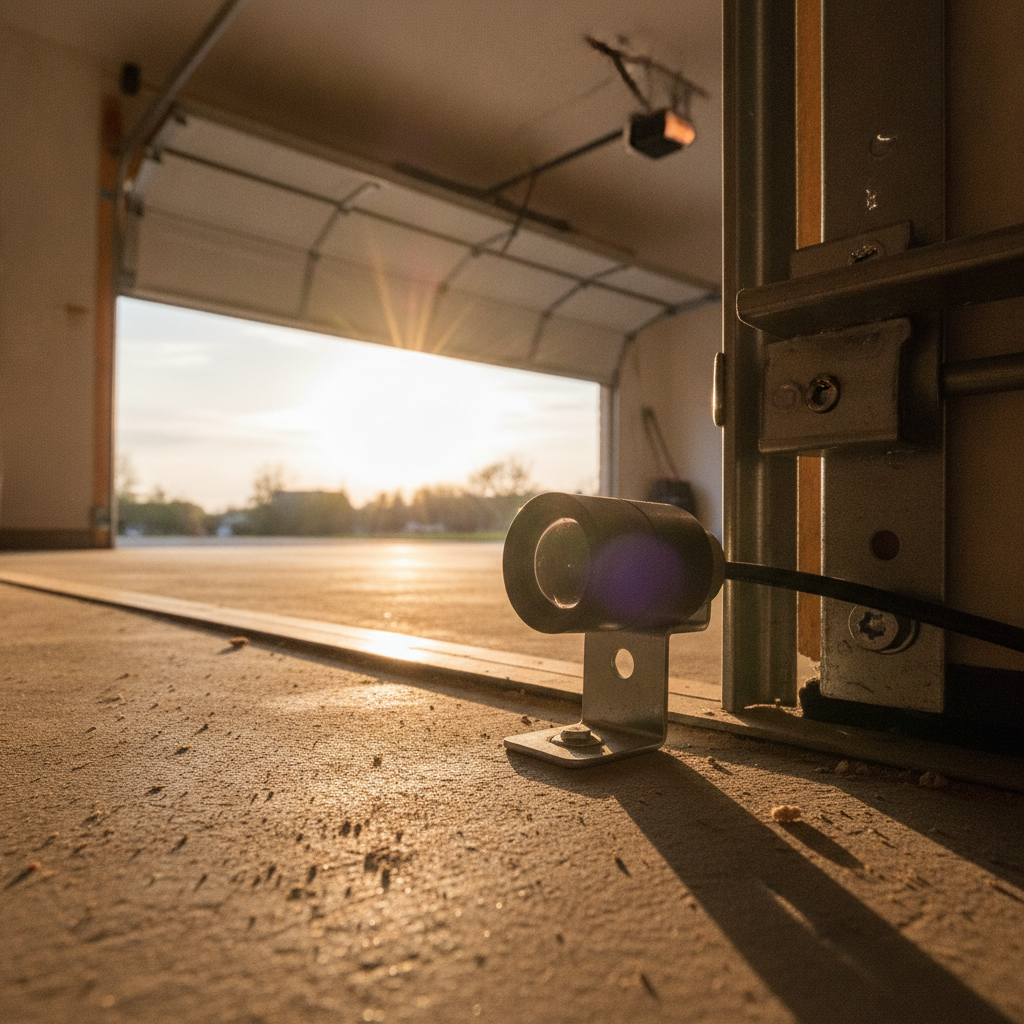
Intermittent garage door sensor issues are often tied to changing conditions. For example, sunlight may only hit the receiving sensor for a short window each day. The door may work at night, fail in the late afternoon, then work again after the sun angle changes.
Moisture can also create inconsistent symptoms. A damp garage floor, wind-driven rain, melting snow, or condensation may affect old wiring connections or worn sensor housings. In Central Indiana, seasonal temperature swings can also make plastic housings, brackets, and wiring expand or contract slightly. That small movement can be enough to expose a borderline alignment or connection problem.
Meanwhile, vibration can make a loose connection harder to identify. The sensor may test fine while the door is still, then fail as the opener motor starts and the tracks shake. This is one reason a technician may inspect the full opener system instead of only replacing the photo eyes.
When the Problem May Not Be the Sensors
Sensor symptoms can overlap with other opener or door problems. For example, a door that starts down and then reverses may have a blocked sensor beam. However, it could also have a travel limit issue, a force setting concern, damaged rollers, binding tracks, or a door balance problem.
If the door reverses before reaching the floor and the opener lights flash, sensors are a likely place to start. If the door hits the floor and then comes back up, the issue may be related to travel settings or mechanical resistance instead. If the door is noisy, jerky, crooked, or hard to move manually, the opener may be reacting to a door problem rather than a sensor problem.
Failing electronics are another possibility. Sensor parts do not last forever, especially when exposed to moisture, impact, or years of temperature changes. This article on whether garage door sensors can wear out covers the warning signs that a sensor may be reaching the end of its service life.
Because several faults can create similar behavior, avoid assuming one part is definitely responsible. A professional inspection can check alignment, wiring continuity, opener settings, brackets, and the condition of the door itself.
Frequently Asked Questions
Why does my garage door close only when I hold the wall button?
Many openers allow constant-pressure closing from the wall control when the sensors are not sending a proper signal. This often points to a sensor alignment, wiring, or photo eye problem, but the system should be inspected before parts are replaced.
Can sunlight really stop a garage door sensor from working?
Yes. Direct sunlight can sometimes overwhelm the receiving sensor, especially if the sun hits the lens at a low angle. This usually causes problems at certain times of day rather than every time the door closes.
Is it safe to bypass garage door sensors temporarily?
No. Safety sensors are there to help prevent the door from closing on people, pets, vehicles, or objects. If the sensors are unreliable, the safer choice is to diagnose and repair the problem instead of bypassing the system.
When to Schedule Garage Door Sensor Service
Schedule service if the sensor lights flicker often, the door reverses without a clear obstruction, the wiring looks damaged, or the problem keeps returning after cleaning the lenses. You should also call for help if the door moves unevenly, shakes, or appears unstable, because the opener may not be the only issue.
Ultimate Garage Doors LLC serves Indianapolis and surrounding Central Indiana with garage door opener and sensor service. If your garage door sensors are acting inconsistently and you want the system checked safely, request professional garage door service and ask about an inspection or estimate.