
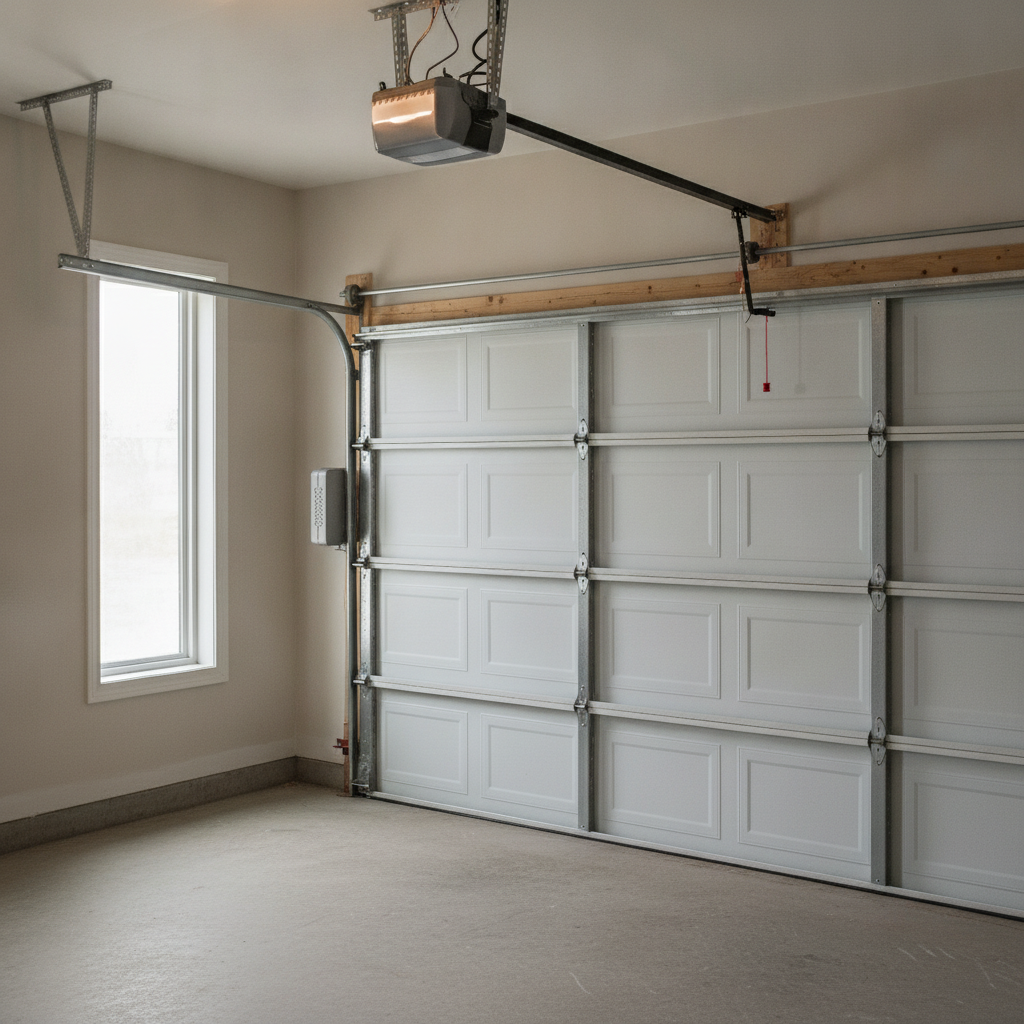
A garage door opener battery backup is not required for every home in Indiana, but it can be a smart upgrade. It lets your opener run for a limited time during a power outage, which helps you get in or out without lifting the door by hand. For many Central Indiana homeowners, that convenience matters because storms, wind, ice, and downed power lines can interrupt electricity with little warning.
Battery backup is especially useful if the garage is your main entrance, if you park inside every day, or if someone in the home has difficulty lifting a heavy garage door. However, it does not fix mechanical problems. If the door has a broken spring, damaged cable, or track issue, the opener should not be used until the door is inspected.
What a Garage Door Opener Battery Backup Does
A battery backup is a rechargeable battery system built into, or connected to, a compatible garage door opener. When normal power is available, the opener keeps the battery charged. When power goes out, the battery supplies temporary power so the opener can raise or lower the door.
The backup is designed for short-term use. It is not meant to operate the door repeatedly for days without power. The number of cycles depends on the opener model, the battery condition, the size of the door, and how well the door is balanced. A properly balanced door is easier for the opener to move. As a result, the battery has less strain during an outage.
Battery backup also helps maintain normal safety functions on many compatible systems. For example, the photo-eye safety sensors still need power to help detect an obstruction in the door opening. Even with backup power, you should watch the door as it moves and keep children, pets, and stored items away from the opening.
Why Battery Backup Matters in Central Indiana
Power outages are not unusual in Indianapolis and the surrounding area. Thunderstorms, high winds, heavy rain, and winter ice can all affect electric service. Meanwhile, many households depend on the garage as their primary entry point. If the opener has no backup and the power is out, the door may need to be operated manually from inside the garage.
That can be inconvenient or difficult in several common situations:
- Your vehicle is trapped inside. This can matter if you need to leave for work, appointments, school pickup, or errands.
- The garage is the main entrance. Some families rarely use the front door, so outage access becomes more than a minor inconvenience.
- The door is large or heavy. Even a properly balanced double garage door can be awkward for some homeowners to lift.
- The garage has no separate service door. If you cannot enter the garage from another door, you may need an exterior emergency release system.
- Mobility is a concern. Battery backup can reduce the need to bend, pull, lift, or handle the manual release during an outage.
A manual release cord is still useful, but it only helps if you can safely reach it. Also, the door must be in good mechanical condition. If a spring has broken or the door is hanging crooked, do not try to force it open. Stop using the system and keep people away from the door until a technician checks it.
Are Garage Door Opener Battery Backups Required?
Regulations depend on where the property is located and what type of opener is being installed. Some jurisdictions have adopted battery backup requirements for new residential garage door openers. California is a well-known example. However, Indiana homeowners are not generally subject to the same statewide battery backup rule for existing residential openers.
That does not mean regulations should be ignored. Local requirements can change, and some properties have different rules because of building type, ownership, accessibility needs, or insurance considerations. Commercial properties, multifamily buildings, and managed rental properties may also have policies that differ from a single-family home.
It is also helpful to separate battery backup from basic opener safety standards. Modern openers use safety features such as photo-eye sensors and auto-reverse functions. Those safety systems are important, but they are not the same thing as backup power. Therefore, a compliant opener may still lack battery backup unless the unit includes that feature or supports an approved battery accessory.
If you are replacing an opener, ask whether the model includes battery backup or can accept one. For older units, compatibility is not guaranteed. In many cases, the battery must match the manufacturer and opener model.
When Battery Backup Is Worth Adding
Battery backup is most valuable when outage access affects safety, convenience, or daily routines. It is also worth considering during an opener replacement because adding the feature at that time is often simpler than trying to adapt an older unit later.
You may want a battery backup if:
- You live in an area with frequent storm-related outages.
- Your garage door is the main way your household enters the home.
- You have an attached garage and want access during bad weather.
- You store a vehicle, tools, or business equipment inside the garage.
- You manage a rental property and want easier access for tenants during outages.
- You have limited strength or mobility and prefer not to lift the door manually.
If you are already comparing opener options, look at the complete system instead of focusing only on backup power. Motor strength, drive type, door weight, and daily use all matter. For a closer look at opener sizing, see this guide to garage door opener horsepower.
In some cases, the right answer is not a battery add-on. An older opener may lack parts support, modern safety features, quiet operation, or smart controls. However, you usually do not need to replace the entire garage door just to upgrade the opener. This overview explains when you can replace an opener without replacing the door.
Maintenance Tips for Battery Backup Openers
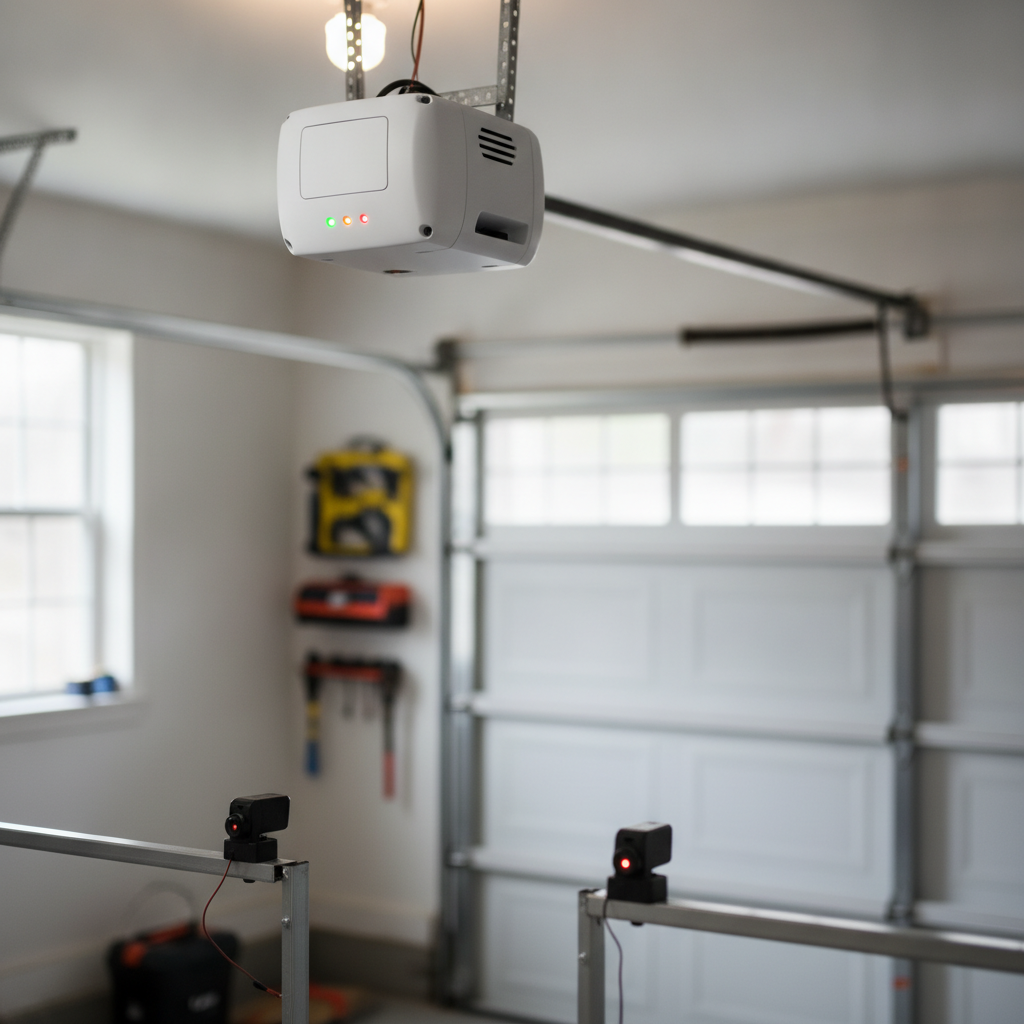
Battery backup systems need occasional attention. The battery ages over time, even if you rarely use it. Heat, cold, charging cycles, and storage conditions can all affect performance. Because Indianapolis weather includes humid summers and cold winters, the battery should be checked as part of routine opener maintenance.
Homeowners can make several safe observations:
- Listen for warning beeps. Many openers beep or show an alert when the backup battery is weak or disconnected.
- Check indicator lights. Some wall controls or opener housings display battery status.
- Review the owner’s manual. The manual should explain battery type, expected life, and replacement guidance.
- Keep safety sensors clear. Wipe dust from the sensor lenses and make sure stored items do not block the beam.
- Watch door movement. Slow, jerky, crooked, or noisy movement can point to a door problem, not just an opener issue.
You may be able to test backup operation by following the manufacturer’s instructions. Usually, that means using the opener on battery power for a limited test. Do not perform repeated tests, and do not continue if the opener strains or the door moves unevenly.
Also, remember that an opener is not designed to overcome a failing door system. If the door feels unusually heavy when disconnected from the opener, that can indicate a spring or balance problem. Springs and cables are high-tension parts. They should be inspected and repaired only by a trained garage door technician.
Frequently Asked Questions
Can I add battery backup to any garage door opener?
No. Some openers accept a manufacturer-approved battery backup, while others do not. Older openers may require replacement if backup power is an important feature.
How long will a garage door opener battery backup last during an outage?
It depends on the opener, battery condition, door weight, and use. Most systems are intended for limited cycles, so conserve battery power during a long outage.
Is the manual release enough if the power goes out?
Sometimes. A manual release can work if you can safely reach it and the door is balanced. However, battery backup is more convenient and may be safer for some households.
Get Help Choosing the Right Opener Setup
Battery backup is a practical feature for many Central Indiana homes, especially where storm outages or limited garage access are concerns. A professional can check opener compatibility, door balance, safety sensors, and overall condition before recommending an add-on battery or a new opener.
If your opener is outdated, your door is difficult to lift, or you want reliable outage access, request a free garage door estimate from Ultimate Garage Doors. A technician can help you choose an opener setup that fits your door, your household, and your access needs.