
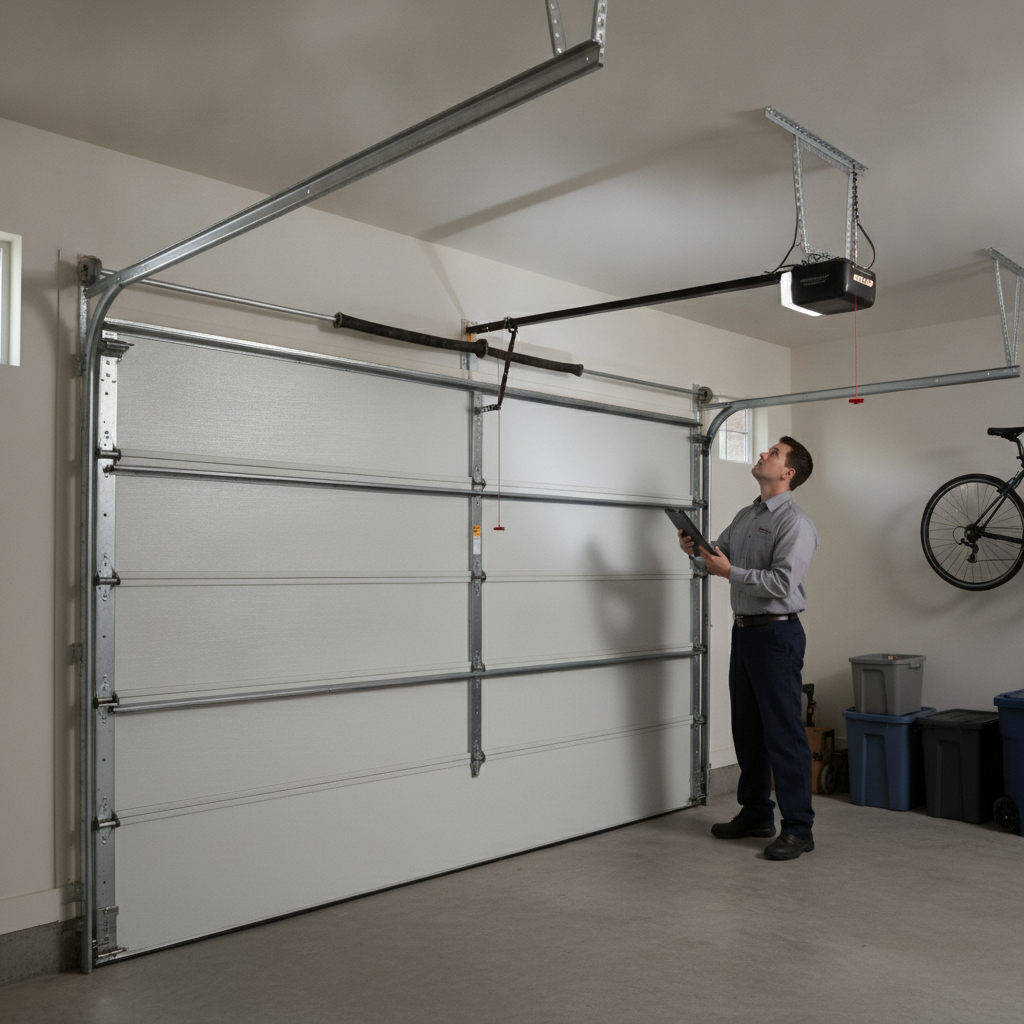
If your garage door opener hums but does not move, the motor may be receiving power but failing to turn the drive system or lift the door. Common causes include a jammed door, a failed starting capacitor, stripped internal gears, opener strain from a broken spring, or a problem with the trolley or rail. Stop trying to run the opener until you can make a few safe checks.
A humming opener is different from one that is completely dead. The sound usually means electricity is reaching at least part of the unit. However, several problems can create the same symptom, so diagnosis matters. Some checks are safe for homeowners, while spring, cable, and internal motor repairs should be handled by a trained garage door technician.
Common Reasons a Garage Door Opener Hums but Does Not Move
A garage door opener is designed to guide a balanced door, not force a heavy or stuck door open. When the opener hums, it may be trying to start but cannot overcome resistance, or an internal part may have failed.
- A jammed or obstructed door: An object, bent track, damaged roller, or manual lock can keep the door from moving.
- A failed capacitor: Many openers use a capacitor to help the motor start. If it fails, the motor may hum but not turn.
- Stripped drive gears: Plastic or nylon gears inside the opener can wear down, especially after years of strain.
- A broken or weak spring: If the spring is not supporting the door correctly, the opener may not be able to lift it.
- A trolley or carriage problem: The opener may hum while the door remains disconnected or stuck on the rail.
- Electrical or control board trouble: Less commonly, a relay or board issue may send power incorrectly to the motor.
Avoid assuming the opener itself is the only problem. Replacing an opener will not solve a broken torsion spring, a cable issue, or a door jammed in the tracks.
Safe Checks You Can Make First
Start with simple observations. Do not force the door open or closed, and do not keep pressing the wall button or remote. Repeated attempts can overheat the motor or cause more damage.
- Look for a manual slide lock engaged on the door.
- Check whether a box, broom, trash can, or other item is blocking the door.
- Look at both tracks for a visible bend, gap, or loose bracket.
- See whether a roller has popped out of the track.
- Check whether the door looks crooked, sagging, or uneven.
- Listen for a hum that stops after a few seconds, which may suggest the motor is struggling to start.
- Confirm the opener is plugged in and the outlet has power.
If the door is crooked, hanging, off track, or unstable, stop there. Keep people and pets away from the opening, avoid standing beneath the door, and do not pull the emergency release. A damaged or unbalanced door can move suddenly.
If the door is fully closed, stable, and shows no visible damage, you may look at the emergency release cord and trolley connection to see whether the opener is engaged. Do not disconnect the opener if you suspect a broken spring, snapped cable, or heavy door.
Jammed Doors, Tracks, and Balance Problems
A jammed garage door can make the opener hum because the motor is trying to move something that will not budge. This can happen after a door is bumped by a vehicle, after hardware loosens, or when weather causes a bottom seal to stick to the floor. Worn rollers or bent tracks can also add enough resistance to stop movement.
Look for uneven gaps along the sides of the door. A door that sits higher on one side may have a cable, roller, or spring issue. You may also see a track that is pinched or pulled away from the wall. These are not good DIY repair candidates because the door’s weight and spring tension can make the situation unsafe.
Door balance is another major factor. Springs carry much of the door’s weight, while the opener moves the balanced door along the tracks. If the springs lose tension or break, the opener may hum, strain, or stop before the door moves. What sounds like an opener problem can actually be a spring or balance problem.
Capacitor, Gear, and Motor Issues Inside the Opener
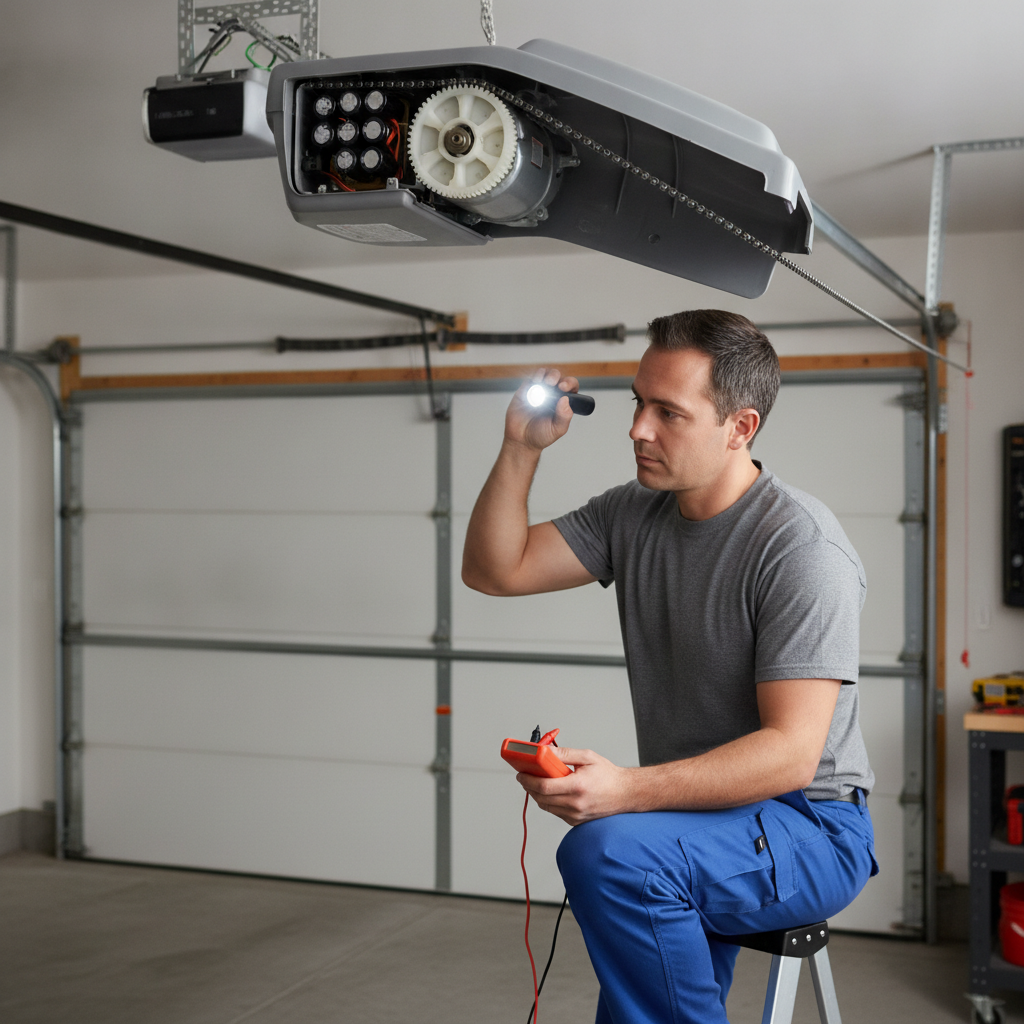
If the door is not visibly jammed, the opener may have an internal failure. A common cause is a bad starting capacitor. The capacitor gives the motor the extra boost it needs to start turning. When it fails, the opener may make a low humming sound, but the chain, belt, or screw drive does not move.
Do not open the motor housing and handle the capacitor unless you are qualified. Some capacitors can hold an electrical charge even after power is disconnected. A garage door technician can test the component and determine whether replacement makes sense.
Stripped gears can create a different pattern. You may hear the motor trying to run, but the drive sprocket does not move the chain or belt properly. Sometimes there is a grinding sound or fine plastic shavings inside the opener cover. Gear failure can come from normal wear, but it can also happen faster if the opener has been lifting a heavy, unbalanced door.
Motor age and opener sizing can also matter. An opener that is undersized for a heavy door may struggle over time, especially if the door has insulation, solid wood sections, or added weight. If you are comparing replacement options, this guide to garage door opener horsepower explains basic sizing factors.
Power, Safety Sensors, and Opener Settings
A humming motor usually means the opener has power, but electrical conditions can still play a role. A loose outlet, damaged cord, failing relay, or control board fault may cause inconsistent operation. If the opener lights dim, flicker, or reset, mention that symptom when you schedule service.
Safety sensors typically stop a door from closing, not from opening. If the door starts down and reverses, sensor alignment may be involved. However, if the opener only hums and there is no movement at all, the issue is more likely mechanical or inside the opener.
Power outages and storm-related interruptions can also expose opener problems. Some modern openers include battery backup, which helps during outages but does not fix a jammed door or broken spring. If you are considering opener features, review whether garage door openers need battery backup for your home and usage.
Limit settings and force settings are sometimes blamed for humming. These settings tell the opener where to stop and how much resistance is acceptable. Turning up force to overcome a stuck or unbalanced door is not a safe fix. It can hide the real problem and stress the door, opener, and hardware.
When Springs or Cables May Be Involved
Garage door springs and cables are high-tension parts. They help carry the weight of the door and keep it moving evenly. If a torsion spring breaks, you may hear a loud bang from the garage. Extension springs can also break or stretch out over time. Cables may fray, loosen, or come off the drum.
- The door feels extremely heavy or will not lift.
- The opener hums but the door does not rise.
- The top section bends or strains when the opener tries to lift.
- The door is crooked or one side rises before the other.
- You see a visible gap in a torsion spring above the door.
- A cable is hanging loose near the side of the door.
If you notice any of these signs, stop operating the door. Keep people and pets away, and do not attempt to repair springs, cables, or bottom brackets yourself. These parts are under significant tension and can cause serious injury if handled incorrectly.
Also, avoid using the opener to “test it one more time.” The opener may pull against a door it cannot lift, which can bend the top section, damage the rail, or strip gears.
Frequently Asked Questions
Can I keep using my garage door opener if it only hums?
No. Stop using it until the cause is identified. Repeated attempts can overheat the motor, damage gears, or worsen a jammed or unbalanced door.
Does a humming opener always mean the motor is bad?
No. A failed capacitor, stripped gear, jammed door, broken spring, or track problem can all make an opener hum without moving the door.
Is it safe to pull the emergency release cord?
Only consider it if the door is fully closed, stable, and shows no signs of spring, cable, or track damage. If the door looks uneven or unstable, do not pull the release.
When to Get Professional Help
Call a garage door professional if the opener hums repeatedly, the door will not move, the door looks crooked, or you suspect a spring, cable, capacitor, or gear problem. These issues often require proper tools, electrical testing, and safe handling of heavy or high-tension parts.
Ultimate Garage Doors LLC helps homeowners and property owners in Indianapolis and nearby Central Indiana communities diagnose opener and door problems. If your opener is humming and the door is not moving safely, request professional garage door service before forcing the system again.