
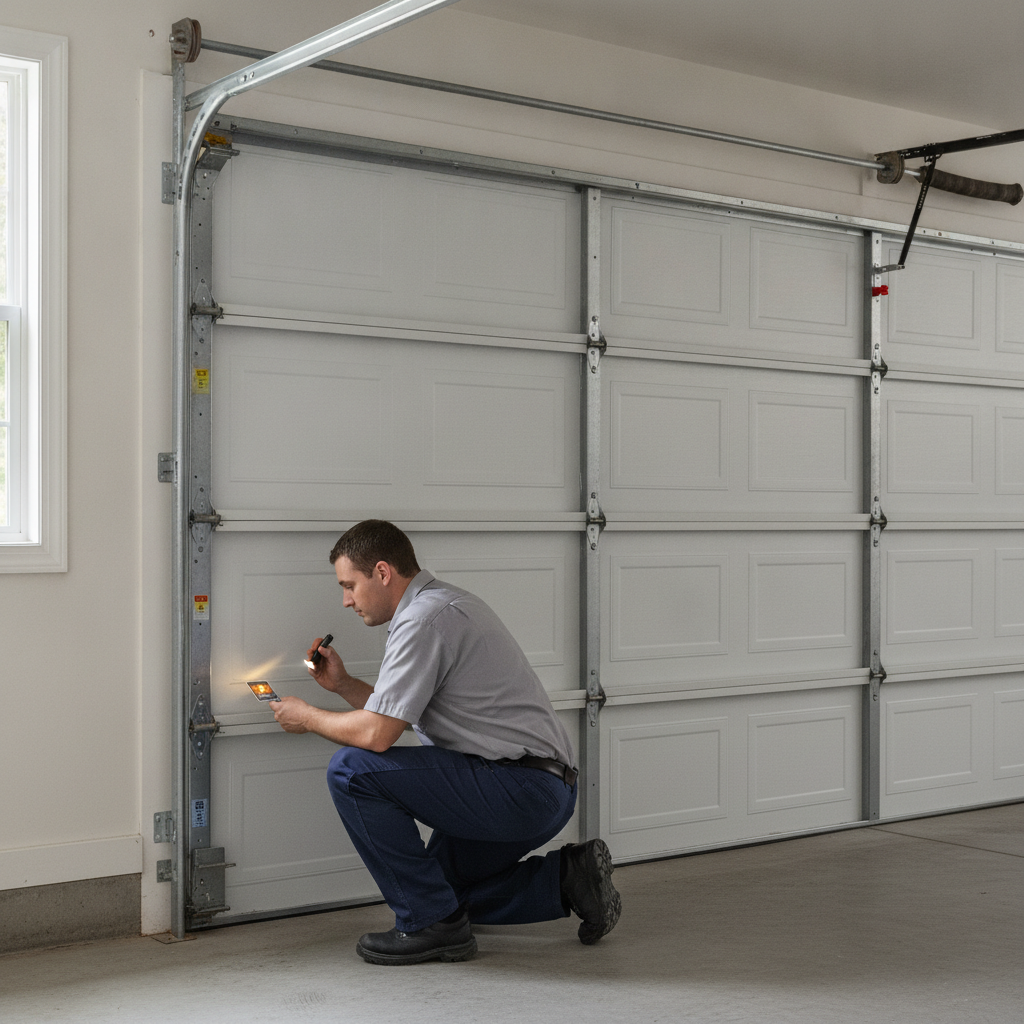
Garage door sensors blinking usually means the opener’s safety system sees a problem. The most common causes are misalignment, something blocking the sensor beam, dirty lenses, loose wiring, moisture, or a model-specific indicator pattern. In many cases, the opener will not close the door from the wall button or remote until the issue is corrected.
The good news is that some sensor issues are simple to observe safely. However, blinking lights can also point to damaged wiring, a failing sensor, or opener control problems. If the door appears unstable, crooked, off track, or damaged, stop using it and keep people and pets away until a professional can inspect it.
What Garage Door Sensors Blinking Usually Means
Garage door photo-eye sensors sit near the bottom of the door tracks, usually a few inches above the floor. One side sends an invisible beam across the opening. The other side receives that beam. If the beam is blocked or the sensors cannot “see” each other, the opener is designed to stop the door from closing.
Most sensor lights are steady when the system is working correctly. A blinking light often means the receiving sensor is not getting a clear signal. Some brands use different colors or flash patterns, so the exact meaning can vary by opener model.
A blinking sensor light may be connected to:
- Sensor alignment problems
- Objects blocking the safety beam
- Dust, cobwebs, or grime on the lens
- Loose, pinched, or damaged low-voltage wires
- Moisture inside the sensor housing
- Sun glare or reflective interference
- A faulty sensor or opener logic board
If your sensor has no light at all, the issue may be power, wiring, or a failed sensor rather than a blocked beam. For that situation, see our guide to a garage door sensor light off for more specific causes.
Alignment Problems Are the Most Common Cause
Sensor alignment is one of the first things to check when garage door sensors are blinking. The two sensor lenses must face each other across the garage door opening. Even a small bump from a broom, trash can, bicycle, or car tire can move a sensor enough to break the beam.
Look at both sensor brackets from a safe standing position. They should be mounted at about the same height and aimed directly across the door opening. If one sensor looks twisted, tilted, loose, or lower than the other, alignment may be the reason for the blinking light.
Do not force the door closed if the opener reverses. The safety system is there to prevent the door from closing on a person, pet, or object. Instead, stop using the opener until you can identify whether the sensors are clear and stable.
In some cases, the sensor bracket itself is bent or the lower door area has been hit. If a vehicle or heavy object recently struck the door, also look for bent tracks, damaged hinges, or a deformed lower panel. A damaged section can affect how the door travels, and in some cases replacing one damaged panel may be part of a larger repair discussion after inspection.
Obstructions, Dirt, and Sunlight Can Interrupt the Beam
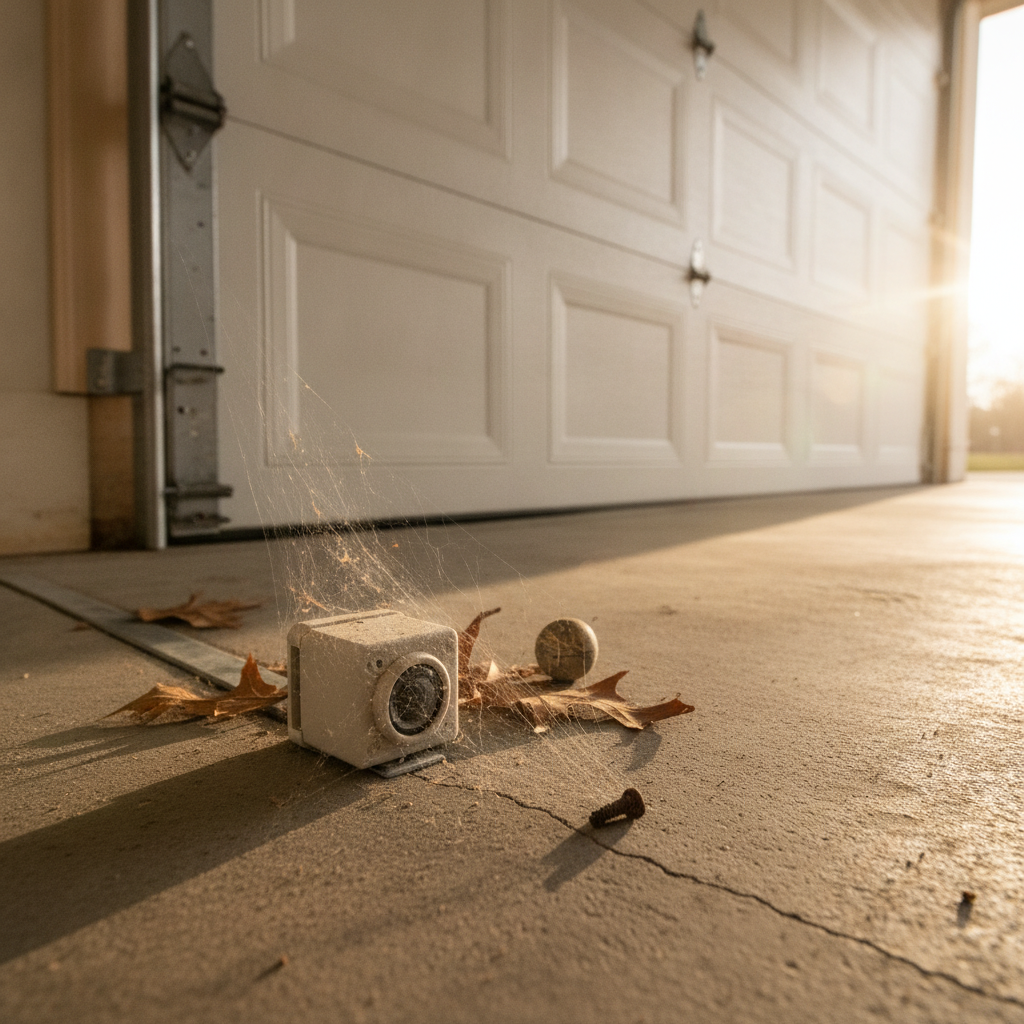
A blocked sensor beam can make the opener behave as if something is in the doorway. The obstruction may be obvious, such as a storage bin or garden tool. However, small items can also cause trouble because the sensor beam is low to the floor.
Check the area between the sensors for:
- Boxes, trash cans, toys, bikes, or yard tools
- Leaves, snow, ice, or debris near the threshold
- Cobwebs or insect nests around the sensor lens
- Dust, mud, or residue on either sensor face
- Items leaning against the track or sensor bracket
You can gently wipe the sensor lenses with a soft, dry cloth. Avoid spraying cleaners into the sensor housing because moisture can create a new problem. Also, make sure nothing hangs in the doorway, including cords, decorations, or extension cables.
Sunlight can sometimes interfere with sensors at certain times of day. This is more common when low-angle sun shines directly into one sensor lens. If blinking happens only in the morning or late afternoon, note the timing. A technician may be able to adjust sensor placement or shielding while keeping the system properly aligned.
Wiring Faults and Moisture May Need Professional Diagnosis
Garage door safety sensors use low-voltage wiring, but that does not mean every wiring problem is a do-it-yourself repair. Loose wire connections, staples through the wire, rodent damage, corrosion, or a pinched wire can interrupt the signal. As a result, the sensor light may blink even when the lenses are clean and aligned.
You can safely look for visible issues without pulling wires apart. For example, check whether a wire is hanging loose, crushed behind a storage item, or visibly frayed. If you see exposed copper, broken insulation, or wiring pulled out of a sensor, stop using the opener and have it inspected.
Moisture is another common cause in Central Indiana garages. Rain, melting snow, high humidity, or water tracked in from vehicles can affect sensor housings and connections. Sensors mounted too low or too close to water-prone areas may blink intermittently after storms or during freeze-thaw weather.
Because several faults can create similar symptoms, guessing can lead to wasted parts. A trained garage door technician can test the sensors, wiring path, and opener terminals to determine whether the problem is alignment, wiring, sensor failure, or the opener control board.
Model-Specific Indicator Lights Can Mean Different Things
Not every opener brand uses the same sensor light codes. Some systems have one green light and one amber or orange light. Others use red or green LEDs. Depending on the model, a blinking light may indicate a blocked beam, a wiring issue, reversed polarity, or communication trouble between the sensor and opener.
If you still have your opener manual, compare the blink pattern with the manufacturer’s troubleshooting chart. Count the flashes carefully, and note whether one sensor is blinking or both are blinking. This information can help a technician narrow down the issue faster.
However, avoid bypassing or disabling garage door sensors. Safety sensors are required protective devices on modern residential openers. If they are not working correctly, the door may not reverse when something is in the closing path.
Also remember that blinking lights do not always mean the sensors are the only problem. A door that binds in the tracks, has broken rollers, or is out of balance may reverse or refuse to close for other reasons. Therefore, the full door system may need to be checked if sensor troubleshooting does not solve the issue.
Safe Checks Before You Call for Service
Before scheduling service, there are a few safe observations a homeowner can make. These checks do not involve springs, cables, bottom brackets, or other high-tension parts. Never work under a door that looks unstable, and never force a door that has come off track.
- Look for anything blocking the doorway. Remove visible objects between the two sensors.
- Clean the lenses gently. Use a soft, dry cloth to remove dust or cobwebs.
- Check whether the sensors face each other. Look for obvious tilting, twisting, or loose brackets.
- Observe the wiring. Note visible cuts, pulled wires, or moisture, but do not disassemble the opener.
- Watch when the blinking happens. Time of day and weather can reveal sunlight or moisture patterns.
If the door closes only when you hold the wall button down, that often points to a sensor-related issue. Many openers allow this as a temporary override from the wall control, but it should not be treated as a repair. The safety system still needs proper diagnosis.
For businesses, rental homes, and busy households, sensor problems can also create access and security concerns. If the door cannot close reliably, do not leave the opening unsecured longer than necessary. Have the system inspected so the root cause can be corrected.
Frequently Asked Questions
Can I realign garage door sensors myself?
You can look for obvious misalignment and gently move a loose sensor bracket only if it is safe and does not require tools near moving parts. If the light keeps blinking, schedule professional service.
Why does my garage door close a little, then go back up?
The opener may think the sensor beam is blocked. However, track resistance, opener settings, rollers, or door balance can also cause reversing, so a full inspection may be needed.
Do blinking sensors mean the sensors are bad?
Not always. Blinking can come from alignment, dirt, obstruction, wiring, moisture, sunlight, or a failed sensor. Testing is needed before deciding which part needs repair or replacement.
When to Get Professional Help
Call a garage door professional if the sensor lights keep blinking after safe basic checks, if wiring appears damaged, or if the door reverses repeatedly. You should also stop using the system if the door is crooked, hanging, off track, or physically damaged. Keep people and pets away from the door until it is inspected.
Ultimate Garage Doors LLC helps homeowners, landlords, property managers, and local businesses in Indianapolis and Central Indiana diagnose sensor, opener, and door safety issues. If your garage door sensors are blinking and the door will not close reliably, request professional garage door service for the next appropriate repair step.