
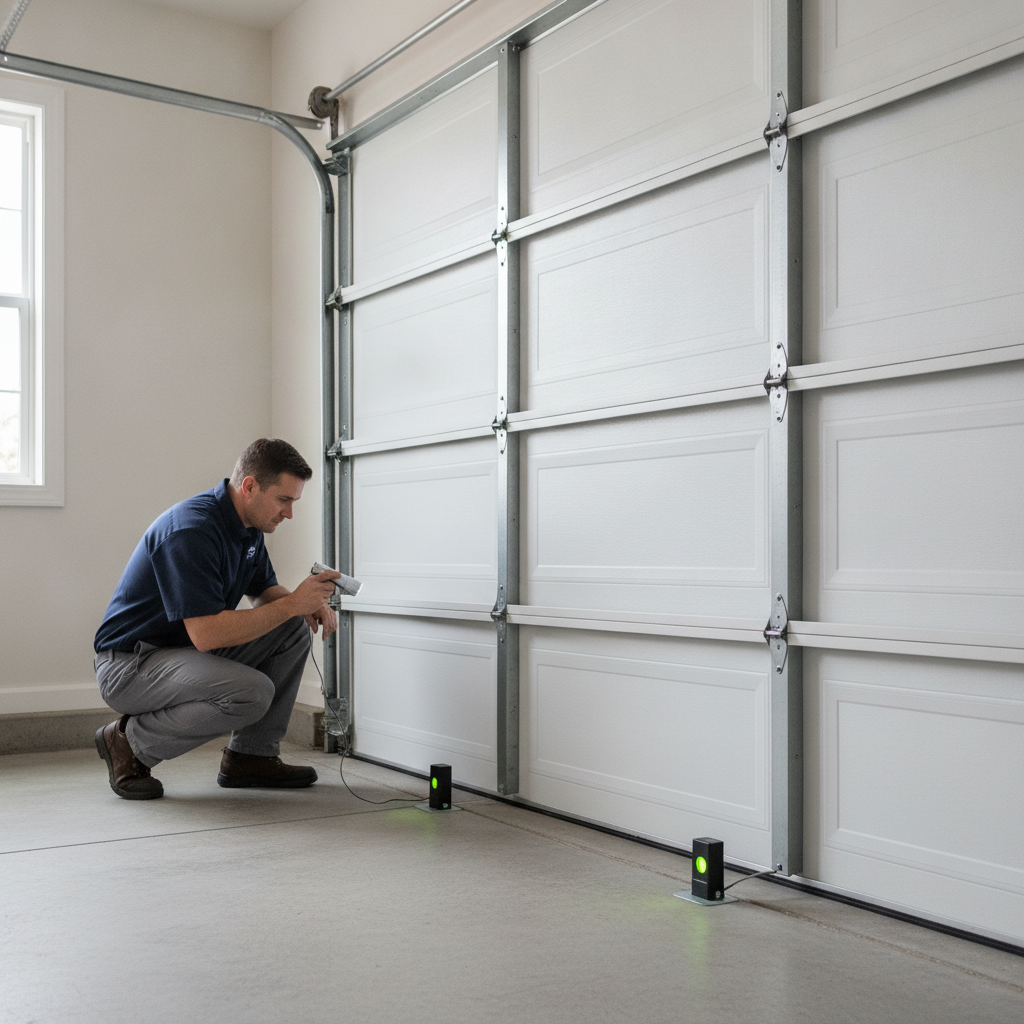
If your garage door sensor light is off, the opener’s safety system may not be functioning correctly. Typical reasons include a loss of power, wiring damage, misalignment, dirty lenses, sunlight glare, or a failed sensor. The opener may refuse to close or may reverse if the sensor beam is interrupted or the receiving eye is not powered.
What a Dark Sensor Light Usually Means
Most residential openers use a pair of photo-eyes mounted near the floor on each side of the door. One sends an invisible beam and the other receives it. Depending on brand and model, one or both lights indicate power and beam status. A completely dark sensor often indicates no power to that sensor, a wiring or connection issue, or internal failure.
Common Causes
Power problems
If the opener motor unit or its outlet has no power, a sensor will be dark. Check the outlet, breaker, and any GFCI device. If the opener light and wall control work but one sensor is dark, the issue is likely limited to that sensor or its wiring.
Loose, pinched, or damaged wiring
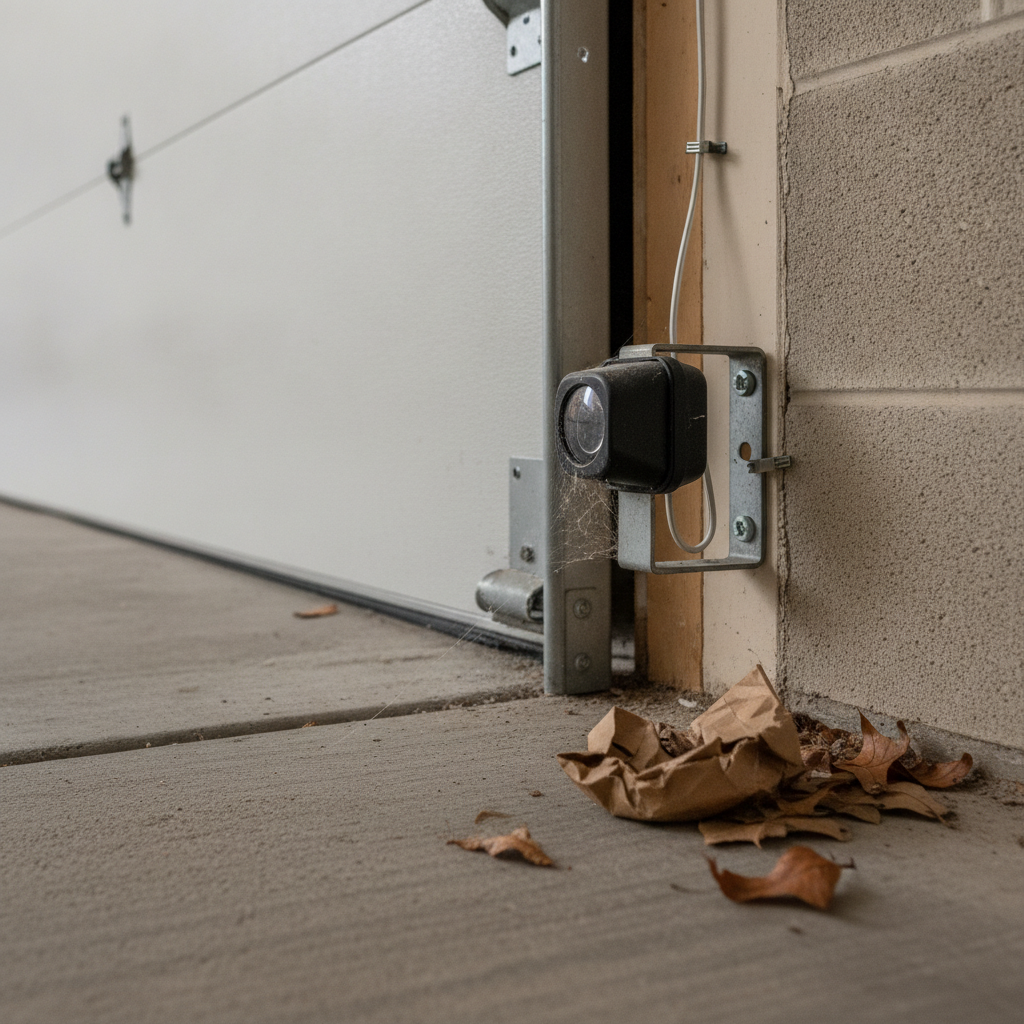
Low-voltage wires run from each sensor to the opener. Staples, storage items, rodents, or repeated vibration can damage or disconnect wires. Visible fraying, chews, or disconnected terminals suggest a wiring fault. Do not open the opener housing or pull on wires unless qualified; call a technician to test and repair wiring safely.
Alignment
Sensors must face each other. A slight bump can tilt a bracket enough to break the beam or prevent the receiver from powering up correctly. From a safe position, look for level mounting and loose or bent brackets. Avoid forcing damaged brackets back into place.
Dirt, cobwebs, and debris
Dust, salt, cobwebs, and leaves can block or scatter the beam. Gently clean both lenses with a soft, dry cloth and clear nearby clutter that may obstruct the path.
Sunlight and glare
Bright sun at certain times can overwhelm some receiving sensors. If the problem is time-of-day dependent, glare may be involved. Do not tape or permanently cover sensors; a technician can add a shield or reposition sensors safely.
Physical damage or failure
Sensors can fail from impact, moisture, corrosion, or age. A cracked housing, missing lens, or severe rust often requires replacement. If a vehicle or object struck the door, related damage to the track or bracket may be present. If damage seems limited to one panel, consider whether one damaged garage door panel can be replaced rather than replacing the whole door.
Safe Checks Homeowners Can Make
- Confirm power. Verify the opener is plugged in and the outlet has power.
- Observe both sensor lights. Note if one is dark, both are dark, or one blinks.
- Clear the path. Remove boxes, tools, or debris near the bottom of the opening.
- Clean lenses. Wipe both sensor eyes gently with a soft, dry cloth.
- Inspect mounting. Look for bent or loose brackets without forcing them.
- Scan visible wiring. Look for frayed, pinched, or chewed wires.
- Watch timing. If it only happens during bright sun, note when it occurs.
Never bypass safety sensors to force the door closed. Bypassing creates a serious hazard. Also avoid standing under the door during tests, especially if it reverses or moves unevenly.
When the Sensor Is Not the Only Problem
A dark sensor light can be a symptom of broader issues. A bent track, off-track door, warped panels, or a damaged bottom section near the sensor bracket may affect both sensor alignment and door operation. Signs to watch for include:
- Crooked or off-track door
- The door closes partway and then binds
- Unusual noises or visible strain from the opener
- Warped or buckled panels
If panels are buckling or showing stress, it can change how brackets align and how the door travels—see guidance on why garage door panels start buckling if you notice panel distortion. If the door is off track or structurally damaged, stop operating it and keep people and pets away.
How Professionals Diagnose and Repair
A technician will observe opener behavior, check sensor alignment and mounting, test voltage and continuity at the sensors, and inspect wiring and control terminals. This prevents unnecessary part replacement. If a sensor is damaged, replacement is common; if wiring or the opener logic board is faulty, the tech will recommend the appropriate repair.
Frequently Asked Questions
Can I close my garage door if the sensor light is off?
You should not bypass the safety sensors. Check for obstructions and clean lenses first. If the light stays off, have a professional inspect the system before using the door.
Why is one sensor light on and the other off?
One sensor may still have power while the other has a wiring, connection, or internal fault. Different brands use different light patterns, so diagnosis should consider the specific opener model.
Do garage door sensors wear out?
Yes. Sensors can fail over time from moisture, corrosion, impact, pests, or wiring wear. Clean and alignment checks should be performed before assuming replacement is needed.
Get Help With Garage Door Sensor Problems
If the sensor light remains off after safe checks, or if the door reverses, closes unevenly, or shows damage, professional service is the safest option. To have the system inspected and receive repair recommendations, request professional garage door service.