
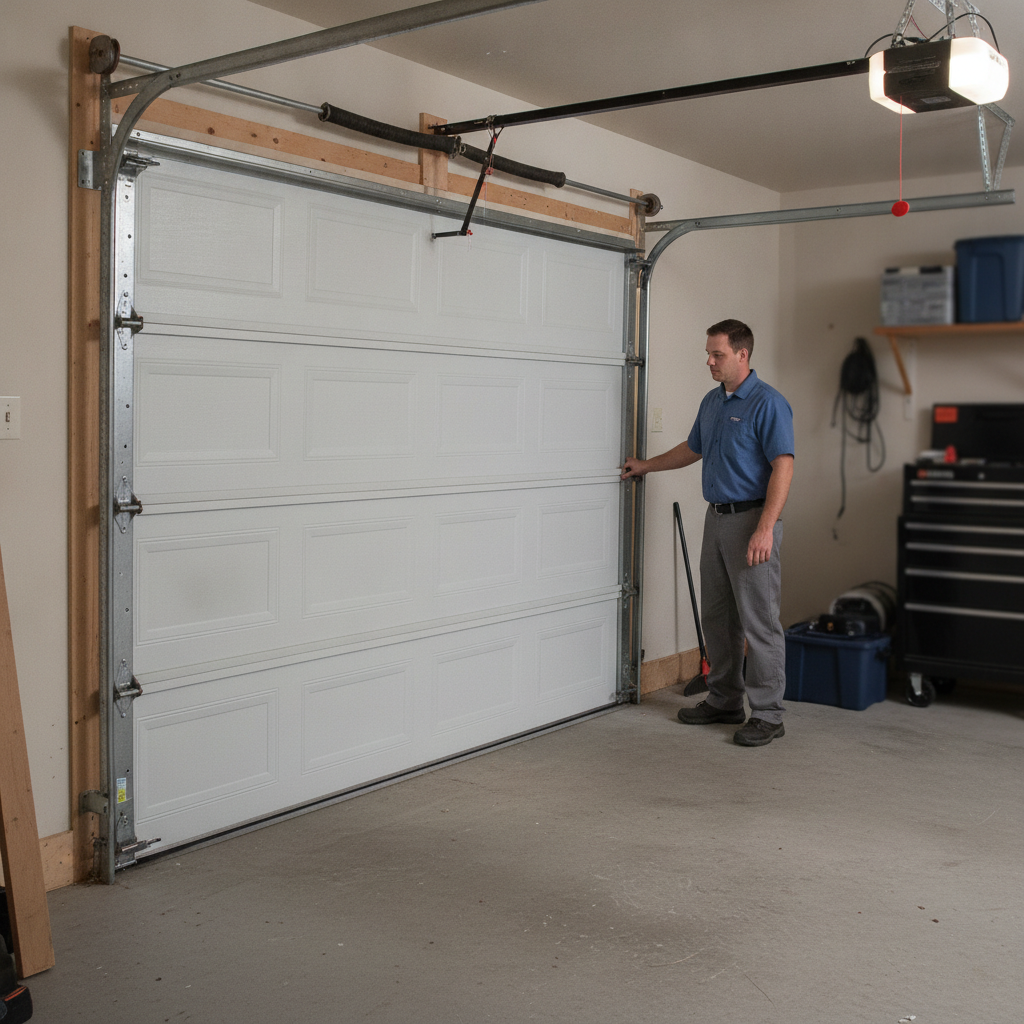
You can check garage door balance with a careful visual inspection and a simple manual lift test, but only if the door appears undamaged and stable. A balanced garage door should move smoothly and stay near a partially open position without dropping or shooting upward. If the door looks crooked, feels unusually heavy, has loose cables, or shows a broken spring, stop using it and call a trained garage door technician.
Garage door balance matters because the springs carry most of the door’s weight. The opener guides the door, but it is not designed to lift a poorly balanced door over and over. When the balance is off, the opener, rollers, hinges, cables, and tracks can wear faster. In some cases, the door may become unsafe to operate.
Why Garage Door Balance Matters
A typical residential garage door can be much heavier than it looks. Torsion springs or extension springs counterbalance that weight so the door can open and close in a controlled way. When the springs are adjusted correctly and the rest of the hardware is in good condition, the door should not feel like dead weight.
If the system loses balance, the opener may strain. You may hear grinding, squeaking, or popping. The door may also reverse unexpectedly, move unevenly, or stop before it reaches the floor. However, several problems can create similar symptoms, so balance should be evaluated along with the condition of the tracks, rollers, cables, hinges, and opener.
Safe Visual Checks Before You Touch the Door
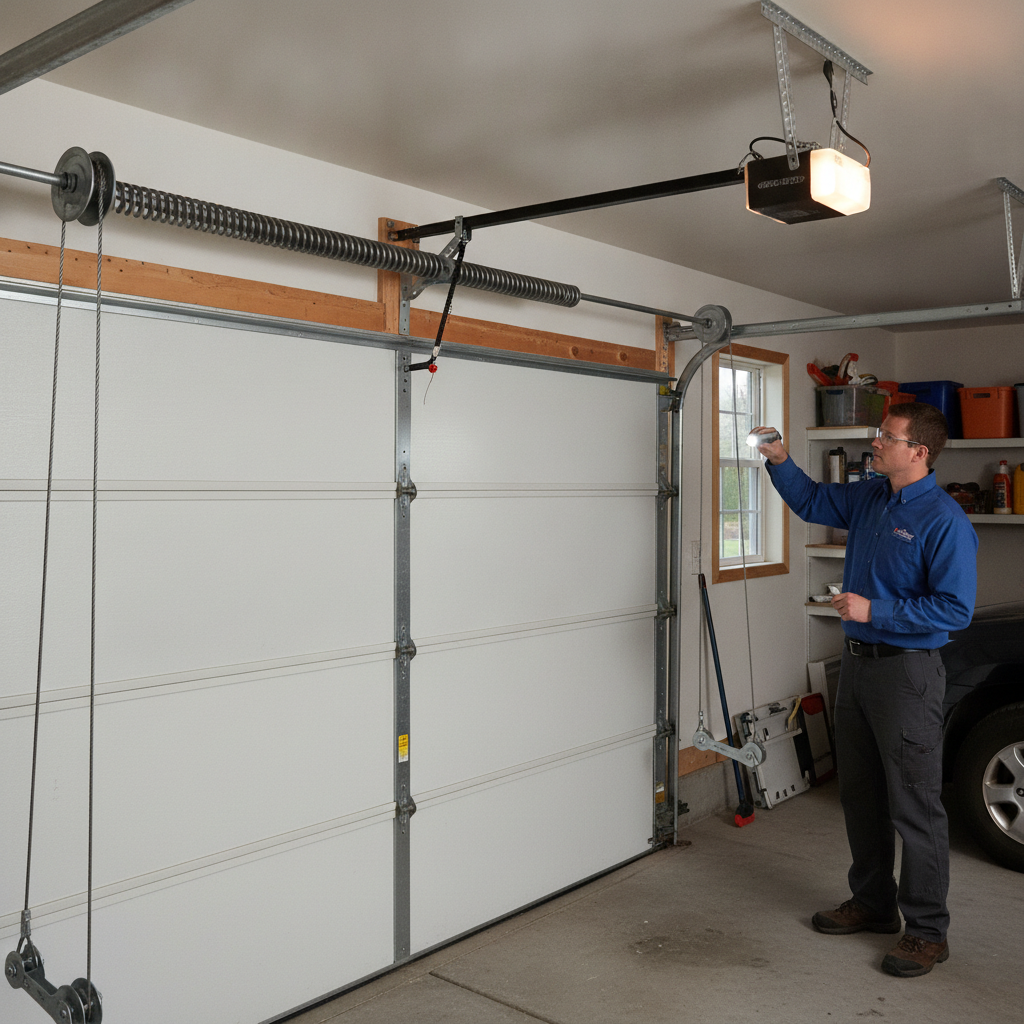
Before you perform any manual test, look over the door while it is fully closed. Stay out from under the door and keep children and pets away from the area. Good lighting helps you see problems without pulling on parts or placing your hands near pinch points.
Check for these warning signs:
- A visible gap in a torsion spring above the door
- Loose, frayed, or hanging garage door cables
- A door that sits crooked in the opening
- Rollers that have come out of the tracks
- Bent tracks, cracked hinges, or damaged panels
- A door that recently slammed shut or fell suddenly
- Unusual grinding, scraping, or popping during operation
If you notice any of these issues, do not run a balance test. The safest next step is to leave the door closed, avoid using the opener, and contact a qualified technician. Springs and cables are high-tension components, and they can cause serious injury if handled incorrectly.
Also look for loose hardware, but do not randomly tighten everything as hard as possible. Garage doors need secure fasteners, yet overtightening can strip holes or damage hinges. For a closer look at this topic, see why homeowners should tighten garage door hardware carefully before making minor maintenance decisions.
How to Check Garage Door Balance Safely
Only continue with a manual balance check if the door appears stable, the cables are properly seated, the springs look intact, and the door is not crooked. If anything feels questionable, skip the test. A professional inspection is safer than guessing.
Use this cautious homeowner test:
- Start with the garage door fully closed. Never disconnect the opener while the door is open or partly open. If the springs are weak or broken, the door could drop.
- Disconnect the opener using the emergency release cord. Pull the release only when the door is closed and the area is clear. This allows the door to move by hand instead of by motor.
- Lift the door slowly by the handle. Keep your hands away from hinges, rollers, tracks, and section joints. Do not yank or force the door.
- Raise the door to about waist height. A properly balanced door should feel manageable and should stay near that position, or move only slightly.
- Guide the door back down carefully. Keep control of the door until it is fully closed. Do not let it drop.
During the test, pay attention to how the door feels. If it is difficult to lift, drops when you stop supporting it, rises on its own, or sticks badly in one area, the balance may be off. Reconnect the opener only after the door is fully closed and stable.
Do not repeat the test several times if the first attempt feels wrong. Continuing to operate an unbalanced door can make damage worse. A simple adjustment can turn into a larger repair if the door strains the opener or shifts in the tracks.
What the Balance Test Results May Mean
A door that stays near the halfway point is usually a good sign. It suggests the spring system is carrying the door’s weight as intended. However, balance is only one part of overall door health. A balanced door can still have worn rollers, loose hinges, failing weather seals, or opener problems.
If the door drops from the halfway position, the springs may be weak, worn, or improperly adjusted. If the door rises on its own, the springs may be too strong or over-adjusted. If the door feels jerky or binds, the issue could involve the tracks, rollers, hinges, cable drums, or door sections.
Because several faults can look similar, a technician should confirm the cause before any repair is attempted. Never adjust springs, remove cables, loosen bottom brackets, or attempt to reset a crooked door yourself. These parts are under significant tension and require proper tools, training, and safety procedures.
Balance Problems Versus Normal Maintenance Issues
Not every noisy or rough-moving garage door is out of balance. Sometimes the door needs basic maintenance, such as cleaning the tracks, checking visible hardware, or lubricating approved moving parts. However, maintenance should never be used to hide or ignore a serious balance issue.
Lubrication can reduce friction at hinges, rollers, springs, and bearings when the correct product is used in the correct place. It will not fix weak springs, damaged cables, or a door that will not stay open. If you are unsure what to use, this guide explains the right lubricant for garage doors and where it is typically applied.
Homeowners can safely make basic observations and keep the area around the tracks clear. They can also listen for changes in sound and watch whether the door moves smoothly. However, they should avoid modifying spring tension, forcing a stuck door, or removing parts connected to the counterbalance system.
A good rule is simple: if the door moves smoothly, stays level, and passes the balance test, normal maintenance may be enough. If the door is heavy, uneven, unstable, or damaged, stop and schedule professional service.
When to Stop Using the Door
Some symptoms call for immediate caution. Stop operating the garage door if it appears unstable or if any high-tension part looks damaged. Keep people and pets away from the opening until the system has been inspected.
Stop using the door if you notice:
- The door hangs at an angle or one side moves faster than the other
- A cable is loose, frayed, or off the drum
- A spring has a visible break or gap
- The door slams shut or will not stay open
- The opener strains, hums, or stops while lifting the door
- The door comes off track or rollers are displaced
- A vehicle or object has hit the door
Do not pull on the door to make it line up. Do not stand under it to inspect the bottom section. Also, do not keep pressing the opener button to force movement. If the door is jammed or crooked, repeated opener use can bend parts, damage panels, or pull the door farther out of alignment.
Frequently Asked Questions
How often should I check garage door balance?
Many homeowners check balance during routine seasonal maintenance, especially before winter and spring. You should also check it if the door starts feeling heavy, moving unevenly, or straining the opener.
Can an unbalanced garage door damage the opener?
Yes. An opener is designed to guide a balanced door, not lift the full weight of a heavy door. Poor balance can strain the motor, gears, rail, and other opener components.
Is it safe to adjust garage door springs myself?
No. Garage door springs and related hardware are under high tension. Homeowners should not wind, unwind, remove, or adjust springs because the work requires proper tools and training.
Get Professional Help for Balance Problems
A basic balance check can help you notice early warning signs, but it is not a substitute for professional diagnosis. If your door feels heavy, drops during the test, rises on its own, looks crooked, or has damaged cables or springs, stop using it and keep the area clear.
Ultimate Garage Doors LLC helps homeowners and property owners in Indianapolis and surrounding Central Indiana with garage door repair, maintenance, spring replacement, opener issues, and damaged doors. If your balance test raises concerns, request a professional garage door inspection so a trained technician can evaluate the door safely and recommend the right next step.