
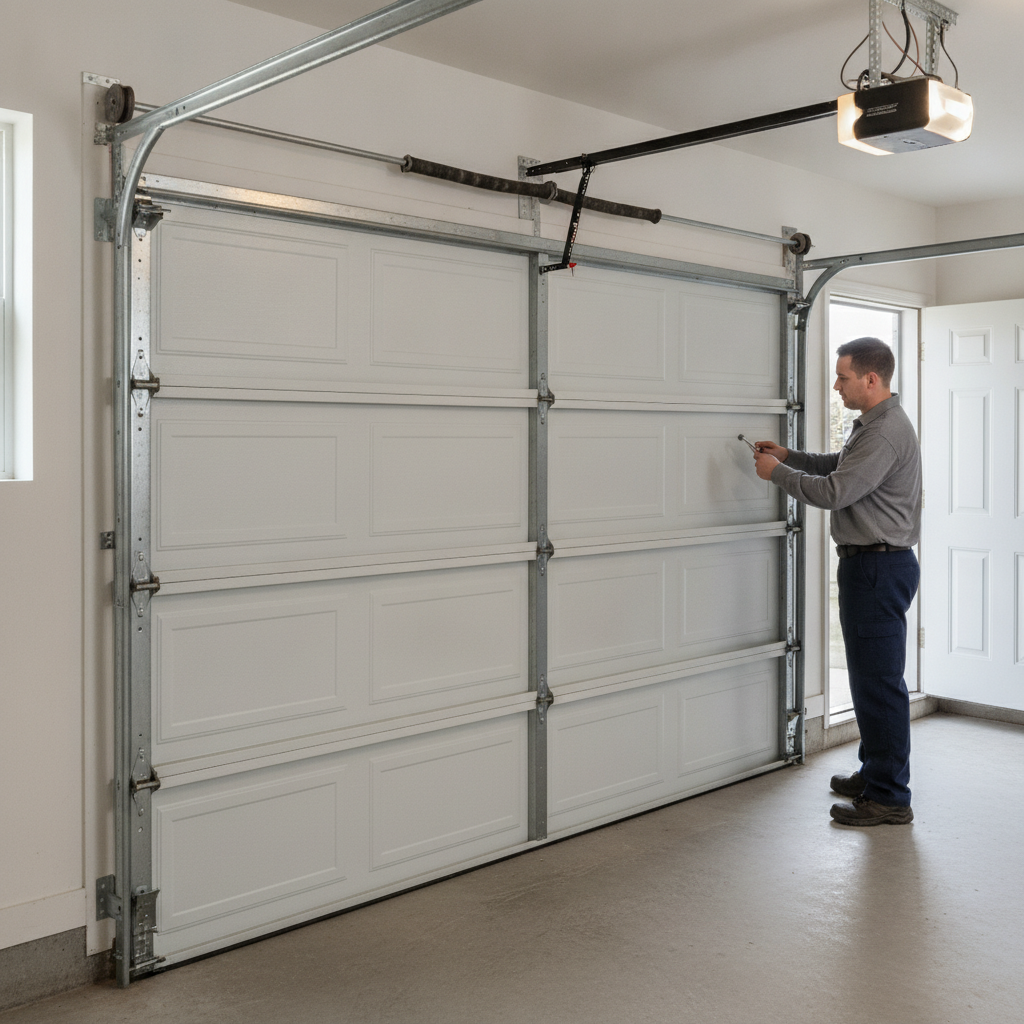
It is smart to tighten garage door hardware during routine maintenance, but it should be done carefully. Garage doors vibrate every time they open and close, so nuts, bolts, hinges, and brackets can loosen over time. However, over-tightening can strip threads, crack parts, bend brackets, or create alignment problems. The safest approach is to check accessible hardware, make small corrections where appropriate, and avoid high-tension parts.
Why Garage Door Hardware Loosens Over Time
A garage door is a moving system, not a fixed wall. Each cycle creates vibration through the panels, hinges, rollers, tracks, opener arm, and mounting brackets. As a result, some fasteners can gradually work loose even when the door was installed correctly.
Temperature changes also play a role in Central Indiana. Metal components expand and contract as garage temperatures shift between hot summers and cold winters. Meanwhile, wooden framing around track brackets can slightly change with humidity. These small movements can allow screws or lag bolts to relax over time.
Loose hardware may start as a minor rattle. Because the door is heavy, that movement can become more noticeable if ignored. For example, a loose hinge can let a panel flex more than it should, which may stress nearby rollers or fasteners.
How to Tighten Garage Door Hardware Without Causing Damage
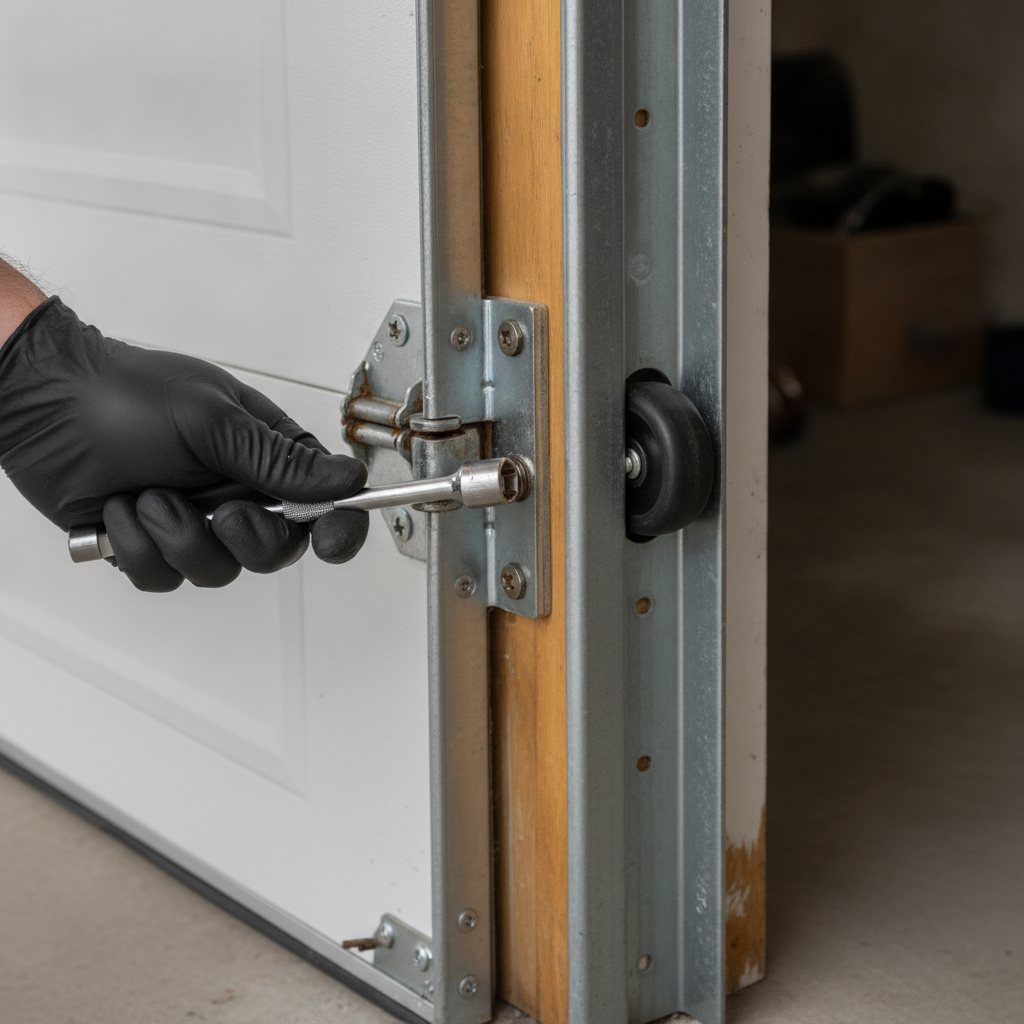
The goal is to snug loose fasteners, not force every nut or bolt as tight as possible. A fastener should hold the part securely without crushing, bending, or distorting the material around it. If a bolt turns freely, the threads may already be damaged, and simply tightening harder will not solve the problem.
Homeowners can usually make safe visual checks on accessible, low-risk hardware while the door is fully closed and stable. Look for obvious movement, missing fasteners, or parts that appear shifted from their normal position. If you use a wrench or socket, use controlled pressure and stop when the fastener feels seated.
Safe observations may include:
- Checking whether hinge screws are visibly loose
- Looking for nuts that have backed away from bolts
- Noting rattling hinges or brackets during door movement
- Inspecting opener mounting hardware for obvious looseness
- Watching whether tracks appear to shake excessively as the door moves
Do not keep turning a fastener if it will not tighten. That can mean the hole is stripped, the bolt is damaged, or the part no longer sits correctly. In that situation, a technician may need to evaluate the part, the mounting surface, and the door alignment.
Risks of Over-Tightening Garage Door Fasteners
Over-tightening is one of the most common mistakes during basic garage door maintenance. It can feel like tighter is safer, but garage door parts need to move in controlled ways. If a moving component is clamped too tightly, it may bind or wear out faster.
Possible over-tightening problems include:
- Stripped threads: The nut or bolt may no longer hold securely.
- Cracked hinges: Some hinges can fracture if stressed unevenly.
- Bent brackets: Track or support brackets can distort under too much force.
- Panel damage: Screws driven too hard can crush or split door material.
- Roller binding: Hinges that are too tight may affect roller movement.
- Misalignment: Pulling one bracket too far can shift the track slightly.
A garage door depends on balance and alignment. Therefore, a small adjustment in the wrong place can create symptoms somewhere else. A door that suddenly rubs, jerks, pops, or opens unevenly after hardware has been tightened should be inspected before it is used repeatedly.
Hardware You Should Not Adjust Yourself
Some garage door parts are under high tension or help support the weight of the door. These components should be left to trained garage door technicians. They can cause injury or serious door damage if loosened, removed, or adjusted incorrectly.
Avoid adjusting or removing:
- Garage door springs, including torsion springs and extension springs
- Garage door cables or cable drums
- Bottom brackets attached to the lower door section
- Spring anchor brackets or bearing plates
- Hardware on a crooked, hanging, or off-track door
- Track brackets if the door is unstable or appears misaligned
If the door is off track, hanging at an angle, or supported by damaged hardware, stop using it. Keep people and pets away, avoid standing beneath the door, and do not try to force it open or closed. Several problems can create similar symptoms, so a professional inspection is the safer way to identify the cause.
This is especially important if you see a loose part near a spring or cable. Those parts are connected to the lifting system. Tightening the wrong fastener, or loosening one by mistake, can change how the door is supported.
How Tight Hardware Fits Into Regular Maintenance
Tightening hardware is only one part of keeping a garage door working properly. A good maintenance routine also includes listening for new noises, watching door movement, checking weather seals, and keeping appropriate moving parts lubricated. If you are unsure which products are safe, this guide to garage door lubricant explains what to use and what to avoid.
During a basic homeowner check, pay attention to changes rather than trying to rebuild the system. A door that has always been quiet but now rattles may have a loose hinge, worn roller, or opener vibration. A door that shakes near the floor may have a track, roller, or balance issue. The symptom is useful, but it does not always identify the exact failed part.
Preventive service can catch loose hardware before it becomes a larger repair. A technician can inspect fasteners, rollers, hinges, tracks, cables, springs, safety sensors, and opener components as a complete system. For a broader look at why routine care matters, see how preventive garage door maintenance helps extend door life.
Signs Loose Hardware Needs Professional Attention
Some loose hardware is simple to correct. However, certain warning signs suggest the door should be inspected before more damage occurs. This is because loose fasteners may be a symptom of wear, impact damage, poor alignment, or a failing part.
Consider professional service if you notice:
- The door pops, bangs, or jerks during travel
- A hinge is cracked, bent, or pulling away from the door
- The track moves noticeably when the door runs
- Rollers look tilted, worn, or ready to leave the track
- The opener rail or motor mount shakes more than usual
- The door looks crooked, uneven, or partly off track
- A bolt spins without tightening
- Fasteners keep loosening again soon after being snugged
Repeatedly tightening the same hardware usually means another issue is creating stress. For example, a worn roller can add vibration to a hinge. Likewise, a track alignment issue can place uneven pressure on brackets. Fixing the underlying cause is better than tightening the same fastener every few weeks.
Frequently Asked Questions
How often should garage door hardware be checked?
Many homeowners check visible hardware a few times a year as part of routine maintenance. You should also check sooner if the door becomes louder, shakes more than usual, or begins moving unevenly.
Can I tighten the bolts on my garage door tracks?
You may be able to snug accessible track fasteners if the door is stable and the track has not shifted. However, do not adjust track position or work on brackets near an unstable, crooked, or off-track door.
Why do my garage door screws keep coming loose?
Repeatedly loose screws may be caused by vibration, stripped holes, worn rollers, panel damage, opener force, or alignment problems. A technician can inspect the system and find what is causing the fasteners to loosen.
When Careful Tightening Is Not Enough
If your garage door still rattles, binds, hangs unevenly, or has hardware that will not stay tight, it is time to have the system checked. Continuing to operate the door can increase wear on hinges, rollers, tracks, and opener components. More importantly, unstable doors and high-tension parts should not be handled as do-it-yourself repairs.
Ultimate Garage Doors LLC serves Indianapolis and surrounding Central Indiana with repair, maintenance, opener service, and garage door replacement. If you are unsure whether loose hardware is minor or a sign of a larger problem, request a free garage door estimate and have a professional take a closer look.