
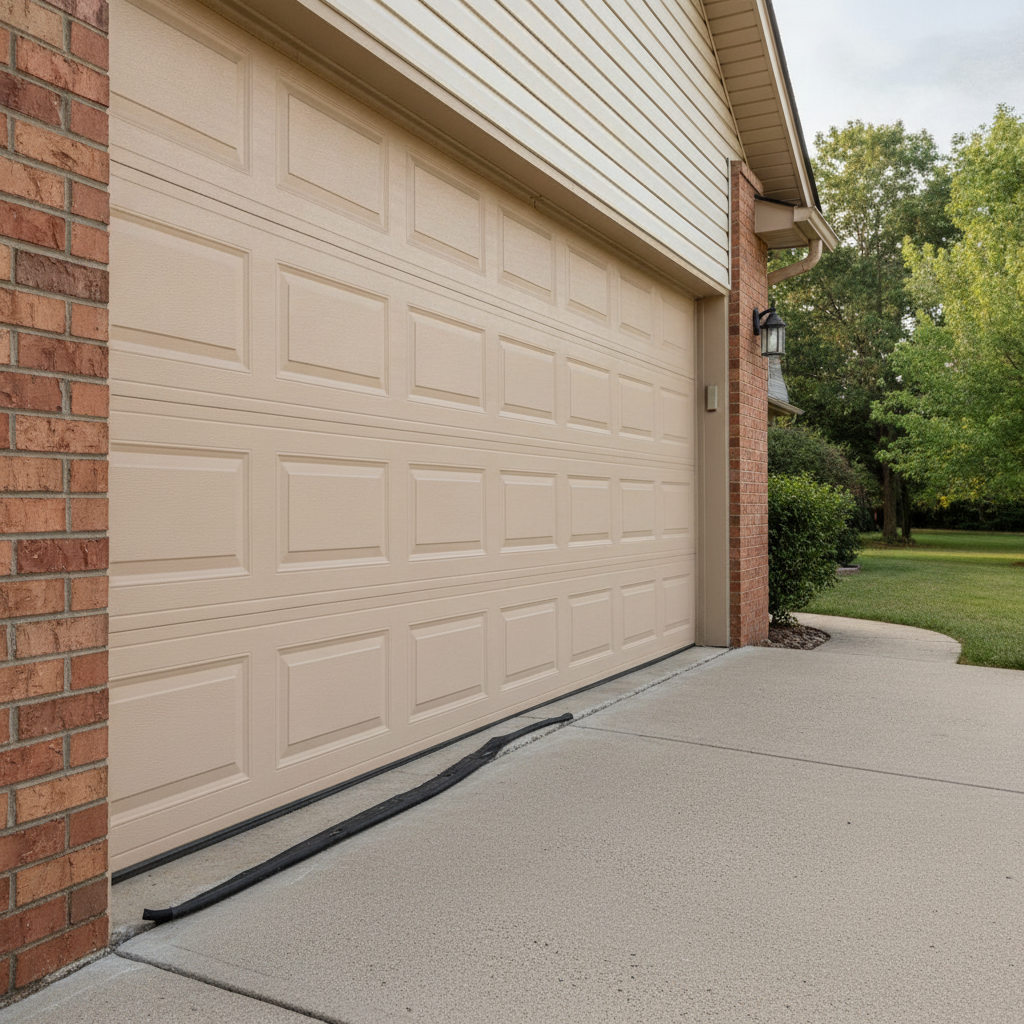
Garage door weatherstripping cracks because rubber, vinyl, and similar seal materials slowly lose flexibility. Age, sunlight, cold temperatures, friction, chemical exposure, and poor fit can all speed up that process. Once garage door weatherstripping becomes brittle or split, it may stop sealing out rain, wind, pests, leaves, and cold air.
For homes in Indianapolis and Central Indiana, weather seals work through hot summers, freezing winters, road salt residue, and regular door movement. That mix can be tough on even a good seal. The goal is to recognize why cracking happens so you can decide whether cleaning, adjustment, or replacement is the right next step.
Why Garage Door Weatherstripping Cracks Over Time
Most garage door weatherstripping is made from flexible material designed to compress against the floor, jambs, or top frame. These materials are durable, but they are not permanent. Over time, they dry out, stiffen, flatten, or split because they are constantly exposed to air, moisture, temperature changes, and movement.
The most common seal locations are the bottom seal, side seals, top seal, and sometimes a threshold seal on the floor. The bottom seal usually wears fastest because it touches concrete every time the door opens or closes. It also sees water, grit, salt, and pressure across the full width of the door.
Cracking does not always mean the garage door has a serious mechanical problem. However, it can be a warning sign that the opening is no longer sealed properly. If the door is also crooked, rubbing, or not closing evenly, the seal may be showing symptoms of a bigger fit or alignment issue.
Age, UV Exposure, and Temperature Swings
Age is one of the simplest reasons weatherstripping cracks. As rubber or vinyl gets older, the compounds that help keep it flexible begin to break down. The seal becomes harder and less able to bend without splitting. Older weatherstripping may look gray, chalky, flat, or curled at the edges. It may also feel stiff when pressed.
A healthy seal should flex and spring back. A worn seal may stay compressed or crack when moved. Different materials age at different rates, and a door used many times a day will usually wear a bottom seal faster than a lightly used door. Even a newly installed door benefits from periodic seal checks, basic cleaning, and routine inspection. If you recently upgraded your door, it is still wise to understand routine maintenance for a new garage door so small wear issues do not go unnoticed.
Sunlight is another major cause of cracked weatherstripping. Ultraviolet rays can weaken rubber and vinyl, especially on garage doors that face strong afternoon sun. UV damage often appears as surface cracking, fading, or a dry texture. South- and west-facing garage doors may see this more often because they receive more direct sunlight during the hottest parts of the day.
Cold weather creates a different problem. Low temperatures can make seals stiff, and a stiff seal is more likely to crack when it bends or compresses. Freeze-thaw cycles are also hard on bottom seals. If water freezes around the bottom of the door, opening the door can tear the weatherstripping. Avoid forcing a frozen door open. If the door jerks, binds, or appears uneven, stop using it until the condition can be checked safely.
Friction, Chemicals, Salt, and Poor Fit
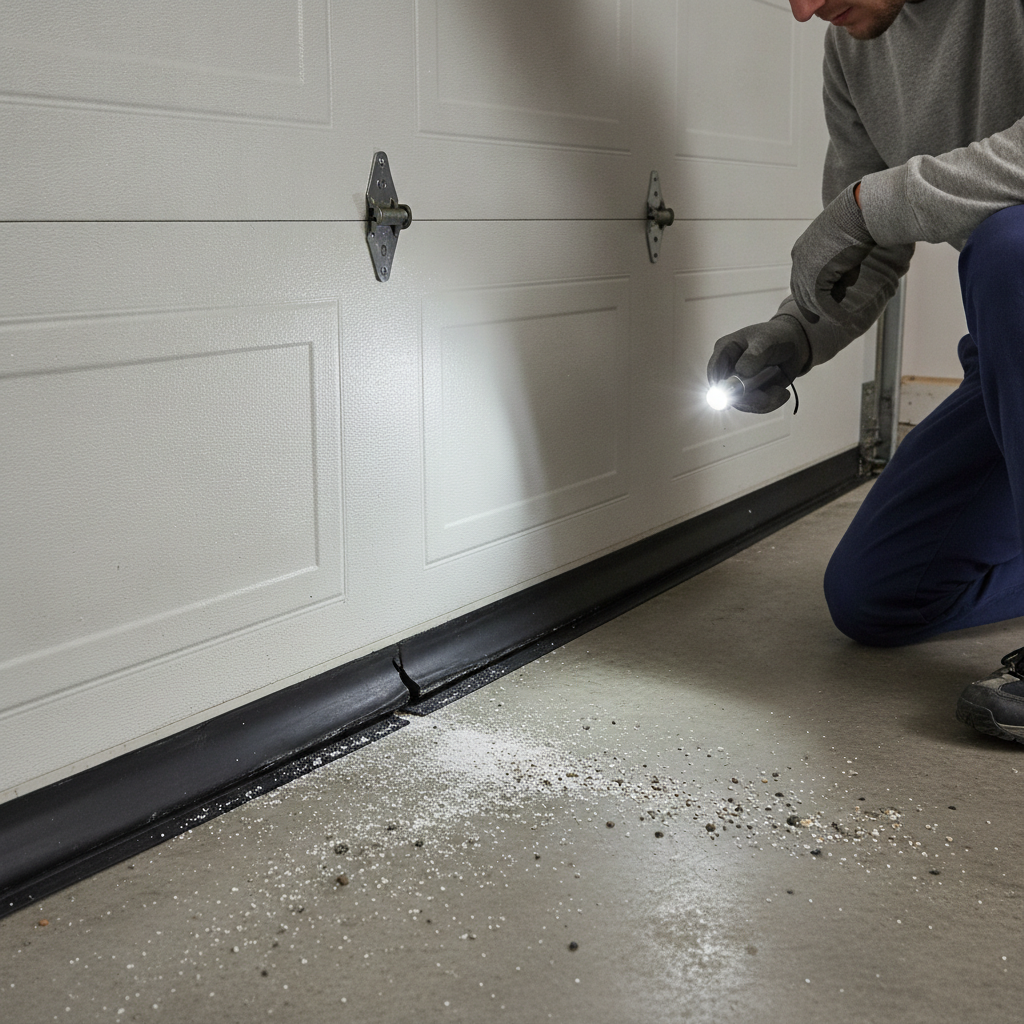
Weatherstripping is designed to touch the frame or floor, but it should not be crushed or dragged excessively. Too much friction can grind away the seal and cause splits. This often happens at the bottom seal, where concrete texture, grit, and dirt act like sandpaper.
A poor fit can come from several sources. The wrong seal profile may not match the bottom retainer. The seal may be too large, too small, or installed unevenly. In some garages, the floor is uneven, so one part of the seal is over-compressed while another part barely touches. If the door is out of level or rubbing against the jamb, the weatherstripping may wear in specific spots.
Look for these clues:
- Cracks in the same area where the door rubs the frame
- A bottom seal that is flattened on one side but not the other
- Daylight showing under one corner of the door
- Scraping sounds as the door opens or closes
- Loose, wavy, or uneven side weatherstripping
Chemical exposure can also cause weatherstripping to crack. Garage seals may contact road salt, ice melt, automotive fluids, lawn chemicals, cleaners, solvents, and other stored materials. Salt and deicing products are common winter problems because vehicles track them into the garage, where they collect near the door and leave abrasive residue.
Good cleaning habits help slow this damage. Sweep debris away from the bottom of the door, rinse salt residue when temperatures allow, and avoid soaking seals with harsh solvents, degreasers, or petroleum-based products. Keep stored liquids sealed and away from the garage door opening so spills do not sit against the weatherstripping.
For busy commercial doors, friction and residue can build up faster because the door cycles more often. Property managers should include seals in their regular inspection plan, along with tracks, rollers, hinges, and opener operation. A consistent commercial garage door maintenance schedule helps identify wear before it leads to bigger performance problems.
How to Check Cracked Weatherstripping Safely
Most weatherstripping checks are safe as long as the door is stable and operating normally. You are only looking at and gently touching the seal, not adjusting springs, cables, tracks, bottom brackets, or other high-tension parts.
Start with the door closed. From inside the garage, look for daylight around the bottom, sides, and top. Inspect the seal for cracks, missing pieces, hard spots, flat areas, or gaps. You can also feel for drafts on a windy day, but keep your hands clear of moving parts.
Next, open the door and check the bottom seal if it is safe to do so. Do not stand under a door that seems unstable, uneven, or damaged. If the door hangs crooked, comes off track, or has broken cables or springs, stop using it and keep people and pets away.
Weatherstripping may need replacement when you notice:
- Visible cracks or splits through the seal
- Water entering under or around the door
- Persistent drafts despite the door closing fully
- Pest entry near gaps in the seal
- A seal that is brittle, flattened, or pulling away
- Uneven contact caused by a poor fit or worn retainer
Sometimes replacing the seal solves the problem. However, if the new seal would rub, twist, or leave the same gap, the door or frame may need attention first. A technician can identify whether the issue is the seal, the door alignment, the floor, or another component.
Frequently Asked Questions
Can cracked garage door weatherstripping be repaired?
Small surface wear may not require immediate replacement, but cracked or brittle weatherstripping usually cannot be restored reliably. Replacement is often the better option when gaps, water leaks, or drafts are present.
How long does garage door weatherstripping last?
There is no single lifespan because usage, sun exposure, weather, chemicals, and material quality all matter. Inspect the seals seasonally and after harsh winter or summer conditions.
Is a gap under my garage door always caused by bad weatherstripping?
No. A worn seal is common, but an uneven floor, poor seal fit, door alignment issue, or opener setting can also create gaps. An inspection can help identify the real cause.
When to Get Professional Help
Call a garage door professional if the weatherstripping is cracked, pulling loose, letting in water, or wearing unevenly. Professional help is also appropriate if the door rubs, closes crooked, hits the floor too hard, or appears unstable. Those symptoms can point to fit, balance, track, or hardware issues that should be diagnosed before a new seal is installed.
You can clean and inspect weatherstripping, but avoid forcing a damaged door or attempting repairs involving springs, cables, bottom brackets, or other high-tension components. If you are unsure whether your seal needs replacement or the door needs adjustment, contact Ultimate Garage Doors LLC for help choosing the next safe step.