
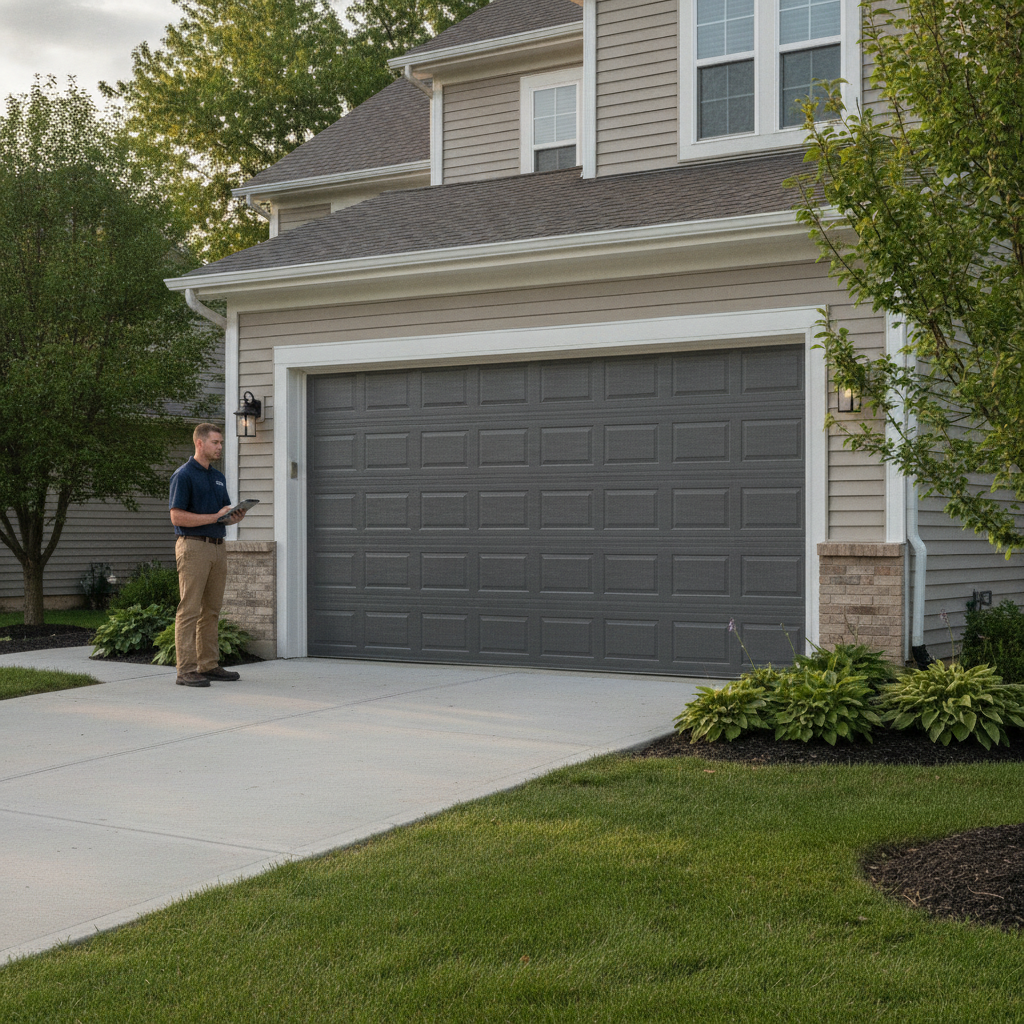
New garage door maintenance may seem unnecessary at first, but even a recently installed door benefits from early inspections and routine care. A new system has moving parts, fasteners, rollers, tracks, springs, weather seals, and opener components that all work together. As the door starts being used daily, some parts can settle, loosen slightly, or need minor adjustment. Catching those small issues early helps the door operate smoothly and may help protect warranty coverage.
A new garage door should not be ignored until something sounds wrong. Instead, think of maintenance as a way to preserve the installation, reduce avoidable wear, and confirm the door is working as intended in your Indianapolis or Central Indiana home.
Why New Garage Door Maintenance Still Matters
A new garage door is not maintenance-free. It is a mechanical system that moves hundreds of pounds each time it opens and closes. Even when the installation is done properly, normal use places stress on hinges, rollers, tracks, springs, cables, and opener hardware.
During the first few weeks or months, parts can settle into position. For example, fasteners may need to be checked, rollers may begin wearing into their normal path, and weatherstripping may compress as it seals against the floor and frame. These are normal parts of the break-in period, but they should still be monitored.
Maintenance also gives a technician a chance to confirm that the door is balanced, the opener is not straining, and the safety features are working correctly. A quiet, smooth door is easier on the opener and less likely to develop premature wear.
Most homeowners do not need to perform complex repairs on a new door. However, they should keep an eye on how the door sounds and moves. If it starts jerking, rubbing, scraping, or closing unevenly, that is a sign to stop and schedule an inspection.
What Happens During the Early Break-In Period
The early break-in period is the time after installation when the garage door system begins operating under real daily use. This is when small adjustments may become noticeable. It does not mean the door was installed incorrectly. It simply means the system is moving, carrying weight, and responding to temperature changes.
Common changes during this period may include:
- Slight changes in operating noise as rollers and hinges begin moving regularly
- Weather seals compressing against the floor or jambs
- Minor hardware movement from vibration
- Opener force settings needing verification
- Track alignment needing a professional check if the door rubs or binds
Because several garage door problems can create similar symptoms, avoid guessing. A rubbing sound could come from track alignment, a roller issue, a hinge problem, or debris. Meanwhile, a door that looks uneven could involve balance, cable tension, track position, or another issue that requires professional diagnosis.
Homeowners can safely observe the door from a distance while it runs. Watch whether it moves evenly and listen for new noises. However, do not loosen brackets, adjust springs, or try to correct cable tension. Those components can be under significant tension and should be handled by a trained garage door technician.
Lubrication Helps Protect Moving Parts
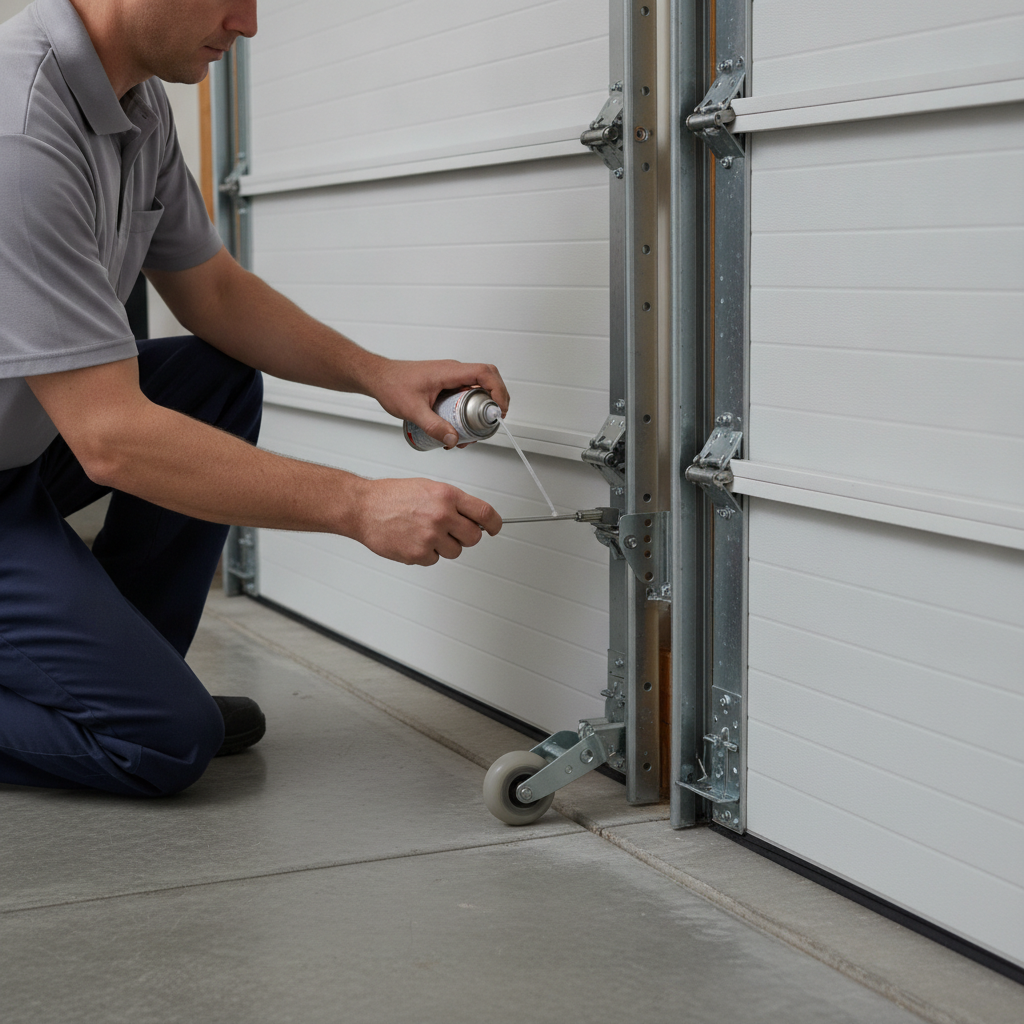
Lubrication is one of the most useful parts of routine garage door care. A properly lubricated door usually runs more quietly and places less friction on moving parts. However, not every part should be lubricated the same way, and using the wrong product can create buildup.
In general, garage door lubricant is used on metal moving points such as hinges, roller stems, and some spring components when appropriate. Nylon roller wheels, belt drives, and plastic parts may not need the same treatment. Always follow the door and opener manufacturer’s guidance.
A homeowner can usually look for dry, squeaky, or rusty moving parts without taking anything apart. If a new door becomes noisy soon after installation, lubrication may help, but noise can also signal another issue. For example, grinding could suggest a roller or track problem, while popping sounds may come from panels or hardware shifting under load.
Do not spray lubricant onto safety sensors, opener electronics, tracks as a cure for misalignment, or weather seals unless the product specifically allows it. Also, do not use heavy grease on parts where it will collect dirt. As a result, the door may become messier and harder to inspect.
Early Inspections Can Catch Settling Hardware
An early inspection gives a professional a chance to check the garage door as a complete system. The goal is not to replace new parts. It is to confirm that the installation is holding properly and that daily use has not revealed an adjustment need.
During a maintenance inspection, a technician may check items such as:
- Hinges, brackets, and visible fasteners
- Rollers and roller stems
- Track spacing and alignment
- Door balance and spring performance
- Cable condition and drum alignment
- Opener travel limits and force settings
- Safety sensor alignment and auto-reverse operation
- Weather seals along the bottom and sides
Door balance is especially important because an unbalanced door can make the opener work harder than it should. If you want to understand what a safe homeowner observation looks like, review this guide on how to check garage door balance safely. Avoid making spring adjustments yourself, because torsion springs and extension springs store a large amount of force.
For residential doors, an early maintenance visit is often useful after the door has been used for a short period. For commercial properties, the schedule may need to be more frequent because of higher daily cycles, heavier doors, and business demands. Property managers can compare needs with a practical commercial garage door maintenance schedule to understand how usage affects service intervals.
Warranty Requirements and Service Records
A new garage door may include manufacturer warranties on sections, hardware, finish, springs, or opener components. The exact coverage depends on the product, installer, and written warranty terms. Because those terms vary, homeowners should read the warranty documents instead of relying on assumptions.
Some warranties may require proper installation, normal use, approved parts, or routine maintenance. Others may exclude damage caused by impact, misuse, lack of care, weather exposure, or unauthorized repairs. Therefore, keeping basic service records can be helpful if a question comes up later.
Good records do not need to be complicated. Keep the installation paperwork, opener manuals, warranty documents, and receipts for any maintenance or repairs. If a technician performs an inspection, save the report or invoice. These records show that the door has received appropriate care.
It is also wise to avoid do-it-yourself changes that could affect coverage. For example, altering spring tension, replacing cables, modifying opener settings beyond normal user controls, or using non-approved parts may create safety concerns and warranty questions. If you are unsure, ask before making changes.
Routine Care Homeowners Can Safely Do
Homeowners can support a new garage door with simple, safe habits. These checks do not require removing parts or working on high-tension components. They are meant to help you notice changes early.
Safe routine care includes:
- Watching the door open and close from a safe distance
- Listening for new squeaks, scraping, grinding, or banging
- Keeping the tracks clear of leaves, dirt, and stored items
- Checking that photo-eye safety sensors are clean and aligned
- Looking for cracked or loose weather seals
- Testing the wall button and remote controls during normal use
- Keeping children away from remotes and moving doors
- Looking for visible frayed cables without touching them
If you see a cable that looks frayed, a spring that appears broken, or a door that is crooked, stop using the door. Keep people and pets away, and do not stand beneath it. Also, do not try to force the door open or closed. A damaged or unstable door can move unexpectedly.
Seasonal changes matter in Central Indiana. Cold weather can stiffen some components, while humidity and road salt can affect metal hardware and seals. Therefore, a quick visual check at the start of each season is a good habit, even on a newer door.
Frequently Asked Questions
How soon should a new garage door be inspected?
A new garage door should be observed regularly from the start. A professional inspection after the door has had some normal use can help catch settling hardware, balance issues, or opener adjustments.
Does a new garage door need lubrication?
Yes, many new garage doors benefit from proper lubrication of moving metal parts. Use the product and locations recommended by the manufacturer or ask a technician during service.
Can maintenance affect my garage door warranty?
It can. Warranty terms vary, but some may require normal care, approved parts, or service records. Always review your written warranty documents for specific requirements.
When to Schedule Professional Maintenance
Schedule professional maintenance if your new garage door becomes noisy, moves unevenly, reverses unexpectedly, rubs the track, leaves gaps at the floor, or seems heavy for the opener. You should also call for help if you notice damaged cables, a broken spring, a crooked door, or any part that appears loose under tension.
Ultimate Garage Doors LLC helps homeowners, property owners, and businesses in Indianapolis and surrounding Central Indiana maintain, inspect, and repair garage door systems. If you want a trained technician to evaluate your new door, request a free garage door estimate and get guidance based on your specific system.