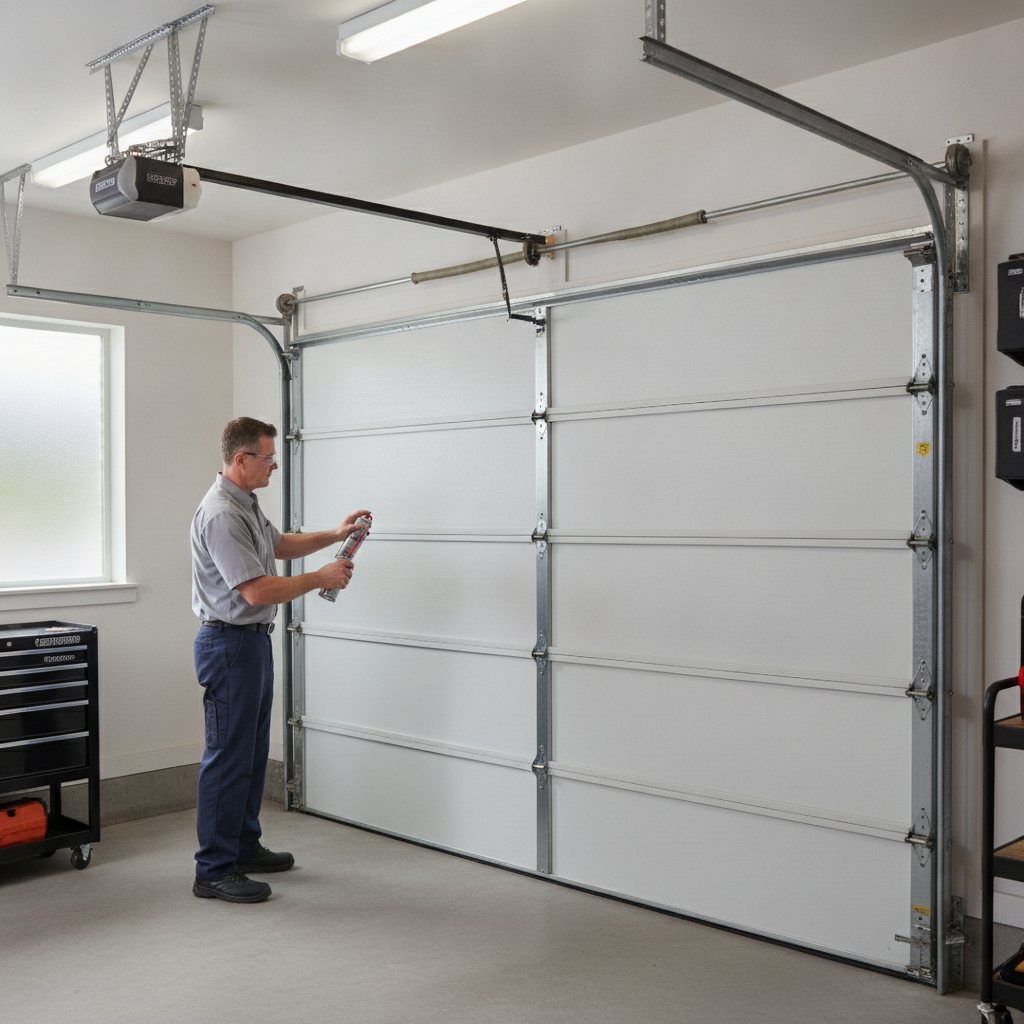
Most homeowners should lubricate a garage door about twice a year, ideally in spring and fall. If your door is used many times a day, exposed to heavy dust, or starts sounding louder than usual, it may need attention every three to four months. Regular lubrication helps reduce friction, protects moving hardware, and can make the door operate more smoothly.
However, lubrication is not a fix for broken springs, damaged cables, bent tracks, or a failing opener. It is routine maintenance. If the door is crooked, hanging, stuck, or unstable, stop using it and have the system inspected by a qualified garage door technician.
How Often Should You Lubricate a Garage Door?
For a typical residential garage door in Indianapolis or Central Indiana, a twice-a-year schedule is a good starting point. Seasonal changes matter because cold weather, humidity, road salt, and temperature swings can affect metal hardware and rubber seals. Spring and fall maintenance helps prepare the door for summer heat and winter cold.
You may need to lubricate more often if your garage door has any of these conditions:
- The door opens and closes several times each day.
- The garage is dusty, damp, or exposed to outdoor debris.
- The door has metal rollers, older hinges, or visible dry hardware.
- You hear squeaking, grinding, or rattling during normal operation.
- The door is part of a rental, commercial space, or shared property with heavier use.
Meanwhile, a lightly used door with sealed nylon rollers may not need as much lubricant. Even so, it should still be inspected regularly because springs, cables, rollers, and hinges all wear over time.
Best Lubricants for Garage Door Maintenance
Use a product made for garage doors or moving metal parts. The best choices are usually a garage door lubricant, white lithium grease, or a silicone-based spray. These products cling better than thin household oils and are less likely to run down the door or collect excessive dirt.
Avoid using a general penetrating oil as your main garage door lubricant. Products often used to loosen stuck parts can be useful in certain situations, but they are not designed to provide long-lasting lubrication for garage door hardware. They can also wash away existing grease.
For most homeowners, a spray lubricant with a straw applicator is easiest to control. Apply a light coating only where needed. More lubricant is not always better because excess product attracts dust, drips onto vehicles, and can create a messy buildup.
Garage Door Parts You Should Lubricate
Before lubricating, close the garage door and disconnect power to the opener if you will be working near moving opener parts. Wipe away loose dirt with a dry cloth. Do not place fingers between hinges, rollers, or track sections.
The following parts commonly benefit from light lubrication:
- Hinges: Apply lubricant at the pivot points where the hinge moves. This helps reduce squeaks as door sections bend along the track.
- Metal rollers: Lubricate the roller bearings, not the track. If the rollers are nylon with exposed bearings, treat only the bearing area.
- Roller stems: A small amount where the stem enters the hinge can reduce friction.
- Torsion springs: A light coating can help reduce surface friction and noise. Do not adjust, unwind, or remove springs.
- End bearing plates: These support the torsion tube near the ends of the spring assembly. Lubricate only accessible bearing areas without loosening hardware.
- Opener chain or screw drive: Follow the opener manufacturer’s guidance. Some openers need specific lubricant, while belt-drive systems usually do not require lubrication on the belt.
- Weather seals: A silicone product may help rubber seals stay flexible, especially before winter.
As a result, the door may sound quieter and move with less resistance. However, lubrication should not hide a serious mechanical issue. A properly maintained door should move evenly, stay aligned in the tracks, and not shake excessively.
Parts You Should Not Lubricate
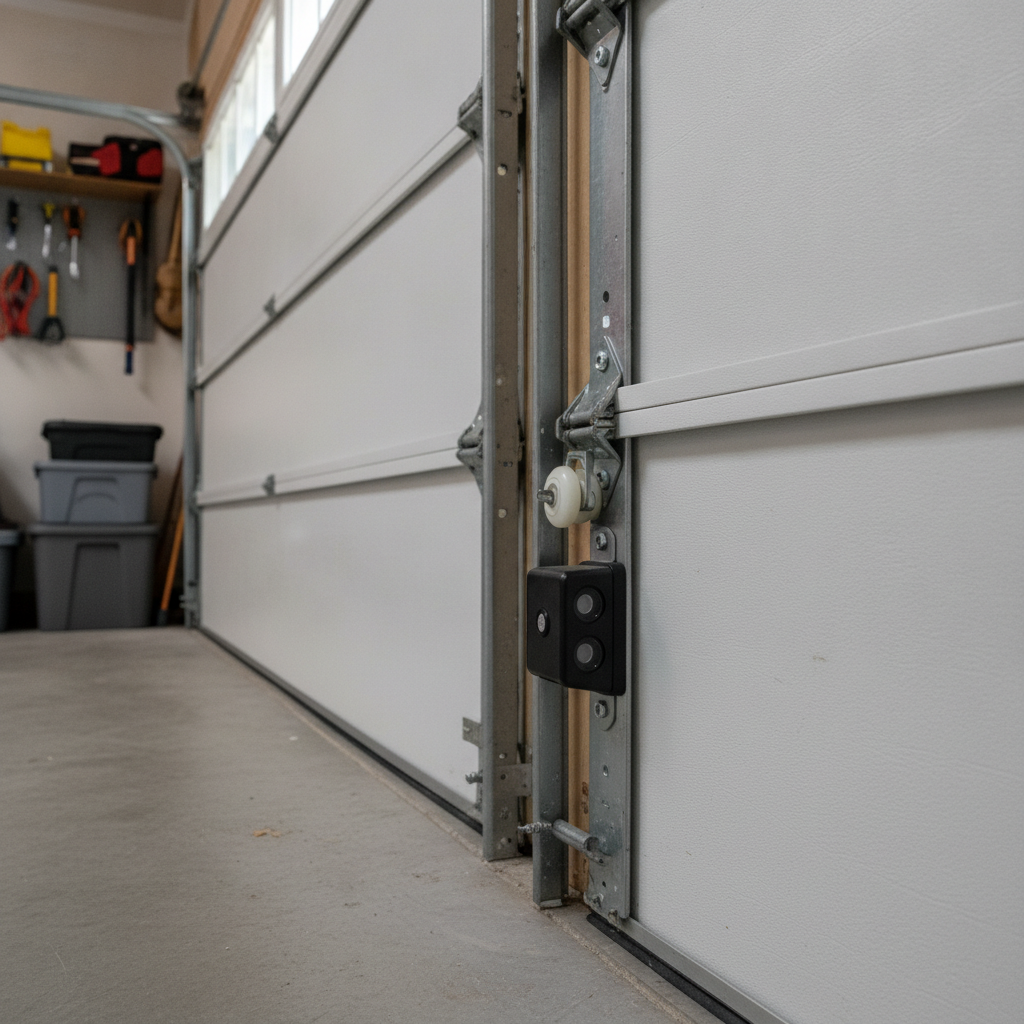
Some garage door parts should stay clean and dry. Lubricating the wrong area can cause slipping, buildup, or sensor problems. It can also make future repairs harder because grease hides wear and collects grit.
Avoid applying lubricant to these areas:
- Tracks: The rollers move inside the tracks, but the tracks are not meant to be greased. Wipe them clean instead.
- Nylon roller wheels: Lubricate only exposed bearings if present. Do not coat the wheel surface.
- Opener belts: Belt-drive openers are designed to run without belt lubricant.
- Safety sensors: Do not spray photo-eye sensors, wiring, or brackets with lubricant.
- Keypads, wall controls, and remotes: These electrical parts should not be sprayed.
- Bottom brackets and cables: These are connected to high-tension spring systems and should be handled by a technician.
Garage door sensors sit near the bottom of the door opening and rely on a clear line of sight. If you are checking sensor placement during maintenance, this guide to garage door sensor height explains the usual mounting range and why alignment matters.
Safe Lubrication Checks Homeowners Can Make
Garage door lubrication is usually a safe maintenance task when you limit your work to visible, accessible parts. Still, the door is heavy, and several components are under high tension. Therefore, avoid loosening brackets, removing parts, or trying to correct a door that appears unstable.
Safe homeowner checks include:
- Listening for squeaks, grinding, or scraping during normal operation.
- Looking for loose, missing, or visibly damaged hinges without tightening high-tension parts.
- Checking whether rollers appear cracked, worn, or wobbly.
- Wiping dirt from tracks without bending or adjusting them.
- Confirming the safety sensors are clean, dry, and facing each other.
- Watching whether the door moves evenly on both sides.
If your opener reverses unexpectedly after maintenance, do not assume lubrication caused the problem. For example, sensor alignment, sunlight, wiring, dirt, or vibration can sometimes create similar symptoms. This overview of an intermittent garage door sensor explains common reasons sensors may work only part of the time.
Stop operating the door if it binds, hangs crooked, comes off track, or drops suddenly. Keep people and pets away from the opening, and never stand beneath an unstable door.
Signs Lubrication Is Not Enough
Lubricant can reduce friction, but it cannot restore worn-out parts or correct a misaligned system. If a problem returns quickly after lubrication, the door may need repair or adjustment.
Common warning signs include:
- A loud bang from the garage, which may indicate a broken spring.
- Cables that look frayed, loose, or off the drum.
- A door that feels unusually heavy or will not stay open.
- Rollers that pop, wobble, or come out of the track.
- Hinges that are cracked, bent, or pulling away from the door.
- Scraping noises from one side of the track.
- An opener that strains, hums, or stops before the door is fully open.
Because several faults can create similar symptoms, a professional inspection is the safest way to identify the actual cause. Springs, cables, bottom brackets, and some opener components can be dangerous if handled without training.
Frequently Asked Questions
Can I use WD-40 on my garage door?
A penetrating oil can help loosen some stuck parts, but it is not the best long-term garage door lubricant. Use a silicone-based spray, white lithium grease, or a product labeled for garage doors.
Should I lubricate garage door tracks?
No. Tracks should be clean, not greasy. Lubricate the roller bearings and hinge points instead, then wipe dirt and debris from the tracks with a dry cloth.
Why is my garage door still noisy after lubrication?
The door may have worn rollers, loose hinges, spring issues, track problems, or opener strain. If noise continues after light lubrication, schedule a professional inspection.
When to Call a Garage Door Professional
Call a professional if your garage door is off track, crooked, unusually heavy, or still noisy after basic maintenance. You should also stop using the door if you see frayed cables, a broken spring, bent track sections, or hardware pulling away from the door.
Ultimate Garage Doors LLC helps homeowners, landlords, property managers, and businesses in the Indianapolis area with garage door maintenance, repairs, opener issues, and replacement needs. If lubrication does not solve the problem or you want the system checked before seasonal weather changes, request a free garage door estimate.