
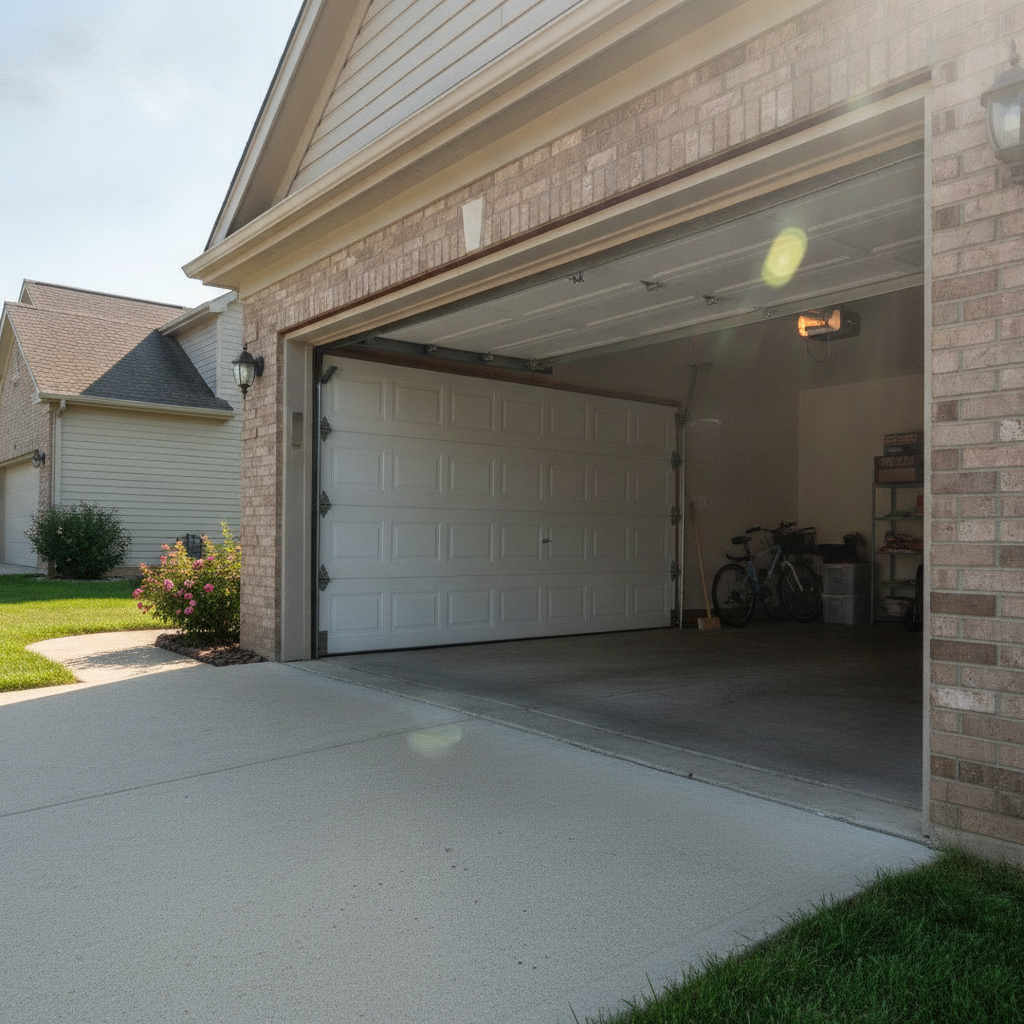
Yes, sunlight can interfere with garage door sensors in some situations. Bright glare can overwhelm the receiving sensor, making the opener think something is blocking the door. If your garage door starts to close, then reverses on sunny days, sensor glare may be one possible cause.
However, sunlight is not the only reason sensors act up. Dirty lenses, loose brackets, vibration, wiring problems, and sensor misalignment can create similar symptoms. The goal is to identify safe clues before assuming the sun is the only problem.
How Sunlight Can Interfere With Garage Door Sensors
Most modern garage doors use photo-eye safety sensors near the bottom of the tracks. One sensor sends an invisible beam across the door opening. The other sensor receives that beam. If the beam is blocked while the door is closing, the opener reverses the door to help prevent injury or damage.
Strong sunlight can sometimes shine directly into the receiving sensor. As a result, the receiver may have trouble reading the beam from the sending sensor. The opener may respond as if the beam is interrupted, even though nothing is in the doorway.
This problem is often most noticeable when the door is closing. The opener may start downward, stop, reverse, and the opener lights may flash. Some systems also show a blinking or unlit sensor indicator light.
Sun glare usually affects the receiving sensor more than the sending sensor. The receiving sensor is the side that must detect a clean signal. If direct light hits it at the right angle, the signal can become unreliable.
Signs That Sunlight May Be the Problem
A sunlight-related sensor issue often follows a pattern. It may happen only during certain hours or during specific seasons. Meanwhile, the same garage door may work normally on cloudy days or after the sun moves.
Common signs include:
- The door closes normally in the morning but reverses in the afternoon.
- The problem appears on sunny days but not during rain or heavy cloud cover.
- The sensor indicator light flickers when sunlight hits the lens.
- Shading the sensor temporarily allows the door to close.
- The issue changes as the sun angle changes through the year.
These clues can be helpful, but they are not a complete diagnosis. For example, a sensor bracket may be slightly loose, and sunlight may only reveal the issue at certain times. Also, dust, spider webs, or moisture on the sensor lens can make glare problems worse.
If the indicator lights are blinking, the pattern may help narrow the issue. For more detail on what those lights may mean, see this guide to blinking garage door sensors.
Why Sensor Orientation Matters
Garage door sensors must face each other accurately. Even a small shift can weaken the beam. If one sensor is angled slightly upward, outward, or downward, bright light can make the weak connection fail more often.
Sensor orientation can change for simple reasons. A trash can, bicycle, shovel, or snowblower may bump a sensor bracket. Vibration from normal door movement can also loosen hardware over time. In Central Indiana, seasonal temperature changes may cause small shifts in brackets, tracks, or framing.
Safe homeowner observations include checking whether the sensors appear to point directly at each other. You can also look for obvious damage, bent brackets, cobwebs, leaves, or stored items near the beam path. Do not loosen brackets, adjust wiring, or modify the opener if you are unsure what you are doing.
If the sensors are not aligned, the opener may refuse to close with the wall button or remote. Some openers allow the door to close only while the wall control is held down. That behavior suggests a safety sensor issue and should not be treated as a long-term workaround.
Safe Ways to Check for Glare
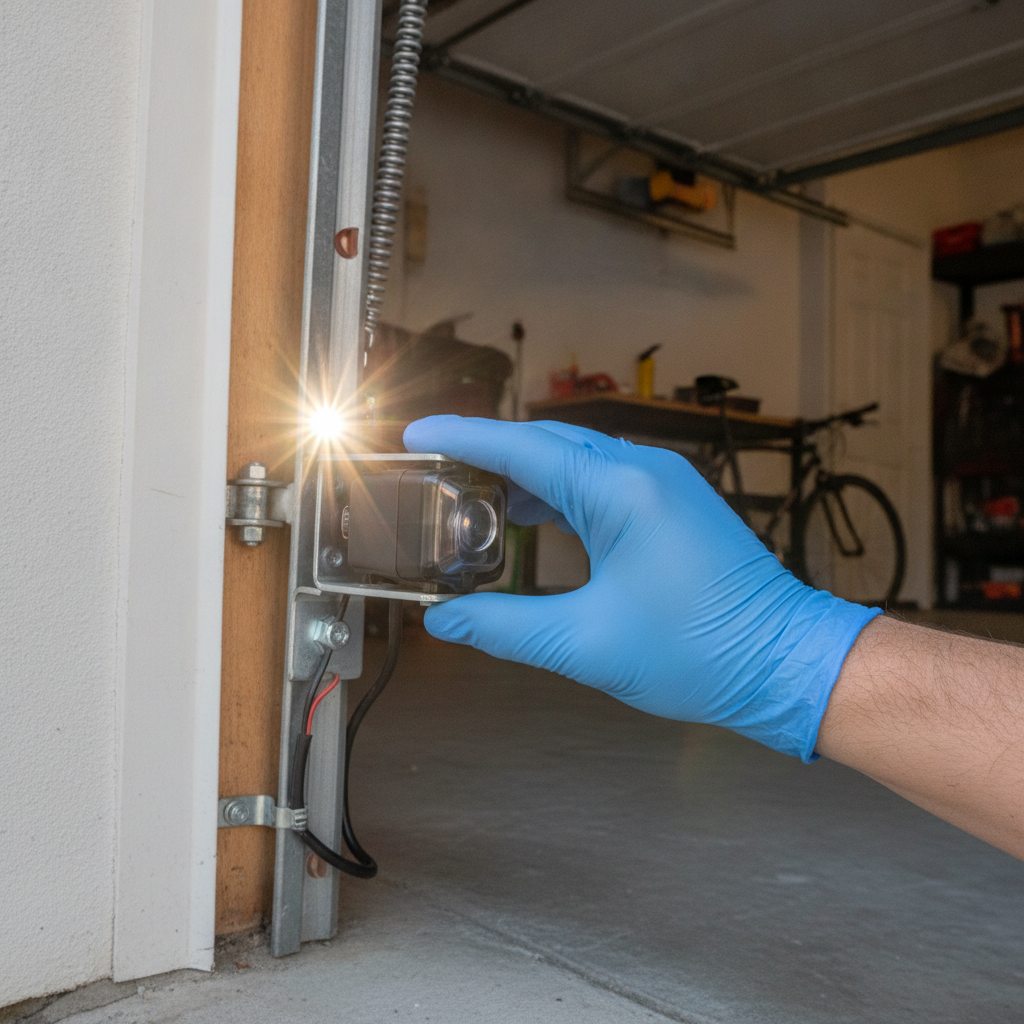
You can make a few safe observations without taking the system apart. Start with the door fully open and keep people, pets, and objects away from the opening. Never stand under a moving garage door while testing it.
Try these safe checks:
- Look at the sun angle. See whether direct sunlight is hitting one sensor lens.
- Watch the indicator lights. A steady light is usually better than a flickering or unlit one, though meanings vary by opener brand.
- Shade the sensor briefly. Use your hand or a small object beside the sensor, without blocking the beam, to see whether the indicator becomes steady.
- Check for dirt. Dust, pollen, salt residue, and spider webs can scatter light across the lens.
- Remove nearby clutter. Boxes, tools, and yard equipment can partially block or reflect light near the sensor path.
Cleaning the lenses may help if the sensor is dusty or filmed over. Use a soft, dry cloth first. If needed, use a lightly damp cloth and avoid harsh chemicals. For a more detailed process, review these tips on how to clean garage door safety sensors.
Because sensor systems vary, avoid taping over the lens, painting the sensor, or bypassing the safety system. Those fixes can reduce protection and create new problems. A sensor must still see the beam clearly to do its job.
Shielding and Seasonal Changes
Sometimes the solution is as simple as blocking direct glare while keeping the sensor beam open. Small sensor shields are designed to reduce side glare without covering the lens. However, any shield must be installed carefully so it does not interrupt the beam or trap moisture around the sensor.
Homeowners sometimes try cardboard, tape, or makeshift covers. These may work briefly, but they often shift, fall off, or block the sensor. They can also collect dust and make the issue worse. A proper shield should shade the sensor from direct sunlight while leaving a clear path across the door opening.
Seasonal changes can explain why the problem appears suddenly. During spring and fall, the sun sits lower in the sky at certain times of day. That lower angle can shine directly into a garage that had no trouble during summer. Snow, light-colored driveways, wet pavement, or nearby windows can also reflect light toward the sensor.
In Indianapolis and surrounding Central Indiana, changing weather can add to the confusion. One day may be cloudy and cool, while the next is bright with strong afternoon sun. Therefore, keeping notes about the time of day and weather can help a technician diagnose the issue faster.
Other Problems That Look Like Sunlight Interference
Sunlight may be part of the problem, but several other faults can cause the same door behavior. A garage door that reverses before closing does not always have a glare issue.
Possible causes include:
- Dirty sensor lenses that weaken the signal.
- Misaligned sensors caused by bumped brackets or loose hardware.
- Damaged low-voltage wiring between the opener and sensors.
- Faulty sensor units that no longer send or receive reliably.
- Track or door problems that cause the opener to detect resistance.
- Opener force or travel issues that need professional adjustment.
Do not force the door closed repeatedly if it keeps reversing. Repeated operation can strain opener components and may hide a safety issue. If the door is crooked, off track, hanging unevenly, or physically damaged, stop using it and call a qualified garage door professional.
A technician can test sensor alignment, wiring continuity, opener response, and the door’s mechanical movement. That matters because the opener and the door work as one system. If the door is heavy, binding, or out of balance, sensor adjustments alone may not solve the problem.
Frequently Asked Questions
Can I permanently shade a garage door sensor?
Sometimes, but the shield must not cover the sensor lens or block the beam. A properly fitted sensor shield is safer than tape, cardboard, or a homemade cover that can move out of place.
Why does my garage door only reverse in the afternoon?
Afternoon sun may be hitting the receiving sensor at a direct angle. However, loose alignment, dirt, wiring, or opener issues can also appear at certain times, so a full check is wise.
Is it safe to bypass garage door sensors?
No. Safety sensors are designed to reduce the risk of the door closing on a person, pet, or object. If they are malfunctioning, repair the cause rather than bypassing them.
When to Ask a Professional for Help
Call a professional if the door keeps reversing, the sensor lights will not stay steady, the wiring looks damaged, or the door moves unevenly. Professional help is also appropriate if sunlight appears to be the trigger but cleaning and safe visual checks do not solve the issue.
Ultimate Garage Doors LLC can inspect garage door safety sensors, opener behavior, and related door components for homeowners and property owners in the Indianapolis area. If glare, alignment, wiring, or another issue is affecting your door, request a free garage door estimate to get practical guidance before the problem becomes more frustrating.