
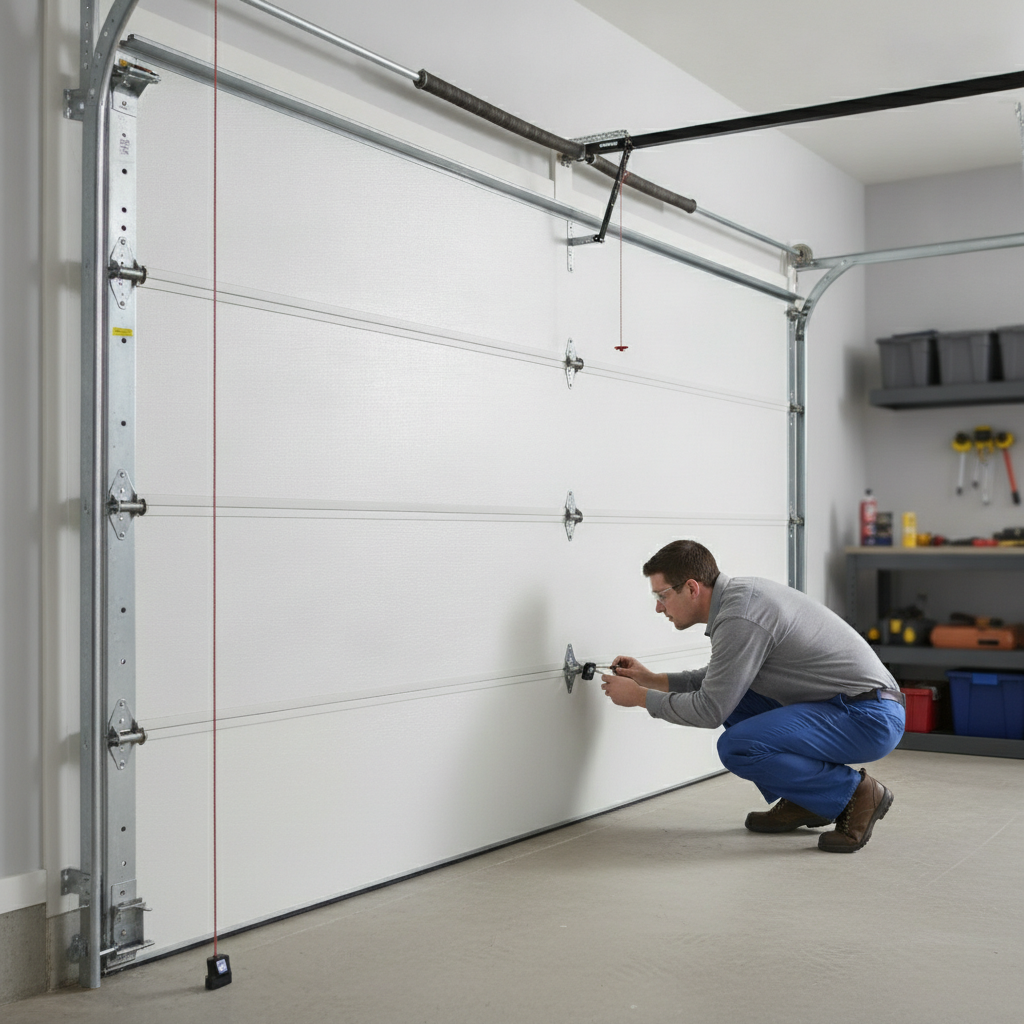
If your garage door closes only when I hold the button, the opener is often reacting to a problem with the photo-eye safety sensors. Holding the wall control can activate a constant-pressure close mode on many openers, but that does not mean the system is working correctly. It usually means the opener does not trust the safety sensor signal, so remotes and normal one-touch closing may fail.
This problem is common for homeowners in Indianapolis and across Central Indiana. Some causes are simple to spot, such as a blocked sensor or dirty lens. Other causes, including damaged wiring, failed sensors, opener logic problems, or unstable door movement, may require professional diagnosis.
Why a Garage Door Closes Only When You Hold the Button
Modern garage door openers use photo-eye safety sensors near the bottom of the door opening. One sensor sends an invisible beam across the doorway, and the other receives it. If something blocks the beam while the door is closing, the opener should stop and reverse the door.
When the opener cannot confirm that the sensor beam is clear, it may refuse to close normally. The door may go down only while you press and hold the wall-mounted button. This behavior helps reduce the chance of the door closing on a person, pet, vehicle, or object.
Common causes include:
- Something blocking the sensor beam
- Dirty, fogged, or salt-covered sensor lenses
- Photo eyes that have been bumped out of alignment
- Loose, damaged, or disconnected sensor wires
- Direct sunlight hitting the receiving sensor
- A failed sensor or opener control board
- Door vibration that causes an intermittent signal
Treat this symptom as a safety warning rather than a minor inconvenience.
Common Safety Sensor Problems
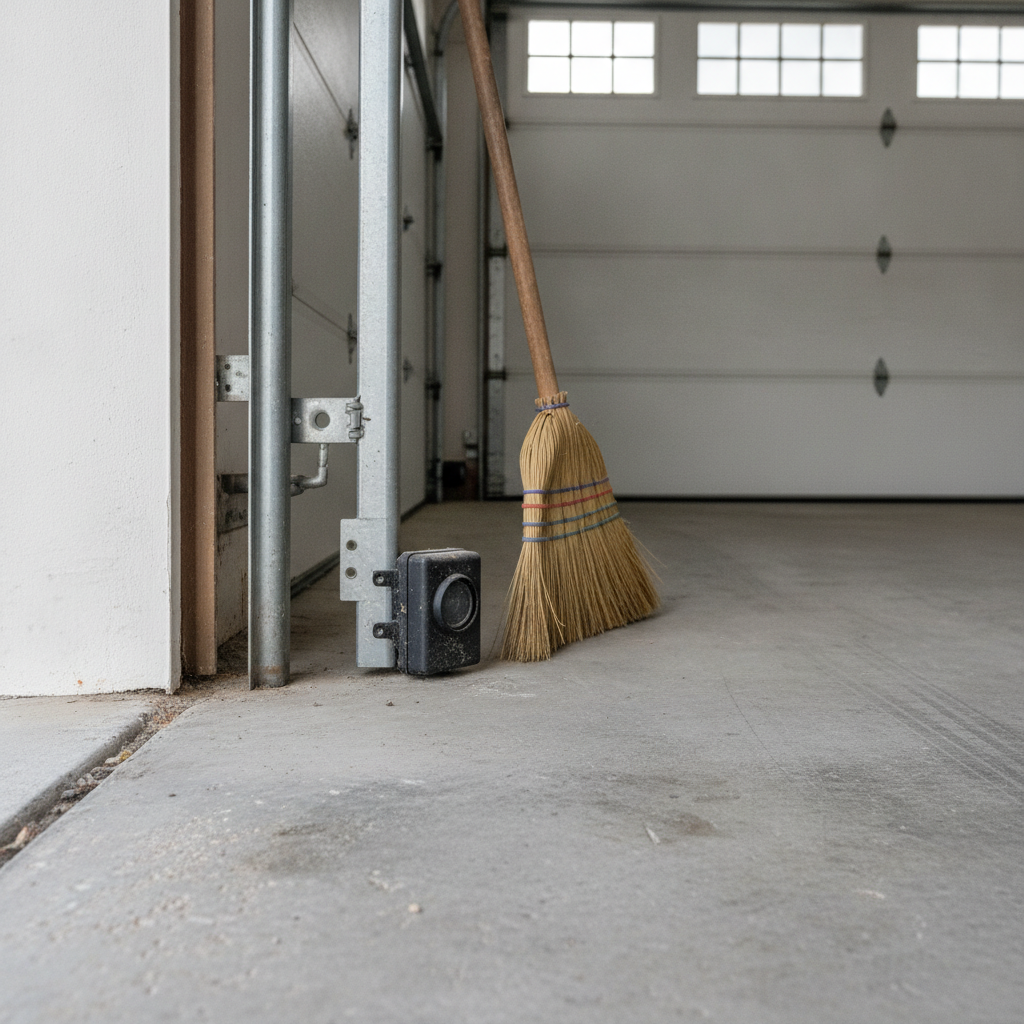
The photo-eye sensors are small, but they play a major safety role. They are usually mounted a few inches above the floor on each side of the garage door. If the sensors do not have a clear line of sight, the opener may reverse, blink its lights, click, or require you to hold the wall button to close the door.
Blocked sensor path
Start with the simplest possibility. A trash can, shovel, storage bin, broom, bicycle tire, leaf pile, or snow buildup can interrupt the beam. Even a small object near the sensor may be enough to stop normal closing.
Look across the full doorway, not only directly in front of the sensors. A ladder leaning into the opening may block the beam at an angle. Also check for spider webs, mulch, or debris near the brackets.
Dirty or cloudy lenses
Dust, road salt, pollen, and garage grime can collect on the sensor lenses. In winter, condensation or slush can also interfere with the beam. Gently cleaning the lenses may restore the signal if the sensors are otherwise aligned and working.
Use a soft, dry or slightly damp cloth. Avoid harsh cleaners, pressure washing, or soaking the sensor housing. For more detail, see these tips for cleaning garage door safety sensors without damaging them.
Sensor alignment issues
Garage door sensors must face each other directly. If one bracket is bumped by a trash can, lawn mower, or foot, the beam may miss the receiving sensor. Many sensors have indicator lights that show whether the beam is connected, though light colors vary by opener brand.
You can safely look at the brackets and sensor lights. However, avoid forcing brackets or rewiring anything if the parts appear damaged. A sensor that keeps losing alignment may point to a loose bracket, vibration, track movement, or another issue that should be inspected.
Wiring and Opener Issues That Can Mimic Bad Sensors
If the path is clear and the lenses look clean, wiring may be the next concern. Safety sensors use low-voltage wires that run from the sensors to the opener motor unit. If those wires are loose, pinched, chewed, corroded, stapled too tightly, or disconnected, the opener may read the sensors as blocked.
Safe homeowner observations include checking for obvious damage without pulling on the wires. Look for frayed insulation, hanging wire, rodent damage, or wires that have come loose from a sensor housing. Notice whether the issue changes when the door moves, because vibration can make an intermittent connection appear only during operation.
Do not open electrical covers or attempt repairs beyond your comfort level. Sensor wiring problems can be frustrating because the issue may appear and disappear. A trained technician can test the sensor circuit, inspect opener terminals, and determine whether the fault is in the wiring, sensors, or opener.
Less commonly, the opener control board may fail to process a good sensor signal. This is not the first assumption to make, because dirty, misaligned, or damaged sensors are more common. Still, if the sensors and wiring check out, the opener itself may need evaluation.
Sunlight, Weather, and Intermittent Closing Problems
Direct sunlight can sometimes interfere with the receiving photo eye. This often happens at certain times of day when the sun shines directly into the sensor lens. The door may close normally in the morning but refuse to close in the afternoon, or the problem may change with the season.
Weather can also affect sensor performance. Rain, condensation, ice, and wind-blown debris may disturb the beam. In Central Indiana, freeze-thaw cycles can shift small parts, and road salt or garage dust can build up on sensor lenses during winter.
If the problem seems tied to bright sun, angle, or time of day, the issue may not be random. This explanation of how sunlight affects garage door sensors can help you understand what may be happening before scheduling service.
Even if sunlight is involved, avoid covering sensors with tape, cardboard, or anything that blocks their normal view. A proper fix should preserve the safety function while reducing interference.
Why Bypassing Garage Door Safety Sensors Is Unsafe
It can be tempting to bypass the sensors if you are tired of holding the wall button. However, the sensors are not optional accessories. They are designed to help prevent the door from closing on people, pets, vehicles, tools, and stored items.
Disabling or bypassing the photo eyes can create a serious safety risk. It may also hide a larger problem with the opener or door system. For example, if the door is heavy, unbalanced, or moving unevenly, defeating the safety system removes an important layer of protection.
Do not tape sensors together, cut wires, disconnect photo eyes, or modify the opener so the door closes without a working safety signal. Also avoid relying on constant-pressure closing as a long-term workaround. That feature may help you close the door temporarily while you remain at the wall control, but it should not replace a repair.
If the door is crooked, shaking, stuck, off track, or visibly damaged, stop operating it. Keep people and pets away from the opening, and do not stand beneath the door. Unstable door movement can involve springs, cables, tracks, rollers, or other parts that need professional attention.
Safe Checks Before You Call for Service
You can make a few safe observations before contacting a technician. These checks may solve a simple issue or help you describe the problem more clearly.
- Clear the doorway: Move objects away from both sides of the opening and the sensor beam path.
- Clean the lenses: Wipe each sensor lens gently with a soft cloth.
- Check sensor lights: Look for solid, blinking, or missing indicator lights, but remember colors vary by brand.
- Look at alignment: Confirm both sensors appear to face each other directly.
- Inspect visible wires: Check for obvious cuts, loose wires, or damage without pulling or rewiring.
- Note patterns: Pay attention to whether the problem happens during sun, rain, cold weather, or only at certain times.
- Watch door movement: If the door jerks, tilts, binds, or reverses for reasons beyond the sensors, stop using it.
These steps are observations and light maintenance, not a substitute for repair. If the door still will not close normally, a technician can test the system and correct the underlying fault.
Frequently Asked Questions
Why does my remote not close the garage door, but the wall button does?
The opener may be detecting a safety sensor problem. Many openers will not close from a remote if the photo-eye signal is missing, blocked, or misaligned.
Can I hold the wall button every time instead of fixing the sensors?
No. Holding the button may close the door temporarily, but it should not be used as a permanent workaround. The safety system still needs to work correctly.
Do both garage door sensor lights need to be on?
Usually, yes, but the exact light behavior depends on the opener brand. A blinking or dark sensor light often points to alignment, wiring, power, or sensor failure.
When Professional Help Makes Sense
Call a qualified garage door technician if cleaning and clearing the sensor area do not restore normal operation. You should also get help if you see damaged wires, loose brackets, repeated alignment problems, opener error codes, or unusual door movement.
A professional can test the safety sensors, inspect the opener, check door balance, and look for related problems. If your garage door in the Indianapolis area only closes while you hold the button, request professional garage door service from Ultimate Garage Doors LLC for a safe inspection and repair recommendation.