
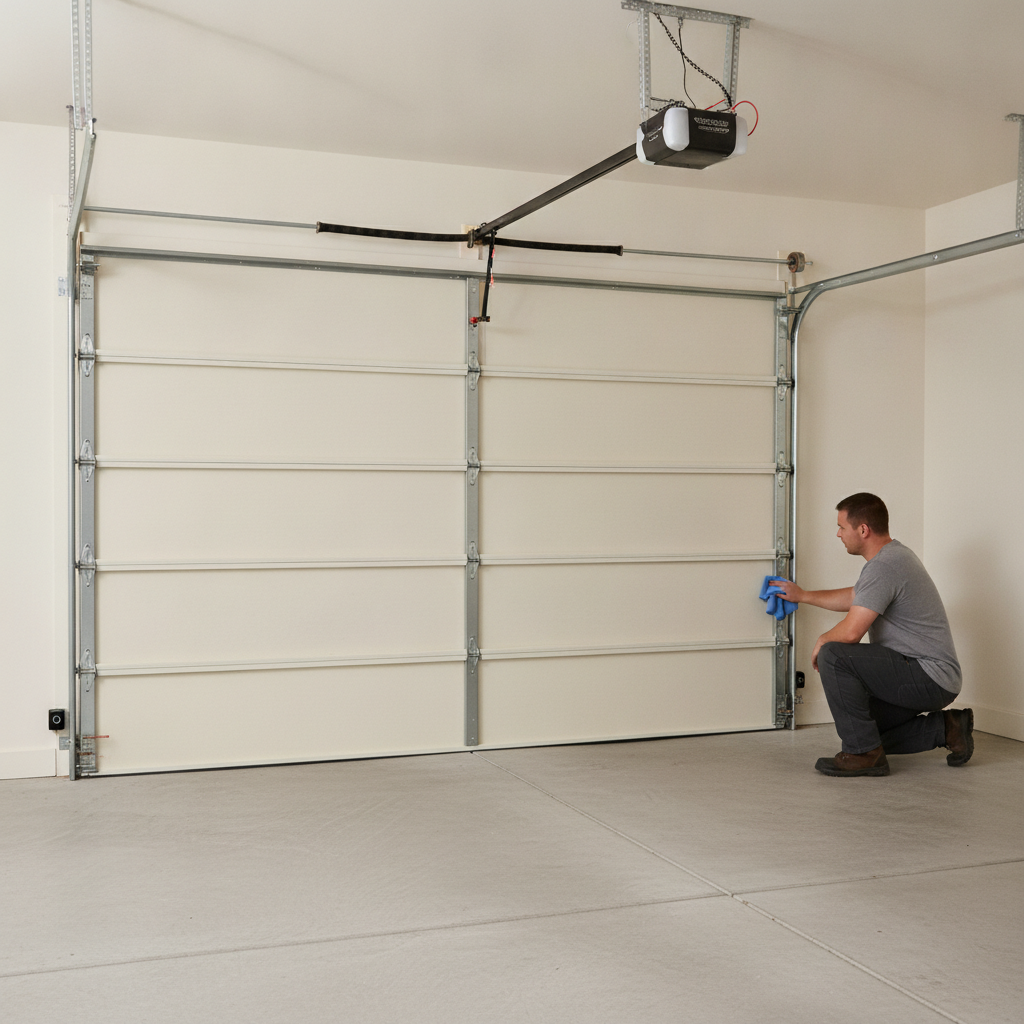
If your garage door starts to close and then reverses, dirty or misaligned safety sensors may be the reason. You can often clean garage door safety sensors safely with a soft cloth, gentle cleaner, and a careful visual check. However, if the door still will not close, the sensor lights are inconsistent, or the wiring looks damaged, a professional inspection may be needed.
Garage door safety sensors sit near the bottom of the door tracks, usually a few inches above the floor. One sensor sends an invisible beam across the door opening, and the other receives it. If the beam is blocked, the opener should prevent the door from closing. That simple system helps protect people, pets, vehicles, and stored items from a closing door.
How to Clean Garage Door Safety Sensors
Before cleaning, make sure the garage door is fully open or fully closed and stable. Keep children and pets away from the door area while you work. Also, avoid standing under a moving door or reaching near rollers, tracks, springs, or cables.
For routine sensor cleaning, follow these safe steps:
- Stop using the opener while you inspect the sensors. If possible, unplug the opener or keep wall controls and remotes away from others so the door is not activated unexpectedly.
- Find both sensors. Look near the bottom of each vertical track. Each sensor usually has a small plastic housing and a lens facing the opposite side.
- Remove loose dust and cobwebs. Use a dry microfiber cloth or a soft brush. Do not use anything abrasive on the lens.
- Wipe the lens gently. If grime is present, use a lightly damp cloth with a small amount of mild dish soap. Never spray cleaner directly onto the sensor.
- Dry the sensor housing. Moisture left on the lens or around the wiring can cause trouble, especially in damp garages.
- Clear the path between sensors. Move boxes, tools, bikes, leaves, or snow buildup away from the beam path.
- Test the door from a safe position. Stand clear of the door opening and use the wall control. The door should close smoothly without reversing for no clear reason.
Most sensor lenses are small, so heavy scrubbing is not needed. A fingerprint, sawdust, spiderweb, or road salt film can be enough to interfere with the beam. In Central Indiana, garages also collect seasonal dust, pollen, and moisture, so occasional cleaning is a practical maintenance habit.
What to Check Before Blaming the Sensors
A sensor problem can look obvious, but several issues can cause similar symptoms. For example, the door may reverse because the opener force settings, track condition, rollers, or door balance need attention. Therefore, treat sensor cleaning as one safe first check, not a complete diagnosis.
Homeowners can safely look for these common issues:
- Objects in the door path: Trash cans, hoses, toys, storage bins, and snow piles can block the beam.
- Dirty lenses: Dust, grease, leaves, and cobwebs can keep the sender and receiver from communicating.
- Bumped brackets: A sensor bracket can get knocked out of position by a broom, lawn equipment, or vehicle tire.
- Loose sensor housing: A sensor that wiggles may not stay pointed at the sensor across from it.
- Sun glare: Bright low-angle sunlight can sometimes interfere with the receiving sensor.
- Water exposure: Wet wiring, condensation, or water dripping near the sensor can create intermittent behavior.
If the opener light flashes or the sensor indicator lights blink, the system may be telling you that the beam is blocked or the sensors are not communicating correctly. For more detail on what blinking lights can mean, see this guide to garage door sensors blinking.
How to Check Garage Door Sensor Alignment
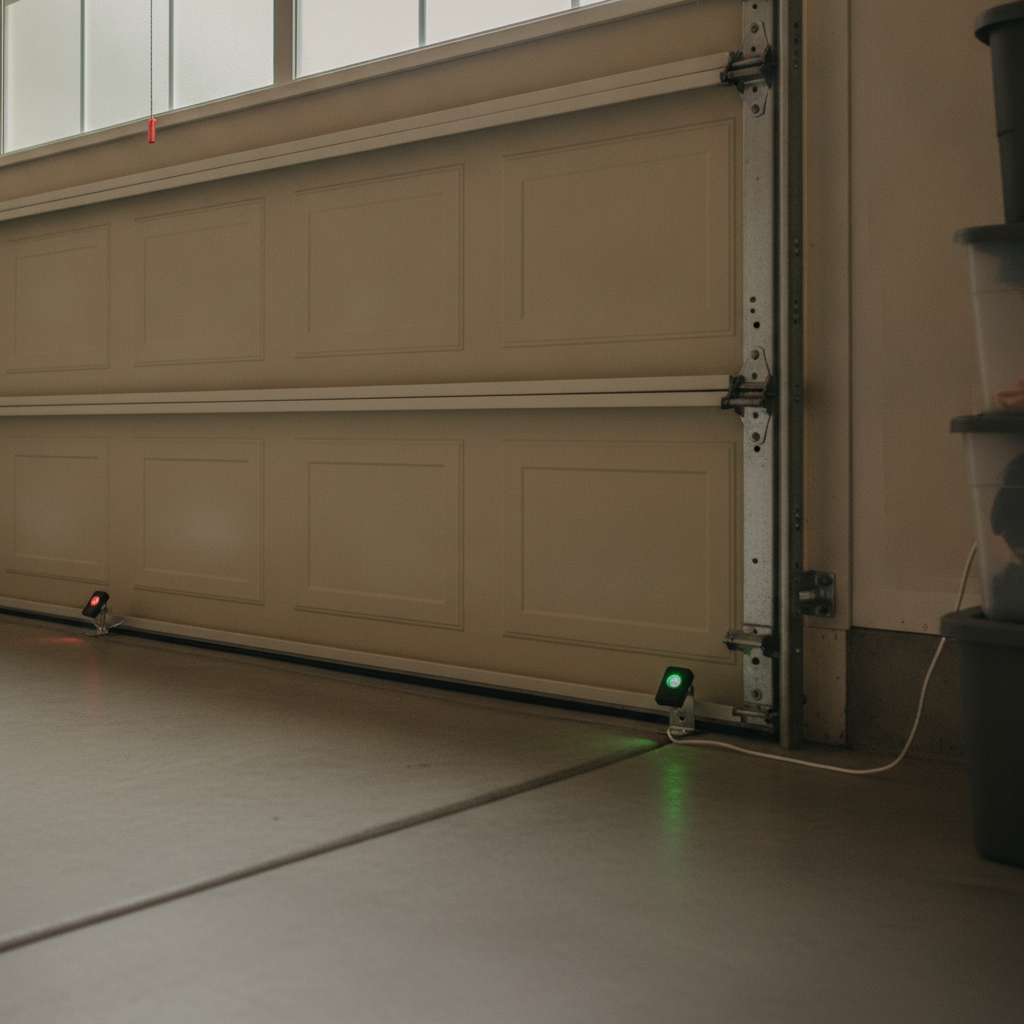
After cleaning, look at the indicator lights on both sensors. Many systems show a steady light when the sensors are aligned and powered. A blinking, dim, or missing light may point to misalignment, a wiring issue, or a failed sensor. The exact light colors vary by opener brand, so your owner’s manual may help with interpretation.
To check alignment safely, stand outside the door path and look across the opening from one sensor to the other. The two lenses should face each other directly. If one sensor appears tilted up, down, inward, or outward, the invisible beam may miss the receiving sensor.
You may be able to make a minor correction if the sensor bracket was only lightly bumped. Gently move the sensor housing until it points directly at the other sensor, then see whether the indicator light becomes steady. Do not yank on wires, bend the track, or force a bracket into place. If the bracket is damaged, loose, rusted, or attached to a bent track, have a technician inspect it.
Also check whether the sensors are mounted at similar heights. They do not need to be perfect to the millimeter, but a large height difference can prevent the beam from lining up. Meanwhile, keep the floor area clear so you are not working around clutter while testing the door.
Signs Cleaning Is Not Enough
Clean lenses and proper alignment solve many simple sensor problems. However, sensors can fail over time, and wiring can also become damaged. Replacement or professional repair may be needed if the problem keeps returning.
Watch for these signs:
- The same sensor light stays off. If one indicator never lights, the sensor may not be receiving power or may have failed.
- Lights flicker when nothing moves. Flickering can suggest loose wiring, vibration, moisture, or internal sensor trouble.
- The door reverses only during closing. Safety sensor issues usually affect closing, not opening.
- The sensor lens is cracked. A damaged lens may scatter the beam or allow moisture into the housing.
- Wires are cut, frayed, corroded, or chewed. Damaged low-voltage wiring should be repaired correctly, not twisted together as a temporary fix.
- The brackets will not hold alignment. Loose or damaged mounting hardware can cause repeated nuisance reversals.
- Cleaning helps only briefly. If the issue returns quickly, there may be a deeper electrical or opener problem.
If one sensor light is completely off, cleaning may not solve the issue. The cause could be a disconnected wire, lack of power, a damaged sensor, or an opener control problem. This overview of why a garage door sensor light is off explains several possibilities homeowners commonly notice.
Safe Maintenance Tips for Sensor Reliability
Sensor care does not require complicated tools. The main goal is to keep the beam path clear and protect the sensors from impact, moisture, and grime. A quick visual check every month or during seasonal garage cleanup can prevent many false reversals.
These habits can help:
- Keep storage bins, rakes, shovels, and sports gear away from the sensor area.
- Wipe dust and cobwebs from both lenses with a soft dry cloth.
- Check after sweeping, power washing, moving tools, or parking close to the tracks.
- Avoid spraying water or chemicals directly on the sensors.
- Look for loose wires, cracked housings, or brackets that move too easily.
- Clear leaves, mud, ice, or snow near the bottom of the garage opening.
Also pay attention to how the door moves. If the door shakes, sags, scrapes, or looks crooked, stop using it and keep people and pets away. Those symptoms may involve tracks, rollers, cables, springs, or door sections rather than the sensors. High-tension parts can be dangerous, so they should be handled by a trained garage door technician.
Frequently Asked Questions
Can I use glass cleaner on garage door sensors?
It is better to use a soft cloth and mild soap on a lightly damp cloth. Avoid spraying glass cleaner directly on the sensor because liquid can enter the housing or affect wiring.
How often should garage door safety sensors be cleaned?
Many homeowners clean them every few months or whenever dust, cobwebs, pollen, or moisture collects near the door. Clean them sooner if the door reverses unexpectedly.
Why does my garage door close only when I hold the wall button?
That can happen when the opener thinks the safety beam is blocked or misaligned. Dirty lenses, bad alignment, damaged wiring, or failed sensors can all cause similar behavior.
When to Call for Professional Sensor Help
Call a professional if cleaning and basic alignment checks do not restore normal operation. You should also get help if the sensor lights remain off, the wiring is damaged, the door closes unpredictably, or the door appears unstable. Do not bypass the safety sensors to make the door close, because they are an important part of the garage door safety system.
Ultimate Garage Doors LLC helps homeowners and property owners in Indianapolis and surrounding Central Indiana diagnose sensor, opener, and door operation problems. If your sensors keep acting up or you are unsure whether replacement is needed, request professional garage door service for a safe inspection and practical repair options.