Photo eyes and auto-reverse are two different garage door safety systems, but they work toward the same goal: helping prevent a closing garage door from trapping a person, pet, vehicle, or object. Photo eyes detect something in the doorway before the door touches it. Auto-reverse reacts when the door meets resistance during closing.
Both systems matter because a garage door is heavy and moves with enough force to cause damage or injury. If either safety feature is not working correctly, the opener may behave unpredictably. In some cases, the door may refuse to close. In others, it may close when it should reverse.
How Photo Eyes and Auto-Reverse Are Different
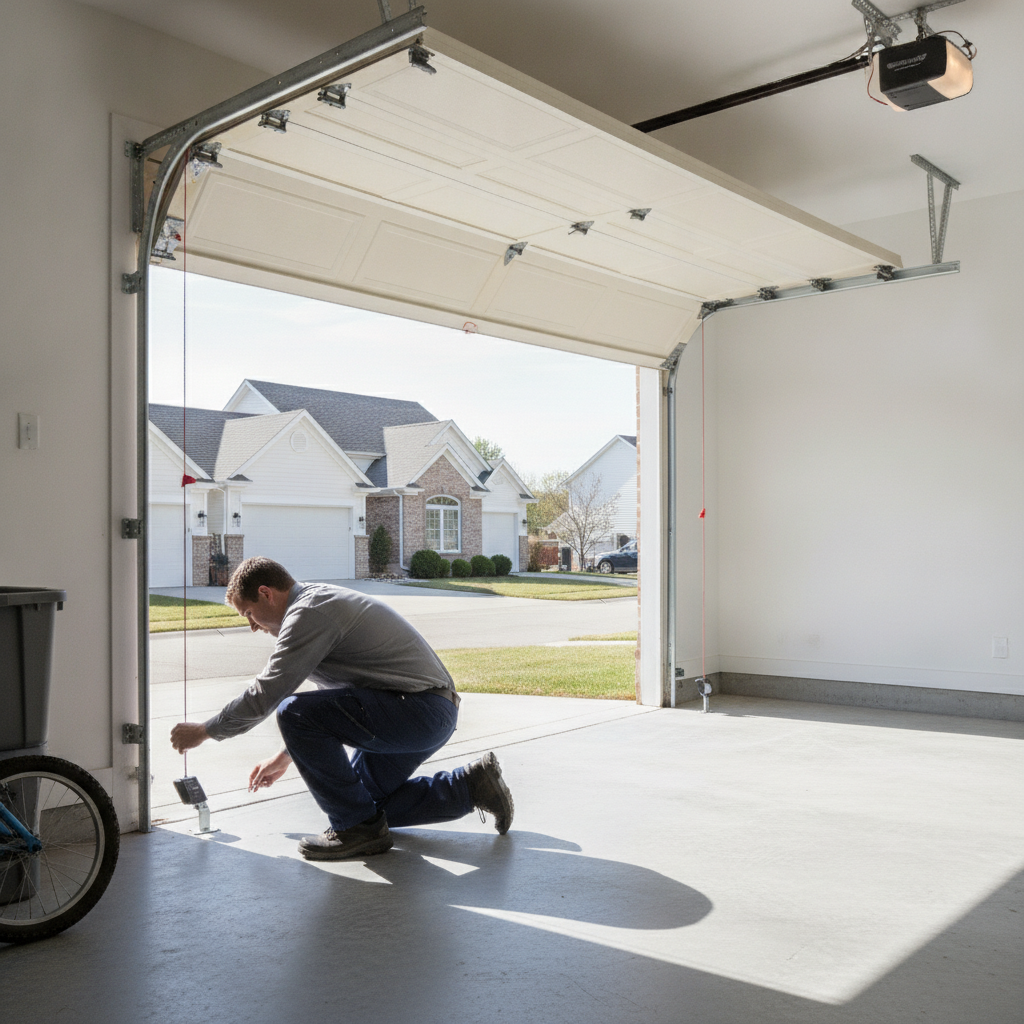
Photo eyes, also called safety sensors, are mounted near the bottom of the garage door tracks. They face each other across the door opening and create an invisible infrared beam. If that beam is blocked while the door is closing, the opener should stop and reverse the door before contact happens.
Auto-reverse is built into the garage door opener system. It responds when the door senses resistance while closing. For example, if the bottom of the door contacts an object, the opener should reverse the door back open instead of continuing to push down.
The easiest way to remember the difference is this: photo eyes help prevent contact, while auto-reverse responds after resistance is detected. They are related, but they are not the same part of the system.
Many homeowners use the terms interchangeably because both can cause the door to reverse. However, a blocked sensor beam is different from a force setting, travel issue, worn roller, bent track, or door balance problem.
How Garage Door Photo Eyes Work
Photo eyes are usually installed a few inches above the garage floor, one on each side of the door opening. One sensor sends an infrared signal, and the other receives it. When the beam is clear, the opener receives a signal that it is safe to close.
If a bike tire, trash can, snow shovel, pet, or person interrupts the beam, the opener should reverse the door. Many openers also flash the opener light or refuse to close with the wall button unless the button is held down. That behavior often points to a sensor issue rather than a broken opener.
Common photo eye problems include:
- Dirty sensor lenses
- Sensors knocked out of alignment
- Loose sensor brackets
- Damaged low-voltage wiring
- Sun glare or moisture affecting the sensor
- Objects stored too close to the sensor path
Homeowners can safely look for obvious issues. Check whether boxes, tools, leaves, or ice are blocking the sensor beam. You can also gently wipe the lenses with a soft cloth and look for indicator lights. Do not rewire sensors or bypass them. A bypassed safety sensor can allow the door to close when the opening is not clear.
If your garage door only closes while you keep the wall button pressed, photo eyes are often involved. This symptom can also have other causes, so it helps to understand why a garage door closes only when you hold the button before assuming the opener itself has failed.
How Auto-Reverse Works
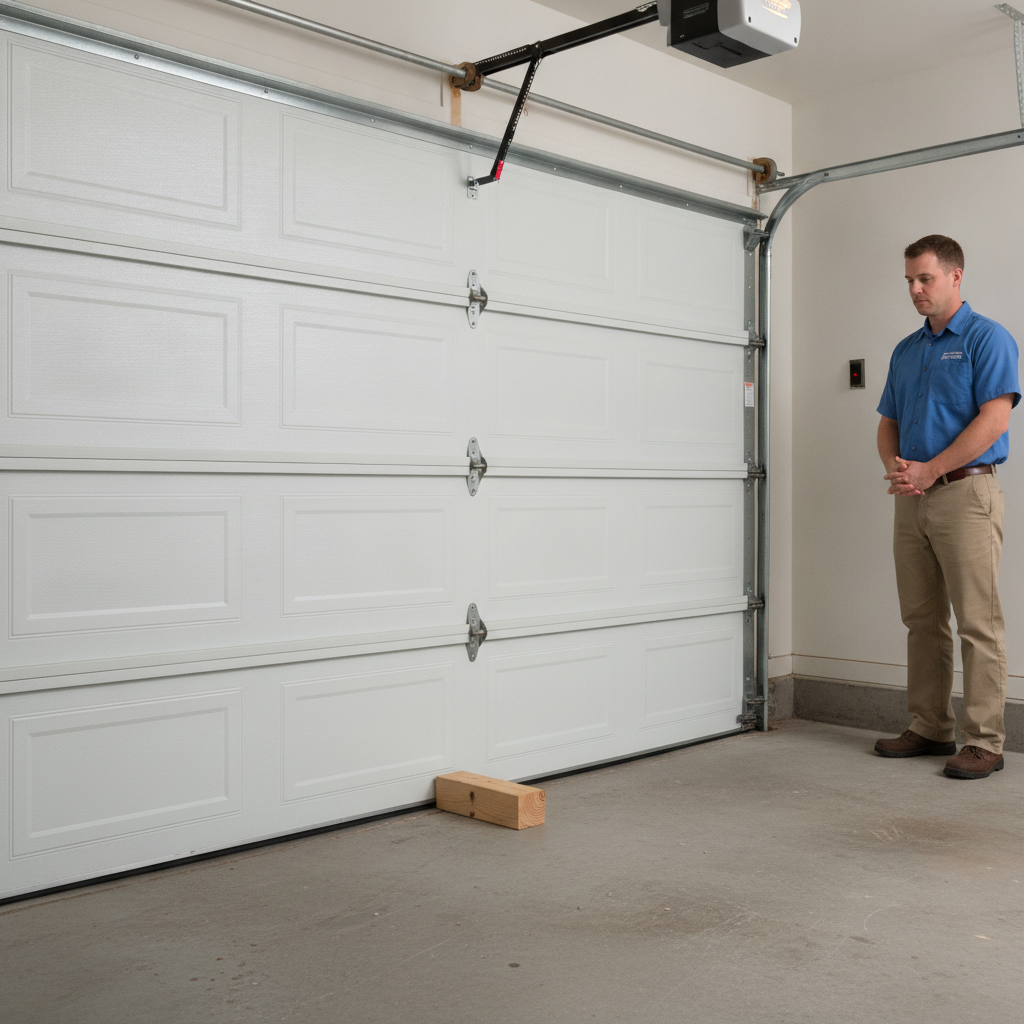
Auto-reverse is the opener’s response to excessive resistance during closing. If the door hits an object or binds because something is wrong, the opener should stop and reverse. This feature helps reduce the chance that the door will continue forcing itself downward.
Auto-reverse depends on more than one condition. The opener must be set correctly, but the door also needs to move freely. A door that is out of balance, dragging on the tracks, or struggling because of worn rollers can make the opener think it has hit an obstruction.
Several issues can affect auto-reverse performance:
- Incorrect opener force or travel settings
- A door that is heavy because of a spring problem
- Rollers that are worn, cracked, or binding
- Tracks that are bent, dirty, or misaligned
- Hinges or hardware that are loose or damaged
- An opener that is aging or malfunctioning
Auto-reverse should not be defeated by increasing force until the door closes. That can hide a mechanical problem and may make the door less safe. If the door does not move smoothly by hand or feels unusually heavy, stop using it and contact a qualified technician. Springs and cables are high-tension parts and should not be adjusted or repaired by homeowners.
Testing matters because auto-reverse can drift out of adjustment over time. For a safe overview of timing and what to watch for, see this guide on how often to test garage door auto-reverse.
Why Both Safety Systems Must Work Correctly
A garage door opener should not depend on only one safety feature. Photo eyes and auto-reverse protect against different situations, so both need to function correctly.
Photo eyes are especially useful for low objects in the doorway. A child’s scooter, a box, a pet, or a bumper can break the beam before the door touches anything. Auto-reverse is important if an obstruction does not interrupt the photo eye beam or if the door encounters resistance while moving.
For example, a tall object leaning against the inside of the door might not block the beam near the floor. In that situation, the door could still contact the object. Auto-reverse should respond when the door meets resistance. However, if the auto-reverse feature is misadjusted or the opener is malfunctioning, the door may not respond properly.
The opposite can also happen. Auto-reverse may work during a contact test, but misaligned photo eyes may prevent normal closing. The door may start down, stop, reverse, or refuse to close unless the wall control is held.
In Central Indiana, dust, road salt, moisture, leaves, and temperature swings can affect door movement and sensor reliability. Routine observation helps catch small issues before they become inconvenient or unsafe.
Safe Checks Homeowners Can Make
You do not need to disassemble the opener to notice many safety-system problems. Start with simple observations while keeping people, pets, and vehicles away from the doorway.
Safe homeowner checks include:
- Confirm nothing is stored in the path between the photo eyes.
- Look for steady or blinking indicator lights on the sensors.
- Gently clean sensor lenses with a dry, soft cloth.
- Check whether sensor brackets appear loose or bent.
- Listen for grinding, straining, or jerky movement while the door runs.
- Watch whether the door reverses at the same point every time.
- Notice whether the opener lights flash after a failed close attempt.
If the door is crooked, hanging, off track, or visibly damaged, stop operating it. Do not pull on the door, force it with the opener, or stand beneath it. A damaged door can shift unexpectedly, especially if a cable, spring, track, or roller has failed.
Also avoid adjusting springs, cables, bottom brackets, or other high-tension hardware. These parts are under significant stored force. A trained garage door technician can inspect the whole system and determine whether the issue is electrical, mechanical, or related to opener settings.
Common Signs Something Is Wrong
Safety-system problems do not always look the same. Sometimes the door will not close at all. Other times it closes partway and reverses even though the doorway looks clear.
Call for service or stop using the door if you notice:
- The door closes on an object without reversing.
- The photo eyes are misaligned and will not stay aligned.
- The door reverses randomly during normal use.
- The opener strains, hums, or stops before the door reaches the floor.
- The door is uneven, jerky, or unusually loud.
- The door feels heavy when disconnected from the opener.
- Sensor wires are cut, pinched, corroded, or hanging loose.
Some of these symptoms may point to the opener. Others may point to springs, rollers, tracks, cables, or general door balance. Because several faults can create similar behavior, a complete inspection is often the safest way to find the real cause.
Frequently Asked Questions
Do photo eyes and auto-reverse do the same thing?
No. Photo eyes detect an obstruction across the doorway before the door reaches it. Auto-reverse responds when the door meets resistance during closing. Both help improve safety, but they work differently.
Can I bypass garage door photo eyes?
No. Bypassing photo eyes removes an important safety feature and can allow the door to close when the opening is blocked. If sensors will not align or stay powered, have them inspected instead.
Why does my garage door go down and then reverse?
The cause could be misaligned photo eyes, dirty lenses, opener setting issues, worn rollers, track problems, or a door balance concern. A technician can check both the opener and the door hardware.
When to Call a Garage Door Professional
If a safety feature fails, the door reverses unpredictably, or the door appears unstable, stop using the opener until the system is checked. This is especially important if the door is crooked, off track, unusually heavy, or making new grinding noises.
Ultimate Garage Doors LLC helps homeowners and property owners in Indianapolis and nearby Central Indiana communities diagnose garage door safety concerns, opener problems, sensor issues, and door hardware failures. If you are unsure whether your photo eyes or auto-reverse are working correctly, request a professional garage door inspection and get clear guidance before the problem becomes more serious.