
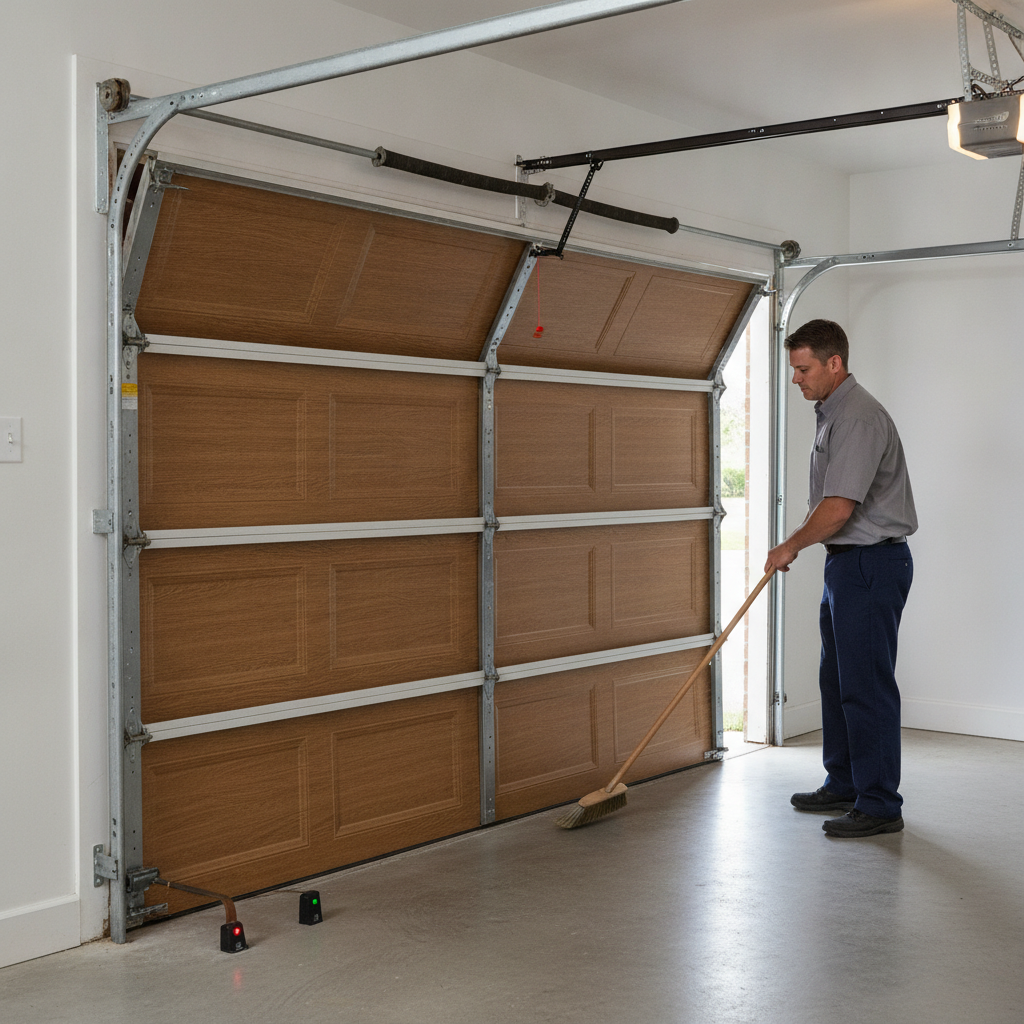
A garage door auto-reverse test should be done once a month. This simple safety check helps confirm that your garage door opener reverses when something blocks the door’s path or when the door meets resistance. If the door does not reverse correctly, stop using the automatic opener and have the system inspected before normal use continues.
Auto-reverse features are especially important on homes with children, pets, vehicles, storage bins, and busy daily routines. In Indianapolis and throughout Central Indiana, changing light, dust, vibration, and seasonal weather can affect sensors and opener performance over time. Monthly testing helps you catch small safety issues before they become larger problems.
How Often to Do a Garage Door Auto-Reverse Test
Test your garage door auto-reverse system monthly. A good habit is to check it when you replace HVAC filters, test smoke alarms, or do other routine home maintenance. The test only takes a few minutes, but it can reveal problems with sensors, opener force settings, door balance, or track movement.
Most modern garage door openers use two safety systems. The first is the photo-eye sensor system near the bottom of the door tracks. These sensors send an invisible beam across the door opening. If something breaks that beam while the door is closing, the opener should reverse the door.
The second system is the contact reverse feature. This is the opener’s ability to reverse when the door touches an obstruction or meets abnormal resistance. Both systems matter because they protect against different types of hazards.
You should also test the auto-reverse system after certain changes, including:
- A new garage door opener installation
- Sensor realignment or sensor replacement
- Garage door track, roller, or cable repair
- A power outage or electrical work near the opener
- A hard impact to the door or tracks
- Any time the door starts closing unevenly or behaving differently
If you have a rental property or a commercial overhead door, include auto-reverse testing in your documented maintenance routine. Frequent use can make safety checks even more important.
What Normal Auto-Reverse Operation Looks Like
During normal operation, a garage door should close smoothly, without jerking, dropping, or shaking heavily. The opener should not strain, chatter, or stop repeatedly. The door should stay level as it moves, and the rollers should remain in the tracks.
For the photo-eye sensor test, the door should start closing, then immediately reverse when the sensor beam is interrupted. The door should travel back upward without needing repeated button presses. The opener light may flash on some systems, which often signals that the sensor circuit detected an obstruction.
For the contact reverse test, the door should reverse after touching a solid object placed flat under the center of the door. Many opener manuals refer to a board-like test object for this check. Do not use your hand, foot, or any body part to test contact reversal.
Normal operation usually includes these signs:
- The door reverses promptly when the photo-eye beam is blocked.
- The door reverses after light contact with a safe test object.
- The opener does not require you to hold the wall button to close the door.
- The door remains level while moving up and down.
- The sensors remain firmly mounted and aimed at each other.
- The opener stops when expected and does not slam the door shut.
If your garage door only closes while you keep pressure on the wall control, the issue often involves the sensor circuit or sensor alignment. For more detail on that symptom, see this guide to why a garage door closes only when holding the button.
How to Test Photo-Eye Sensors Safely
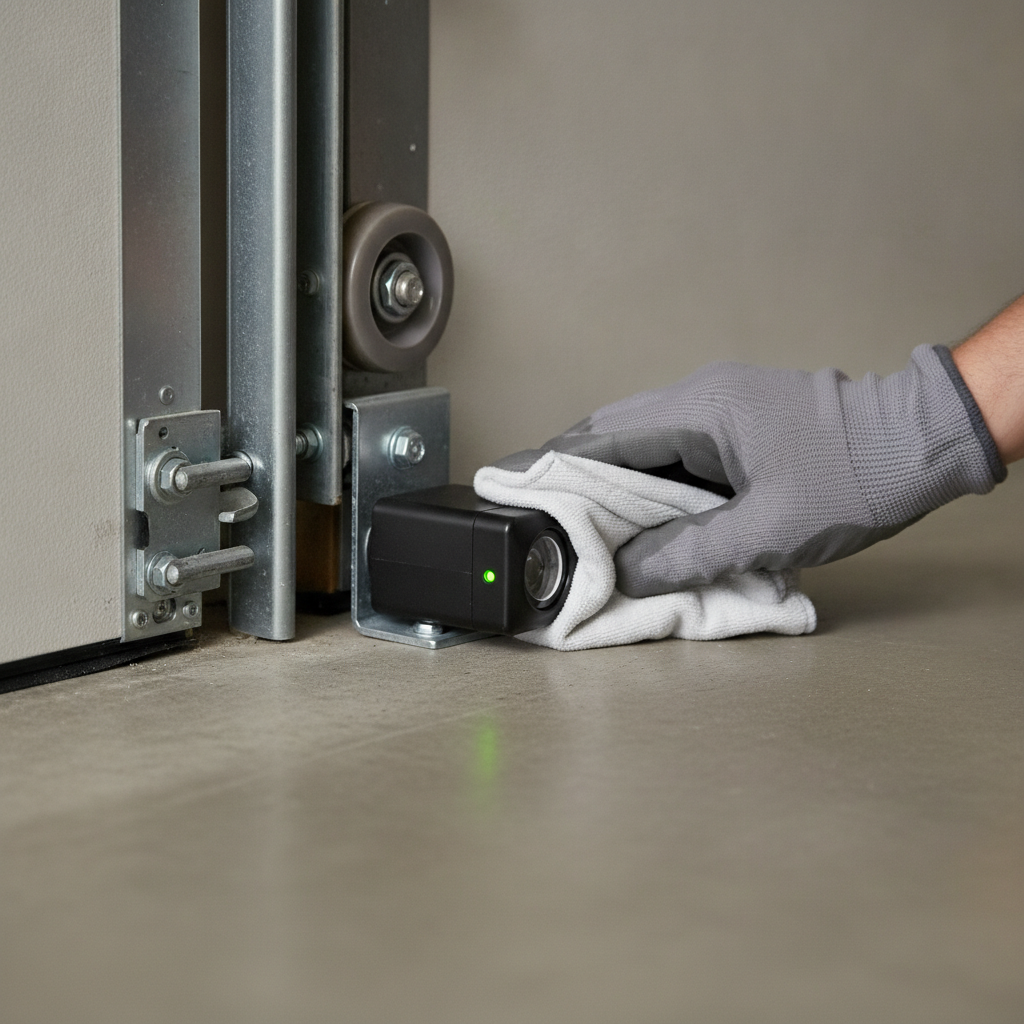
The photo-eye sensors are usually mounted a few inches above the garage floor, one on each side of the door. They must face each other directly. If one sensor is bumped by a trash can, bike, shovel, or storage box, the beam may no longer line up.
To make a safe monthly observation, stand clear of the door’s path. Start closing the door with the wall button or remote, then pass a long object such as a broom handle through the sensor beam. The door should reverse. Keep hands, feet, people, and pets away from the moving door.
If the door keeps closing when the beam is blocked, stop using the automatic opener. The problem could be misaligned sensors, damaged wiring, dirty lenses, a failing opener component, or another issue. Do not tape sensors, bypass sensors, or aim them away from the opening. Those shortcuts remove an important safety feature.
Also check the sensor lenses for dust, spider webs, leaves, or moisture. Cleaning the lenses with a soft cloth is a safe homeowner task. However, if the sensors are loose, damaged, or not responding after basic cleaning and alignment checks, a technician should inspect the system.
Common Reasons Auto-Reverse Fails
Several issues can make a garage door auto-reverse test fail. The cause is not always obvious from one symptom, so avoid assuming the opener is the only problem. The opener, sensors, tracks, door balance, and hardware all work together.
Common causes include:
- Misaligned safety sensors: The photo-eyes may not face each other directly.
- Dirty sensor lenses: Dust, cobwebs, or moisture can block the beam.
- Loose sensor brackets: Vibration can shift sensors out of position.
- Damaged sensor wiring: Wires can loosen, corrode, or be damaged by storage items.
- Opener force setting problems: The opener may not sense resistance correctly.
- Door balance issues: A heavy or unbalanced door can strain the opener.
- Track or roller problems: Binding can make the door reverse unexpectedly or fail to move smoothly.
- Sun glare: Bright light may interfere with some sensor systems at certain times of day.
Sunlight-related sensor trouble can be frustrating because the door may work normally in the morning but fail later. If that pattern sounds familiar, review how sunlight can interfere with garage door sensors before assuming the opener itself is bad.
Opener adjustments should be handled carefully. Some settings may look simple, but changing force limits without understanding the door’s condition can hide a safety problem. For example, a door that needs too much force to close may have a balance, spring, roller, or track issue that needs professional attention.
When to Stop Using the Garage Door
Stop using the automatic opener if the door fails either auto-reverse test. A door that does not reverse properly can create a serious safety risk. Until the issue is inspected, use another entrance when possible and keep people and pets away from the door area.
You should also stop operating the door if you notice any of these warning signs:
- The door closes on the test object without reversing.
- The door continues closing when the sensor beam is blocked.
- The door reverses randomly with no clear obstruction.
- The door hangs crooked or appears uneven.
- The door has come off track or rollers have slipped out.
- A cable looks frayed, loose, or broken.
- A spring is broken or separated.
- The opener strains, grinds, or shakes the door heavily.
- The door drops quickly or will not stay open.
If the door is crooked, off track, or supported unevenly, do not stand beneath it. Do not pull on the door, force it open, or try to reset cables or springs. Garage door springs, cables, and bottom brackets are high-tension components. They should only be serviced by a trained garage door technician.
If the door looks physically stable but the opener safety system fails, leave the opener off and avoid routine use until the problem is diagnosed. In some cases, a technician may find a sensor issue. In other cases, the opener or the door hardware may need adjustment or repair.
Frequently Asked Questions
Do I need to test both sensors and contact reversal?
Yes. The photo-eye sensors and contact reverse feature protect against different hazards. A monthly safety check should confirm that both systems respond correctly.
What if my garage door reverses before touching anything?
That can happen because of sensor misalignment, sun glare, track resistance, opener settings, or hardware problems. If cleaning and removing obvious obstructions do not help, schedule a professional inspection.
Can I keep using the door if only one safety test fails?
No. If either auto-reverse test fails, stop using the automatic opener until the issue is inspected and corrected. One failed safety feature is enough to treat the door as unsafe.
Get Professional Help for Auto-Reverse Problems
Monthly testing is a smart homeowner habit, but repairs should be handled carefully. If your garage door fails an auto-reverse test, behaves unpredictably, or shows signs of damaged hardware, stop using the door and keep the area clear. A qualified technician can inspect the opener, sensors, tracks, rollers, springs, cables, and door balance to find the real cause.
Ultimate Garage Doors LLC helps homeowners, landlords, property managers, and local businesses in Indianapolis and Central Indiana with garage door safety concerns, opener issues, repairs, and maintenance. If your door does not reverse correctly or you are unsure whether it is safe to operate, request a professional garage door inspection.