
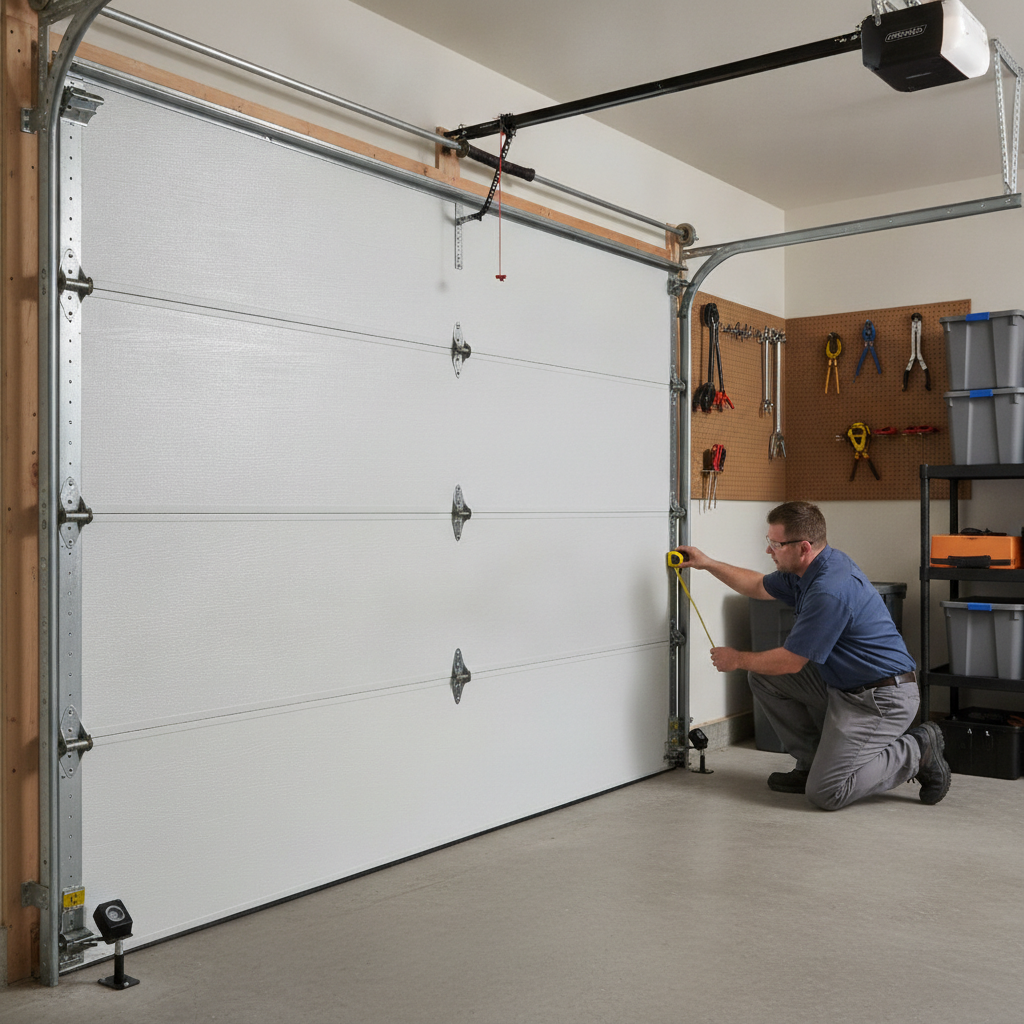
Typical garage door sensor height is usually near the bottom of the door opening, commonly about 4 to 6 inches above the garage floor. Many modern residential opener instructions specify that photo eye sensors should be mounted no more than 6 inches above the floor. This low placement helps the system detect a small child, pet, storage bin, or other obstruction before the door closes.
However, the correct height is not something to guess. Manufacturer instructions, opener model requirements, and applicable local code or inspection standards matter. If a sensor is mounted too high, misaligned, damaged, or bypassed, the garage door may not reverse when it should.
Why Garage Door Sensor Height Matters
Garage door safety sensors are also called photo eyes or photoelectric sensors. They work as a pair. One side sends an invisible beam across the garage door opening, while the other side receives it. If something breaks the beam while the door is closing, the opener should stop and reverse the door.
The reason garage door sensor height is low is simple: the most serious hazards are often close to the floor. A beam placed too high may pass over a low object. For example, a small pet lying near the threshold or a child’s toy in the opening may not interrupt a beam mounted much higher than recommended.
Correct placement also helps the opener meet its designed safety function. Since the early 1990s, residential automatic garage door openers in the United States have been required to use an external entrapment protection device, such as photoelectric sensors. The exact installation details depend on the opener and sensor system, so the manufacturer’s manual is the controlling guide for that product.
Typical Garage Door Sensor Height for Residential Doors
For most residential garage door openers, the typical sensor height is around 4 to 6 inches above the finished floor. Many installers aim for a position close to 6 inches, depending on the bracket design and the manufacturer’s instructions.
This range is common because it balances safety and practical operation. The sensors must be low enough to detect small obstructions, but not so low that minor debris, leaves, or uneven concrete constantly block the beam. In Indianapolis, snow melt, road salt, and wind-blown leaves can collect near the threshold. Good placement helps reduce nuisance problems while still keeping the safety feature effective.
Do not assume that every door should use the exact same bracket location. The best position can depend on:
- The opener brand and model
- The sensor bracket design
- The garage floor condition
- The door track layout
- The width and shape of the door opening
- Whether the door is residential or commercial
If you are replacing sensors or installing a new opener, follow the manual for that equipment. If the manual conflicts with an old installation, the older placement may not be correct.
What Happens If Sensors Are Mounted Too High or Too Low?
Sensor position affects both safety and reliability. A photo eye can be technically powered and aligned, yet still be poorly placed for the job it must do.
If garage door sensors are mounted too high, the beam may not detect low objects in the door’s path. That can reduce the protection the system is intended to provide. A high-mounted sensor may also create a false sense of safety because the opener appears to work normally during everyday use.
If sensors are mounted too low, they may be more vulnerable to dirt, water, accidental bumps, and debris. A sensor that sits very close to the floor may be blocked by leaves, spider webs, toys, or a slight buildup of snow and slush. As a result, the door may refuse to close even when the opening looks clear.
Poor placement can also make alignment harder. Sensors need a clear line of sight across the opening. If a bracket is twisted, loose, or mounted on an uneven surface, the beam may drift out of alignment over time. That can lead to a door that closes only partway, reverses unexpectedly, or works inconsistently.
How Alignment Affects Garage Door Sensor Safety
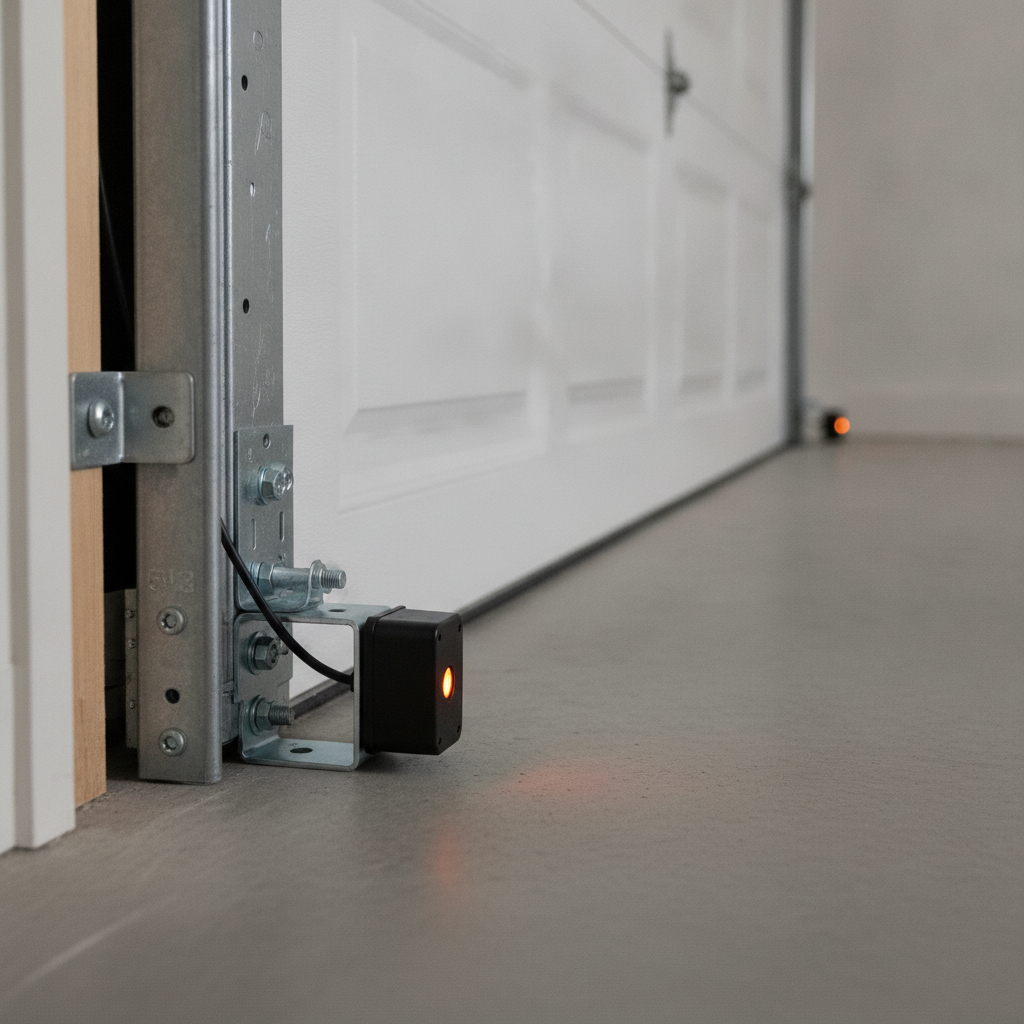
Sensor height is only one part of the installation. The two photo eyes also need to face each other directly. Even a small angle change can keep the receiver from detecting the beam.
Most sensors have indicator lights. Depending on the brand, one light may show power while another confirms alignment. A blinking or dark light can point to a blocked beam, dirty lens, wiring issue, power problem, or failed sensor. Because different brands use different light patterns, the opener manual is the best reference.
Homeowners can safely make a few basic observations before calling for service:
- Check whether both sensors are mounted at the same height.
- Look for boxes, trash cans, tools, or toys blocking the beam.
- Gently clean the sensor lenses with a soft cloth.
- Look for a loose bracket or a sensor that has been bumped.
- Check whether direct sunlight seems to affect operation at certain times of day.
Intermittent operation can be especially confusing because the door may work normally one day and fail the next. If that sounds familiar, this explanation of why a garage door sensor works intermittently covers common causes such as alignment, wiring, sunlight, and vibration.
Avoid bypassing the sensors to make the door close. The sensors are a safety device, not an optional accessory. If the opener only closes when you hold the wall button down, the system likely needs attention before normal use continues.
Why Manufacturer Instructions and Local Codes Matter
Garage door sensor installation is not only a matter of convenience. Openers are tested and listed as complete systems, and the instructions explain how that system is supposed to be installed. Mounting sensors outside the listed range can affect safety performance and may create problems during an inspection or after a property sale.
Local requirements can also matter. Residential properties, rental homes, commercial buildings, and managed properties may have different expectations. In some situations, an inspector, property manager, or insurance representative may look for proper safety equipment and correct installation.
Commercial garage doors can involve additional safety devices, controls, or monitored entrapment protection requirements. A warehouse door, service bay door, or multi-tenant property door should be evaluated based on the specific operator and use. What is acceptable for a small residential opener may not apply to a heavier commercial system.
Manufacturer instructions also help with replacement decisions. Sensors can be damaged by impact, corrosion, moisture, wire problems, or age. If the lights are unreliable and alignment does not hold, the issue may be more than placement. For more detail, see how garage door sensors can wear out over time.
Safe Homeowner Checks Before Calling for Service
You can inspect sensor placement without taking apart the opener or touching high-tension garage door parts. Start by standing outside the path of the door and looking at the lower track area on both sides. The sensors should be securely mounted, aimed at each other, and positioned near the floor according to the opener instructions.
Use a tape measure only as a visual check. Measure from the finished floor to the center of the sensor lens on each side. If one side is much higher than the other, or if the sensors are clearly above the recommended range, the installation should be corrected.
Also look for conditions that can affect the sensors:
- Loose or bent brackets
- Cracked sensor housings
- Frayed, cut, or exposed low-voltage wires
- Water pooling near the brackets
- Objects stored beside the track
- Sunlight shining directly into one sensor
If you see damaged wiring, a broken bracket, or a door that behaves unpredictably, stop relying on the opener until it is checked. Do not tape sensors in place, disconnect them, or aim them away from the opening. Temporary shortcuts can remove the protection the opener is designed to provide.
Frequently Asked Questions
Can garage door sensors be higher than 6 inches?
Many residential opener instructions call for sensors to be no more than 6 inches above the floor. Always follow the specific manual for your opener and any applicable local requirements.
Should both garage door sensors be mounted at the same height?
Yes. The sender and receiver should generally face each other at the same height so the beam travels straight across the door opening. Uneven height can cause alignment problems.
Can I move my garage door sensors myself?
You may be able to visually check placement and clear obstructions. However, if brackets, wiring, opener settings, or code compliance are involved, professional service is the safer choice.
When to Have Sensor Placement Checked
Have a technician inspect the system if your sensors are mounted well above the floor, the door reverses for no clear reason, the opener will not close normally, or the sensor lights will not stay steady. You should also get help after impact damage, water exposure, wiring damage, or an opener replacement.
A properly placed and aligned photo eye system helps your garage door opener operate as intended. If you are unsure whether your sensors are at the correct height, Ultimate Garage Doors can inspect the opener, sensor alignment, brackets, and related safety functions. For service in Indianapolis or the surrounding Central Indiana area, request a professional garage door inspection.