
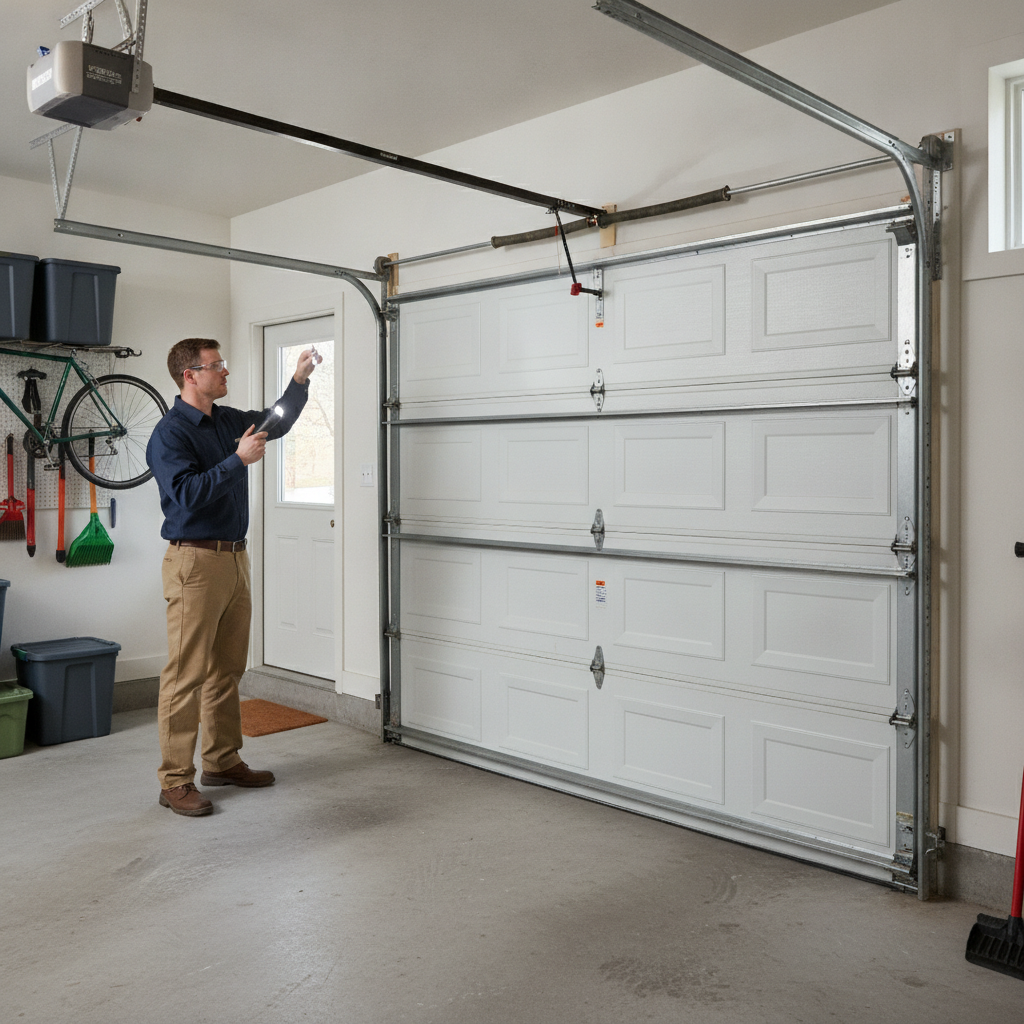
Garage door parts homeowners should never adjust include springs, cables, bottom brackets, cable drums, and other hardware connected to the counterbalance system. These components control the weight of the door and can be under extreme tension. If they slip, break, or release suddenly, they can cause serious injury and expensive door damage.
Some garage door care is appropriate for homeowners. You can look for visible wear, listen for unusual sounds, clean sensor lenses, and keep the area around the door clear. However, adjusting high-tension parts is not basic maintenance. Those repairs should be handled by a trained garage door technician.
Why High-Tension Garage Door Parts Are Risky
A garage door can be very heavy, but it feels manageable because springs and cables offset much of that weight. This is the counterbalance system. It helps the opener move the door and helps the door stay controlled as it opens and closes.
Because the counterbalance system stores and transfers force, small changes can have big consequences. A loose set screw, frayed cable, cracked bracket, or shifted drum may look like a simple fix. However, touching the wrong part can release tension or leave the door unsupported.
Another problem is that different failures can create similar symptoms. A crooked door might involve a cable issue, track damage, a weak spring, damaged rollers, or more than one problem at the same time. Guessing at the repair can make the door less safe.
If your garage door is hanging unevenly, stuck partly open, off track, or making a sharp popping sound, stop using it. Keep people and pets away from the door, avoid standing underneath it, and arrange a professional inspection.
Garage Door Parts Homeowners Should Never Adjust
The following parts are best left to trained technicians. You can often inspect them visually from a safe distance, but you should not loosen, tighten, remove, reposition, or modify them yourself.
Garage door springs
Garage door springs provide the lifting force for the door. Most residential doors use torsion springs mounted above the door or extension springs along the upper tracks. Both types operate under heavy tension.
Never attempt to wind, unwind, stretch, remove, or replace a garage door spring. Also avoid touching spring hardware, winding cones, anchor brackets, or related fasteners. If a spring breaks, the door may become extremely heavy and unsafe to lift manually.
Warning signs of a possible spring problem include a loud bang from the garage, a visible gap in a torsion spring, a door that feels unusually heavy, or an opener that struggles to move the door. These signs mean the door needs professional attention.
Garage door cables
Garage door cables run between the bottom of the door and the spring system. They help carry the door’s weight as it opens and closes. If a cable frays, slips, snaps, or comes off its drum, the door can become crooked or unstable.
Do not pull on a loose cable or try to wind it back into place. Also avoid cutting, clamping, or removing cable hardware. A cable issue can leave one side of the door unsupported, and forcing the door can bend tracks, damage panels, or cause sudden movement.
Bottom brackets
Bottom brackets are mounted near the lower corners of the garage door. They connect to the cables and carry high tension from the counterbalance system. Because of that connection, they are among the most dangerous parts on the door.
Homeowners should never remove, loosen, or adjust bottom brackets. Even if the bracket looks damaged or only one fastener appears loose, cable tension may still be present. A technician can secure the door, control the tension, and replace damaged hardware when needed.
Cable drums and torsion hardware
Cable drums are round grooved wheels mounted on the torsion tube above the door. The cables wrap around these drums as the door moves. If a drum shifts or a cable wraps incorrectly, the door can lift unevenly.
Do not loosen drum set screws or try to realign a drum. The torsion tube, drums, bearings, spring cones, and center bearing plate all work together. Adjusting one part without controlling the full system can quickly create an unsafe condition.
Loaded hinges, fixtures, and damaged sections
Most hinges are not spring-loaded, but impact damage can place extra stress on hinges, fixtures, rollers, and tracks. For example, a crashed door may twist a section and trap hardware under load. A door that has jumped the track may no longer support its weight evenly.
If the door is bent, hanging, jammed, or off track, do not force it open or closed. Do not stand beneath it to inspect the damage. Damaged sections can shift without warning, especially if a cable or roller is no longer seated correctly.
Safe Checks Homeowners Can Make
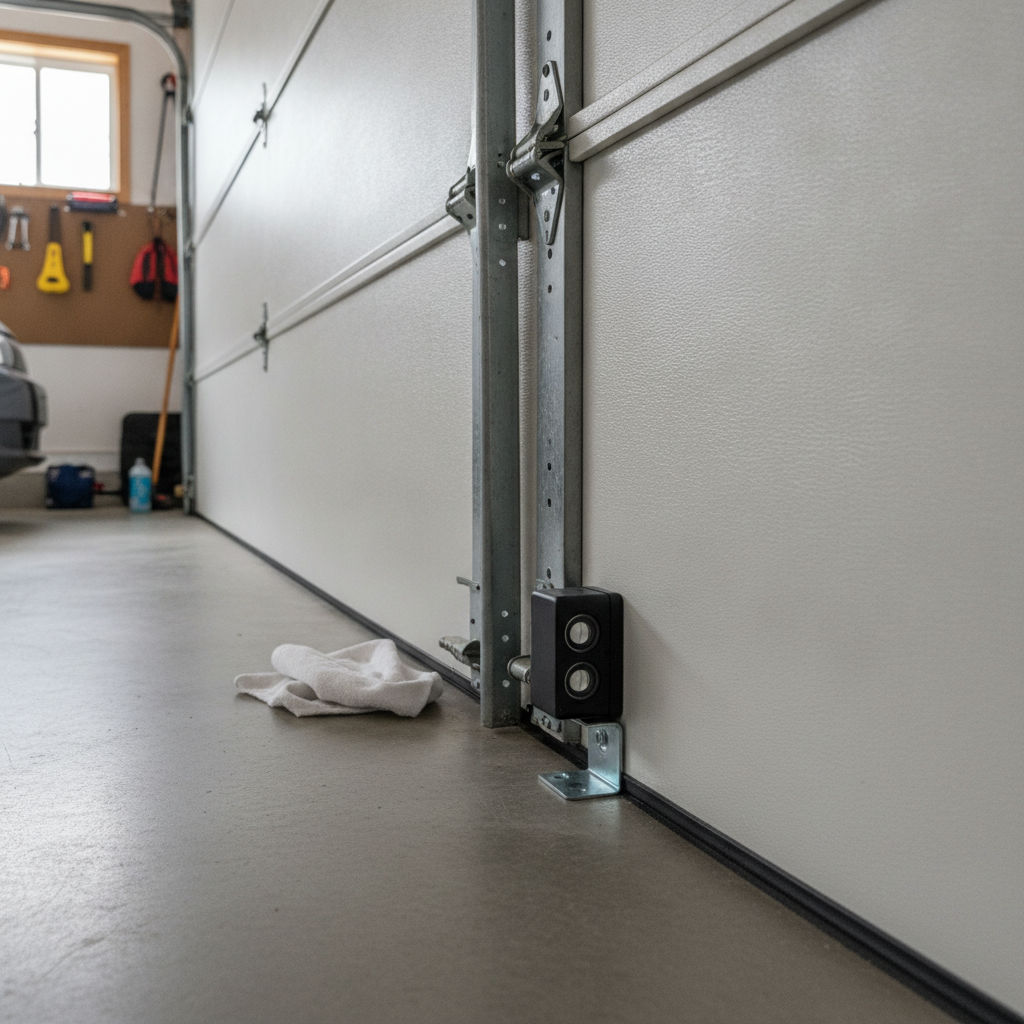
You do not need to ignore your garage door completely. Simple observation can help you catch problems early. The key is to inspect without adjusting high-tension parts or placing yourself under an unstable door.
Safe homeowner checks may include:
- Looking for frayed cables from a safe distance without touching them
- Checking whether the door appears level when fully closed
- Listening for grinding, scraping, popping, or squealing sounds
- Confirming that safety sensor lenses are clean and aligned
- Watching for rollers that wobble, drag, or come out of the track
- Looking for cracked weather seals or loose visible hardware on non-tension parts
- Testing the wall button and remote only if the door is moving normally
Basic cleaning and observation can be part of a regular routine. For a broader list of safe homeowner tasks, use a practical garage door maintenance checklist and skip anything that involves springs, cables, bottom brackets, or unstable door sections.
If you notice a serious problem during a visual check, stop there. Continued operation can make the issue worse. An opener may keep trying to lift a door that is no longer balanced, which can strain the motor and damage the top section.
Warning Signs That Mean Stop Using the Door
Some symptoms call for extra caution. They do not always identify the exact failed part, because springs, cables, tracks, rollers, and opener settings can overlap. However, they are strong signs that the door should not be used until it is inspected.
Stop operating the garage door if you notice:
- The door is crooked, tilted, or hanging on one side
- A cable is loose, frayed, snapped, or wrapped unevenly
- A spring is broken, stretched out, or separated
- The door closes hard or drops faster than normal
- The opener hums but the door does not move correctly
- The door is stuck partly open or partly closed
- Rollers have come out of the track
- A bottom bracket looks cracked, bent, or pulled away
- The door was hit by a vehicle or heavy object
In these cases, keep children, pets, and vehicles away from the door. Also avoid using the emergency release unless a qualified professional tells you it is safe. If the door is not balanced or supported, releasing it from the opener can allow sudden movement.
What Professionals Do Differently
A trained garage door technician evaluates how the door, springs, cables, rollers, tracks, hinges, drums, and opener work together. This matters because one visible symptom may be caused by a hidden problem elsewhere in the system.
Professional service also involves proper tools and safe control of tension. Technicians can support the door, identify damaged parts, and make adjustments in the correct order. They can also check door balance, travel limits, force settings, hardware condition, and opener operation after repairs are complete.
For ongoing care, a scheduled inspection can catch wear before it creates a larger problem. If you want to understand what a technician typically reviews, see what is covered during professional garage door maintenance.
This is especially useful for busy households, rental properties, and local businesses where a garage door may cycle many times each day. Preventive maintenance cannot stop every failure, but it can reduce avoidable strain and help identify unsafe conditions sooner.
Frequently Asked Questions
Can I tighten a loose garage door cable myself?
No. Garage door cables are tied to the spring system and can be under heavy tension. If a cable is loose, frayed, or off the drum, stop using the door and call a trained technician.
Is it safe to replace a broken garage door spring?
No. Garage door spring replacement should not be a DIY project. Springs store significant force, and improper handling can cause injury or damage.
What garage door maintenance can I do myself?
You can visually inspect the door, keep tracks clear of debris, clean safety sensor lenses, listen for unusual sounds, and watch for uneven movement. Avoid adjusting high-tension parts.
When to Call for Professional Garage Door Help
Call a professional if your garage door is crooked, stuck, off track, unusually heavy, noisy, or visibly damaged. You should also get help if you see loose cables, broken springs, bent bottom brackets, shifted drums, or signs that the door is no longer balanced.
If you are unsure whether a part is safe to touch, treat it with caution and leave it alone. For help evaluating high-tension garage door parts or an unsafe door, contact Ultimate Garage Doors LLC.