
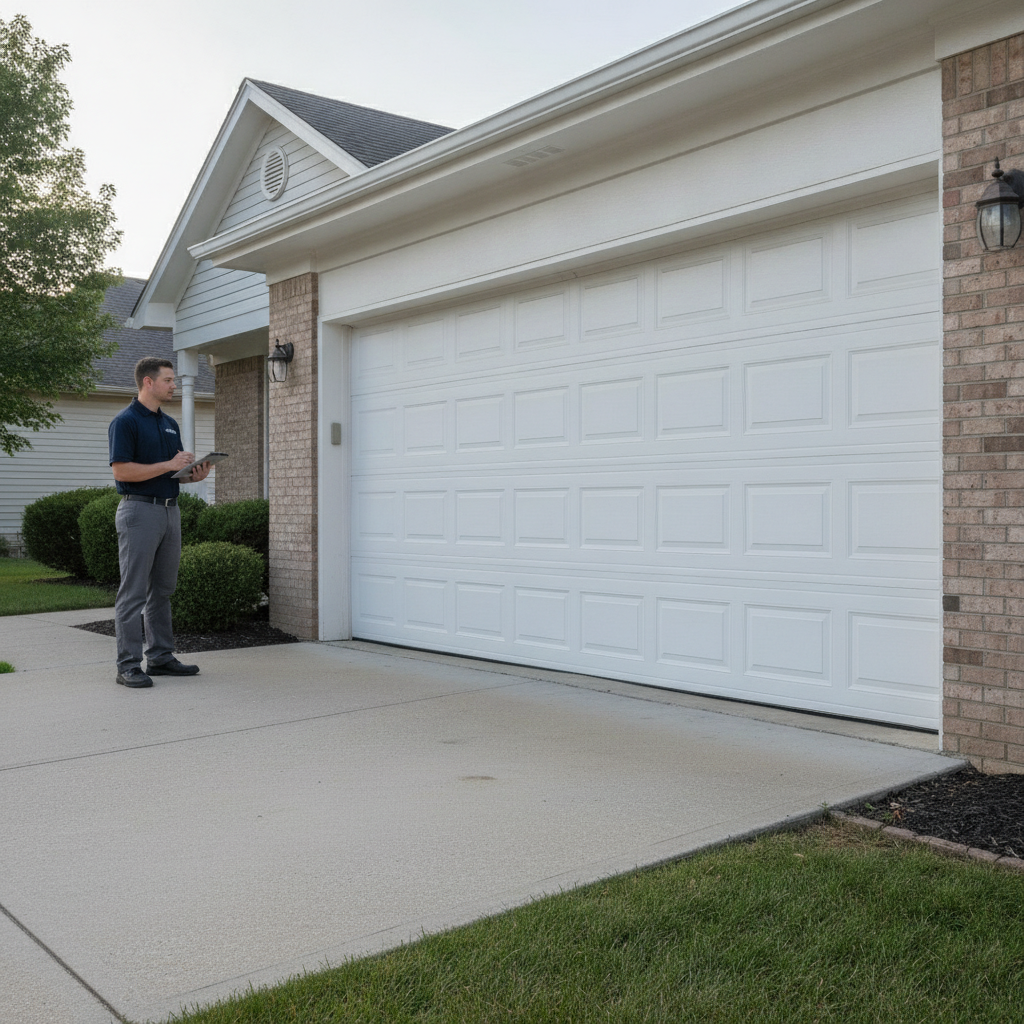
A practical garage door maintenance checklist helps homeowners spot small problems before they become harder to repair. You can safely check the door’s movement, sounds, hardware, weather seals, opener behavior, and safety sensors without touching high-tension parts. However, springs, cables, bottom brackets, and severely damaged doors should always be handled by a trained garage door technician.
For homes in Indianapolis and Central Indiana, seasonal temperature swings can affect metal parts, seals, rollers, and opener performance. A few simple checks each month can help your garage door run more smoothly and give you a better sense of when professional service is needed.
Monthly Garage Door Maintenance Checklist
Set aside a few minutes each month to watch and listen to your garage door. These checks do not require tools or disassembly. They are meant to help you notice changes in performance, not repair high-tension components.
- Watch the door open and close: Stand inside the garage, away from the moving door. Look for shaking, jerking, sagging sections, or uneven movement.
- Listen for new noises: Grinding, scraping, popping, or squealing can point to worn rollers, dry hinges, loose hardware, or opener strain.
- Check the tracks visually: Look for dents, gaps, debris, or areas where rollers appear to drag. Do not loosen track brackets or force the door back into place.
- Inspect rollers and hinges: Look for cracked rollers, missing roller stems, bent hinges, or loose-looking fasteners.
- Look at the weather seal: Check the bottom seal and side seals for gaps, cracking, brittleness, or daylight coming through.
- Test the wall button and remote: Make sure the opener responds consistently. Delayed response may involve batteries, wiring, controls, or opener issues.
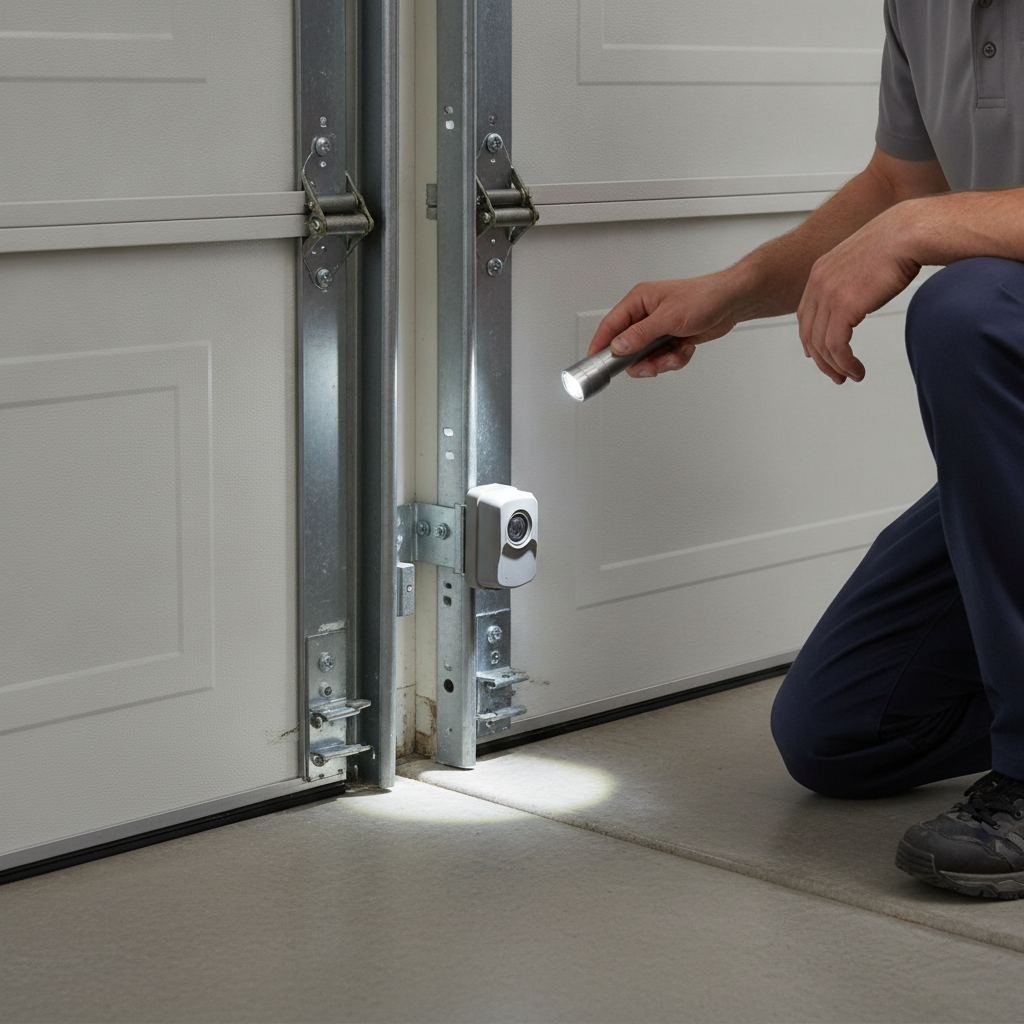
- Check the safety sensors: Make sure both sensors are aligned, clean, and mounted firmly near the bottom of the door tracks.
If you notice a crooked door, frayed cables, broken springs, or a door that hangs unevenly, stop using it. Keep people and pets away, avoid standing beneath the door, and schedule professional service.
Seasonal Garage Door Checks for Central Indiana Homes
Central Indiana weather can shift quickly. Cold winters, humid summers, and windy storms can all affect a garage door system. Therefore, it helps to add a seasonal review to your monthly routine.
Spring and summer checks
Warmer months are a good time to look for rust, excess moisture, and worn seals. Clean leaves, dirt, and spider webs from around the tracks and photo-eye sensors. Also check whether the door sticks after humid weather, because swelling trim or changing floor conditions can affect movement.
Look over painted or finished door surfaces for peeling, bubbling, or impact damage. Small exterior issues can allow moisture to reach the door material, especially on wood or older steel doors.
Fall and winter checks
Before colder weather arrives, inspect weatherstripping around the bottom and sides of the door. A worn seal can let in cold air, water, pests, and road salt residue. Meanwhile, stiff rollers or noisy hinges may become more noticeable when temperatures drop.
After snow or freezing rain, check that the bottom seal is not frozen to the floor before using the opener. If the door seems stuck, do not force it. Forcing a frozen or obstructed door can strain the opener or damage the door sections.
Safe Checks Homeowners Can Do
Homeowners can perform several useful checks without adjusting or removing parts. The key is to observe carefully and avoid anything under tension. Garage doors are heavy, and some parts store a large amount of force.
- Look, but do not adjust springs: Torsion springs sit above the door, while extension springs run along the upper tracks. If a spring is broken, stretched, separated, or rusted, call a professional.
- Inspect cables without touching them: Frayed, loose, tangled, or broken cables can make the door unsafe. Do not try to rewind or reconnect cables.
- Check door balance carefully: If the opener struggles, the door drops quickly, or the door will not stay partly open, the system may be out of balance. A technician should inspect it.
- Clear simple debris: Remove leaves, dirt, or small objects from the floor near the tracks when the door is fully stopped.
- Replace remote batteries: Weak remote batteries can mimic opener trouble and are safe for homeowners to replace.
For a deeper explanation of what trained technicians review, see what is typically included in professional garage door maintenance. Professional maintenance can include testing, adjustments, and repairs that should not be attempted without proper training.
Lubrication, Noise, and Moving Parts
Lubrication can reduce friction and noise when it is done correctly. Hinges, rollers with metal bearings, and some spring systems may need appropriate garage door lubricant. However, not every part should be coated, and too much lubricant can attract dirt.
Do not use heavy grease on tracks. The rollers should move through the tracks, but the tracks themselves should stay clean. A buildup of sticky residue can collect dust and make movement worse over time.
Noises can come from several sources. For example, squeaking may come from dry hinges, rattling may involve loose hardware, and grinding may involve rollers or opener strain. Because similar sounds can have different causes, avoid assuming one part is definitely responsible.
Lubrication schedules can vary based on use, weather, and door type. For more detail on timing and safe product choices, review this guide on how often to lubricate a garage door.
Opener and Safety Sensor Checks
Your garage door opener is separate from the door’s spring system, but the two must work together. If the door is heavy or out of balance, the opener may strain. As a result, opener problems sometimes point to a door issue rather than an electrical issue.
Start with simple observations. Make sure the opener light works, the remote responds, and the wall control is not loose. Also look at the opener rail and listen for unusual humming, clicking, or grinding.
Safety sensors are mounted near the bottom of the door opening. They help prevent the door from closing when something breaks the beam between them. If the door starts down and reverses, dirty or misaligned sensors may be involved, although other issues can cause similar behavior.
- Wipe sensor lenses gently with a clean cloth.
- Check that storage boxes, tools, or trash cans are not blocking the sensor path.
- Look for blinking lights on the sensors, which may suggest alignment or wiring concerns.
- Do not bypass or disable safety sensors.
If the opener continues to reverse, strain, or stop unexpectedly after basic checks, stop troubleshooting and have the system inspected.
Problems That Need a Garage Door Professional
Some garage door issues are not safe for homeowner repair. Springs, cables, and bottom brackets are under high tension. A sudden release can cause injury or property damage, so these parts require proper tools and training.
Call a professional if you notice any of these concerns:
- A broken torsion spring or extension spring
- Loose, frayed, tangled, or snapped cables
- A door that is crooked, jammed, hanging, or off track
- A door section that is bent, cracked, or structurally damaged
- A door that slams shut or will not stay open
- Rollers that have come out of the track
- An opener that strains, smokes, hums, or fails to move the door
- Repeated sensor or reversal problems after basic cleaning and alignment checks
Do not force a damaged garage door open or closed. Also avoid disconnecting the opener on an unstable door, because the door may fall or move unexpectedly. If the door appears unsafe, keep the area clear until it can be inspected.
Frequently Asked Questions
How often should I inspect my garage door?
A quick visual and listening check once a month is a good habit. Seasonal checks before winter and after severe weather can also help you catch seal, track, and hardware issues.
Can I tighten loose garage door hardware myself?
You may be able to note loose-looking hardware during inspection, but avoid parts connected to springs, cables, bottom brackets, or structural damage. If you are unsure, schedule professional service.
Is a noisy garage door always dangerous?
Not always. Noise can come from dry rollers, hinges, loose hardware, opener strain, or worn parts. However, sudden loud popping, scraping, or uneven movement should be inspected promptly.
When to Schedule Professional Garage Door Maintenance
A homeowner maintenance routine is useful, but it does not replace professional inspection. If your garage door is noisy, uneven, damaged, difficult to open, or showing signs of spring or cable trouble, stop using it until the problem is diagnosed.
Ultimate Garage Doors LLC helps homeowners and property owners in Indianapolis and the surrounding Central Indiana area with garage door maintenance, repair, replacement, and opener service. If your checklist turns up a concern, request a free garage door estimate and have a trained professional review the system safely.