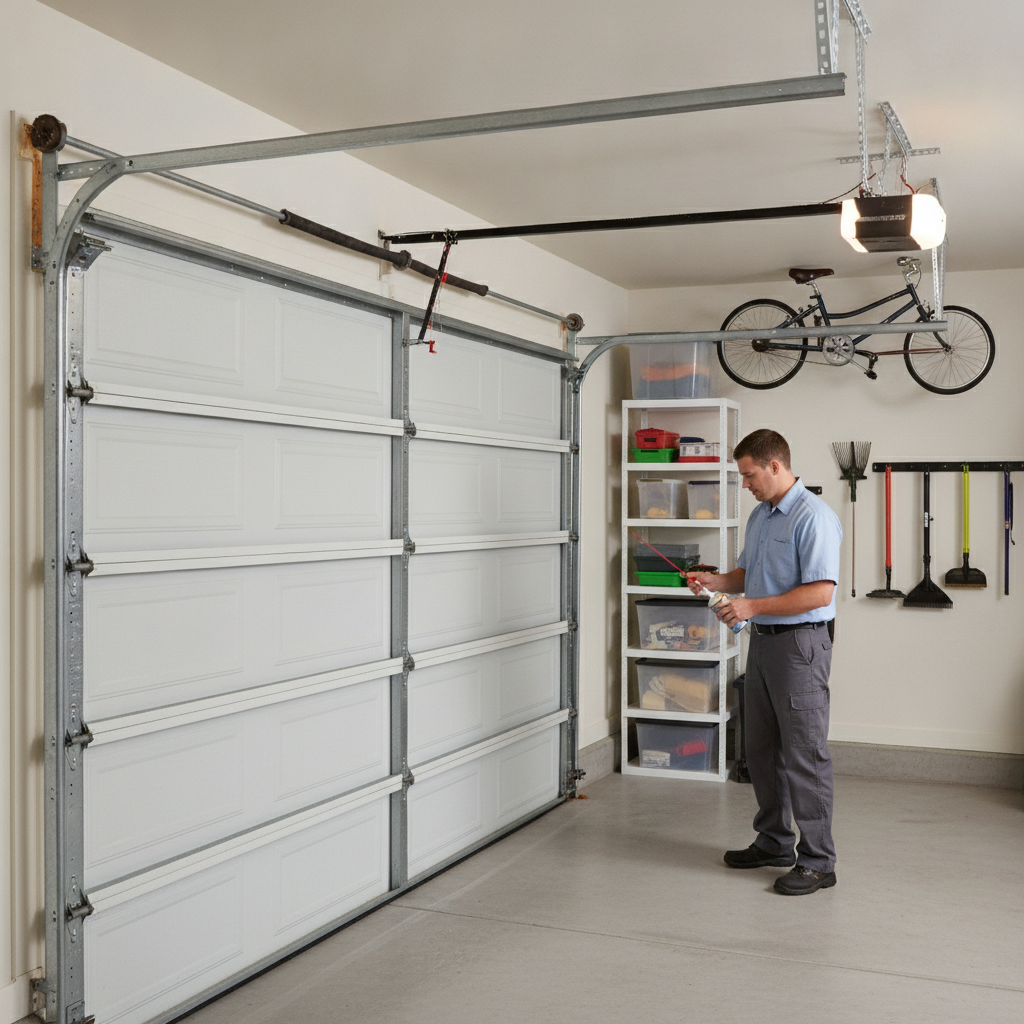
The best garage door lubricant is usually a silicone-based spray or a white lithium grease product made for garage doors or metal moving parts. Silicone sprays are clean and versatile, while white lithium grease offers longer-lasting protection on metal-to-metal contact points. Avoid common household oils because they can attract dirt, drip onto surfaces, and fail to protect the door system properly.
Lubricating a garage door is a simple maintenance task, but it matters where and how you apply the product. The goal is to reduce friction on moving hardware without coating parts that should stay clean. Seasonal temperature swings can also affect how a door sounds and moves, so the right lubricant helps maintain smoother operation.
Why the Right Garage Door Lubricant Matters
A garage door has many moving parts that work together each time the door opens or closes. Rollers move inside the tracks. Hinges flex between door sections. Springs, bearings, and opener components help lift and control the door. When these parts dry out, the door may become louder, rougher, or harder on the opener.
Lubrication helps reduce friction between moving surfaces. As a result, the door can often run more smoothly and quietly. Proper lubrication may also reduce wear on rollers, hinges, bearings, and other hardware. However, lubricant is not a repair for damaged parts, poor door balance, bent tracks, broken springs, or frayed cables.
For a broader look at routine care, preventive garage door maintenance can help homeowners understand how lubrication fits with inspections, safety checks, and seasonal upkeep.
Silicone vs. White Lithium Garage Door Lubricant
Most homeowners should choose between silicone spray and white lithium grease. Both can work well, but they have different strengths. Before buying a product, check that the label says it is suitable for garage doors, metal parts, hinges, rollers, or similar moving hardware.
Silicone-based spray
Silicone spray is popular because it is relatively clean, easy to apply, and less likely to leave a heavy residue. It works well on many garage door parts, including hinges, rollers with metal stems, springs, bearings, and weather seals when the product label allows rubber use.
Silicone performs well in changing temperatures. Because silicone is thinner than grease, it may need to be reapplied more often on high-use doors.
White lithium grease
White lithium grease is thicker and clings well to metal surfaces. It is often a strong option for hinges, roller stems, bearings, and other metal-to-metal contact points. Because it stays in place longer, it can provide durable protection where parts rub or pivot.
However, white lithium grease can collect more dust if overapplied and may leave visible residue. Use a light coating rather than soaking the hardware; a small amount in the right place usually works better than a heavy layer spread everywhere.
Which one should you choose?
For general homeowner maintenance, silicone spray is often the easiest starting point. It is clean, simple, and versatile. White lithium grease may be better for noisy hinges or metal contact points that need a thicker protective film. Some products add corrosion protection — read the label before use.
Lubricants and Oils to Avoid
Not every slippery product belongs on a garage door. Some products may quiet a squeak briefly but create bigger maintenance problems later. Others wash away quickly or leave sticky buildup.
Avoid these products for routine garage door lubrication:
- Motor oil: It is messy, attracts dirt, and can drip onto the floor or door sections.
- Cooking oil: It breaks down, becomes sticky, and is not designed for mechanical hardware.
- Penetrating oil as the main lubricant: Some penetrating sprays help loosen stuck parts, but many are too thin for lasting lubrication.
- Heavy grease on tracks: Grease inside the tracks can collect grit and interfere with smooth roller movement.
- General household oil: Light oils often run off quickly and leave residue where dust can build up.
The tracks are a common source of confusion. Garage door tracks guide the rollers, but they do not need to be coated with lubricant. In most cases, tracks should be clean and dry. If you see packed dirt, cobwebs, or sticky residue, wipe the tracks carefully with a dry or lightly damp cloth while the door is stable.
Where to Apply Garage Door Lubricant
Before applying lubricant, disconnecting parts or adjusting hardware is not necessary for basic maintenance. Homeowners should avoid loosening brackets, removing cables, adjusting springs, or changing opener force settings without proper training. Several garage door components are under high tension and can be dangerous.
For safe basic lubrication, focus on accessible moving parts while keeping hands clear of pinch points. Follow the product label, use a light amount, and wipe away excess. Good application points often include:
- Hinges: Apply lubricant where the hinge pivots, not across the entire door section.
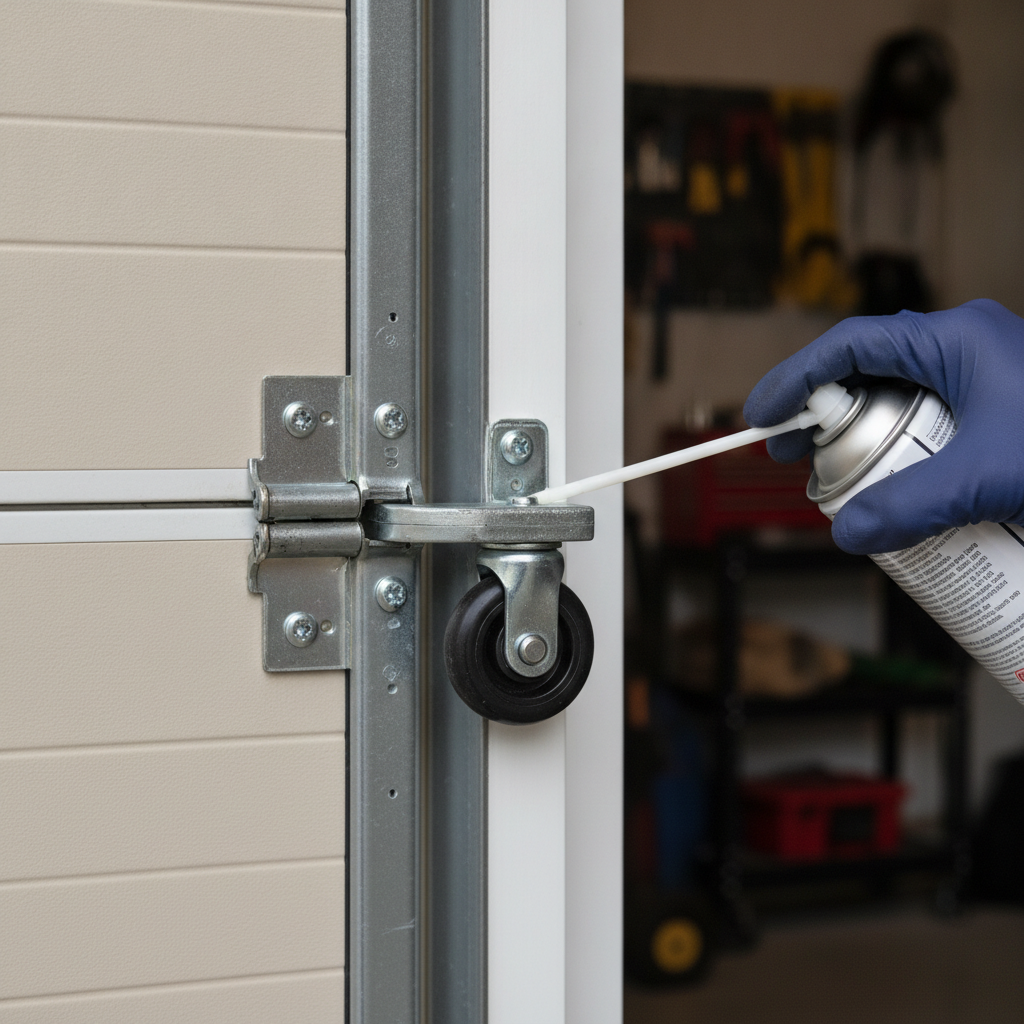
- Roller stems: Lubricate the metal stem where the roller shaft meets the hinge bracket. Do not coat nylon roller wheels unless the product label says it is safe.
- Bearings and end plates: A light spray can help where rotating metal parts are accessible.
- Torsion spring surface: A light coat may reduce noise and corrosion, but do not adjust, wind, unwind, or remove springs.
- Lock hardware: If your door has a manual lock, use an appropriate lubricant sparingly on moving lock parts.
Do not spray safety sensors, opener belts, opener circuit boards, or photo-eye lenses. Also avoid spraying the bottom rubber seal unless the lubricant label specifically says it is safe for rubber. Some products can dry out or damage rubber and vinyl materials.
If you are unsure which components are safe to touch, review guidance on garage door parts homeowners should never adjust. Lubricating accessible hardware is different from working on high-tension parts.
Basic Application Tips for Homeowners
Lubrication should be careful, light, and controlled. More product does not mean better protection. Too much lubricant can drip, stain, attract dirt, or make future service messier.
Use these practical tips:
- Choose the right product. Use silicone spray or white lithium grease labeled for garage doors or metal moving parts.
- Start with a clean surface. Wipe visible dirt from hinges, roller stems, and nearby hardware before applying lubricant.
- Apply a small amount. Aim the straw or nozzle at the pivot point or moving contact area.
- Move the door carefully. Open and close the door to help distribute lubricant only if the door is operating normally.
- Wipe off excess. Remove drips or buildup with a clean rag.
If the door is jerky, crooked, off track, hanging unevenly, or making a loud snapping sound, stop using it. Do not try to force it open or closed. Keep people and pets away from the door area and contact a qualified garage door technician.
For most residential doors, lubrication a few times per year is reasonable. Doors that see heavy use, moisture, or dusty conditions may need attention more often. However, repeated squeaking shortly after lubrication may point to worn rollers, loose hinges, poor alignment, or another repair issue.
When Lubricant Will Not Solve the Problem
Lubricant can reduce friction, but it cannot correct every garage door noise or movement problem. Several faults can create similar symptoms. For example, grinding may come from worn rollers, a misaligned track, dry hinges, or opener strain. A professional inspection may be needed to identify the actual cause.
Call for help if you notice any of these warning signs:
- The door is crooked, sagging, or off track.
- A cable looks frayed, loose, or disconnected.
- A spring appears broken or separated.
- The opener hums but the door does not move normally.
- The door slams shut or feels unusually heavy.
- Rollers are cracked, missing, or wobbling badly.
- Lubrication only quiets the door for a short time.
Springs, cables, and bottom brackets are especially important to leave alone. These parts can hold significant tension even when the door is not moving. Do not stand beneath an unstable door or attempt to repair high-tension components yourself.
Frequently Asked Questions
Is silicone spray or white lithium grease better for garage doors?
Both can work well. Silicone spray is cleaner and easier for general use, while white lithium grease clings longer to metal contact points such as hinges and roller stems.
Should I lubricate the garage door tracks?
No. Tracks should usually be clean and dry. Lubricating tracks can attract dirt and make roller movement less smooth over time.
Can I use WD-40 as garage door lubricant?
Caution: traditional penetrating WD-40 formulas are not ideal as long-term lubricants; check the label for specialty lubricants before using.
Get Help With a Noisy or Hard-Moving Door
If your garage door still squeaks, grinds, sticks, or moves unevenly after proper lubrication, the issue may involve worn hardware, door balance, tracks, cables, springs, or the opener. Stop using the door if it appears unstable, and do not attempt high-tension repairs.
Ultimate Garage Doors LLC helps homeowners and property owners in Indianapolis and surrounding Central Indiana with garage door maintenance, repair, and replacement needs. If you are not sure whether lubrication is enough, contact Ultimate Garage Doors LLC to have the door evaluated by a professional.