
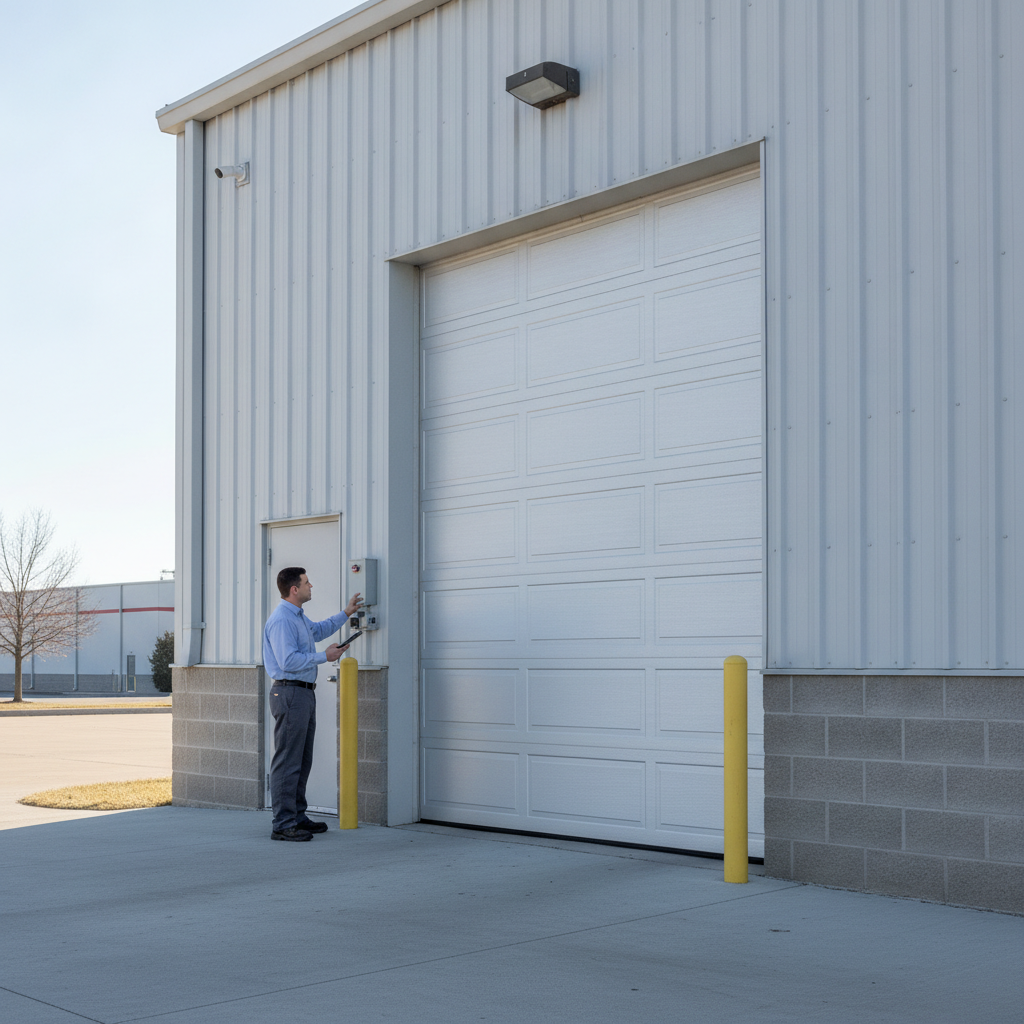
Commercial garage door maintenance should usually be scheduled at least once or twice per year, but high-use doors often need quarterly or even monthly attention. The right schedule depends on how often the door cycles, the type of door, the work environment, and how costly downtime would be for your operation.
For businesses, apartment properties, warehouses, auto shops, and service facilities in Indianapolis and Central Indiana, garage doors are often part of daily operations. A neglected door can create safety risks, slow deliveries, expose inventory, or interrupt tenant and employee access. A usage-based maintenance plan helps reduce those risks before a small issue becomes a shutdown.
Commercial Garage Door Maintenance Schedules by Usage
The best maintenance interval is based on door usage, not just the calendar. A commercial door that opens 10 times per week has different needs than a loading dock door that cycles all day. Springs, rollers, hinges, cables, tracks, operators, and safety devices all wear faster with frequent movement.
As a general planning guide:
- Low-use commercial doors: Doors used only a few times per week may need professional maintenance once per year.
- Moderate-use doors: Doors used daily, but not constantly, often benefit from service every six months.
- High-use doors: Busy warehouse, delivery, fleet, or service bay doors may need quarterly maintenance.
- Very high-cycle doors: Doors in heavy logistics or industrial settings may require monthly checks or a custom maintenance plan.
These are not strict rules because the door’s condition also matters. For example, a door exposed to dust, moisture, vibration, forklift traffic, or frequent temperature changes may need service more often. Older doors may also need closer monitoring, especially if parts are nearing the end of their useful life.
Why Door Cycles Matter More Than the Calendar
A door cycle is one full open-and-close movement. Commercial doors are built for repeated use, but every cycle places stress on moving parts. Over time, lubrication breaks down, hardware loosens, rollers wear, and spring tension changes.
Cycle count matters because wear can build quietly. A property manager may not notice a gradual increase in noise or drag until the door becomes unreliable. Meanwhile, an opener may work harder than it should, which can shorten the life of the operator.
Different door systems also have different needs. A sectional overhead door has panels, hinges, rollers, tracks, springs, and cables. A rolling steel door uses a different curtain and barrel assembly. A commercial operator may have chains, belts, gears, photo eyes, and control stations that need inspection. Therefore, a good maintenance schedule should reflect the specific door system on the property.
If your building has multiple doors, each one may need its own schedule. A front service bay used all day may need quarterly maintenance, while a rear storage door used occasionally may only need annual service. Treating every door the same can lead to over-servicing some doors and under-servicing the doors that carry the heaviest workload.
Safety Issues Maintenance Can Help Catch Early
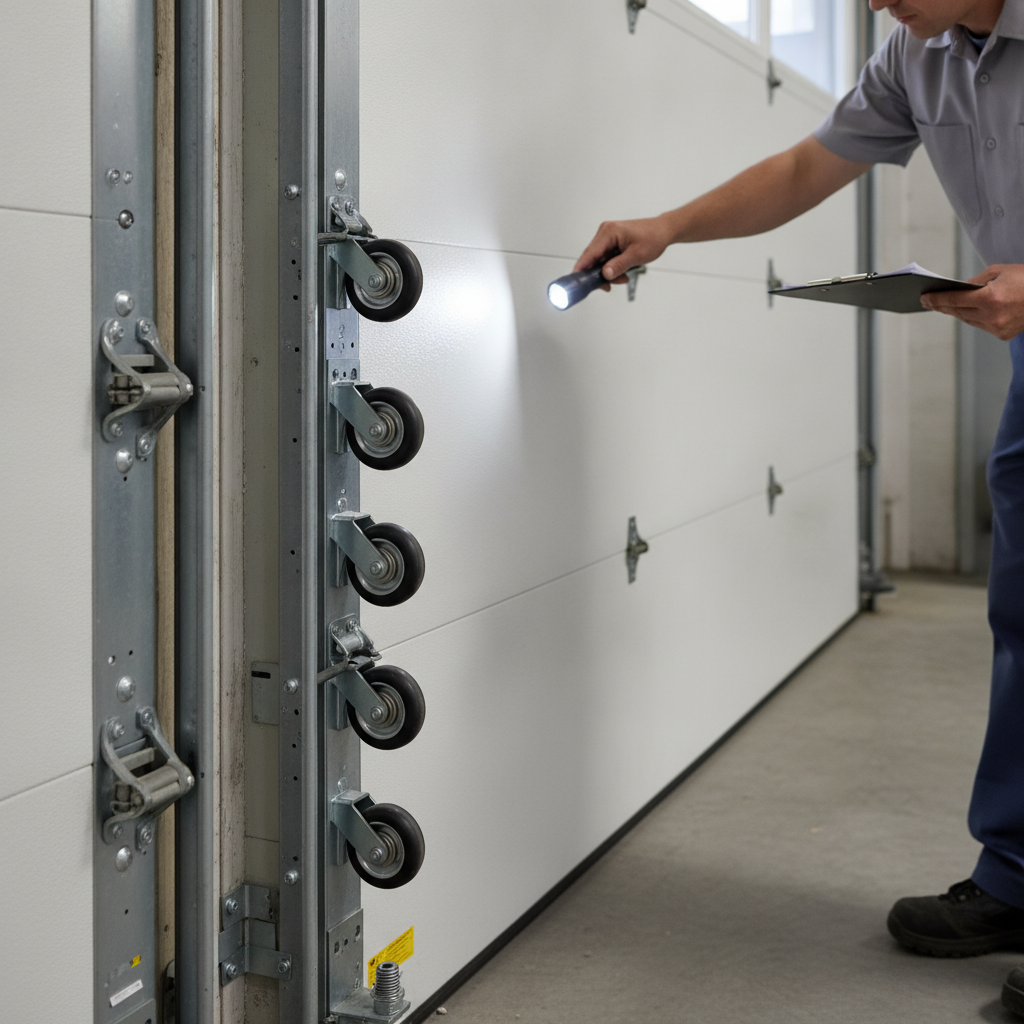
Commercial garage doors are heavy, and many use high-tension springs and cables. Maintenance helps identify wear before a component fails suddenly. It also supports safer daily use for employees, tenants, vendors, and customers.
A professional maintenance visit may include inspection of:
- Garage door springs, including torsion springs or extension springs where applicable
- Cables, drums, and bottom fixtures
- Rollers, tracks, hinges, and brackets
- Operator limits, force settings, chains, belts, and gears
- Photo eyes, safety edges, reversing systems, and control stations
- Panel condition, weather seals, and door alignment
- Fasteners, mounting points, and structural supports
Some safety checks are safe for staff to observe from the floor. For example, they can listen for grinding noises, watch for uneven travel, check whether safety sensors appear blocked, and report doors that hesitate or reverse unexpectedly. However, employees should not adjust springs, remove cables, loosen bottom brackets, or work on high-tension parts.
If a door is crooked, hanging, off track, or visibly damaged, stop operating it. Keep people and pets away from the opening, and do not stand beneath the door. Several issues can cause these symptoms, so a qualified technician should inspect the system before anyone attempts to use it again.
Preventing Downtime and Costly Interruptions
Downtime is one of the biggest reasons to maintain commercial garage doors on a schedule. A stuck loading dock door can delay shipments. A failed fleet door can trap vehicles. A damaged security door can leave a building exposed after hours.
Preventive maintenance reduces downtime because it gives technicians a chance to spot developing problems. Worn rollers, loose hinges, frayed cables, weak springs, and misaligned tracks can often be addressed before the door becomes unusable. As a result, managers can plan service at a better time instead of reacting during a busy workday.
Maintenance can also protect related equipment. When a door is out of balance or dragging in the tracks, the operator may strain to move it. That added stress can affect gears, chains, belts, and motor components. If your team wants to understand the general concept of door balance, this guide on how to check garage door balance safely explains what balance means and why unsafe testing should be avoided on damaged systems.
Not every problem is visible during normal operation. For example, a door may still open while a cable begins to fray or hardware slowly loosens. That is why scheduled maintenance is more reliable than waiting until something sounds bad or stops moving.
What Should Be Documented After Each Service Visit?
Documentation is a practical part of commercial garage door maintenance. It helps property owners, landlords, and managers track door condition, plan budgets, and show that safety-related equipment is being monitored. Good records are especially useful for facilities with multiple doors or changing staff.
A maintenance record should normally include:
- Date of service and door location or door number
- Door type, size, and operator type if available
- Observed condition of springs, cables, rollers, tracks, panels, and hardware
- Lubrication performed and adjustments made by the technician
- Safety device testing, such as photo eyes or reversing systems
- Repairs completed during the visit
- Recommended future repairs or replacement considerations
- Notes about unusual noise, impact damage, or operational concerns
Clear records make it easier to spot patterns. For example, if one door repeatedly needs roller replacement or track alignment, the problem may involve door usage, building movement, operator strain, or impact from equipment. Documentation also helps managers prioritize repairs across several locations or overhead doors.
Staff observations are valuable too. A simple log of noise, slow movement, error codes, or service interruptions can help a technician diagnose intermittent problems. Meanwhile, routine visual checks can identify issues between service visits without requiring employees to perform repairs.
What Property Staff Can Safely Check Between Visits
Between professional maintenance visits, trained staff can perform simple visual and operational observations. These checks should never involve disassembling parts or adjusting tension. The goal is to notice changes early and report them.
Safe checks may include:
- Looking for bent tracks, damaged panels, or missing weather seals
- Listening for new grinding, popping, scraping, or squealing sounds
- Watching whether the door moves smoothly and evenly
- Checking that the floor area and photo eyes are clear of debris
- Confirming wall controls and remotes work as expected
- Noting whether the operator strains, shakes, or stops unexpectedly
- Reporting loose-looking hardware without tightening high-tension parts
Hardware can loosen over time because doors vibrate during operation. However, not every fastener should be handled casually. Some brackets are connected to high-tension systems, so staff should understand why it is important to tighten garage door hardware carefully and leave risky components to a professional.
Any inspection program should include a clear stop-use policy. If a door appears unstable, drops quickly, hangs unevenly, or comes off track, employees should not try to force it open or closed. Secure the area and call for professional service.
Frequently Asked Questions
How often should a warehouse garage door be serviced?
A warehouse door used daily should often be serviced at least twice per year. High-cycle loading dock or fleet doors may need quarterly or monthly maintenance, depending on use.
Can employees lubricate commercial garage doors?
Some businesses allow trained staff to lubricate approved low-risk points, but this depends on the door and company policy. Springs, cables, bottom brackets, and operator adjustments should be handled by a technician.
What are signs a commercial garage door needs service now?
Grinding noises, uneven movement, slow operation, reversing problems, frayed cables, loose-looking parts, impact damage, or a door that will not fully open or close all indicate service is needed.
When to Schedule Professional Maintenance
If your commercial garage door is used daily, supports deliveries, secures inventory, or affects tenant access, it should be on a preventive maintenance schedule. Annual service may be enough for light use, but busy commercial doors usually need service every six months or more often.
Professional help is also appropriate if the door is noisy, uneven, off track, damaged, or unreliable. Stop using any door that appears unstable, keep the area clear, and avoid working on springs, cables, or bottom brackets. For help with a usage-based maintenance plan in Indianapolis or Central Indiana, request a free garage door estimate from Ultimate Garage Doors.