
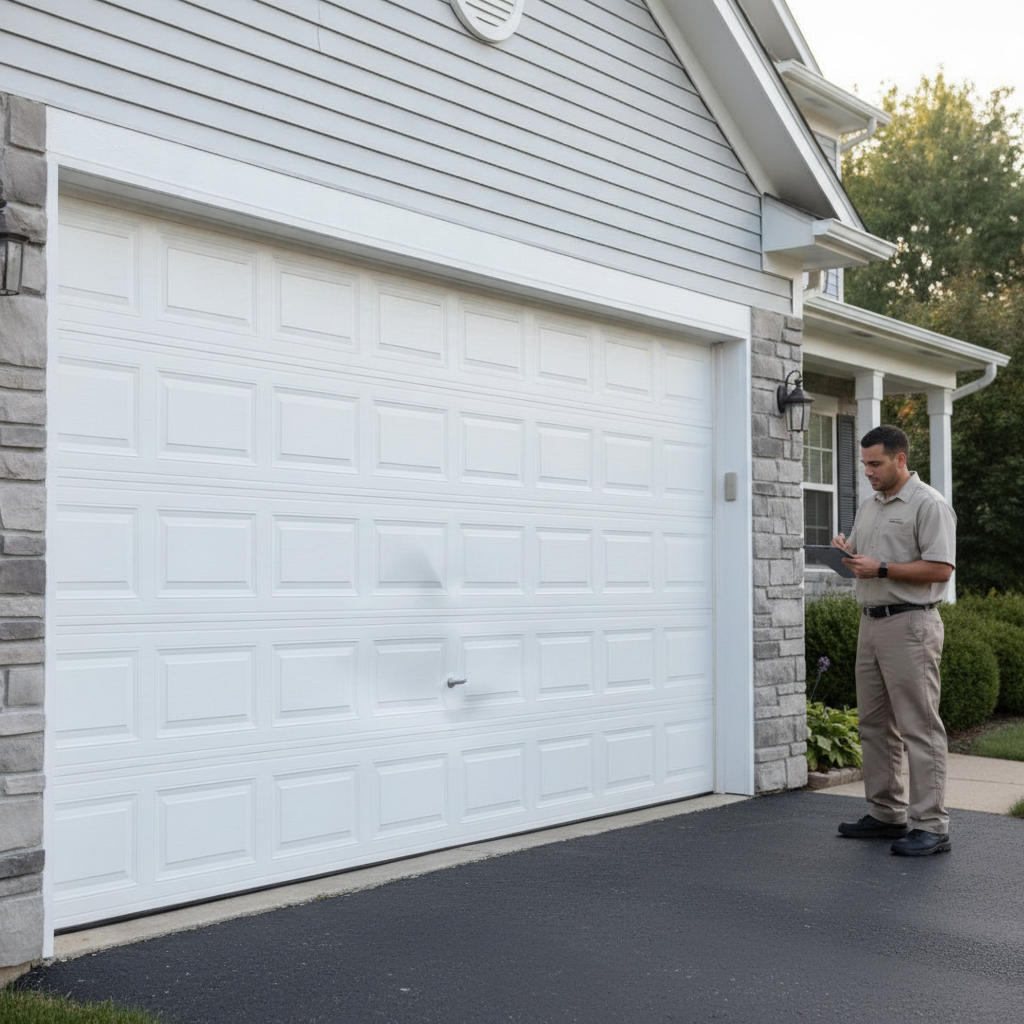
Yes, one damaged garage door panel can often be replaced if the door model is still available, the new panel can be matched, and the rest of the door is structurally sound. However, garage door panel replacement is not always the best or most cost-effective choice. Door age, color fading, hidden damage, and hardware condition can all affect the recommendation.
For homeowners in Indianapolis and Central Indiana, the right answer usually starts with a careful inspection. A small dent in one section is very different from a bent door, cracked stile, damaged track, or door that no longer moves evenly.
When Garage Door Panel Replacement Makes Sense
Replacing one panel can be a practical repair when the damage is limited to a single section. For example, a low-speed bump from a vehicle, a basketball impact, or storm debris may dent one panel while leaving the rest of the door in good condition.
A single-panel repair is usually more realistic when:
- The damage is cosmetic or limited to one section.
- The garage door still opens and closes smoothly.
- The tracks, rollers, hinges, cables, and springs appear to be working normally.
- The manufacturer still makes the same panel design.
- The existing door is not severely faded or worn.
Panel replacement may also help preserve the look of the home without replacing the whole door. Meanwhile, it can reduce waste when most of the door is still serviceable. Still, the repair must keep the door balanced and properly aligned. A garage door is a moving system, not just a set of decorative panels.
Matching the Replacement Panel
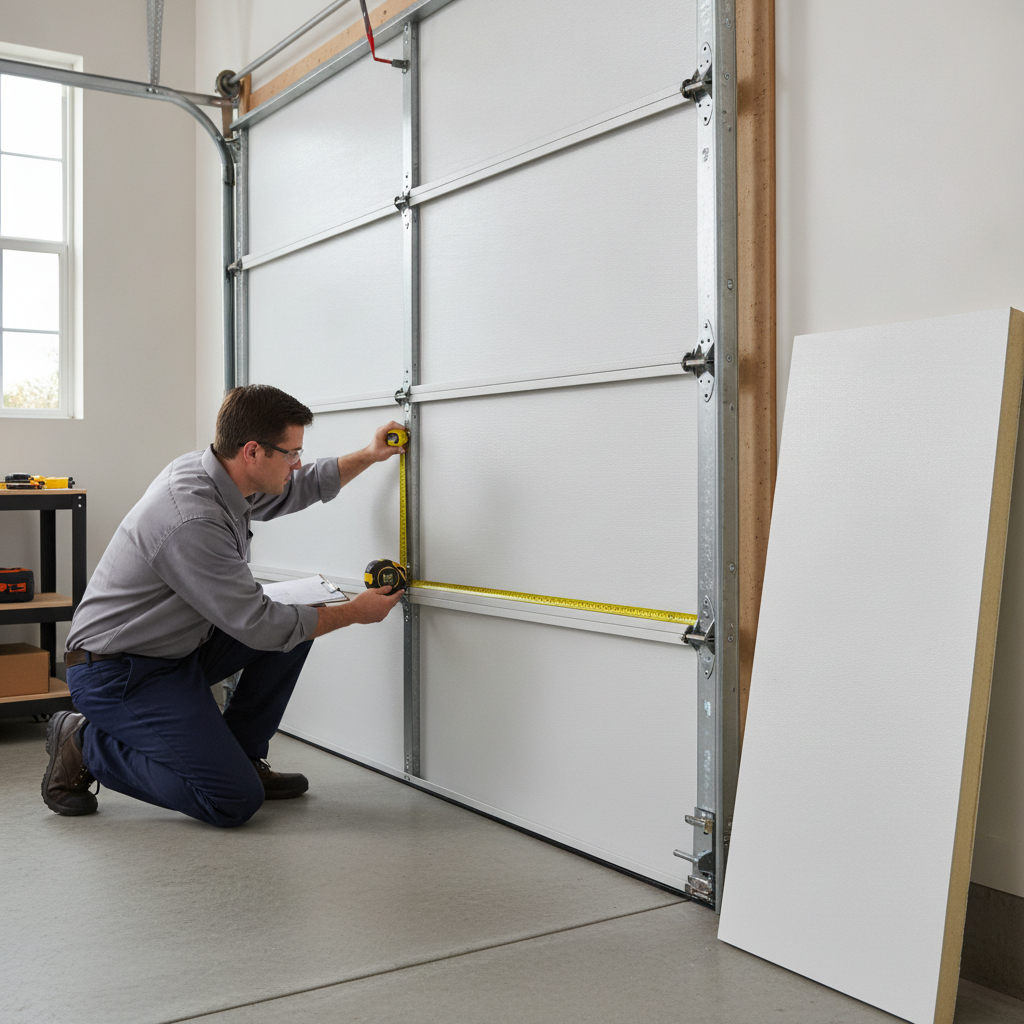
Panel matching is one of the biggest factors in any garage door panel replacement decision. A replacement section must match the door’s size, thickness, panel style, insulation type, and manufacturer design. Even small differences can affect how the sections stack, seal, and move through the tracks.
The most important matching details include:
- Panel profile: Raised panel, recessed panel, carriage-style, flush, or another design.
- Door width and section height: The replacement must fit the exact opening and existing sections.
- Insulation: Insulated and non-insulated panels are not always interchangeable.
- Steel gauge or construction: Different materials can change weight and door balance.
- Window placement: Decorative inserts and window sections must line up correctly.
Because many garage door brands use proprietary section designs, a panel from one manufacturer often cannot be safely substituted for another. Also, older doors may have hardware patterns that do not line up with current replacement panels. A professional can identify the door model and check whether the correct section is still available.
Door Age, Model Availability, and Color Differences
Even when a replacement panel exists, age can complicate the repair. Garage door manufacturers update product lines over time. As a result, a panel that was common years ago may be discontinued or replaced with a newer design that looks similar but does not fit exactly.
Color matching can also be difficult. Garage doors fade from sunlight, weather, road salt, and normal aging. A new white, almond, sandstone, or brown panel may match the original factory color, but the existing door may no longer be that exact shade. Therefore, the replacement section could look brighter or slightly different after installation.
Painting may be an option in some cases. However, paint adds labor and may still not create a perfect match if the panel texture, sheen, or material is different. If appearance matters a great deal, especially on a front-facing garage, it may be worth comparing a single-panel repair with a full replacement.
Door age matters for another reason, too. If the springs, rollers, weather seals, and opener are also near the end of their service life, repairing one section may only solve part of the problem. A technician can help you weigh the condition of the entire system instead of focusing only on the visible dent.
Structural Damage Can Change the Recommendation
A dented panel is sometimes only the visible sign of a larger issue. If the door was hit hard, the impact may have bent the vertical tracks, loosened hinges, pulled fasteners, or twisted the door frame. In those cases, replacing one section may not restore safe operation.
Stop using the door if it appears crooked, hangs unevenly, rubs hard in the tracks, or makes loud popping sounds after impact. Keep people and pets away from the door, and do not stand under it. Avoid forcing the door open or closed because that can make the damage worse.
Warning signs that may point to structural or operating damage include:
- The door is uneven from side to side.
- One section bows inward or outward.
- Rollers have come out of the track.
- Hinges are bent, cracked, or pulling away from the door.
- The opener strains, reverses, or pulls the door at an angle.
- Cables appear loose, frayed, or out of place.
If the panels are bowing or folding, the issue may involve more than impact damage. For more context on that symptom, see this guide to garage door panels buckling. Buckling can come from damaged sections, poor reinforcement, opener strain, or other system problems.
High-tension parts, including springs and cables, should be handled only by a trained garage door technician. These parts help carry the door’s weight and can be dangerous if adjusted incorrectly.
Cost Considerations: One Panel vs. Full Door Replacement
Many homeowners ask whether replacing one panel is cheaper than replacing the entire garage door. Often, it can be. However, the lowest upfront repair is not always the best long-term value.
The total cost depends on several factors:
- Whether the matching panel is available.
- The size, material, and insulation level of the door.
- Whether the panel must be painted or custom ordered.
- Whether hinges, rollers, brackets, or other hardware are damaged.
- Whether the door needs adjustment after the new panel is installed.
- The condition and age of the rest of the door system.
If a newer door has one damaged section, panel replacement may make sense. If an older door has multiple worn parts, visible rust, failing seals, or discontinued panels, a full replacement may be more practical. A new door can also provide a consistent appearance and updated operation, but it is not always necessary.
Hardware condition should be part of the decision. Hinges connect the door sections and help them move correctly through the track radius. If damaged hinges are ignored, a new panel may not move properly. Homeowners who notice loose, noisy, or cracked hinges can review common signs in this article on garage door hinge replacement.
Because every garage door is different, an inspection is the best way to compare repair and replacement options. A professional can check the panel, hardware, track alignment, opener force, and door balance before recommending a path forward.
Safe Checks Homeowners Can Make
You can make a few simple observations before calling for service, as long as the door appears stable. These checks do not require tools or disassembly.
- Look at the damaged panel from inside and outside the garage.
- Check whether the door sits level when closed.
- Listen for scraping, grinding, or popping during normal movement.
- Look for gaps around the weather seal.
- Note the brand label or model information if it is visible.
- Take photos of the full door and the damaged area.
Do not remove hinges, brackets, cables, or springs to inspect the door. Also, do not try to bend a panel back into shape while it is attached to the door. That can shift the door, damage connected parts, or create an unstable condition.
If the door is stuck open, off track, or visibly unstable, leave it alone. A damaged garage door is heavy, and movement can be unpredictable.
Frequently Asked Questions
Can any garage door panel be replaced?
No. A panel can usually be replaced only if a compatible section is available and the rest of the door is in safe working condition. Discontinued models or structural damage can make full replacement a better option.
Will a new panel match the rest of my garage door?
It may match in shape and size but still look slightly different in color. Sun exposure and weather can fade older panels, so a new factory-finished section may stand out.
Can I replace a garage door panel myself?
Panel replacement is not a simple cosmetic task. Garage doors are heavy and connected to springs, cables, hinges, and tracks, so this repair is best handled by a qualified technician.
Get a Professional Panel Assessment in Central Indiana
If one garage door panel is damaged, the best next step is to find out whether the damage is isolated or part of a larger door problem. Ultimate Garage Doors LLC can inspect the panel, check the door’s movement, and explain whether repair or replacement is the more sensible option.
If your door is crooked, off track, or difficult to operate, stop using it until it has been checked. For help deciding whether one panel can be replaced, request a free garage door estimate from Ultimate Garage Doors.