
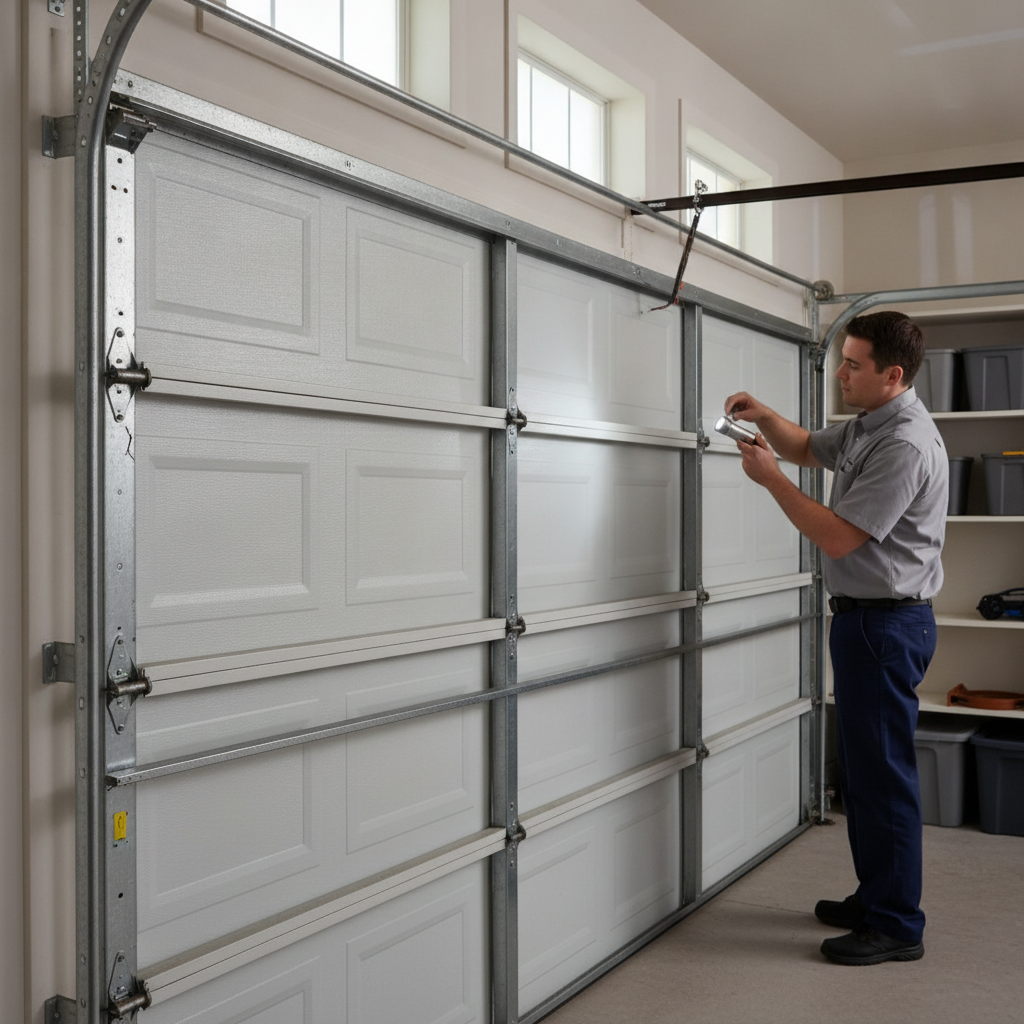
You may know your garage door hinges need replacing if you see cracked metal, bent hinge leaves, loose fasteners, grinding or popping noises, or door sections that move unevenly. Hinges help each section pivot as the door travels through the tracks, so worn hinges can affect both movement and alignment. However, similar symptoms can also come from rollers, tracks, springs, or door damage, so a careful inspection matters.
For homeowners in Indianapolis and Central Indiana, hinge problems are worth addressing early. A damaged hinge can place extra strain on nearby panels, rollers, and opener hardware. As a result, a small issue can become a more expensive repair if the door keeps operating while parts are loose or distorted.
Why Garage Door Hinges Matter
Sectional garage doors are built from horizontal panels. Hinges connect those panels and allow the sections to bend as the door moves from vertical to horizontal. Many hinges also hold roller stems, which guide the door through the tracks.
Because hinges move every time the door opens or closes, they experience constant stress. The metal can fatigue over time, especially if the door is heavy, unbalanced, poorly lubricated, or used many times each day. Weather, corrosion, impact damage, and loose hardware can also shorten hinge life.
A working hinge should sit flat against the door section, hold the roller stem securely when designed to do so, and pivot smoothly without scraping or shifting. If it no longer does those jobs, the door may not travel evenly.
Signs Your Garage Door Hinges Need Replacing
Garage door hinge problems usually become visible before the hinge fails completely. Look for these common warning signs from a safe position with the door closed and the opener disconnected only if it is safe to do so.
- Cracked hinge metal: Small cracks often start near screw holes, bends, or pivot points. A crack can spread as the door continues moving.
- Bent or twisted hinges: A hinge should not appear warped, folded, or pulled away from the door. Bending can change how the section pivots.
- Loose screws or bolts: Fasteners that will not stay tight may indicate worn holes, damaged section material, vibration, or hinge stress.
- Excessive hinge movement: Hinges should pivot, but they should not wobble, rattle, or shift side to side.
- Grinding, popping, or scraping noises: Noises may come from dry hinges, worn rollers, misalignment, or metal fatigue.
- Uneven section movement: One section may lag, jerk, bow, or appear to pull differently than the others.
- Rust or corrosion: Surface rust is not always urgent, but deep corrosion can weaken hinge metal and fasteners.
Cracking deserves special attention because it often means the hinge has lost strength. If you want more background on why this happens, this related article on garage door hinge cracks explains common causes such as stress, age, and door imbalance.
How Worn Hinges Affect Door Movement
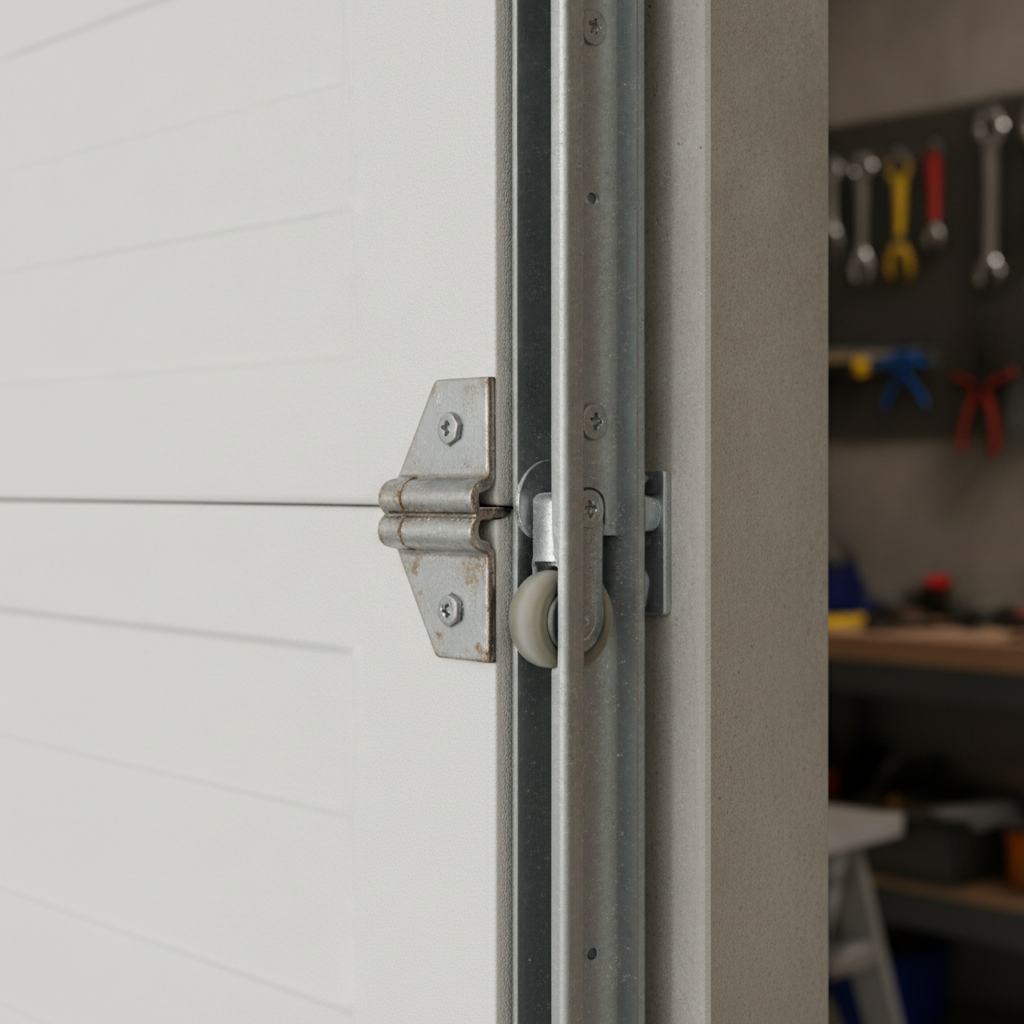
A hinge problem does not always stay isolated. Since hinges connect the sections and often work with the rollers, a damaged hinge can change how the entire door travels. For example, a bent hinge may push a roller stem at an angle. Meanwhile, a cracked hinge may allow one section to flex more than it should.
You may notice the door looks slightly crooked while moving. One side might seem to rise faster than the other, or a panel may shudder as it passes the curve in the track. The opener may also sound strained because it is pulling against extra resistance.
Sometimes the door may rub against the track or trim. This does not automatically mean the hinge is the only problem. Track alignment, roller wear, panel damage, cable tension, and door balance can all create similar symptoms. If rubbing is part of what you are seeing, review the common reasons a garage door rubs against the track so you can better describe the issue to a technician.
If the door appears unstable, severely crooked, or partially off track, stop operating it. Keep people and pets away from the opening, and do not stand beneath the door. Forcing a damaged garage door can make the condition worse and may create a safety hazard.
Noises That May Point to Hinge Wear
Noises are often the first clue homeowners notice. A healthy garage door is not silent, but it should move without harsh metal-on-metal sounds. Hinges can contribute to noise when the pivot points are dry, worn, loose, cracked, or misaligned.
Listen for changes rather than a single normal sound. A new popping noise at the same point in the door’s travel may mean a hinge is binding as the section turns through the curved track. A rattling sound may indicate loose hinge fasteners or worn hinge holes. However, squeaking can also come from rollers, bearings, springs, or opener parts.
Lubrication may quiet a dry hinge if the hinge is otherwise in good condition. However, lubrication will not fix cracked metal, stripped fastener holes, bent hinge leaves, or distorted door sections. If noise returns quickly or appears with visible damage, replacement or another repair may be needed.
Safe Checks Homeowners Can Make
You can make several safe observations without taking the door apart. These checks are meant to help you identify warning signs, not to replace a professional inspection.
- Stand inside the garage with the door closed. Look across each hinge for cracks, bending, missing screws, and rust.
- Watch the door operate from a distance. If it is safe, observe whether any section jerks, bows, or moves differently than the rest.
- Listen for repeated noises. Note where the sound happens, such as near the top section, middle panels, or track curve.
- Check for gaps between hinge plates and the door. A hinge pulling away from the section needs attention.
- Look at the rollers near the hinge. A roller sitting at an odd angle can suggest hinge, track, or section trouble.
Do not remove hinges while the door is under tension or while the door is open. Also avoid work near garage door cables, springs, bottom brackets, or any high-tension hardware. These parts can be dangerous without the right tools and training.
Repair, Lubrication, or Replacement?
Not every noisy hinge needs immediate replacement. If the hinge is straight, secure, and not cracked, basic maintenance may be enough. A garage door technician may clean and lubricate moving points, tighten appropriate fasteners, and check whether the door is balanced and tracking correctly.
Replacement is more likely when a hinge is cracked, bent, badly corroded, missing hardware, or no longer holding the section or roller properly. A technician will also consider the condition of the door section itself. If the surrounding metal or wood is damaged, simply installing a new hinge may not solve the underlying issue.
Hinges also come in different sizes and positions. Many sectional doors use numbered hinges in specific locations because each section needs the correct roller offset. Using the wrong hinge can affect alignment and door movement. Therefore, it is best to match replacement parts correctly rather than choosing a hinge only by appearance.
If multiple hinges show wear, the door may have a broader issue. A heavy or unbalanced door, worn rollers, damaged tracks, or opener strain can contribute to repeated hinge failure. Addressing only the visible hinge may leave the cause unresolved.
Frequently Asked Questions
Can I keep using my garage door if one hinge is cracked?
It is best to stop using the door until it is inspected. A cracked hinge can spread or fail, which may affect section movement and overall door stability.
Are squeaky garage door hinges always a replacement issue?
No. Squeaking can come from dry hinges or other moving parts. However, squeaking with cracks, bending, looseness, or uneven movement should be checked by a professional.
How long do garage door hinges usually last?
There is no single lifespan because usage, door weight, maintenance, weather, and alignment all matter. Regular inspection helps catch wear before failure.
When to Call a Garage Door Professional
Call a professional if you see cracked or bent hinges, loose hardware that will not hold, uneven section movement, track rubbing, or any sign that the door is unstable. You should also get help if the door is crooked, hanging, off track, or difficult for the opener to move.
Ultimate Garage Doors LLC can inspect the hinges, rollers, tracks, opener, and related hardware to find the cause of the problem. If your door is showing signs of hinge failure in the Indianapolis area, request a free garage door estimate before using the door further.