
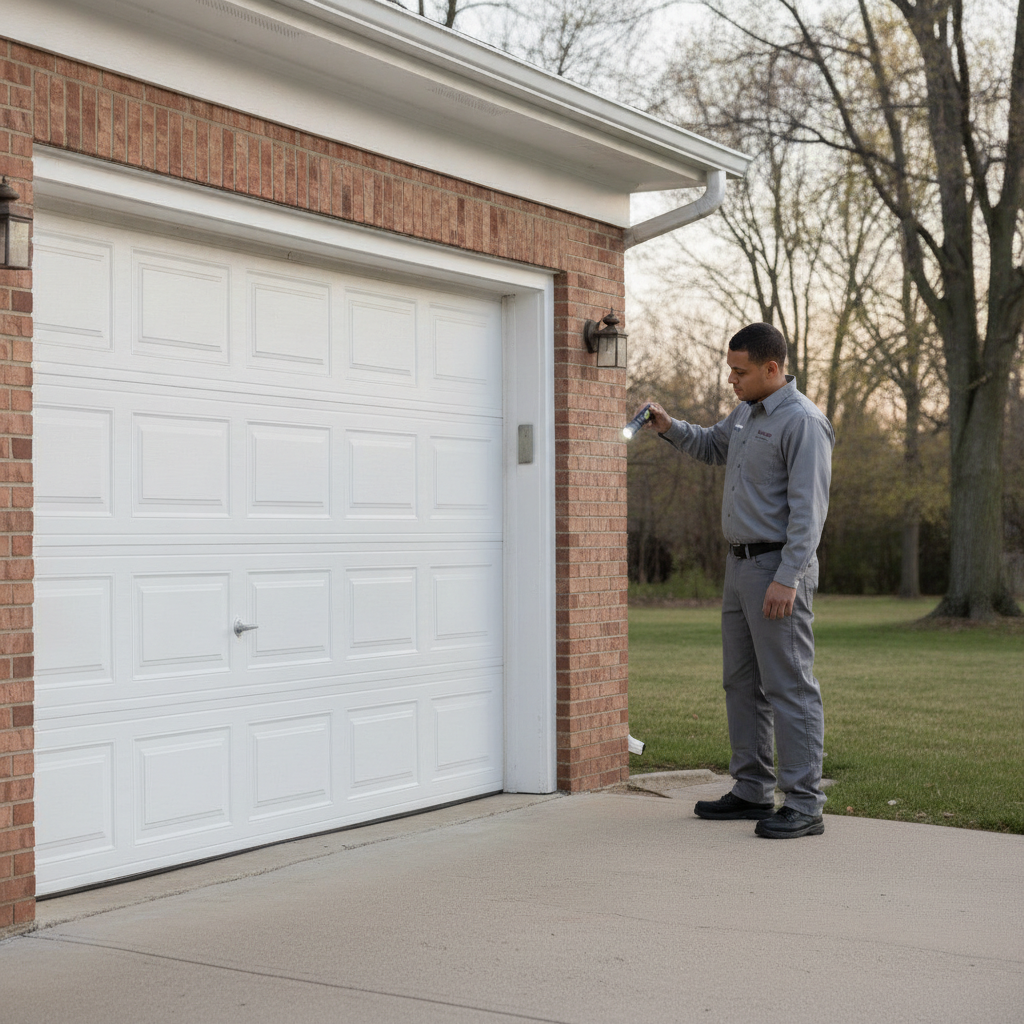
A bent garage door track can sometimes be repaired, but it depends on the severity, location, and cause of the damage. Minor track bends may be straightened by a trained garage door technician. However, badly kinked, twisted, cracked, or repeatedly damaged track sections are often safer to replace. Proper alignment matters because the tracks guide the rollers, support smooth door travel, and help prevent the door from binding, leaning, or coming off track.
If your garage door looks crooked, hangs unevenly, rubs loudly, or will not move normally, stop using it. Keep people and pets away from the door, avoid standing beneath it, and do not try to force it open or closed. A damaged track can place extra stress on cables, rollers, hinges, springs, and the opener.
When Bent Garage Door Track Repair May Be Possible
In some cases, a bent track does not require full replacement. A professional may be able to straighten the track if the damage is shallow, localized, and has not weakened the metal. For example, a light inward bend near the vertical track may be repairable if the door still sits securely in the tracks and the rollers have not jumped out.
Repair is more realistic when the track still has its original shape overall. The technician will look at the curve of the track, the roller path, the mounting brackets, and the gap between the track and the door. Even a small adjustment can affect how the full door moves, so alignment must be checked across the whole system.
Minor repair may be considered when:
- The bend is small and limited to one short area.
- The track is not cracked, torn, or severely creased.
- The door has not come loose from the track.
- The rollers still move smoothly after inspection.
- The track can be realigned without weakening the mounting points.
Homeowners can safely observe visible damage from a distance. However, track straightening should not be treated like a simple cosmetic fix. Garage doors are heavy, and the track works with high-tension parts. A trained technician can evaluate whether adjustment is safe or whether a new track section is the better long-term choice.
When Track Replacement Is the Safer Choice
Replacement is usually safer when the track is sharply kinked, twisted, split, rust-weakened, or bent in multiple places. A track that has been crushed by a vehicle, lawn equipment, or heavy impact may no longer hold the correct shape even if it appears partly straightened. As a result, the rollers may continue to bind or climb out of position.
Track replacement may also be needed if the door has gone off track. In that situation, the track damage may be only one part of the problem. The rollers, cables, hinges, brackets, and door sections may also need inspection. Continuing to run the opener can make the damage worse because the motor may keep pulling while the door is stuck.
A replacement section may be the better option if you notice:
- A roller has popped out of the track.
- The door is tilted, jammed, or hanging unevenly.
- The track has deep dents, sharp creases, or torn metal.
- Mounting brackets have pulled away from the wall or jamb.
- The same area has been repaired before and bent again.
- The door makes grinding, scraping, or banging sounds during travel.
If the track damage follows an impact, professional inspection is especially important. The visible bend may not show the full extent of the problem. For more detail about common causes, see this guide to why garage door tracks bend.
Why Garage Door Track Alignment Matters
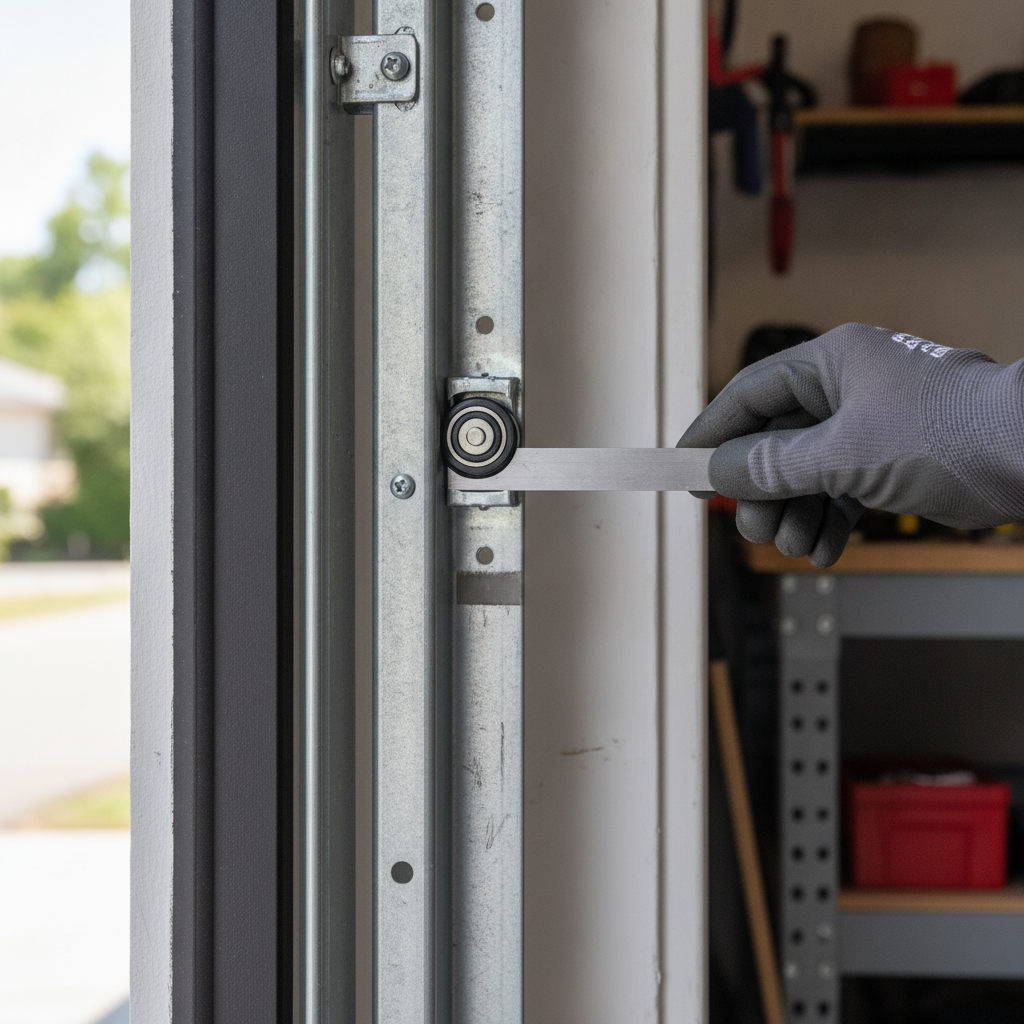
Garage door tracks do more than give the door a place to roll. They control the path of the door as it moves from vertical to horizontal. If the track is out of alignment, the door may shift sideways, drag against the frame, or place uneven pressure on the rollers.
Good alignment keeps the rollers moving with minimal resistance. It also helps the opener lift and lower the door without unnecessary strain. If the track is bent inward, outward, or out of parallel with the opposite side, the opener may seem weak even though the track is the real issue.
Poor alignment can lead to several problems:
- Roller wear: Rollers may scrape or bind instead of rolling cleanly.
- Cable stress: A crooked door can create uneven lifting pressure.
- Opener strain: The opener may pull harder than it should.
- Panel damage: Door sections can twist or rub against the frame.
- Safety concerns: A misaligned door is more likely to jam or come off track.
Rollers also play a major role in smooth operation. If they are worn, dry, or damaged, they can worsen track issues. Routine roller care is different from track repair, but understanding garage door roller lubrication can help homeowners recognize why clean movement through the track matters.
Safe Checks Homeowners Can Make
You can look for signs of track trouble without touching high-tension components or forcing the door. Keep your distance if the door is crooked, partially open, or unstable. Also, do not stand under the door while inspecting it.
With the door closed and the opener not running, you may be able to safely observe:
- Visible bends, dents, or gaps in the vertical tracks.
- Rollers that look crooked, loose, or outside the track.
- Scraping marks on the track or door edge.
- Loose-looking track brackets or missing fasteners.
- A door that sits unevenly on the floor.
- New noises that started after a bump or impact.
These observations can help you explain the problem when you call for service. However, they do not replace a professional diagnosis. Similar symptoms can come from worn rollers, loose hinges, damaged cables, spring problems, opener force settings, or structural movement around the opening.
Avoid trying to hammer the track back into place, loosen brackets, pry the door, or pull the emergency release while the door is unstable. The emergency release disconnects the opener from the door, but it does not make a damaged or unbalanced door safe to move by hand.
How Technicians Decide Between Repair and Replacement
A garage door technician looks at more than the bend itself. The goal is to restore safe, smooth travel across the whole door system. Therefore, the inspection usually includes the track position, roller condition, door balance, cable tension, spring function, opener operation, and attachment points.
The technician may check whether both tracks are parallel and properly spaced. They may also look for signs that the door has been rubbing, binding, or shifting. If the track can be safely straightened and still hold its shape, repair may be practical. If not, replacement reduces the chance of repeat problems.
Several factors influence the decision:
- Depth of the bend: Minor distortion is different from a hard crease.
- Track location: Damage near curves or joints can be harder to correct.
- Metal condition: Rust, cracks, or thinning can make repair unreliable.
- Door movement: A door that binds or jumps may need more than track adjustment.
- Related damage: Rollers, hinges, cables, or sections may also be affected.
For Indianapolis and Central Indiana homeowners, weather can also contribute over time. Moisture, road salt exposure near garages, and freeze-thaw cycles may weaken hardware or affect the framing around the opening. That does not mean every bent track is weather-related, but it is one reason a full inspection is useful.
Frequently Asked Questions
Can I use my garage door if the track is slightly bent?
It is better to stop using the door until it is inspected. Even a slight bend can cause rollers to bind, which may strain the opener or lead to more damage.
Can a bent garage door track make the opener stop working?
Yes. A bent or misaligned track can create resistance that makes the opener reverse, stop, or sound strained. The opener may not be the main problem.
Is track replacement always required after a vehicle bump?
No, but an inspection is recommended. A light bump may only shift the track, while a harder impact can bend metal, loosen brackets, or damage rollers.
When to Call a Garage Door Professional
Call a professional if the door is crooked, stuck, noisy, off track, or visibly damaged. You should also get help if a roller has come out of the track, the door will not close evenly, or the opener struggles after the track was bumped. Stop operating the door, keep the area clear, and avoid DIY repairs on high-tension parts.
Ultimate Garage Doors LLC can inspect the track, rollers, hardware, and door movement to determine whether straightening or replacement is safer. If you need help with a bent garage door track in the Indianapolis area, request a free garage door estimate and get professional guidance before the damage gets worse.