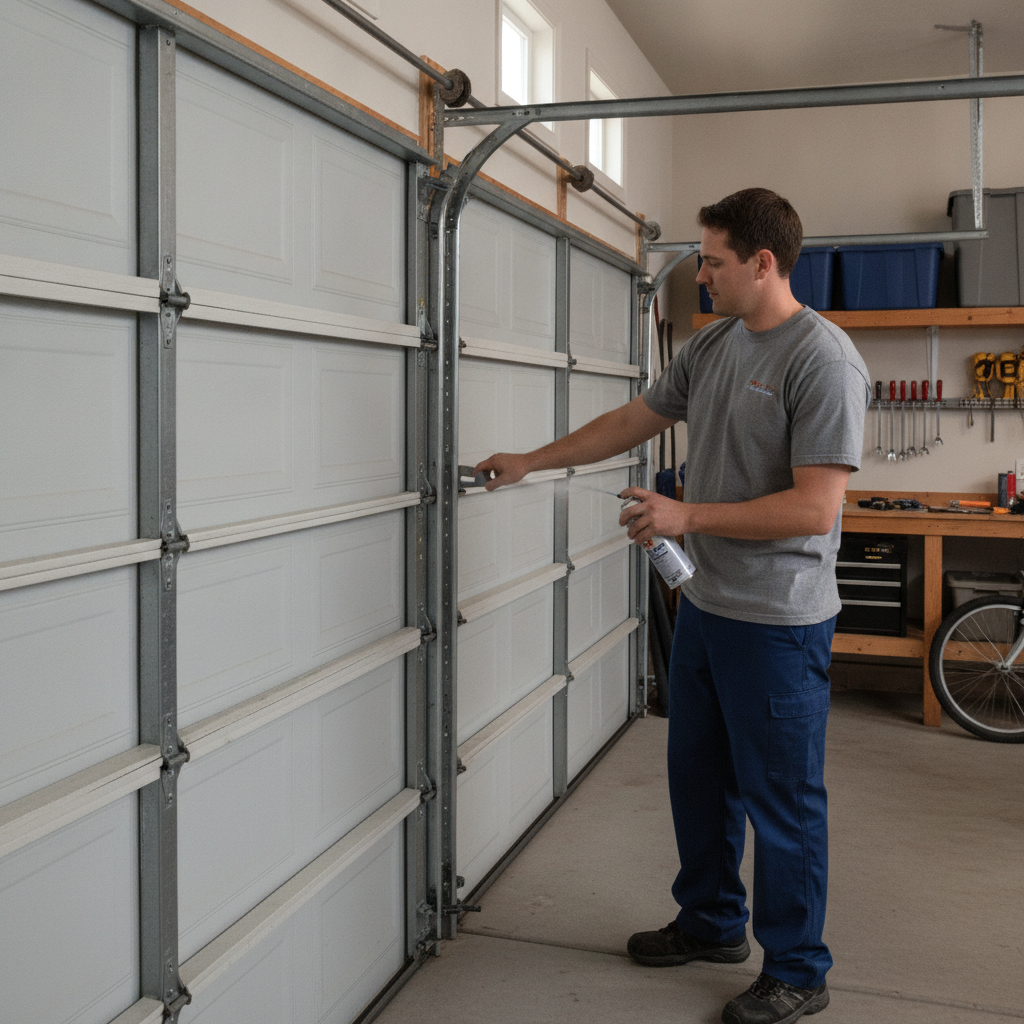
If you are wondering whether garage door rollers need lubrication, the short answer is yes, many rollers do. Lubrication can reduce noise, lower friction, and help the door move more smoothly. However, not every roller should be treated the same way, and lubrication will not fix a cracked wheel, seized bearing, bent stem, or off-track door.
The right approach depends on the roller material, bearing design, door condition, and how often the door is used. For many Indianapolis and Central Indiana homeowners, a simple maintenance routine can help prevent noisy operation, especially during seasonal temperature changes.
Why Garage Door Rollers Need Lubrication
Garage door rollers guide the door as it travels up and down the tracks. Each roller has a wheel and a stem. Many also have ball bearings inside the wheel. These moving parts create friction every time the door opens or closes.
Lubrication helps reduce that friction. As a result, the door may sound quieter and move with less strain on the garage door opener. Proper lubrication can also help slow wear on bearings, hinges, and other moving metal parts.
However, the goal is not to make the tracks greasy. The rollers should roll inside the tracks, not slide through heavy grease. Too much lubricant can collect dust, grit, and road salt residue, which can make the door dirtier and louder over time.
Which Garage Door Roller Types Benefit Most?
Different roller types respond differently to lubrication. Before applying anything, it helps to know what kind of rollers are on your door.
Steel rollers without ball bearings
Basic steel rollers often benefit from lubrication because the wheel and stem create metal-on-metal friction. These rollers can become noisy as they age. A light application of garage door lubricant on the stem and axle area may help, but these rollers are also more likely to remain noisy than higher-quality bearing rollers.
Steel rollers with ball bearings
Steel rollers with exposed ball bearings usually benefit from a small amount of lubricant at the bearing area. The lubricant helps the bearings spin smoothly. However, if the bearings are already loose, rusty, or grinding, lubrication may only provide a temporary improvement.
Nylon rollers with ball bearings
Nylon rollers are common because they are quieter than all-steel rollers. If they have exposed bearings, those bearings may need lubrication. The nylon wheel surface itself usually does not need to be coated. Lubricating the tire of the roller can attract grime and may not improve performance.
Sealed bearing rollers
Some higher-quality rollers have sealed bearings. These are designed to keep lubricant in and contaminants out. They may need little or no bearing lubrication during normal use. In that case, the roller stem and hinge pivot points may still benefit from occasional lubrication, but the sealed bearing area should not be flooded with spray.
If you are unsure whether your rollers are simply dry or actually failing, compare the symptoms with common signs of worn garage door rollers. Visible wear often matters more than noise alone.
Safe Lubricants for Garage Door Rollers
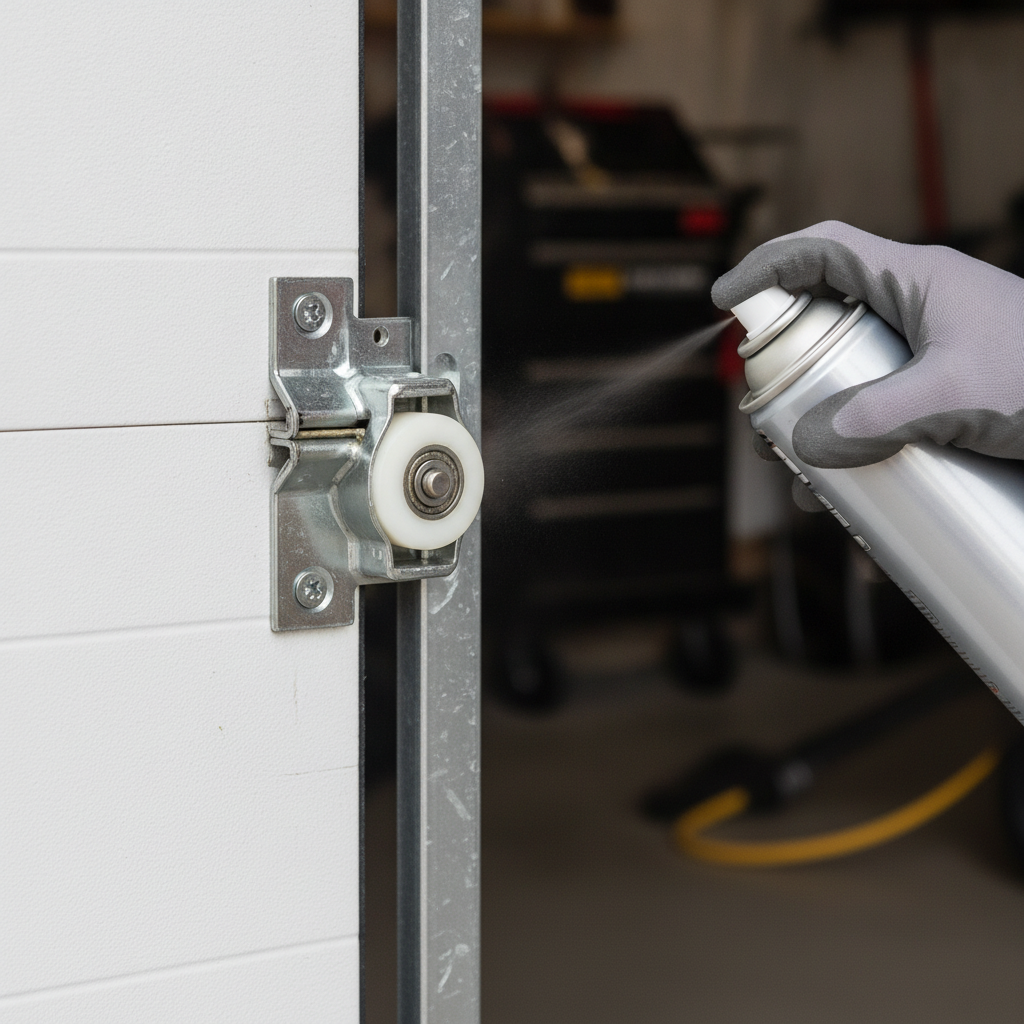
Use a lubricant made for garage doors, metal moving parts, or hinges. The best choice depends on the roller material and bearing style, but most homeowners should look for a product that sprays lightly and does not leave a heavy, sticky coating.
Common safe options include:
- Garage door spray lubricant: Often designed for rollers, hinges, springs, and bearings.
- White lithium spray grease: Useful on many metal moving parts when applied lightly.
- Silicone-based spray: Often suitable around nylon rollers and other non-metal surfaces.
Avoid heavy automotive grease inside the tracks. It can collect dirt and make the rollers drag instead of roll. Also avoid using a water-displacing spray as your only long-term lubricant. Some products can help loosen grime, but they may not provide lasting lubrication for garage door bearings.
Less is usually better. A small amount in the correct place works better than soaking the whole roller, track, and hinge assembly. After lubrication, excess product should be wiped away so it does not drip onto the floor or attract debris.
How Often Should Rollers Be Lubricated?
Most residential garage doors benefit from roller lubrication about twice a year. A good schedule is spring and fall, when many homeowners are already checking weather seals, opener operation, and seasonal maintenance items.
Some doors may need attention more often. For example, a heavily used door on a busy household may cycle several times per day. A detached garage near dusty work areas may also collect more debris around the tracks and rollers. Meanwhile, doors exposed to moisture, road salt, or rapid temperature changes may develop squeaks sooner.
Consider checking lubrication frequency based on these conditions:
- The door has become louder during normal operation.
- The rollers sound dry, squeaky, or chattering in the tracks.
- The garage is dusty, humid, or exposed to outdoor debris.
- The door is used many times each day.
- The door has not been maintained in more than six months.
Before lubricating, look for obvious damage. A cracked roller, leaning stem, missing hinge screw, or bent track should be addressed before normal use continues. Lubrication is maintenance, not a repair for structural problems.
When Lubrication Will Not Fix Roller Problems
Lubrication can help dry moving parts, but it cannot restore damaged components. If the roller is worn out, adding more spray may quiet it for a short time, but the underlying problem remains.
Lubrication usually will not solve these issues:
- Cracked nylon wheels: Cracks can spread and cause uneven movement.
- Flat-spotted rollers: A flat spot can make the door bump or chatter.
- Loose or wobbling bearings: Bearings that no longer hold the wheel steady may need replacement.
- Seized rollers: If the roller will not spin freely, lubrication may not penetrate enough to help.
- Bent roller stems: A bent stem can force the wheel against the track at the wrong angle.
- Damaged tracks: A roller cannot move correctly through a bent, pinched, or misaligned track.
Also, lubrication will not correct a door that is out of balance. Door balance depends heavily on the spring system. If the door feels unusually heavy, drops quickly, or will not stay partly open when disconnected from the opener, a trained technician should inspect it. Springs and cables are high-tension parts and should not be adjusted by homeowners.
Safe Homeowner Checks Before Lubricating
You can make several safe observations before deciding whether lubrication is enough. Keep the door closed while inspecting visible parts, and do not loosen hinges, brackets, cables, springs, or track hardware. Also keep fingers away from pinch points around rollers and hinges.
Safe checks include:
- Look for cracked, chipped, or missing roller wheels.
- Listen for squeaking, grinding, or popping during normal operation.
- Check whether rollers appear straight within the track.
- Look for heavy dirt buildup inside the track.
- Watch for jerky door movement from a safe distance.
If a roller has come out of the track, stop using the door. Do not try to force the door open or closed, and do not stand beneath an unstable door. A roller that repeatedly leaves the track may point to damaged rollers, bent tracks, loose hardware, or door alignment problems. For more detail on that issue, see why garage door rollers come off track.
Homeowners can often handle light lubrication when the door is stable and all parts appear intact. However, roller replacement is different. Replacing rollers can involve brackets and areas near cable tension, depending on the door design. Therefore, it is usually safer to have worn or damaged rollers serviced by a qualified garage door technician.
Frequently Asked Questions
Should I lubricate the garage door tracks?
No, the tracks should usually be kept clean rather than greasy. Rollers are designed to roll inside the track. Heavy lubricant in the track can collect dirt and cause rough movement.
Can lubrication make a noisy garage door quiet?
Sometimes. Lubrication can reduce squeaks from dry rollers, hinges, and bearings. However, grinding, popping, or banging may indicate worn rollers, loose hardware, spring issues, or track problems.
Are nylon garage door rollers maintenance-free?
Not always. The nylon wheel surface may not need lubricant, but exposed bearings and hinge pivot points may still benefit from light lubrication. Sealed bearing rollers usually need less maintenance.
When to Call a Garage Door Professional
If the door is stable, the rollers look intact, and the noise is minor, careful lubrication may be a reasonable maintenance step. However, stop operating the door if a roller is off track, the door hangs crooked, a cable appears loose, or the door feels unusually heavy. Keep people and pets away from the opening until the problem is inspected.
Lubrication works best as prevention. It cannot safely correct damaged rollers, bent tracks, failing bearings, or high-tension spring and cable problems. If your garage door still sounds rough after lubrication or you see visible roller damage, request a free garage door estimate from Ultimate Garage Doors LLC for professional guidance in the Indianapolis area.