
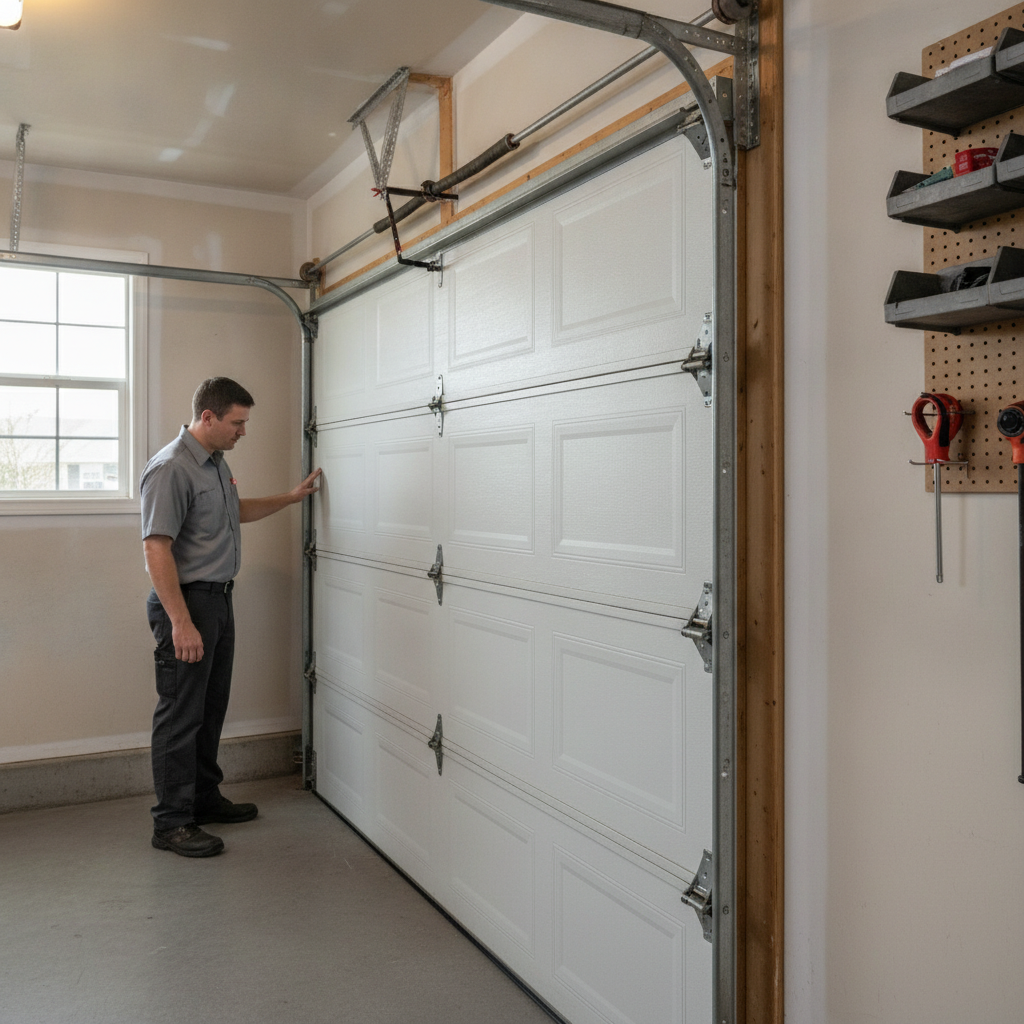
A gap between garage door rollers and track usually means something is out of alignment, worn, loose, or no longer supporting the door correctly. The rollers, tracks, hinges, brackets, cables, and springs all work together to keep the door balanced and guided. If one part shifts or wears out, the spacing around the rollers can change.
If the gap is small and the door operates normally, it may point to early wear or a minor adjustment need. However, if the door looks crooked, rubs the track, shakes, binds, or has a roller partly outside the track, stop operating it. Keep people and pets away from the door until a trained garage door technician can inspect it.
What a Roller-to-Track Gap Usually Means
Garage door rollers are designed to sit inside the vertical and horizontal tracks with enough clearance to roll smoothly. They should not be jammed tightly against the track, but they also should not appear to be pulling away from it. A visible gap can mean the track is out of position, the roller stem is worn, the bracket is loose, or the door is no longer balanced.
Several problems can create similar symptoms. A worn roller may look like a track issue because the roller no longer sits squarely. A bent or shifted track can make a good roller look misaligned. That is why a full inspection matters before deciding whether the issue needs adjustment, roller replacement, track repair, or another service.
In Central Indiana homes, changing weather can also play a role. Temperature swings, moisture, vibration, and daily use can affect hardware over time. Small movement in brackets or track fasteners may become more noticeable as the door ages.
Common Causes of a Gap Between Garage Door Rollers and Track
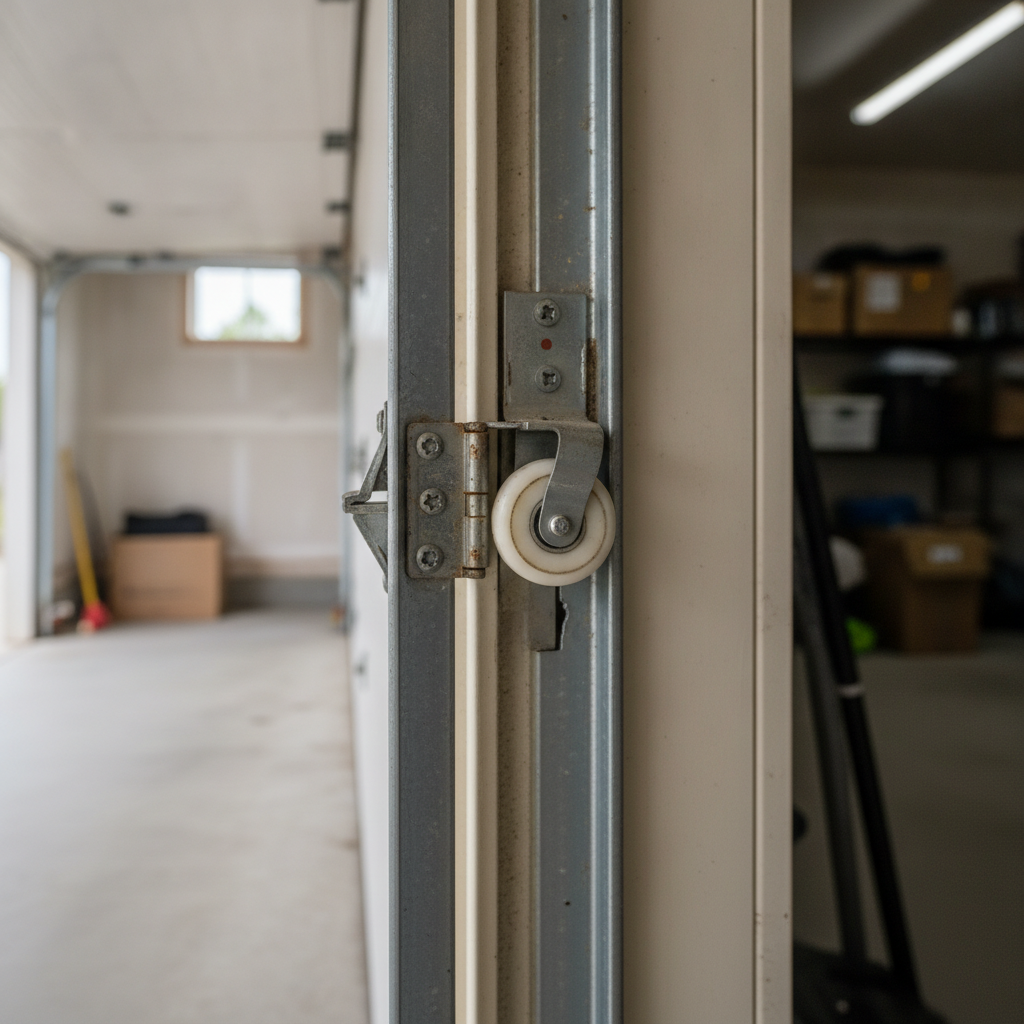
The most common causes fall into four categories: track alignment, roller wear, loose hardware, and door balance. Each one affects how the door moves, but the repair approach is different.
Track alignment problems
The tracks guide the rollers as the door opens and closes. If a track is bent, shifted, twisted, or pulled away from the wall framing, the rollers may no longer sit where they should. This can leave a visible space between the roller and the track on one side of the door.
Track alignment problems can happen after an impact, repeated vibration, loose fasteners, or gradual movement in the mounting hardware. A door bumped by a vehicle, trash bin, or lawn equipment may develop track issues. If you suspect impact damage, this explanation of why garage door tracks bend covers several common causes.
Do not try to force a misaligned door back into position. Forcing the door can worsen the track, pull rollers out, or strain the opener. If the door is binding or leaning, it is safer to leave it alone.
Worn or damaged rollers
Garage door rollers wear down with use. Steel rollers can develop worn bearings, and nylon rollers can crack, flatten, or loosen around the stem. When a roller no longer turns smoothly, it may drag inside the track instead of rolling. Over time, that can increase the gap or make the door shake.
Common signs of roller wear include squeaking, grinding, wobbling, uneven movement, and visible cracking. A roller may also look tilted instead of straight. However, a worn roller is not always obvious from the floor, especially when the issue is inside the bearing.
Loose brackets or hinges
Rollers attach to the garage door through hinges and brackets. If those parts loosen, the roller stem can shift away from the correct angle. This may create a gap even when the track itself is not badly bent.
Loose hinges often show up as rattling, popping, or uneven panel movement. You may also notice screws that appear backed out or hardware that moves when the door runs. Do not remove brackets or hinges while the door is under tension. Some lower brackets connect to high-tension cable systems and should only be handled by a trained technician.
Door balance issues
Door balance refers to how well the garage door springs support the weight of the door. A balanced door moves smoothly and does not feel unusually heavy. When springs are weak, broken, or poorly matched, the door may pull unevenly and put extra stress on rollers and tracks.
Balance problems can make one side of the door lag behind the other. As a result, the door may look crooked, rub the track, or create inconsistent spacing around the rollers. Springs and cables are high-tension parts, so homeowners should not attempt to adjust, wind, unwind, remove, or replace them.
Safe Checks You Can Make Before Calling for Service
You can make a few safe visual observations without touching high-tension parts or forcing the door. These checks help you describe the problem when you call for service, but they are not a substitute for a professional inspection.
- Look at both sides of the door. Compare the gap between the rollers and tracks on the left and right sides.
- Check whether the door looks level. A crooked bottom edge can point to balance, cable, or track problems.
- Listen during operation. Grinding, scraping, popping, or squealing can suggest roller or track issues.
- Watch for shaking. Excessive vibration can loosen brackets and make alignment problems worse.
- Look for visible damage. Dented track sections, cracked rollers, loose hinges, or missing fasteners are warning signs.
- Check the opener behavior. If the opener strains, reverses, or stops, the door may be binding.
If a roller is out of the track, the door is hanging unevenly, or a cable appears loose or frayed, stop using the door. Avoid standing under the door or trying to lift it by hand. A damaged or unbalanced door can move unexpectedly.
Why You Should Not Ignore Roller and Track Gaps
A small gap may not seem serious at first, especially if the door still opens. However, garage doors are heavy moving systems. Small alignment problems can create stress in other parts because each component depends on the others.
When rollers do not track correctly, the door may scrape, bind, or twist. That can wear the rollers faster and place extra strain on hinges, brackets, opener arms, and track fasteners. Over time, the opener may work harder than it should.
A gap can also become a safety concern. If a roller slips out of the track or the door becomes crooked, the door may no longer be fully supported. Continued use can increase the risk of more damage. It can also make the door harder to seal, allowing wind, rain, leaves, or pests into the garage.
Repair, Adjustment, or Replacement: What Might Be Needed?
The right fix depends on the cause and the condition of the door. A technician may find that the track needs adjustment, the rollers need replacement, or loose hardware needs to be secured. In other cases, damaged track sections, worn hinges, spring problems, or cable issues may need attention.
If the track is bent, repair may be possible when the damage is limited and the metal is still structurally sound. Severe bends, cracked mounting points, or repeated off-track problems may require replacement of affected parts. For a closer look, see how technicians evaluate whether a bent garage door track can be repaired.
Roller replacement is common when rollers are worn, noisy, cracked, or wobbling. Better-quality rollers can often improve smoothness and reduce noise, but they still need properly aligned tracks to work correctly. Replacing rollers without correcting the underlying track or balance problem may not solve the issue.
Door balance must also be considered. If the springs are not supporting the door properly, new rollers or track adjustments may only provide short-term improvement. Because springs and cables are under high tension, diagnosis and repair should be left to a qualified garage door professional.
Frequently Asked Questions
Can I keep using my garage door if there is a small gap by the rollers?
If the door runs smoothly and the gap is minor, avoid heavy use and schedule an inspection soon. If the door is crooked, noisy, binding, or off track, stop using it.
Is a gap between the rollers and track always caused by a bent track?
No. A bent track is one possibility, but worn rollers, loose hinges, loose brackets, cable issues, or poor door balance can create similar symptoms.
Can I push the roller back into the track myself?
No. A roller that is out of place may indicate an unstable door or high-tension cable issue. Do not force the door or stand beneath it.
When to Bring in a Garage Door Professional
Call a professional if the gap is growing, the door looks uneven, rollers are out of the track, cables look loose, or the opener struggles to move the door. You should also stop using the door if it scrapes, jerks, drops suddenly, or will not close evenly.
Ultimate Garage Doors LLC helps homeowners and property owners in Indianapolis and Central Indiana diagnose roller, track, hardware, and balance problems. If your door does not look properly supported or you are unsure what caused the gap, request a professional garage door inspection before using it further.