
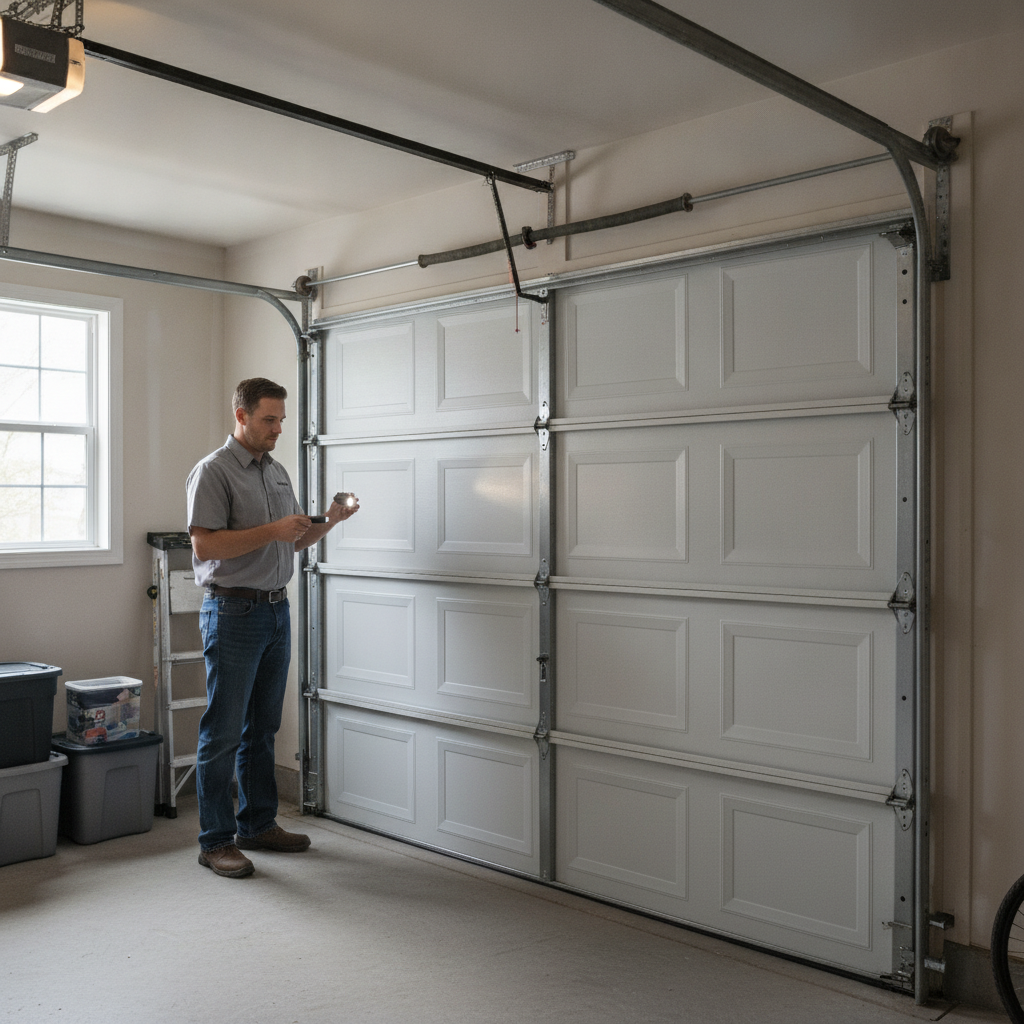
A bent garage door track is usually caused by an impact, loose mounting hardware, an obstruction in the track, corrosion, or a roller problem that forces the door out of alignment. The track guides the rollers as the door opens and closes, so even a small bend can make the door bind, shake, scrape, or move unevenly. If the door looks crooked, hangs off one side, or struggles to move, stop using it until the problem is checked.
Garage doors are heavy systems under spring tension. A damaged track may seem like a simple metal bend, however continued use can turn a minor issue into a dangerous off-track door. Homeowners in Indianapolis and Central Indiana should treat track damage as a safety concern, especially if the door is noisy, uneven, or visibly unstable.
Bent Garage Door Track Causes
Garage door tracks can bend for several reasons. Sometimes the cause is obvious, such as a vehicle bumping the door. Other times, the track slowly moves out of position because hardware loosens or parts wear down over time.
Common causes include:
- Vehicle impact: Backing into the garage door, even at low speed, can bend the vertical track, horizontal track, hinges, or lower door sections.
- Loose brackets: Track brackets hold the metal track to the wall and ceiling framing. If they loosen, the track can shift and twist as the door moves.
- Obstructions: A broom, box, tool, rock, or built-up debris can block the rollers and force the door against the track.
- Corrosion: Rust can weaken track metal or hardware, especially in garages exposed to moisture, road salt, or poor drainage.
- Worn rollers: Rollers that wobble, crack, drag, or seize can put uneven pressure on the track. If you are unsure what roller wear looks like, this guide to worn garage door rollers explains the warning signs.
- Door imbalance: A door that is not balanced can place extra stress on rollers, hinges, opener parts, and track hardware.
Because several problems can create similar symptoms, the visible bend may not be the only issue. For example, a bent track may be the result of a damaged roller, not the original cause.
Signs the Track Is Affecting Door Movement
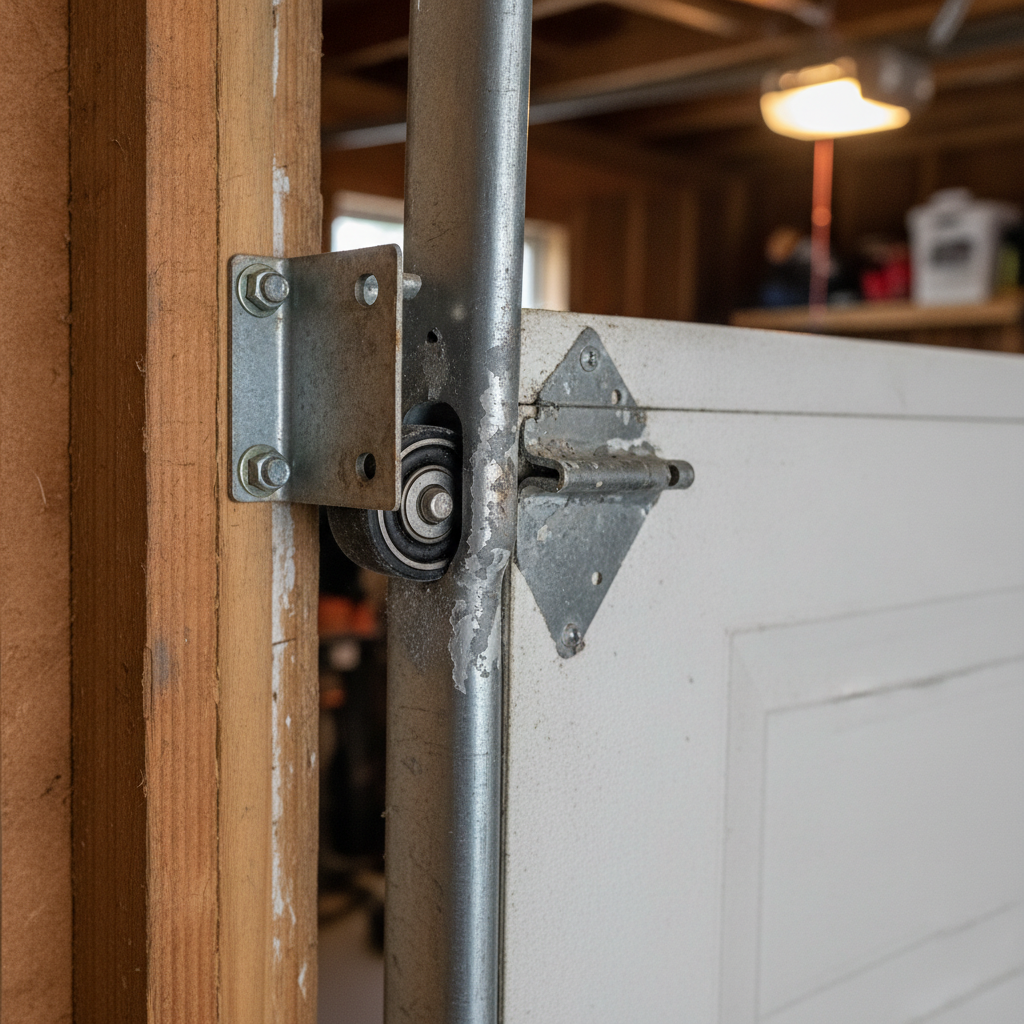
A garage door track does not need to be badly crushed to cause problems. Even a slight inward bend can pinch the rollers or make the door move unevenly. As a result, you may notice symptoms before the damage looks serious.
Watch for these signs:
- The door shakes, jerks, or hesitates while moving.
- One side of the door rises faster than the other.
- The door rubs or scrapes against the track.
- Rollers pop, chatter, or appear to bind in one area.
- The opener strains, reverses, or stops before the door is fully open or closed.
- The door looks crooked in the opening.
- A roller has come out of the track.
- The track is visibly dented, twisted, rusted, or pulling away from the wall.
If any roller has left the track, do not try to force the door open or closed. Also, avoid standing beneath the door or pulling on the sections. A partially off-track garage door can shift quickly.
Why Continued Use Can Make Damage Worse
It may be tempting to keep using the door if it still moves. However, a bent track changes how the door travels. The rollers may no longer sit correctly, and the opener may push against resistance it was not designed to handle.
Continued use can lead to several problems:
- More track damage: A roller can strike the same bent area repeatedly and make the bend sharper.
- Damaged rollers and hinges: Binding adds side pressure to parts that should move smoothly.
- Opener strain: The opener may work harder to pull or push the door through the damaged area.
- Cable problems: If the door moves unevenly, lift cables can lose proper alignment or tension.
- Off-track door movement: A roller may slip out, causing the door to hang unevenly or become unstable.
- Section damage: The door panels can bend or crack if the door twists under load.
Meanwhile, the springs are still counterbalancing much of the door’s weight. That stored tension is one reason track and cable problems should be handled carefully. If the door is crooked, stuck, hanging, or partly off track, keep people and pets away from the opening and contact a qualified garage door technician.
What Homeowners Can Safely Check
You can make a few safe observations without taking the system apart. These checks can help you describe the issue when scheduling service. They are not a substitute for professional repair.
From a safe distance, look for:
- A dent, kink, twist, or gap in the vertical or horizontal track.
- Rollers that are missing, cracked, tilted, or outside the track.
- Brackets that appear loose, bent, or separated from the wall.
- Rust around track seams, fasteners, brackets, or the bottom of the door.
- Objects in or near the track path.
- Fresh scrape marks, metal shavings, or paint worn off one section of track.
- Door sections that no longer line up evenly.
If the door is fully closed and stable, you may remove loose debris near the track path without touching high-tension components. However, do not loosen track bolts, pry the track, force rollers back in, adjust cables, or work around bottom brackets. Those areas can be under significant load.
If the door is open, partly open, crooked, or jammed, leave it alone. Avoid walking beneath it, and do not disconnect the opener to “see what happens.” A damaged door can move unexpectedly when tension changes.
Can a Bent Garage Door Track Be Repaired?
Some track issues can be corrected with careful realignment or hardware replacement. Other situations require replacing a section of track, rollers, hinges, or damaged door sections. The right repair depends on how the damage happened and whether the door is still square in the opening.
A technician will usually inspect the entire system, not just the obvious bend. That matters because a track can be bent by another failing part. For example, a seized roller may drag against the track until the metal distorts. Proper garage door roller lubrication can reduce friction in some systems, but lubrication will not fix a bent track, broken roller, or misaligned door.
Corrosion also changes the decision. Light surface rust may be manageable if the metal remains solid. Severe rust, flaking metal, or weakened fasteners may require replacement because the track must stay securely mounted as the door moves.
Professional inspection is also important after vehicle impact. The track may be bent, but the door sections, bottom fixtures, cables, rollers, and opener rail may also have shifted. Therefore, a complete inspection helps prevent a repair from missing the underlying problem.
How to Reduce the Chance of Future Track Problems
Not every bent track can be prevented, especially after accidental impact. Still, regular garage door maintenance can reduce many common causes of track stress.
Helpful habits include:
- Keep boxes, yard tools, and stored items away from the door path.
- Watch and listen to the door during operation so changes are noticed early.
- Schedule service if the door starts shaking, scraping, or moving unevenly.
- Keep the floor area near the tracks clear of rocks, ice, leaves, and debris.
- Address rusty hardware before corrosion spreads or weakens mounting points.
- Do not ignore opener strain, repeated reversing, or new grinding sounds.
Garage doors work as connected systems. Tracks, rollers, hinges, springs, cables, and openers all affect one another. A small issue in one area can create stress somewhere else because the door’s weight must stay balanced and guided throughout the full travel path.
Frequently Asked Questions
Is it safe to use a garage door with a bent track?
It is best to stop using the door if the track is visibly bent, the door moves unevenly, or a roller is out of place. Continued use can make the door unstable and may damage other parts.
Can I straighten a garage door track myself?
Minor dents may look simple, but track alignment affects the whole door system. Do not pry the track, force rollers back in, or adjust hardware on an unstable door. A technician can check the track, rollers, cables, and door balance safely.
Why did my garage door come off track?
A door can come off track because of impact, worn rollers, loose brackets, cable issues, obstruction, or misalignment. Since several faults can look similar, the system should be inspected before the door is used again.
Get Help With a Bent or Unsafe Garage Door Track
If your garage door track is bent, the safest next step is to stop operating the door and keep people and pets clear of the opening. This is especially important if the door is crooked, hanging, stuck, or partly off track.
Ultimate Garage Doors LLC can inspect damaged garage doors in Indianapolis and the surrounding Central Indiana area and explain whether repair or replacement is appropriate. If your door is scraping, binding, or no longer moving safely, request a free garage door estimate for professional assistance.