
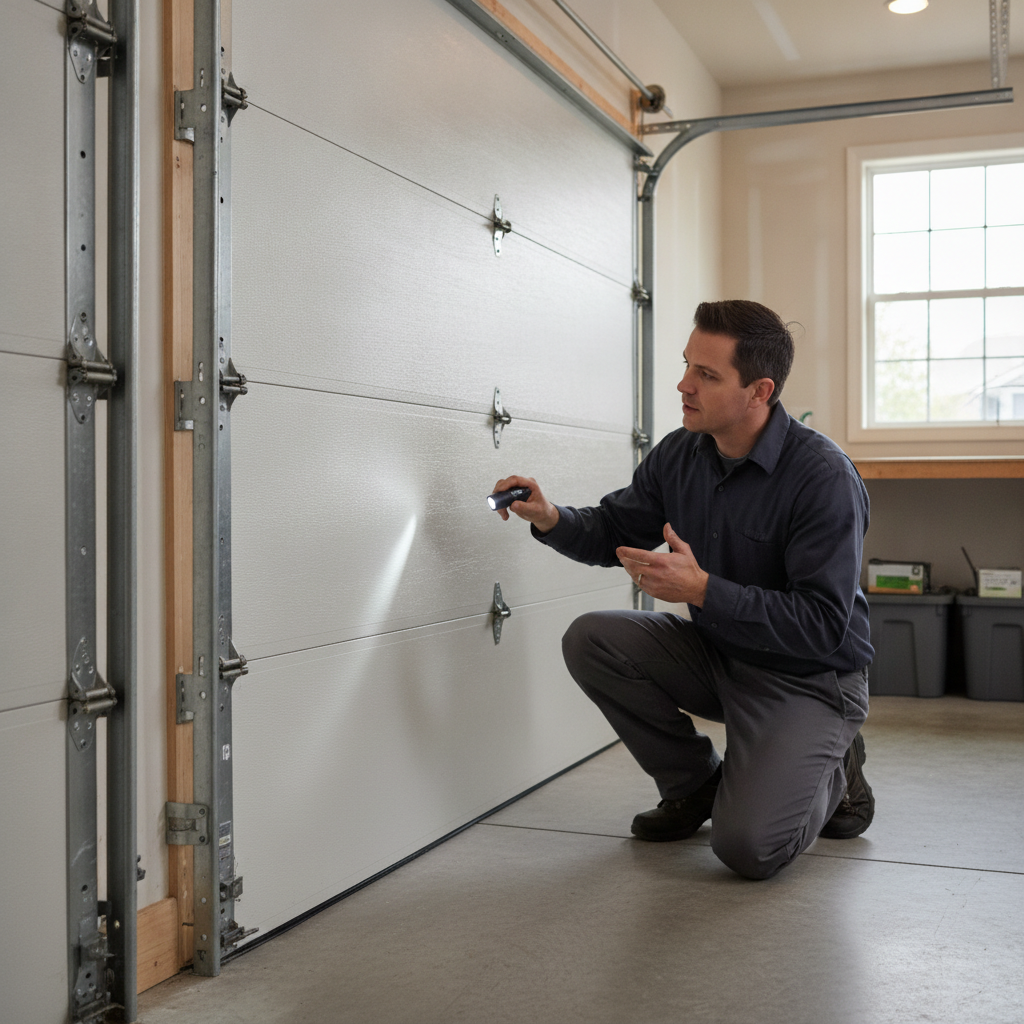
Worn garage door rollers often show up as wobbling, grinding or squeaking noise, sticking movement, flat spots on the wheel, or visible cracking and damage. If your door no longer moves smoothly in the tracks, the rollers are one of the first parts worth checking. However, several garage door problems can create similar symptoms, so a careful inspection matters before deciding what needs repair.
Signs Your Worn Garage Door Rollers Need Attention
Garage door rollers are the small wheels that guide the door through the vertical and horizontal tracks. They carry a lot of movement during daily use, so they can wear down over time. Most homeowners notice the symptoms before they know the cause.
Common signs of worn rollers include:
- Wobbling or shaking: The door may rattle as it moves, or individual rollers may appear loose in the track.
- Flat spots: A roller wheel may stop turning smoothly and slide instead of roll. This can create a thumping or dragging feel.
- Loud operation: Squealing, grinding, clicking, or popping can point to damaged rollers, dry bearings, or track issues.
- Sticking or jerky movement: The door may hesitate in certain spots because the roller is binding in the track.
- Visible damage: Cracks, chips, missing wheel material, bent stems, or worn bearings are signs that the roller should be evaluated.
If the door is crooked, hanging unevenly, or coming out of the track, stop using it. Keep people and pets away from the door until a qualified garage door technician can inspect it.
Why Rollers Cause Noise, Wobbling, and Sticking
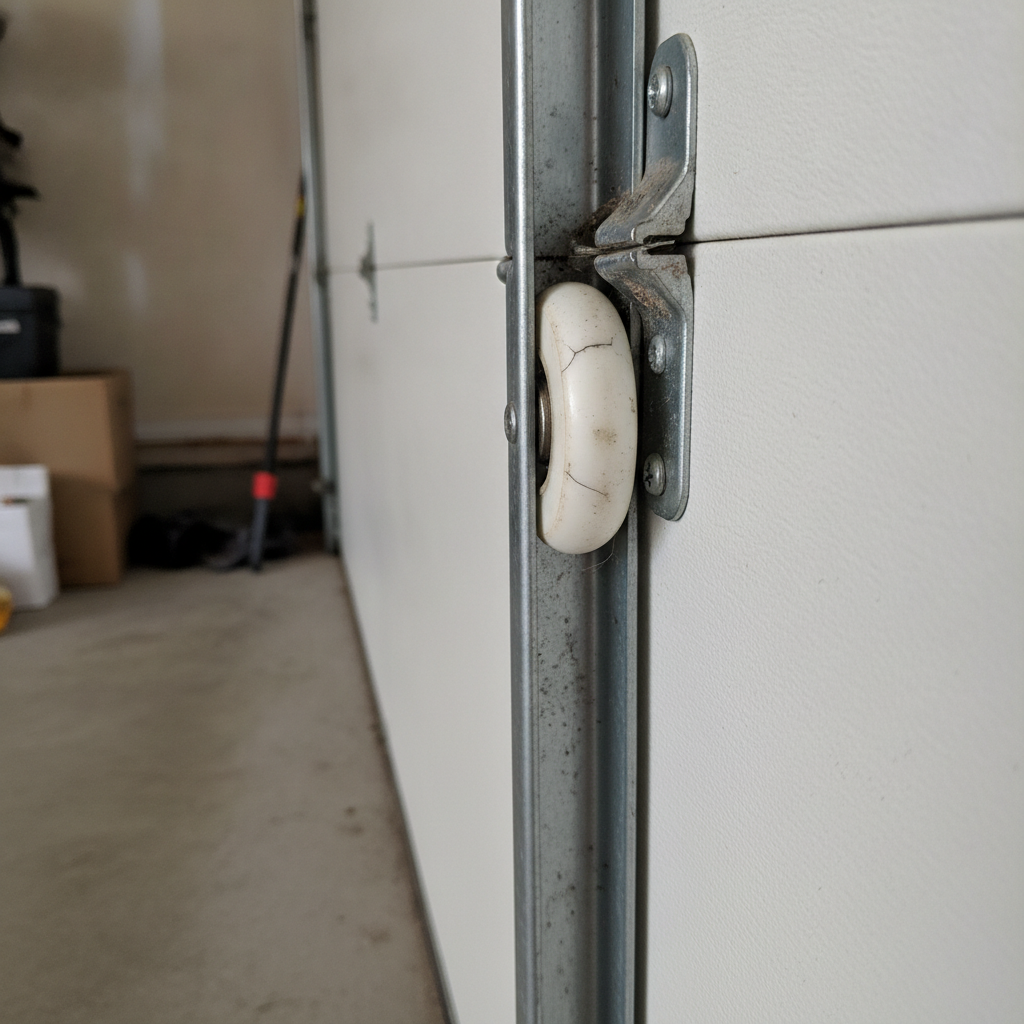
A healthy roller turns freely as the door opens and closes. When the wheel wears down or the bearing fails, the roller may drag inside the track instead. As a result, the opener has to work harder, and the door may sound rough or uneven.
Wobbling often happens when the roller stem is bent, the wheel is worn unevenly, or the hinge holding the roller has become loose or damaged. Meanwhile, sticking can happen if a roller is no longer round, if debris is caught in the track, or if the track is bent. A worn roller can also contribute to track problems because it no longer guides the door correctly.
If your rollers are leaving the track or the door looks unstable, the problem may involve more than the rollers themselves. Track alignment, hinges, cables, and door balance can all affect how the door moves. For related causes, see this guide on why garage door rollers come off track.
Safe Checks Homeowners Can Make
You can inspect garage door rollers without taking the door apart. The safest approach is to observe the door from a clear position and avoid touching moving parts. Do not stand under the door while checking it.
Start with the door closed. Look along both tracks and check whether the rollers appear seated in the track. Then look for cracked wheels, missing chunks, rust, bent stems, or rollers that appear tilted. Also notice whether any hinges look loose or damaged.
If it is safe to do so, operate the door once and watch from inside the garage at a distance. Listen for grinding, squeaking, scraping, or repeated clicking. Notice whether the door shakes at certain points, slows down, or appears to catch near one roller.
Homeowners should avoid these tasks:
- Removing rollers from the bottom bracket
- Forcing a stuck or crooked door open
- Pulling on a door that has slipped out of track
- Loosening cables, springs, or bottom fixtures
- Trying to bend a track while the door is under load
Garage door cables, springs, and bottom brackets are under heavy tension. They can be dangerous if handled without the right tools and training.
What Causes Garage Door Rollers to Wear Out Faster
Rollers wear with normal use, but some conditions speed up the process. For example, a garage door used several times a day will put more cycles on the rollers than a door used only once or twice daily. Heavy doors can also place more stress on worn hardware.
Common causes of faster roller wear include:
- Lack of maintenance: Dirt, dry bearings, and neglected hardware can make rollers work harder.
- Track problems: Bent or dirty tracks can cause rollers to scrape instead of roll smoothly.
- Poor door balance: If the springs are not supporting the door properly, the whole system may strain.
- Moisture and corrosion: Rust can affect metal parts, especially in garages with high humidity or road salt exposure.
- Low-quality or mismatched rollers: Rollers that are not suited to the door can wear out sooner.
Central Indiana weather can also play a role. Temperature swings, moisture, and winter debris can affect tracks, hinges, and roller performance. Therefore, periodic garage door maintenance can help catch small problems before they affect the entire system.
Repair or Replace? What to Consider
A noisy roller does not always mean every roller must be replaced. Sometimes the issue is debris in the track, a dry bearing, a loose hinge, or a slightly bent track. However, cracked rollers, badly worn wheels, and seized bearings usually need replacement rather than adjustment.
A technician will typically look at the full door system before recommending a repair. That includes the rollers, tracks, hinges, opener operation, cables, springs, and door balance. This matters because replacing one visible part may not solve the problem if another component caused the roller damage.
The type of roller also affects how the door sounds and moves. Nylon rollers are often quieter than steel rollers, while steel rollers may be used in certain heavier-duty applications. If you are comparing options, this breakdown of nylon and steel garage door rollers explains the main differences.
If only one roller looks damaged, it may still be worth checking the rest. Rollers are often the same age and have gone through the same number of cycles. Replacing a full set may make sense in some cases, but the right recommendation depends on the door, condition, and hardware.
Frequently Asked Questions
Can I use my garage door if one roller looks worn?
If the door still moves smoothly and stays in the tracks, avoid heavy use and schedule an inspection. If the door is crooked, stuck, or off track, stop using it and keep clear of the door.
Do worn rollers damage the garage door opener?
They can. Rollers that bind or drag make the opener work harder. Over time, that added strain can affect the opener, tracks, hinges, and other hardware.
How often should garage door rollers be inspected?
Look and listen during normal use, and include the rollers during routine garage door maintenance. If noise, wobbling, or sticking appears, have the door checked sooner.
Get Help With Noisy or Damaged Rollers
Garage door roller problems are easier to handle before the door becomes unstable. If you notice wobbling, flat spots, loud operation, sticking, or visible roller damage, stop using the door if it appears unsafe. A professional can check whether the issue is the rollers, tracks, hinges, balance, or another part of the system.
Ultimate Garage Doors LLC serves Indianapolis and surrounding Central Indiana with garage door repair, roller replacement, maintenance, and related service. If your door is noisy, jerky, or showing signs of roller wear, request professional garage door service and get practical help based on the condition of your door.