
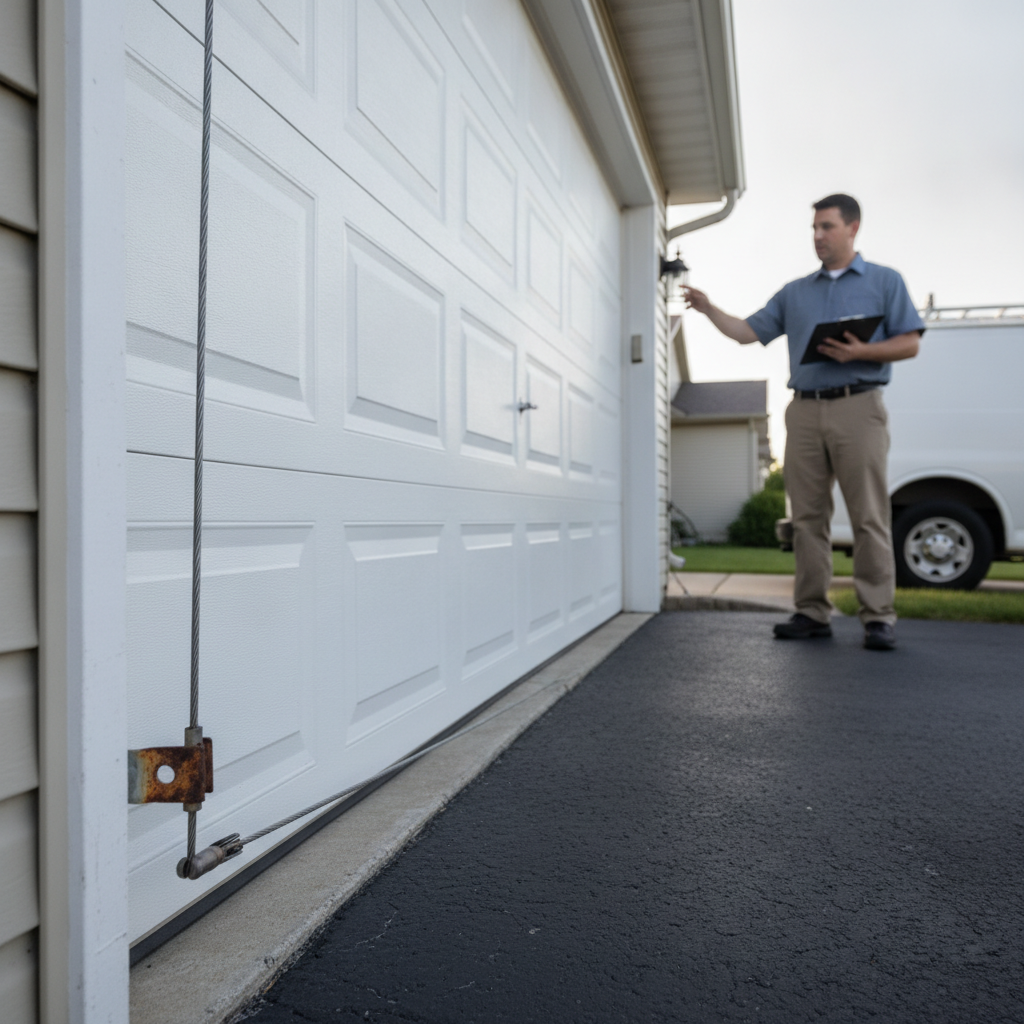
A damaged garage door bottom bracket can make a garage door unsafe because the bracket is tied to the lift cable system. If you notice rust, bending, cracked metal, loose fasteners, or a cable that no longer sits correctly at the lower corner of the door, stop using the door and keep people and pets away until it can be inspected.
The bottom bracket may look like a small piece of hardware, but it is part of a high-tension system. On most sectional garage doors, the lift cable attaches at or near the bottom bracket and works with the springs to help raise and lower the door. Because of that tension, homeowners should not remove, loosen, tighten, or adjust bottom brackets themselves.
What the Bottom Bracket Does
The bottom bracket is mounted at the lower corner of a sectional garage door. It helps secure the bottom roller and provides an attachment point for the lift cable. As the door moves, the cable pulls from the bottom while the rollers guide the sections through the tracks.
This arrangement allows the spring system to carry much of the door’s weight. It also means the bottom bracket can be under significant force. If the bracket fails or shifts, the door may become crooked, unstable, jammed, or unsafe to operate.
Bottom brackets are also exposed to moisture, road salt, lawn debris, and repeated movement. In Central Indiana, winter moisture and freeze-thaw cycles can contribute to corrosion around lower door hardware, so the bottom corners deserve regular visual attention.
Common Signs of a Damaged Garage Door Bottom Bracket
You can notice many warning signs without touching the bracket. Stand several feet away with the door fully closed, if it can close normally, and look at both lower corners. If the door is crooked, hanging, or stuck, do not keep testing it.
Possible signs of a damaged bottom bracket include:
- Heavy rust or corrosion: Surface rust may be common on older hardware, but flaking metal, deep pitting, or rust around fastener holes can weaken the bracket.
- Bent or twisted metal: A bracket that no longer sits flat against the door may have been stressed by impact, cable tension, or track problems.
- Loose or missing fasteners: Screws or bolts that appear backed out can allow the bracket to shift. Do not tighten them if the cable is attached under tension.
- Cracks or torn mounting points: Splits in the bracket or in the door section around the bracket can reduce support.
- Uneven cable position: A cable that looks displaced, frayed, slack, or detached near the bracket may indicate a related cable or spring issue.
- Crooked bottom section: If one side of the door sits lower than the other, the bracket, cable, roller, track, or spring system may be involved.
Several garage door problems can look similar from the outside. A bent track, broken spring, loose cable, damaged roller, or weakened door section can also make the door sit unevenly. A professional inspection helps identify the actual cause before repairs begin.
Why Corrosion and Bending Matter
Corrosion is more than a cosmetic issue when it affects the bottom bracket. Rust can weaken the metal, enlarge fastener holes, and reduce the bracket’s ability to stay firmly mounted under normal door movement.
Moisture often collects near the bottom of a garage door. Snow, rain, floor condensation, and deicing salt can speed up rust on lower hardware. If the weather seal is worn or the door sits in standing water, corrosion may appear sooner.
Bending is also a concern because the bracket needs to stay aligned with the cable, roller, and track. A bracket can bend after a vehicle bump, a door impact, or continued use while another part is failing. Even a slight twist can change how force moves through the cable system.
The safe response is not to force the door to see if it still works. Continuing to operate a door with a questionable bracket can worsen the damage and place extra strain on other components.
Loose Fasteners and Cable Attachment Risks
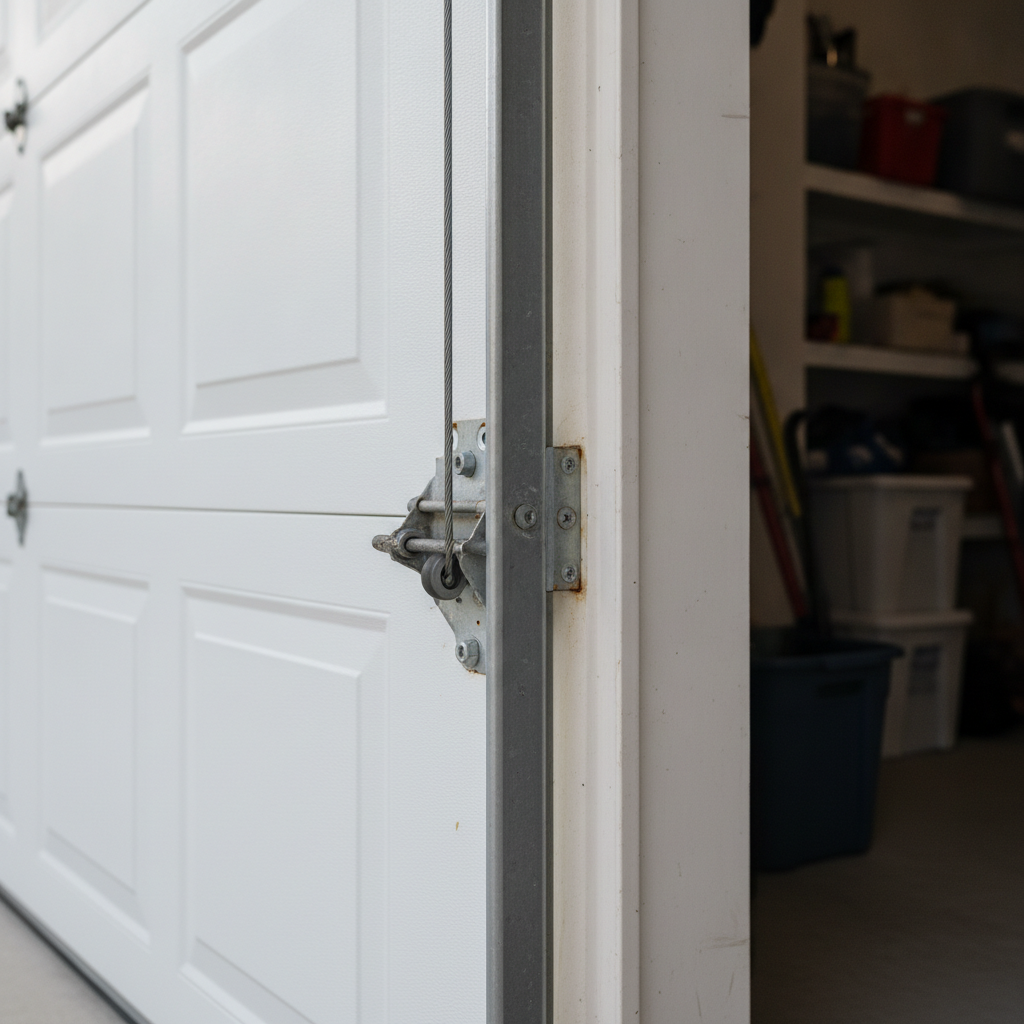
Loose fasteners around the bottom bracket should always be treated carefully. On many garage doors, the lift cable attaches directly to the bottom bracket or to hardware integrated with it. That cable is connected to the spring counterbalance system, so it may be under significant tension even when the door is closed.
Because of that tension, do not remove the bracket, back out fasteners, adjust the cable, or try to reposition the hardware. A sudden cable release can cause serious injury or door damage. This is not the same as tightening a loose hinge in the middle of the door.
If the cable appears slack, hanging, or out of place, the issue may involve more than the bracket. A loose cable can point to spring tension problems, cable drum concerns, impact damage, or a door that has come out of balance. For more detail on that symptom, see this guide to a garage door cable hanging loose.
The cable also works with drums at the top of many torsion spring systems. If the cable is not tracking correctly, a technician may inspect the drums, shaft, bearings, springs, and brackets together. This overview of garage door cable drums explains how those parts fit into the lifting system.
Safe Observations Homeowners Can Make
Homeowners can make a few safe visual observations without touching high-tension parts. These checks can help you describe the problem when scheduling service, but they are not a substitute for a professional diagnosis.
Safe observations include:
- Looking for rust, cracks, or bending from several feet away.
- Checking whether both bottom corners of the door sit evenly on the floor.
- Noticing if the cable appears frayed, slack, detached, or wrapped incorrectly.
- Listening for new scraping, popping, or grinding sounds during normal operation, if the door still appears stable.
- Looking at the outside of the lower door section for impact damage.
- Checking whether the bottom weather seal is damaged and allowing water inside.
If anything looks unstable, do not continue opening and closing the door for testing. Avoid standing under the door or placing hands near the bottom bracket, cable, or track. A damaged bracket can shift without much warning.
If your vehicle is trapped inside, do not force an uneven or damaged door open. Forcing the door can create more serious problems. Instead, explain the access issue when you call for service.
What a Professional Technician Will Inspect
A trained garage door technician will look beyond the visible bracket. The bracket may be the result of another problem, not the original cause. For example, a door that hit an object may bend a bracket and knock a roller out of alignment at the same time.
During an inspection, a technician may evaluate:
- The bottom brackets on both sides of the door.
- The lift cables and their attachment points.
- The rollers, hinges, and lower door section.
- The vertical tracks and track fasteners.
- The door balance and spring system.
- The cable drums and torsion shaft, when applicable.
- Signs of impact, corrosion, water damage, or structural weakness.
The technician can then determine whether the bracket needs replacement, whether the door section is damaged, or whether another part caused the issue. If replacement is needed, the high-tension cable and spring forces must be controlled safely with the correct tools and training.
For older doors, the inspection may reveal wear in several lower components. That does not automatically mean a full door replacement is required, but if the bottom section is rotted, cracked, or badly bent, replacing only the bracket may not provide a lasting repair.
Frequently Asked Questions
Can I tighten a loose bottom bracket myself?
No. Because the lift cable is often attached to the bottom bracket, its fasteners can be under spring tension. Do not loosen, tighten, or remove bottom bracket hardware. Have a qualified garage door technician inspect it.
Is rust on a bottom bracket always dangerous?
Light surface rust may not mean immediate failure, but heavy corrosion, flaking metal, cracked areas, or rust around fasteners can weaken the bracket. A professional inspection is the safest way to judge the risk.
Can a damaged bottom bracket make the door crooked?
Yes, it can. However, a crooked garage door can also come from cable, spring, roller, track, or door section problems. Stop using the door if it looks uneven or unstable.
When to Call for Professional Repair
Call a garage door professional if you see bending, severe corrosion, loose fasteners, cable problems, or an uneven bottom section. You should also stop operating the door if it scrapes, jerks, hangs crooked, or appears unstable. Keep people and pets away from the door, and avoid standing beneath it.
Ultimate Garage Doors LLC helps homeowners and property owners in Indianapolis and surrounding Central Indiana with garage door repairs, including damaged brackets, cables, rollers, springs, and related safety concerns. Same-day service may be available when scheduling, parts, location, and circumstances permit.
If you suspect a damaged bottom bracket or related cable issue, request professional garage door service from Ultimate Garage Doors and ask for a safe inspection before using the door again.