
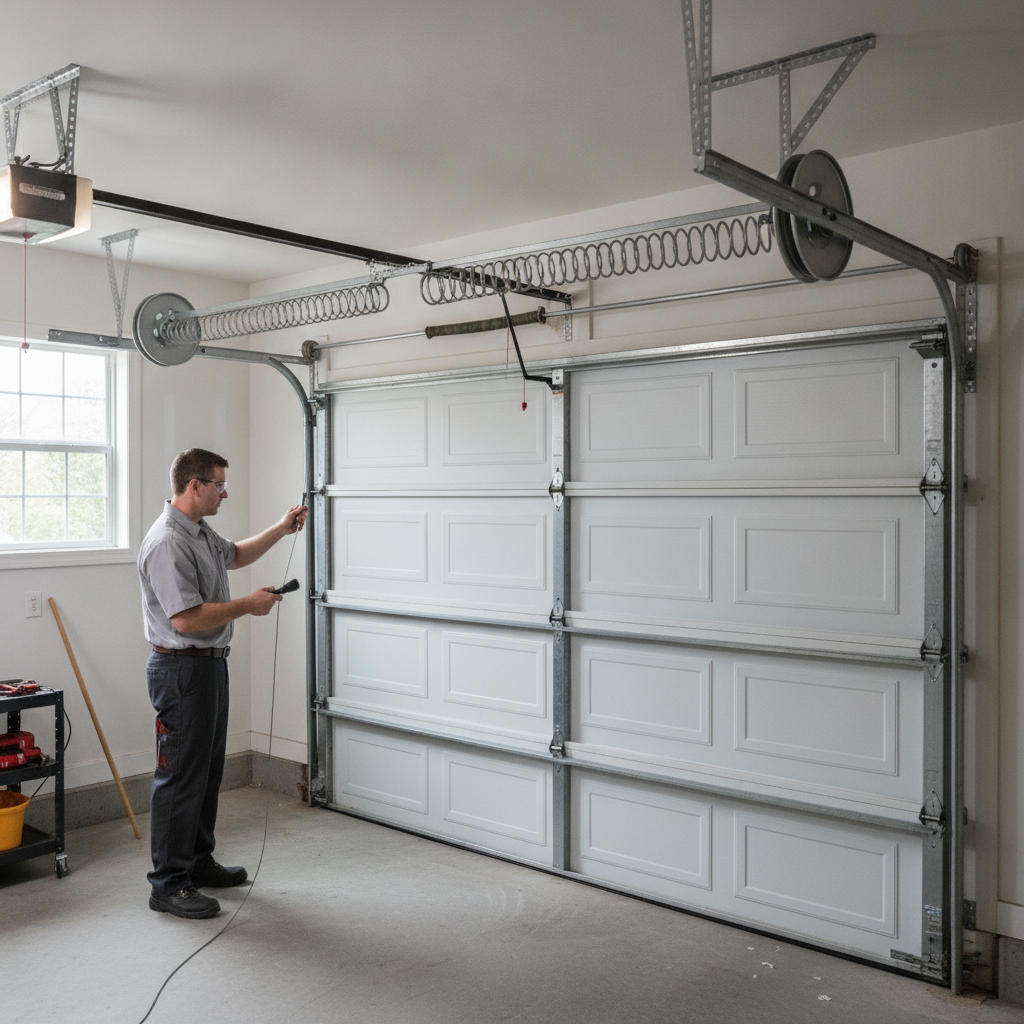
Garage door cable drums are the grooved wheels near the top corners of many garage door systems. They help wind and unwind the lift cables as the door opens and closes. In simple terms, the drums guide cable movement so the door can rise evenly, stay balanced, and work with the spring system instead of fighting against the full weight of the door.
Most homeowners never notice the drums until something looks crooked, noisy, loose, or unstable. However, these parts play a major role in safe garage door operation. Because cable drums connect directly to springs and cables, problems should be handled carefully and inspected by a trained garage door technician.
What Garage Door Cable Drums Do
On a standard torsion spring garage door, cable drums sit on the torsion shaft above the door opening. One drum is mounted near each end of the shaft. The lift cables attach to the bottom of the door, run upward along the sides, and wrap into the grooves of the drums.
As the door opens, the torsion springs release stored energy and turn the shaft. The drums rotate with that shaft and wind the cables in a controlled pattern. As a result, the cables lift the bottom corners of the door evenly.
As the door closes, the process reverses. The cables unwind from the drums while the springs gain tension. This balance is what keeps a heavy garage door from crashing down under its own weight.
Cable drums are not motors, brakes, or decorative hardware. They are precision lifting components. Their size, groove design, and placement must match the door height, spring setup, and cable type. If the wrong drum is installed or a drum shifts out of position, the door may not lift correctly.
How Drums Work With Springs and Cables
Garage door drums, springs, and cables work as one lifting system. If one part is damaged or out of adjustment, the other parts often show symptoms too. That is why a crooked door does not always mean the drum alone has failed.
The torsion springs provide the counterbalance. They store and release force as the door moves. The torsion shaft transfers that force to the cable drums. Meanwhile, the drums manage how the cables wrap and unwrap, which helps each side of the door move at the same rate.
The cables do the actual pulling at the lower corners of the door. They must stay seated in the drum grooves. If a cable jumps a groove, becomes slack, frays, or slips off the drum, the door can tilt, bind in the tracks, or become unsafe to operate.
For example, a door that is heavier on one side may have a cable issue, a spring tension problem, a shifted drum, track resistance, or more than one problem at the same time. Therefore, a visual symptom is only a starting point. A proper diagnosis checks the entire lifting system.
Common Signs of Cable Drum Problems
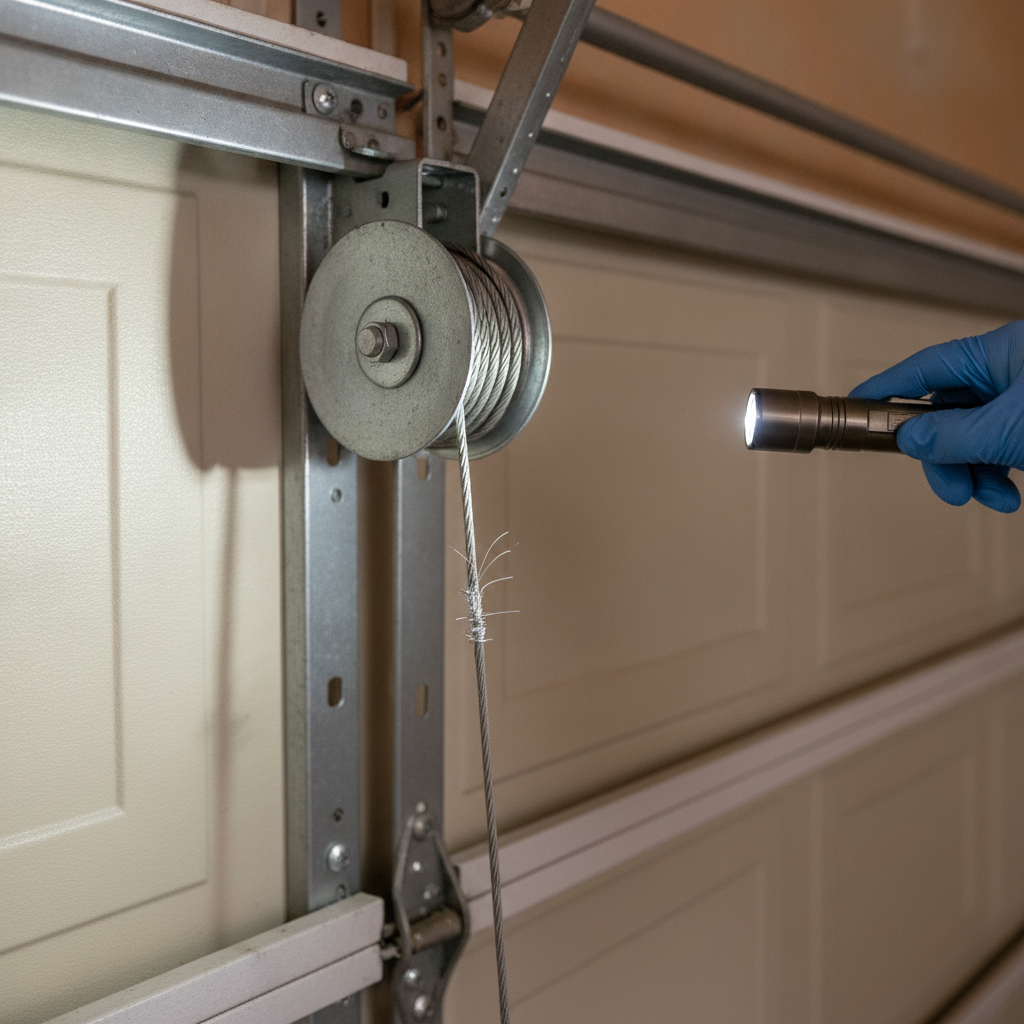
Cable drums can wear, crack, loosen, or become misaligned. They may also appear to be the problem when the real issue begins with a cable or spring. Watch for these warning signs:
- The garage door looks crooked while opening or closing.
- One cable appears loose while the other side remains tight.
- A cable has slipped off the drum or is wrapped unevenly.
- The door jerks, binds, or stops partway in the tracks.
- You hear scraping, popping, grinding, or sudden snapping sounds near the top corners.
- The door closes too quickly or feels unusually heavy when disconnected from the opener.
- The opener strains, reverses, or cannot move the door smoothly.
- The drum appears cracked, chipped, or shifted on the shaft.
If the door is crooked, hanging, off track, or supported by a loose cable, stop using it. Keep people and pets away, and avoid standing under the door. A garage door in that condition can move unexpectedly.
Frayed cables are especially important because they can affect how the cable sits in the drum grooves. If you see broken cable strands, review what homeowners should know about frayed garage door cables and arrange a professional inspection before using the door again.
Why Cable Drums Fail or Come Out of Alignment
Cable drums usually fail because another part of the lifting system is worn, strained, or out of balance. Sometimes the drum itself is damaged. Other times, the drum is reacting to a cable, spring, or track problem.
Common causes include:
- Worn or damaged lift cables: Frayed or stretched cables may not wrap cleanly into the drum grooves.
- Rust and corrosion: Rust can weaken cables and roughen related hardware, especially in damp garages or during Central Indiana winters.
- Improper spring tension: Springs that are not balanced correctly can place uneven force on the drums and cables.
- Loose set screws or shifted hardware: A drum that moves on the torsion shaft can throw off cable tracking.
- Impact damage: A bumped or crashed door can bend tracks, loosen cables, or change the alignment of the lifting system.
- Normal wear: Repeated cycles can wear grooves, bearings, cables, and fasteners over time.
- Wrong replacement parts: Drums must match the door and lifting system. Incorrect parts can cause poor cable travel.
Rust is a common reason cable systems start acting up. Corroded cables may become stiff, rough, or weak, which can affect the way they wrap around the drums. If corrosion is visible, this guide to why garage door cables rust explains common moisture-related causes and prevention considerations.
What Homeowners Can Safely Check
You can make a few safe observations without touching the high-tension parts. Start with the door fully closed if possible. Do not try to pull cables back onto drums, loosen set screws, adjust springs, or remove hardware.
Safe visual checks include:
- Look at both top corners to see whether the cables appear evenly wrapped on the drums.
- Check whether one side of the door sits higher than the other.
- Listen for new grinding, popping, or scraping sounds during operation.
- Look for frayed cable strands, rust, or cable slack along the sides of the door.
- Notice whether the opener seems to strain more than usual.
- Check the tracks for obvious bending or gaps where rollers may bind.
These checks are only for observation. If you see a cable off the drum, a tilted door, a broken spring, or a damaged bottom bracket, do not keep testing the door. Also avoid using the opener to force movement because the opener is not designed to correct lifting system failures.
Garage door springs and cables are under significant tension. Cable drums are connected to that same force. Because of that, repair work should be left to someone with the correct tools, training, and parts.
Can a Garage Door Work With a Bad Cable Drum?
A garage door may move briefly with a bad or misaligned cable drum, but continued use can make the problem worse. The cable may stack incorrectly, jump grooves, or unwind from the drum. The door can then become crooked, jammed, or unstable.
The opener may also suffer strain. Openers are designed to move a balanced door, not lift the full weight of a damaged or unbalanced system. If the door becomes heavy, uneven, or noisy, the safest choice is to stop operating it until it has been inspected.
In some cases, the drum may be reusable after a related cable or spring issue is corrected. In other cases, the drum may need replacement. The right answer depends on the condition of the drum grooves, shaft, cables, springs, bearings, and door alignment.
Frequently Asked Questions
Are garage door cable drums used on every garage door?
No. Cable drums are most common on torsion spring systems, where they mount on the torsion shaft above the door. Some extension spring systems use pulleys instead.
Can I put a garage door cable back on the drum myself?
No. A cable that has come off the drum is part of a high-tension system. Stop using the door and have a qualified technician inspect it.
Why does one cable look loose near the drum?
A loose cable can point to a broken spring, shifted drum, cable stretch, track binding, or door damage. Several issues can look similar, so diagnosis matters.
When to Call a Garage Door Professional
Call a professional if your garage door is crooked, off track, hanging unevenly, noisy near the drums, or showing loose or frayed cables. You should also stop using the door if a cable has slipped off a drum or if the door feels unusually heavy.
Ultimate Garage Doors LLC helps homeowners and property owners in Indianapolis and Central Indiana diagnose cable drum, cable, spring, and door balance problems. If you suspect a lifting system issue, request a free garage door estimate before operating the door again.