
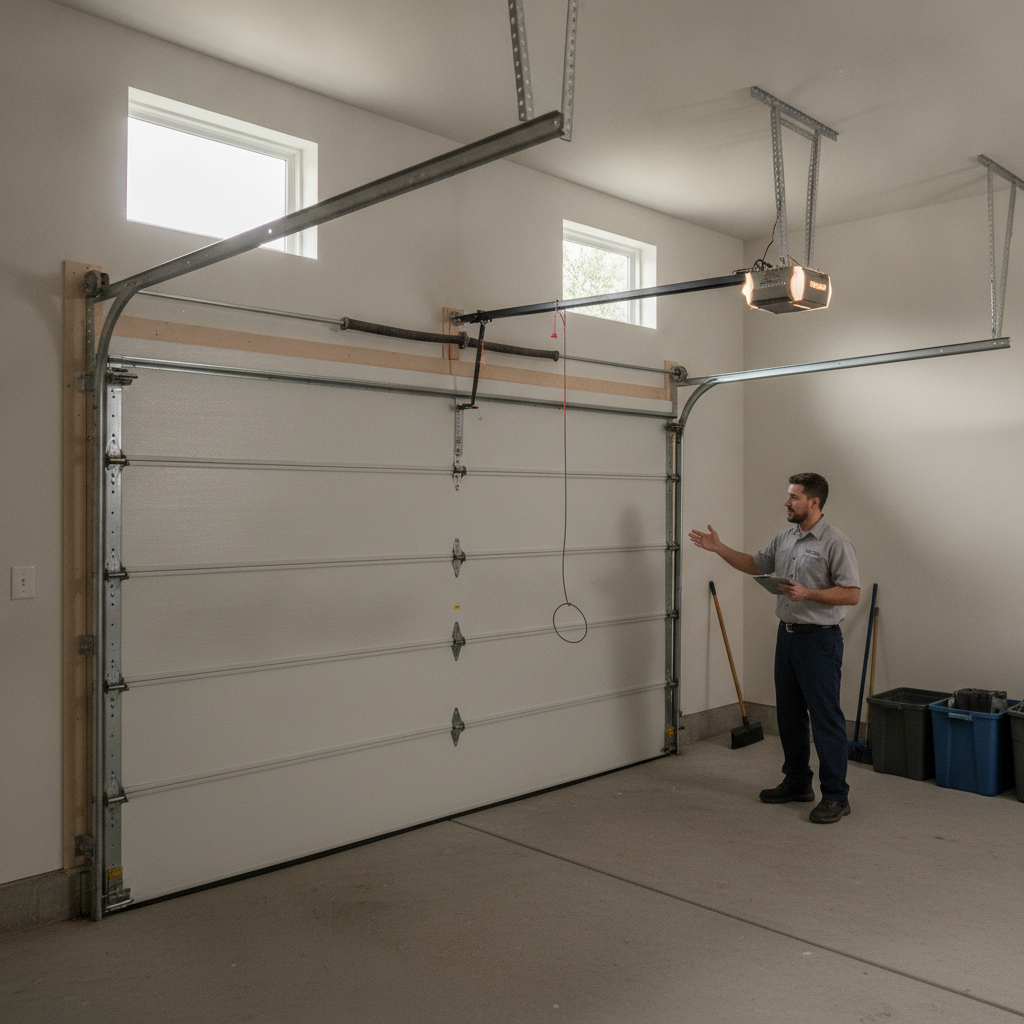
If you see a garage door cable hanging loose, stop using the door until it has been checked. A loose cable usually means the door is no longer moving evenly or the counterbalance system is not holding tension correctly. Because garage door cables work with springs and other high-tension parts, this is not a safe do-it-yourself repair.
In many cases, the loose cable is a symptom rather than the root problem. A broken spring, off-track roller, damaged drum, jammed door section, or poor door balance can all allow cable slack to appear. The safest next step is to keep people and pets away from the door and arrange a professional inspection.
What a Garage Door Cable Hanging Loose Usually Means
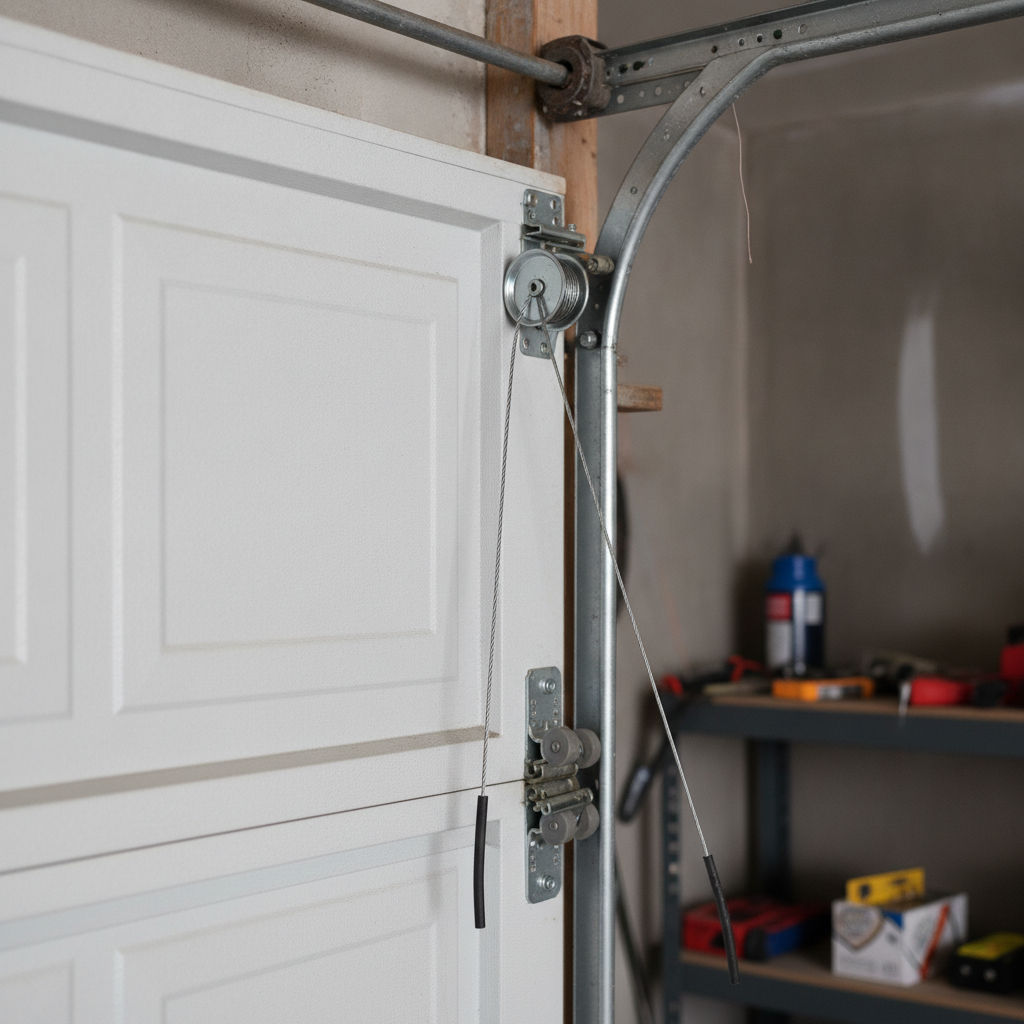
Garage door cables help lift and lower the door by transferring spring tension to the bottom of the door. On many residential doors, the cables wind around grooved cable drums above the door. As the door opens and closes, the drums guide the cables so both sides move together.
When one cable hangs loose, the system has likely lost proper tension on that side. That can happen suddenly, such as when a spring breaks. It can also develop after the door binds, a roller leaves the track, or the cable fails to wrap cleanly on the drum.
A loose cable may look minor, but it can create a serious operating problem. The door may become crooked, heavy, stuck, or unstable. If the opener continues pulling on the door, it may bend sections, damage tracks, or make the cable problem worse.
Common Causes of a Loose Garage Door Cable
Several issues can create cable slack. The visible cable is only one part of the lift system, so the actual cause may not be obvious without inspecting the hardware.
Broken or weak garage door springs
Garage door springs carry much of the door’s weight. Torsion springs mount above the door, while extension springs usually stretch along the horizontal tracks. If a spring breaks or loses tension, the cables may no longer stay tight as the door moves.
A broken torsion spring often leaves a visible gap in the spring coil. The door may feel extremely heavy or may not open more than a few inches. If this happens, stop operating the opener because the motor is not designed to lift the full weight of the door without spring support.
Spring work is dangerous because stored tension can release suddenly. A trained technician can determine whether the spring system, cables, drums, and bearings are working together correctly.
Off-track rollers or a crooked door
Rollers guide the door through the tracks. If one or more rollers come out of the track, the door may bind or tilt. As a result, one cable can lose tension while the other side remains tight. You might notice the door leaning, rubbing the track, or stopping partway open. Even if the cable itself is not broken, the door should not be operated while it is crooked or uneven.
Cable drum problems
The cable drum is the grooved wheel that helps keep the cable wrapped in the right position. If the cable jumps a groove, overlaps itself, or slips off the drum, slack may appear lower on the door. Dirt, worn hardware, a bent shaft, or an uneven door can contribute to poor winding.
For a deeper explanation of how these parts work, see this guide to garage door cable drums. Understanding the drum’s job can help homeowners recognize why a loose cable should be inspected before the door is used again.
Frayed, stretched, or damaged cables
Cables are made of twisted metal strands. Over time, those strands can fray, rust, kink, or stretch. A damaged cable may not sit correctly on the drum, and it may lose strength before it fully breaks. If you see broken strands, rust, or a cable that looks thinner in one area, avoid touching it.
Homeowners sometimes ask whether frayed garage door cables can be repaired, but cable condition should always be evaluated by a qualified technician because cables are tied into the door’s high-tension counterbalance system.
Why You Should Stop Using the Door
A loose cable changes how the door’s weight is supported. The door may appear to move normally for a short time, but the system is no longer operating as designed. Continuing to use it can increase the risk of a stuck door, falling door section, damaged opener, or additional hardware failure.
Stop using the garage door if you notice any of these warning signs:
- One cable is hanging loose or has fallen off the drum.
- The door looks crooked, tilted, or uneven.
- The door opens a few inches and then stops.
- The opener strains, hums, or pulls the door at an angle.
- A spring appears broken, separated, or stretched unevenly.
- Rollers are outside the track or the track looks bent.
- The door slammed shut, dropped suddenly, or made a loud bang.
Do not disconnect the opener to test the door if the door looks unstable. Pulling the emergency release on a door with spring or cable trouble can cause the door to move unexpectedly. If the door is stuck open, keep the area clear and wait for professional help.
What Homeowners Can Check Safely
You can gather helpful information without handling the cable or taking anything apart. This can make the service conversation easier, especially if the door is stuck and you need to describe the problem.
From a safe distance, you may be able to observe:
- Whether the loose cable is on the left side, right side, or both sides.
- Whether the door is fully closed, partly open, or stuck open.
- Whether one side of the door is lower than the other.
- Whether a spring has a visible gap or looks separated.
- Whether rollers appear to be inside the tracks.
- Whether the cable is off the drum, tangled, kinked, or visibly frayed.
- Whether the opener rail or arm looks strained or bent.
These are visual checks only. Do not tighten set screws, loosen drums, unwind cables, remove bottom brackets, or try to place the cable back on the drum. Those parts can be under heavy tension even when the door is not moving.
If your garage door is the main entry point to your home, it can be tempting to force it open for convenience. However, forcing a door with a loose cable can turn a repairable issue into a larger failure.
How a Technician Diagnoses the Problem
A professional garage door technician will look at the full lift system rather than only the loose cable. Since several faults can create similar symptoms, diagnosis usually includes checking the springs, cables, drums, rollers, tracks, hinges, bottom brackets, and opener connection.
The technician may also evaluate door balance. A balanced door should be properly supported by the spring system throughout its travel. If one side lifts faster than the other, the cables may wrap unevenly or lose tension again after a repair.
Depending on the condition of the system, the repair may involve replacing worn cables, correcting the cable wrap, addressing a broken spring, realigning rollers, or repairing damaged track components. The right fix depends on the inspection. A loose cable does not automatically mean every part needs replacement.
Frequently Asked Questions
Can I open my garage door if one cable is loose?
No. You should stop using the door if a cable is loose. The door may be unbalanced or unstable, and operating it can cause more damage or create a safety risk.
Does a loose cable always mean the cable is broken?
Not always. The cable may be intact but loose because of a broken spring, off-track roller, drum issue, or door imbalance. A technician can identify the actual cause.
Can I put the cable back on the drum myself?
No. Cable drums, bottom brackets, and springs can be under high tension. Repositioning a cable without proper tools and training can be dangerous.
When to Call for Professional Help
Call a garage door professional if you see cable slack, a crooked door, off-track rollers, a broken spring, or any sign that the door is not supported evenly. Keep people and pets away from the door, avoid standing beneath it, and do not try to force the door open or closed.
Ultimate Garage Doors LLC can inspect cable, spring, drum, roller, and track problems for homeowners and property owners in Indianapolis and nearby Central Indiana areas. If your garage door cable is hanging loose or the door appears unstable, request professional garage door service to have the system evaluated safely.