
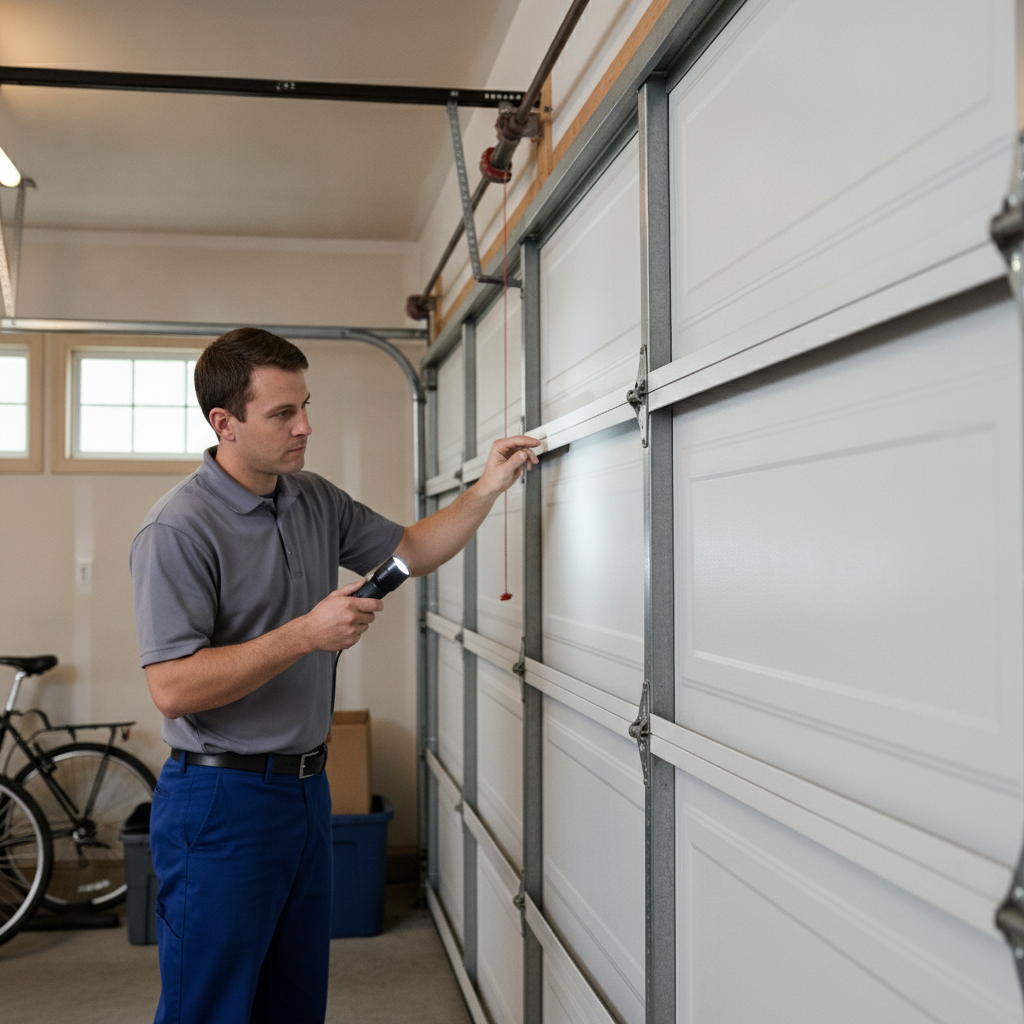
Garage door hinges crack when they are forced to carry more stress than they were designed to handle. Common causes include metal fatigue, loose fasteners, heavy door panels, impact damage, corrosion, and poor alignment. Because hinges help each door section bend and move smoothly, a cracked hinge should not be ignored.
For Indianapolis and Central Indiana homeowners, hinge damage can start small and then get worse as the door opens and closes. In some cases, several issues work together. For example, a loose hinge may allow extra movement, while a misaligned track adds side pressure every time the door runs.
Why Garage Door Hinges Crack Over Time
Garage door hinges are small parts with a demanding job. They connect the horizontal sections of a sectional garage door and allow those sections to pivot as the door moves along the track. Each cycle places stress on the hinge plates, hinge barrels, screws, and surrounding panel material.
Over time, repeated movement can cause metal fatigue. Metal fatigue happens when a part weakens after many cycles of bending, vibration, or loading. The hinge may look fine for years, then develop a hairline crack near a screw hole, bend point, or roller stem area.
Age is not the only factor. A newer hinge can crack early if the door is out of balance, the fasteners are loose, or the panel is too heavy for the hinge style. Also, one cracked hinge can transfer extra stress to nearby hinges, which may lead to more damage.
Loose Fasteners Create Extra Movement
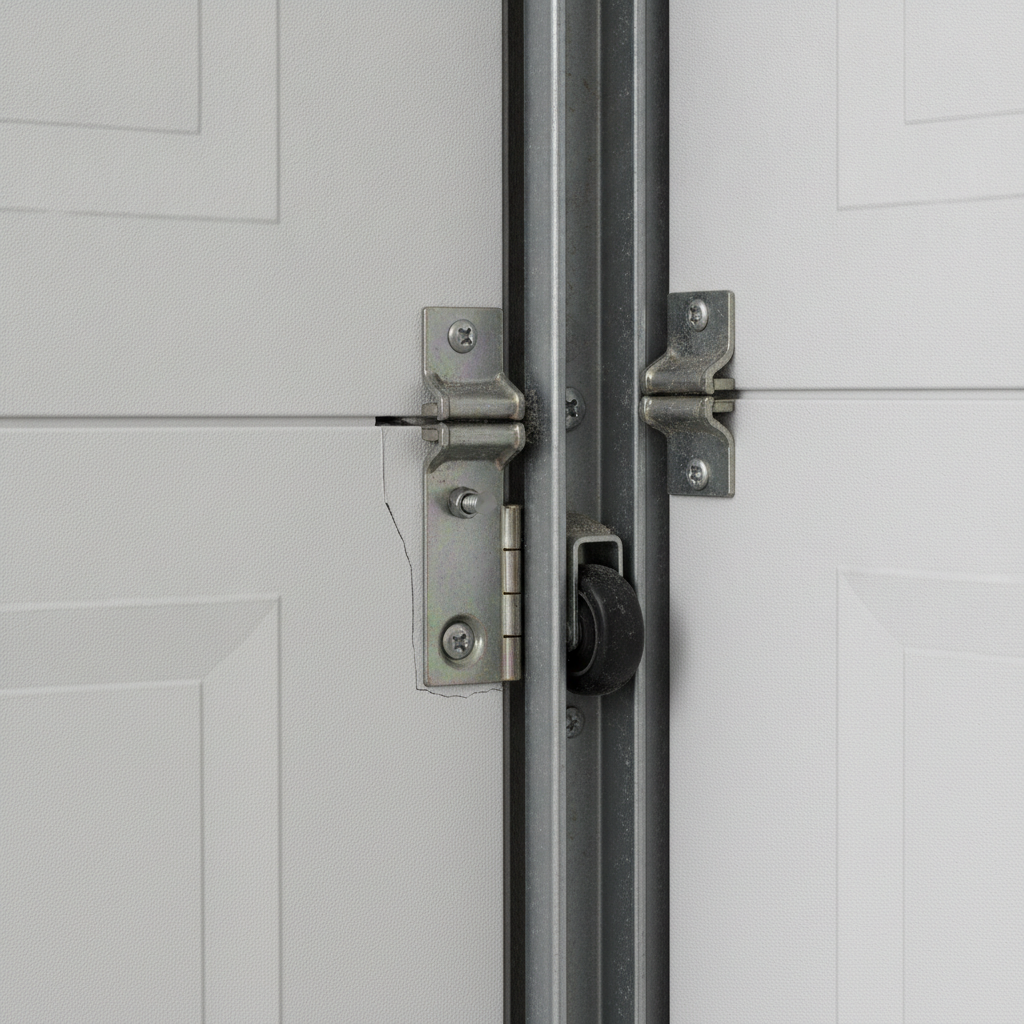
Loose screws or bolts are one of the most common reasons hinges fail. A hinge should sit firmly against the garage door section. If fasteners loosen, the hinge can shift, rattle, and flex in ways it should not.
This extra movement often enlarges the screw holes or pulls against the door skin. As a result, the hinge may crack around the mounting points. You may hear popping, clicking, or rattling as the door moves. The door section may also look slightly misaligned where two panels meet.
Homeowners can safely make a visual check from the garage floor with the door closed. Look for missing screws, tilted hinge leaves, widened holes, rust trails, or metal that no longer sits flat. However, avoid removing hinges or adjusting parts if the door appears crooked, sagging, or unstable. Those conditions can involve spring tension, cable tension, and door weight.
Heavy Panels and Door Balance Problems
Garage door hinges are selected based on the door design, panel thickness, and roller location. If panels are unusually heavy, damaged, waterlogged, or reinforced incorrectly, the hinges may carry more load than expected. This is especially true on older wood doors or doors with added materials attached to the panels.
Door balance also matters. Garage door springs are designed to offset the weight of the door. If the springs are worn, broken, or not properly matched to the door, the opener and hardware must work harder. That extra strain can show up at hinges, rollers, brackets, and opener components.
Signs that hinge cracking may be related to weight or balance include:
- The opener strains or slows during travel
- The door feels unusually heavy when operated manually by a professional
- Multiple hinges are cracked or bent
- Panels flex noticeably as the door moves
- The door slams shut or will not stay in position
Do not try to adjust garage door springs to correct a balance problem. Springs are high-tension components and can cause serious injury if handled incorrectly. A trained garage door technician can evaluate the spring system, door weight, and hardware together.
Impact Damage and Daily Wear
A cracked hinge can also start with a single impact. A vehicle bumping the door, a trash bin catching a panel, or a tool striking a hinge can bend the metal. Even if the door still works afterward, the hinge may have a weak point that grows into a crack over time.
Impact damage does not always look dramatic. You may notice a dented panel, a hinge that no longer lines up with the section below it, or a roller that sits at an odd angle. Meanwhile, the opener may keep pulling the door through its travel, putting more stress on the damaged area.
Daily wear can make the problem worse. Hinges that are dry, rusty, or packed with dirt cannot move as smoothly. The hinge barrel may bind, and the hinge leaves may flex each time the door bends around the track radius. Lubricating the correct moving parts can help reduce friction, but it will not repair a cracked hinge or fix a bent door section.
Poor Alignment Adds Side Pressure
Garage door hinges are designed to handle movement in a specific direction. Poor alignment can force the door to twist, rub, or pull sideways. That side pressure can crack hinges, wear rollers, loosen screws, and damage the panel around the hinge.
Alignment issues may come from bent tracks, loose track brackets, worn rollers, a shifted door section, or a previous impact. If your door rubs, scrapes, or moves unevenly, the hinge may be reacting to a larger tracking problem. For a closer look at related symptoms, see this guide to a garage door rubbing against the track.
Lubrication is sometimes misunderstood in this area. Rollers, hinges, and some opener parts may need suitable garage door lubricant, depending on the system. However, tracks should generally be clean rather than coated with grease because buildup can attract dirt and interfere with roller movement. This explanation of whether garage door tracks should be lubricated covers that difference in more detail.
Warning Signs of Cracked or Failing Hinges
A cracked hinge may be visible, but not always. Some cracks start near screw holes or along folded metal edges. Others appear on the hinge barrel where the roller stem passes through.
Watch for these warning signs:
- Visible cracks, splits, or sharp edges on hinge metal
- Popping, snapping, squeaking, or grinding sounds
- A hinge that looks bent, twisted, or pulled away from the panel
- Loose or missing screws around one or more hinges
- Panels that separate unevenly as the door opens
- Rollers that sit crooked in the track
- A door that jerks, binds, or shakes during travel
If the door is crooked, hanging, off track, or partially unsupported, stop using it. Keep people and pets away from the opening, and do not stand beneath the door. A damaged hinge may seem minor, but the door sections are heavy and can shift unexpectedly.
Frequently Asked Questions
Can I use my garage door if one hinge is cracked?
It is safer to stop using the door until the hinge is inspected. A cracked hinge can worsen quickly and may place extra stress on nearby hinges, rollers, and panels.
Do all cracked hinges mean the whole door needs replacement?
No. Many hinge problems can be repaired if the panels and other hardware are in good condition. However, severe panel damage, corrosion, or repeated hinge failures may point to a larger issue.
How often should garage door hinges be checked?
Homeowners can visually check hinges during routine maintenance a few times a year. A professional inspection is helpful if you hear new noises, see loose hardware, or notice uneven door movement.
When to Call a Garage Door Professional
Call a professional if you see cracked hinges, bent panels, loose hinge hardware, crooked rollers, or uneven door movement. You should also get help if the door has been hit, is rubbing the track, or seems heavier than normal. These symptoms can have more than one cause, and the safest repair depends on the full door system.
A technician can inspect the hinges, rollers, tracks, panels, opener force settings, cables, and spring balance without guessing. If your garage door hinges are cracked or the door no longer moves smoothly, request a free garage door estimate from Ultimate Garage Doors for professional guidance in the Indianapolis area.