
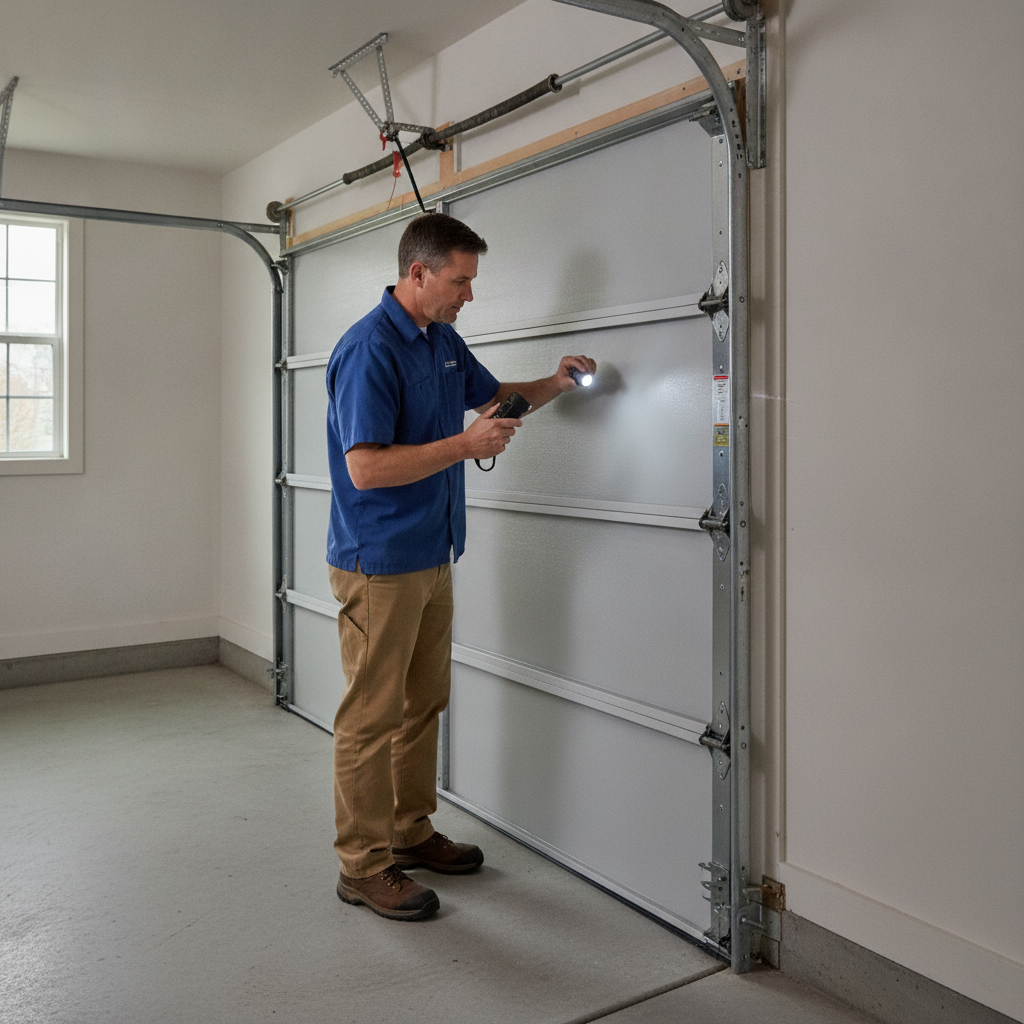
A garage door rubbing against track hardware usually means something is out of alignment, worn, loose, or shifting under load. The cause may be as simple as a loose hinge or as serious as a bent track, damaged roller, or door panel moving out of position. Because several problems can create the same scraping sound, the safest next step is to inspect only what you can see without forcing the door.
If the door is scraping, binding, hanging crooked, or struggling to move, avoid repeated use. A rubbing door can worsen quickly because the opener may keep pulling against resistance. That can damage rollers, hinges, tracks, panels, or the opener itself.
Common Reasons for a Garage Door Rubbing Against Track
The track guides the rollers as the garage door opens and closes. It does not carry the full weight of the door by itself, but it keeps the door moving in the correct path. If the rollers no longer sit correctly in that path, the door may scrape, grind, or rub against the track.
Common causes include:
- Track misalignment: The vertical or horizontal track may be slightly bent, shifted, or pulled away from its correct position.
- Loose hinges: Hinges connect the door sections. If hinge fasteners loosen, a section can shift and cause rubbing.
- Damaged rollers: A cracked, worn, or seized roller may drag instead of rolling smoothly.
- Panel movement: A damaged or sagging panel can sit unevenly and contact the track.
- Loose track brackets: Brackets hold the track to the wall or ceiling framing. If they loosen, the track can move.
- Impact damage: A vehicle bump, stored item, or lawn equipment can bend a track or shift a panel.
Sometimes the sound is not caused by the track itself. For example, a worn roller may grind inside the track, or a hinge may pull a door section slightly sideways. Therefore, the location of the noise helps, but it does not always identify the full problem.
How Misalignment Causes Rubbing
A garage door track must be positioned so the rollers can move freely without pinching or dragging. Even a small bend or shift can create contact between the door edge, roller stem, hinge, or track wall.
Track misalignment can happen gradually. Vibration from daily use may loosen hardware over time. Seasonal temperature changes in Central Indiana can also affect framing, fasteners, and door movement. Meanwhile, one accidental impact can create a sudden problem.
Signs of possible misalignment include:
- The door rubs in the same spot during every cycle.
- The door looks tighter on one side than the other.
- One roller appears deeper in the track than nearby rollers.
- The track looks bent, twisted, or pulled away from the wall.
- The door jerks or hesitates as it passes a certain point.
Do not try to bend the track back by force while the door is under load. Tracks work with rollers, hinges, cables, springs, and brackets. Moving one part without checking the full system can create a larger alignment problem.
Loose Hinges, Damaged Rollers, and Panel Movement
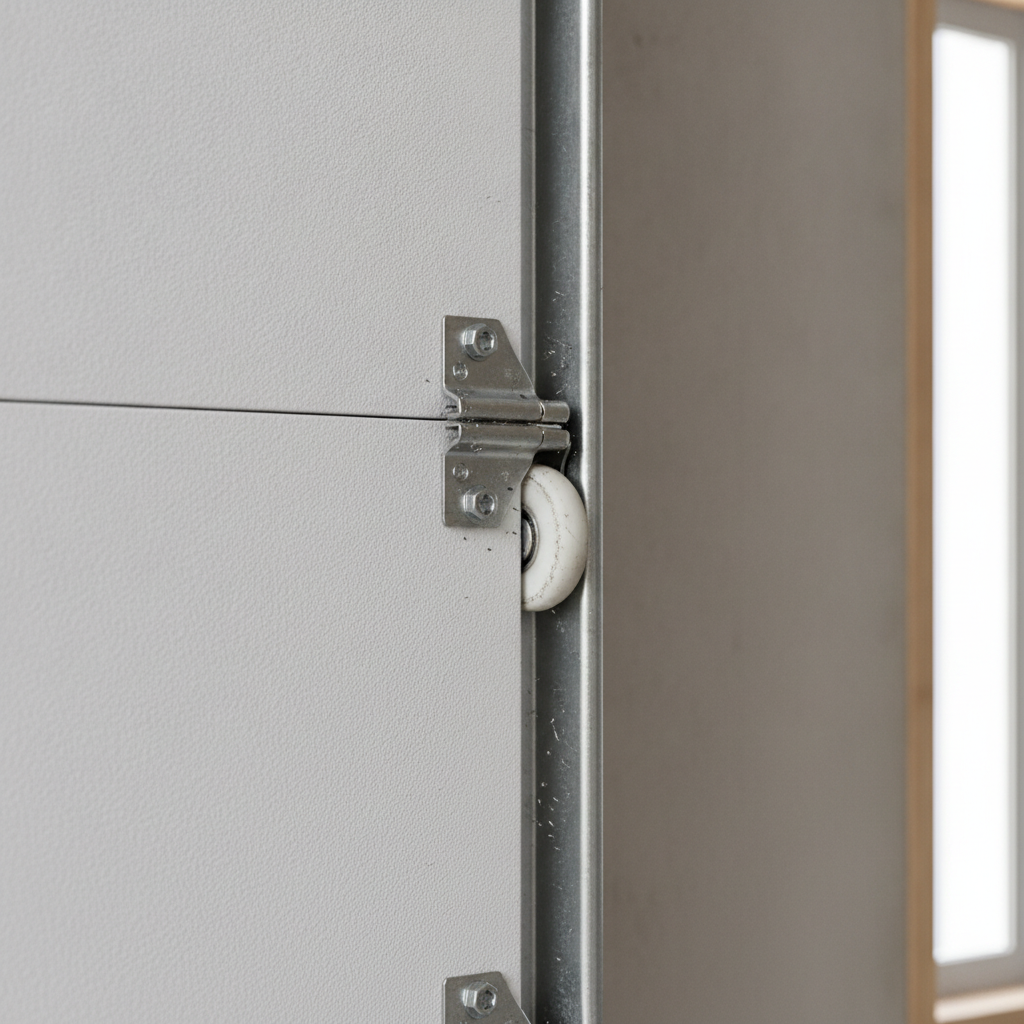
Many rubbing problems start with small parts that no longer hold the door in the correct position. Hinges and rollers are especially important because they guide the door sections as they bend through the curved part of the track.
A loose hinge can allow one section to shift outward or inward. As a result, the roller may no longer sit squarely in the track. You might hear scraping at the hinge area, or you may see a gap that looks uneven between door sections.
Rollers can also wear out. Metal rollers may become noisy or rough. Nylon rollers can crack, chip, or stop turning smoothly. If a roller drags instead of spinning, it can make the door sound like it is rubbing on the track even when the track is not the main issue.
Panel movement is another possible cause. A door section can bow, crack, or shift after impact or long-term wear. Once a panel changes shape, it may bring hinges and rollers out of line. This can make the door scrape on one side, especially near the lower sections.
Lubrication may reduce noise in some moving parts, but it does not fix a bent track or a shifted door. Also, homeowners often assume the inside of the track should be greased. In most cases, the rollers need to roll cleanly, not slide through heavy lubricant. For more detail, see this guide on whether garage door tracks should be lubricated.
Safe Checks Homeowners Can Make
You can make a few safe observations before calling for service. However, do not remove parts, loosen brackets, adjust cables, or work near springs. Garage door springs and cables are under high tension and can be dangerous without proper tools and training.
Start with the door fully closed if it can close safely. Keep children and pets away from the area. Do not stand beneath a door that looks crooked, unstable, or partially off track.
Safe checks include:
- Look at the tracks: Check for visible bends, dents, gaps, or loose-looking brackets.
- Watch the rollers: From a safe distance, look for rollers that wobble, drag, or sit unevenly.
- Listen for the location: Note whether the rubbing happens near the floor, curve, or upper track.
- Check door spacing: Look for uneven gaps along the sides of the door.
- Look for damaged hinges: Check whether hinge plates appear cracked, loose, or bent.
- Inspect the panels visually: Look for dents, bowing, cracks, or separation between sections.
If the door is jammed, crooked, or looks like it may come out of the track, stop operating it. Do not try to pull it into place. Also, avoid using the opener to force the door through a sticking point because the opener is not designed to correct mechanical binding.
Why You Should Not Ignore Track Rubbing
A rubbing garage door may still open and close for a while. However, continued use can turn a minor adjustment into a more expensive repair. The friction can wear down rollers, strain hinges, loosen brackets, and damage the opener rail or drive system.
Rubbing can also be a warning sign of uneven door movement. If one side of the door travels differently from the other, cables and springs may experience uneven stress. That does not mean a spring or cable is definitely failing, but it does mean the system should be checked before the problem spreads.
Ignoring the issue can lead to:
- Worn or broken rollers
- Bent track sections
- Loose hinge hardware
- Cracked or shifted door panels
- Opener strain and premature wear
- A door that becomes stuck open or closed
For example, a small dent in a vertical track may catch a roller each time the door moves. Over time, the roller may wear flat or pop out of alignment. As a result, the door may become noisy, uneven, or unsafe to operate.
Prevention and Maintenance Tips
Routine maintenance helps catch rubbing problems early. You do not need to take the system apart to notice changes. A quick visual check every so often can reveal loose hardware, unusual gaps, or worn rollers before the door starts binding.
Pay attention to new sounds. Grinding, scraping, popping, or squealing can all point to different issues. Also, watch how the door moves. A balanced and properly aligned door should travel smoothly without shaking, dragging, or shifting side to side.
Good maintenance habits include:
- Keeping the track area clear of stored items and debris
- Looking for loose or missing hinge fasteners
- Watching for roller wear or wobble
- Checking weather seals for dragging that may mimic track rubbing
- Scheduling professional inspection when movement changes
Track inspection is especially useful because small bends and loose brackets are easier to address before the door becomes stuck. If you want a deeper look at timing and warning signs, review this guide on garage door track inspection.
Frequently Asked Questions
Can I keep using my garage door if it rubs the track?
It is better to limit use until the cause is identified. If the door is crooked, binding, or unstable, stop using it and keep people and pets away.
Will lubricant fix a garage door rubbing against the track?
Not usually. Lubricant may quiet some rollers or hinges, but it will not correct bent tracks, loose hardware, damaged rollers, or panel misalignment.
Is a rubbing garage door dangerous?
It can become unsafe if the door is forced to operate while misaligned. A rubbing door may strain parts and could lead to a stuck or unstable door.
When to Call a Garage Door Professional
Call a trained technician if the rubbing continues, the door looks uneven, rollers appear damaged, or the track seems bent. You should also stop using the door if it is off track, hanging crooked, jammed, or making sudden grinding noises.
A professional can inspect the full system, including tracks, rollers, hinges, brackets, panels, cables, springs, and opener operation. This matters because the visible rubbing may be a symptom of another issue. For homeowners and property owners in Indianapolis and surrounding Central Indiana, Ultimate Garage Doors can help determine the safest repair options.
If your door is scraping, binding, or showing signs of misalignment, request a free garage door estimate from Ultimate Garage Doors before the problem causes more damage.