Should garage door tracks be lubricated? In most cases, no. Garage door tracks should usually be kept clean and dry rather than coated with grease or oil. The rollers need a clear path to move smoothly, and heavy lubricant inside the tracks can attract dirt, grit, and debris. However, several moving parts on the door system may benefit from the right garage door lubricant.
This distinction matters because many noisy or rough garage doors are not fixed by greasing the tracks. The real issue may be dirty tracks, worn rollers, loose hardware, poor door balance, or a developing alignment problem. For homeowners in Indianapolis and Central Indiana, routine cleaning and careful observation can help prevent small issues from becoming more disruptive.
Why Garage Door Tracks Are Usually Cleaned, Not Greased
Garage door tracks guide the rollers as the door opens and closes. They are not designed to be a greased sliding surface. Instead, the roller wheels should turn inside the track while the track simply provides the path.
Grease in the track can create new problems. It can collect dust, leaves, pet hair, road salt residue, and garage debris. Over time, that buildup can become sticky and abrasive. As a result, the rollers may drag instead of rolling cleanly.
Oil can also drip onto the door, floor, or stored items. In cold weather, thick lubricant may become gummy. That can make the door feel heavier and louder rather than smoother.
A clean track is normally better than a lubricated track. Wiping away grime allows the rollers to move without obstruction. If the door still binds, squeaks, shakes, or rubs after the tracks are clean, the cause may be elsewhere in the system.
Should Garage Door Tracks Be Lubricated If the Door Is Noisy?
Noisy operation does not automatically mean the tracks need lubrication. A garage door can squeak, rattle, grind, or pop for several reasons. Worn rollers can chatter inside the track, dry hinges can squeak, and loose hardware can vibrate during operation.
Before adding lubricant, look for basic clues while keeping a safe distance from moving parts. Homeowners can safely observe the door from inside the garage while another adult operates the wall button. Do not place your fingers near rollers, hinges, springs, cables, or tracks while the door is moving.
Common noise sources include:
- Dirty tracks: Dust and debris may cause rough travel.
- Dry hinges: Hinges can squeak where door sections bend.
- Worn rollers: Older rollers may wobble, scrape, or sound rough.
- Loose hardware: Brackets and hinges can rattle during operation.
- Spring or cable issues: High-tension parts may make unusual popping or snapping sounds.
- Opener strain: A struggling opener may hum, jerk, or reverse unexpectedly.
If the door is crooked, hanging, off track, or moving unevenly, stop using it. Keep people and pets away, avoid standing under the door, and contact a qualified garage door technician. These symptoms can involve high-tension components or an unstable door.
How to Clean Garage Door Tracks Safely
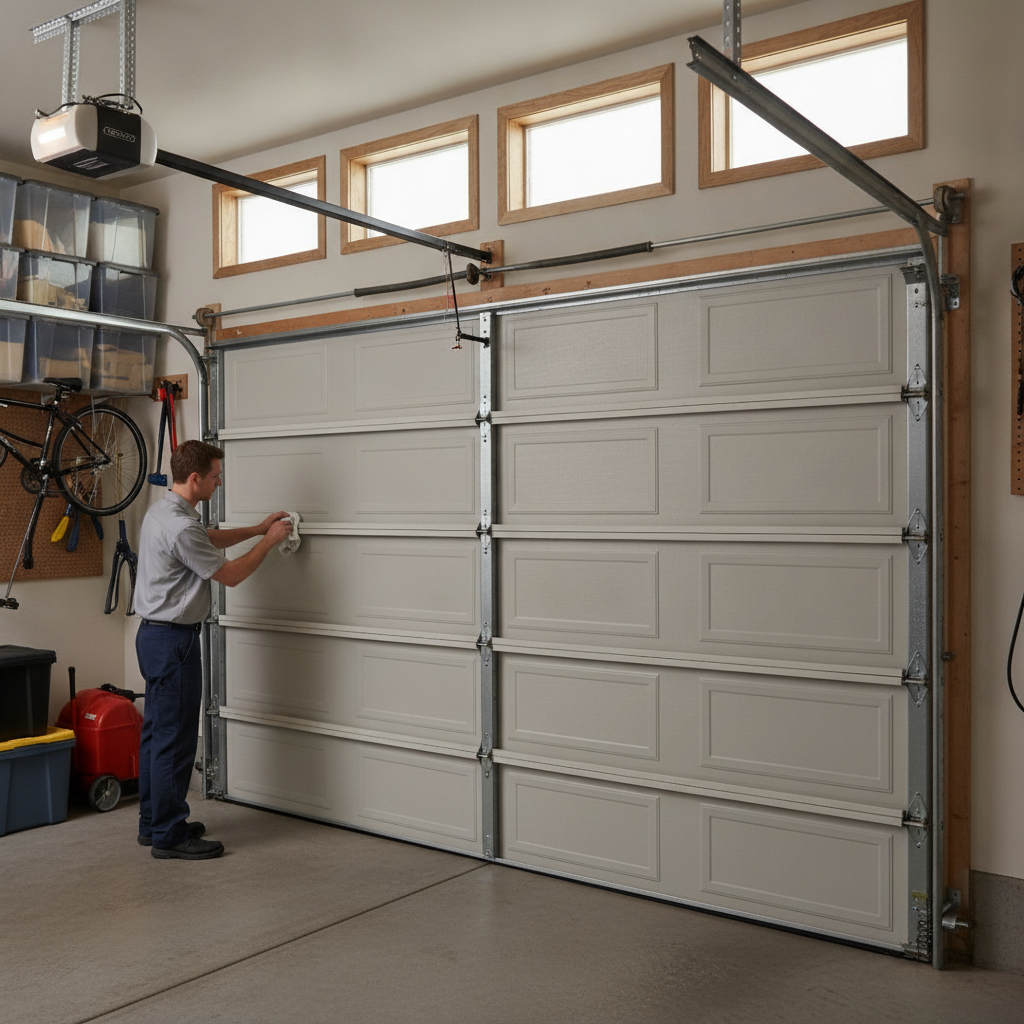
Track cleaning is a reasonable maintenance task for many homeowners if the door is stable and operating normally. The goal is to remove buildup, not to alter the track or hardware.
Wipe the inside of the vertical and horizontal tracks with a dry cloth or a lightly damp cloth. A mild household cleaner may help with stubborn grime, but avoid soaking the track. Dry the area afterward so moisture does not sit on the metal.
While cleaning, avoid bending the track, loosening brackets, or forcing anything into tight spaces. Do not remove rollers, cables, brackets, or springs. Those parts can create safety risks when handled incorrectly.
Look for these track concerns during cleaning:
- Dents, bends, or crushed spots in the track
- Rollers that appear cracked, flat-spotted, or loose
- Loose fasteners around track brackets
- Scrape marks that suggest rubbing or misalignment
- Gaps between the rollers and the track
- Sections where the door appears tilted or uneven
Regular visual checks are helpful because small track issues can affect the entire door system. If you want a deeper maintenance schedule, see this guide on garage door track inspections for signs worth watching throughout the year.
Which Garage Door Parts May Need Lubrication?
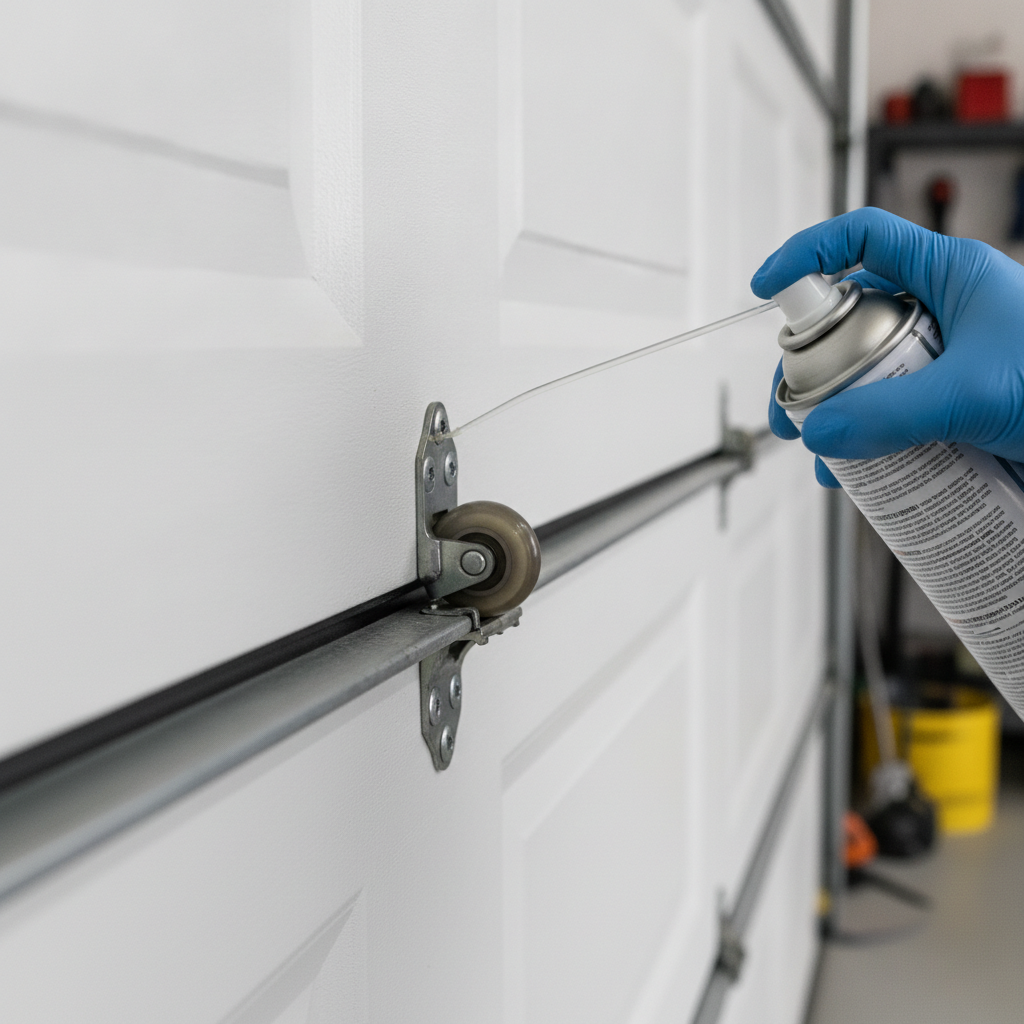
Although tracks should generally stay clean and dry, several moving parts may need occasional lubrication. Use a garage door lubricant recommended for metal moving parts, such as a silicone-based or lithium-based product. Avoid heavy grease in exposed areas where it can trap grit.
Always follow the product label and your door or opener manufacturer’s guidance. Apply lubricant sparingly. More lubricant is not always better, because excess product can drip, collect dust, or migrate into places where it does not belong.
- Rollers: Some rollers have exposed metal bearings that can benefit from light lubrication. Sealed nylon rollers may not need lubricant at the wheel itself. If rollers are cracked, wobbling, or binding, lubrication will not solve the underlying wear.
- Hinges: Hinges connect the door sections and allow them to bend as the door travels around the curved track. A small amount of lubricant on hinge pivot points can reduce squeaking and friction.
- Springs: A light coating of appropriate lubricant may reduce surface noise and corrosion on some spring systems. However, springs are high-tension components. Do not adjust, remove, wind, unwind, or attempt to repair them yourself.
- Bearings and pulleys: Some doors have bearing plates, pulleys, or other moving hardware that may require lubrication. These areas vary by door type. If you are unsure what a part is, leave it alone and ask a technician during a maintenance visit.
- Opener rail or screw drive: Some garage door openers have rails or screw-drive mechanisms with specific lubrication requirements. Others do not need added lubricant in the same way. Check the opener manual before applying anything to the opener rail.
Signs Lubrication Is Not the Real Fix
Lubricant can quiet normal metal movement, but it cannot correct alignment, balance, or damage. If the door has a mechanical problem, adding lubricant may temporarily mask the symptom while the issue gets worse.
Watch for signs that the door needs professional attention rather than more lubricant:
- The door shakes, jerks, or binds in the same spot.
- The opener struggles to lift the door.
- The door reverses without a clear obstruction.
- One side of the door appears lower than the other.
- A roller has come out of the track.
- Cables look frayed, loose, or uneven.
- You hear a loud bang from the garage.
- The door feels unusually heavy when disconnected from the opener.
A visible gap between a roller and the track can also indicate a fit, alignment, or hardware issue. The explanation of a roller and track gap can help you understand why this symptom should not be ignored.
If any high-tension part appears damaged, stop operating the door. Springs, cables, and bottom brackets are under significant tension. They should be inspected and repaired by a trained garage door professional.
Simple Maintenance Tips for Smoother Operation
A clean, well-observed garage door usually runs more quietly and reliably. You do not need to disassemble anything to perform basic maintenance. However, consistency helps.
Use these practical habits:
- Wipe visible debris from the tracks every few months.
- Keep stored items away from the door path and safety sensors.
- Listen for new sounds during opening and closing.
- Look for loose, missing, or bent hardware without touching high-tension parts.
- Use garage door lubricant only on appropriate moving parts.
- Clean excess lubricant if it drips or collects dirt.
- Schedule service if the door becomes uneven, unstable, or unreliable.
Seasonal changes can also affect garage doors in Central Indiana. Cold temperatures may stiffen older rollers or seals, while humidity can contribute to corrosion. Windblown debris and road salt residue can collect near garage openings. Keeping the tracks clean helps reduce these effects.
Do not force a door that will not move normally. A stuck or crooked garage door can worsen quickly if the opener continues pulling against resistance. Stop the opener and get the system checked before more damage occurs.
Frequently Asked Questions
Can I spray WD-40 in my garage door tracks?
It is better not to use WD-40 or similar products as a track lubricant. The tracks should usually be cleaned and dried, while appropriate garage door lubricant should be used only on suitable moving parts.
How often should I clean garage door tracks?
Many homeowners can check and wipe the tracks every few months. Clean them sooner if you notice dirt, salt residue, leaves, or sticky buildup that could interfere with roller travel.
What if my door still squeaks after lubrication?
The noise may come from worn rollers, loose hinges, opener strain, spring issues, or track alignment. If the sound continues, a professional inspection can identify the cause safely.
When Professional Garage Door Help Makes Sense
Cleaning tracks and lightly lubricating the right moving parts can improve normal operation. However, some problems need trained diagnosis. If your door is off track, crooked, hanging, unusually heavy, or making sharp popping sounds, stop using it and keep everyone clear of the opening.
Ultimate Garage Doors LLC serves Indianapolis and surrounding Central Indiana with garage door repair, maintenance, opener service, and replacement guidance. If cleaning does not solve the problem, or if you see signs of damage, request a garage door estimate before the issue becomes harder on the door system.