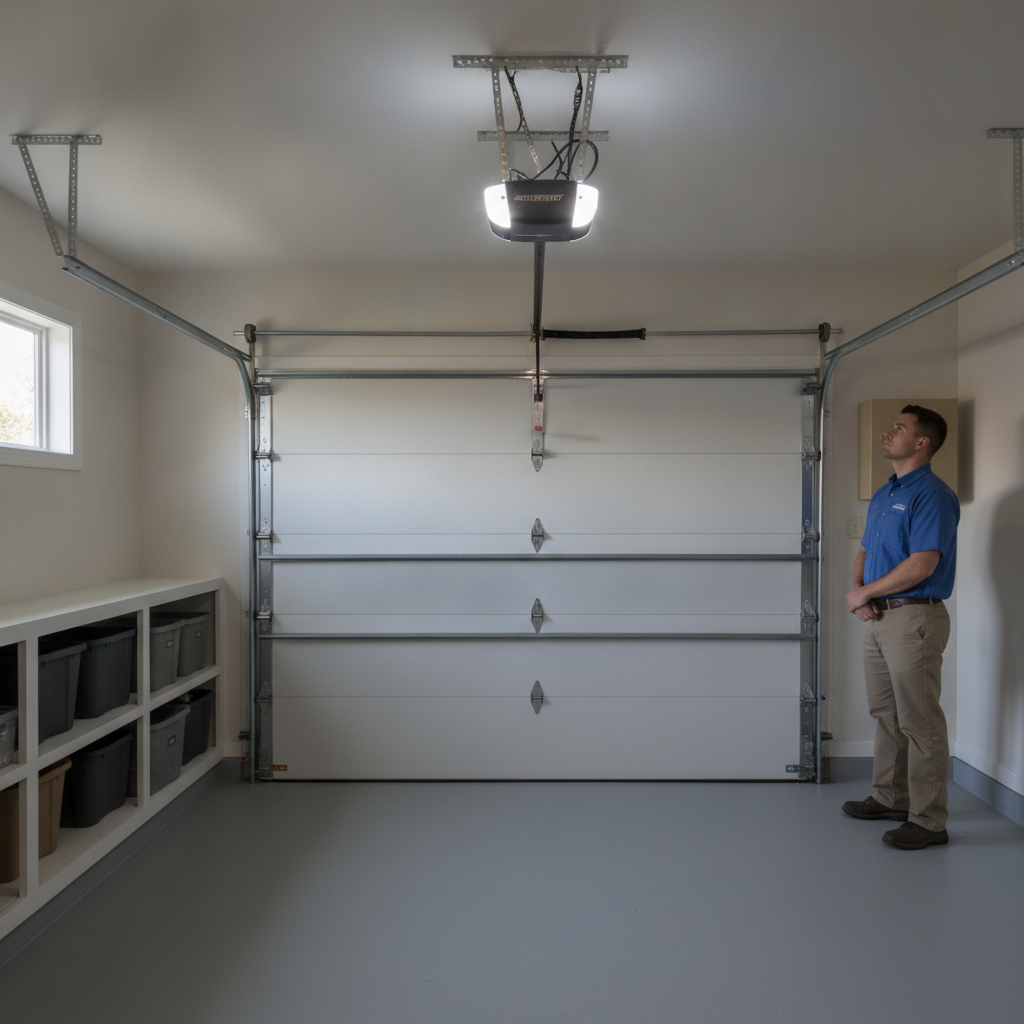
A new opener should do more than lift the door. The most important garage door opener safety features include photo eyes, auto-reverse protection, secure rolling-code technology, battery backup, bright lighting, and app alerts. Together, these features help reduce entrapment risk, improve visibility, protect access to your garage, and warn you when something is not working as expected.
Essential garage door opener safety features to look for
Most modern garage door openers include basic safety technology, but features can vary by model. Before replacing an opener, compare more than motor size and noise level. Look at how the opener protects people, pets, vehicles, and stored items around the door.
For a typical home in Indianapolis or Central Indiana, a well-equipped opener should include:
- Photo eyes: Small safety sensors near the bottom of the door opening that detect objects in the door’s path.
- Auto-reverse: A function that reverses the door if it meets resistance while closing.
- Rolling-code security: Remote technology that changes the access code after each use.
- Battery backup: Backup power that can operate the opener during many outages, depending on the battery condition and model.
- Built-in lighting: Work lights, security lights, or motion-activated lights that improve visibility.
- App alerts: Smartphone notifications that can tell you when the door opens, closes, or stays open.
These features do not replace a properly balanced garage door. However, they can make everyday operation safer and more predictable when the door, springs, tracks, rollers, and opener are all in good condition.
Photo eyes and auto-reverse protection
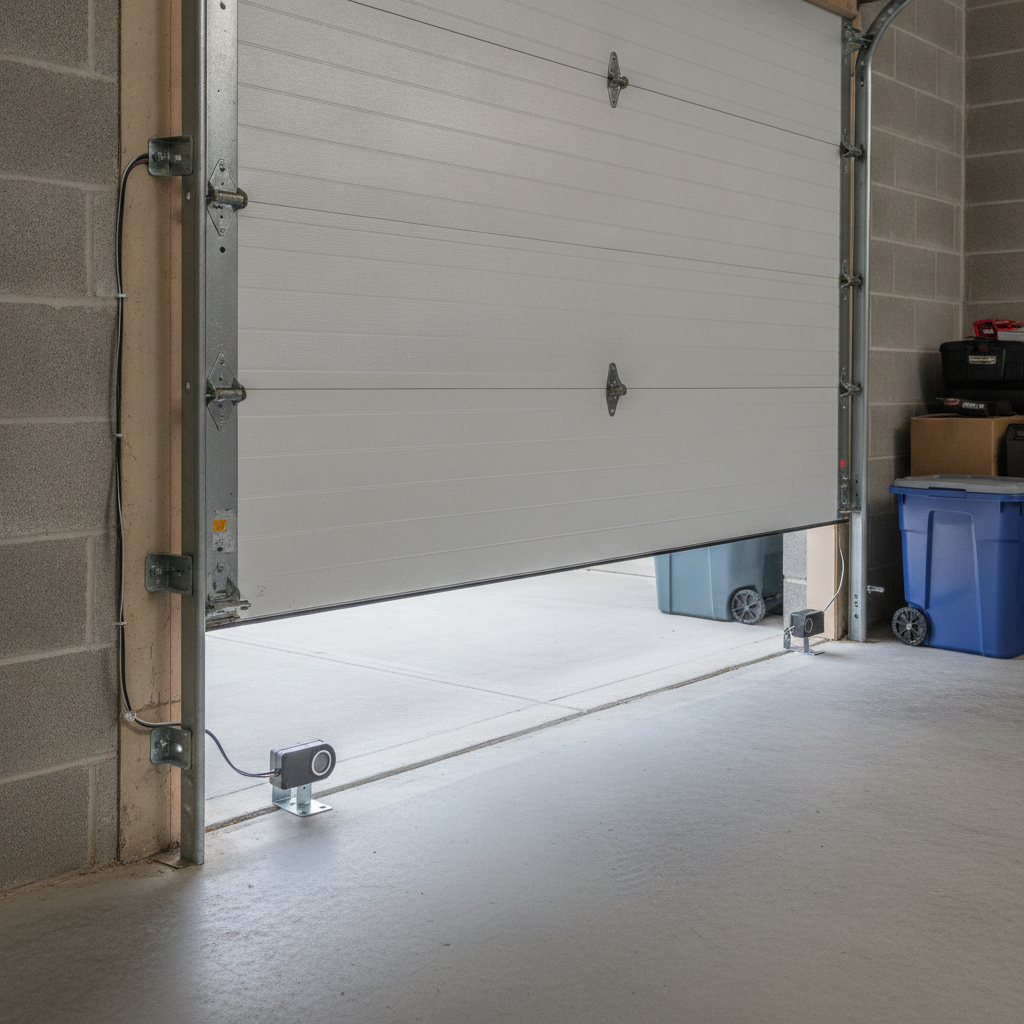
Photo eyes, also called safety sensors, are one of the most important opener safety features. They send an invisible beam across the bottom of the garage door opening. If a person, pet, bicycle, trash bin, or other object breaks the beam while the door is closing, the opener should stop and reverse the door.
Auto-reverse adds another layer of protection. If the closing door meets resistance, the opener should reverse instead of continuing downward. This matters because not every obstruction will interrupt the sensor beam at the right moment. For example, a box, uneven floor condition, or item near the center of the door may affect how the opener reacts.
Homeowners can safely observe whether the sensors are mounted, lit, and facing one another. You can also watch for signs of trouble, such as the door closing partway and then reversing, the opener light flashing, or the door refusing to close from the remote. However, do not tape sensors together, bypass them, or ignore repeated reversal problems. A misaligned sensor may be simple, but similar symptoms can also point to wiring, track, door balance, or opener setting issues.
Rolling codes and secure access controls
Security is also a safety issue. Older fixed-code remotes used the same code each time, which made them less secure than today’s systems. A rolling-code opener changes the access code after each use, helping reduce the chance of unauthorized remote access.
Many new openers also include extra access controls. These may include a vacation lock on the wall console, temporary keypad codes, remote lockout, or app-based user permissions. These features can be helpful for landlords, property managers, or families who want to control who can open the garage and when.
If remotes, keypads, or vehicles keep losing connection to the opener, the issue may not be a security problem. It may involve interference, memory limits, power interruptions, or a control board concern. For more detail on that symptom, see this guide to why a garage door opener loses programming.
Battery backup, lights, and visibility
Battery backup is useful during power outages, especially if the garage is a main entry point to the home. It can allow the opener to run for a limited number of cycles when normal power is unavailable. The actual performance depends on the opener model, battery age, door condition, and how often the door is operated during the outage.
Backup power is not a reason to ignore door balance. If a garage door is extremely heavy, crooked, or binding in the tracks, the opener may strain or fail to move it. As a result, a technician should inspect the door system if the opener struggles, hums without movement, or stops during travel.
Lighting is another practical safety feature. Built-in LED lighting, dual lights, motion-activated lights, or corner-to-corner lighting can make the garage safer when you arrive at night. Better lighting helps you see tools, steps, stored items, pets, and people near the door. It also makes it easier to notice a broken roller, loose hinge, damaged weather seal, or other visible concern before it becomes a larger repair.
Smart app alerts and monitoring
Smart opener features can provide helpful awareness. App alerts may notify you when the garage door opens, closes, remains open, or is operated at an unusual time. Some systems also allow remote closing after you verify that the doorway is clear through normal visibility or a compatible camera setup.
These alerts are convenient, but they should not replace basic safety habits. Before closing a garage door remotely, make sure the area is clear. If you cannot confirm that, wait until someone can check the opening. Meanwhile, if an app repeatedly reports failed closures, that may indicate sensor alignment, door travel, opener force settings, or mechanical problems.
Smart features also depend on stable Wi-Fi, correct setup, and periodic software updates. Therefore, choose a model that fits how your household actually uses the garage. A simple, reliable opener may be better than a feature-heavy model if the extra tools will not be used.
Match the opener to the door and household
The safest opener is one that fits the door system. A lightweight, properly balanced single door may not need the same drive system as a heavy insulated double door. Chain-drive, belt-drive, screw-drive, jackshaft, and direct-drive openers each have different space, noise, and performance considerations.
Before choosing a model, consider these factors:
- Door size and weight: Heavier or insulated doors may need a stronger opener and a properly adjusted spring system.
- Garage layout: Low ceilings, high-lift doors, or side obstructions may affect opener style.
- Noise concerns: Bedrooms above or near the garage may benefit from a quieter drive system.
- Daily use: A busy household may value brighter lighting, stronger hardware, and smart alerts.
- Power outage concerns: Battery backup may matter more if the garage is your main entrance.
- Security needs: Temporary access codes and app controls can help with guests, tenants, or service visits.
A professional installation also helps ensure the opener’s travel limits, force settings, sensor alignment, and wall controls are set correctly. After installation, regular service keeps the opener and door system working together. If you are unsure how often to schedule it, this overview explains garage door opener service intervals and what maintenance can include.
Frequently Asked Questions
Are photo eyes required on a new garage door opener?
Modern residential openers are designed to use safety sensors as part of the entrapment protection system. If your current opener lacks working photo eyes, replacing or upgrading the opener is usually a wise safety decision.
Is battery backup worth adding to a garage door opener?
Battery backup is often worth considering if you use the garage as a primary entrance or have frequent power outages. However, the door must still be in good mechanical condition for the backup system to work properly.
Can app alerts make a garage door safer?
App alerts can improve awareness by telling you when the door opens, closes, or stays open. They are most useful when combined with working sensors, proper opener setup, and safe operating habits.
Get the right opener installed safely
A new opener can add safety, security, and convenience, but it should be matched to the door and installed correctly. If your door is crooked, hanging, off track, unusually heavy, or supported by damaged springs or cables, stop using it and keep people and pets away from the opening. Avoid standing beneath the door or attempting high-tension repairs.
Ultimate Garage Doors LLC can help homeowners and property owners in the Indianapolis area compare opener options and inspect the full door system before installation. If you are planning an opener replacement or your current opener is showing safety concerns, request a free garage door estimate for professional guidance.