
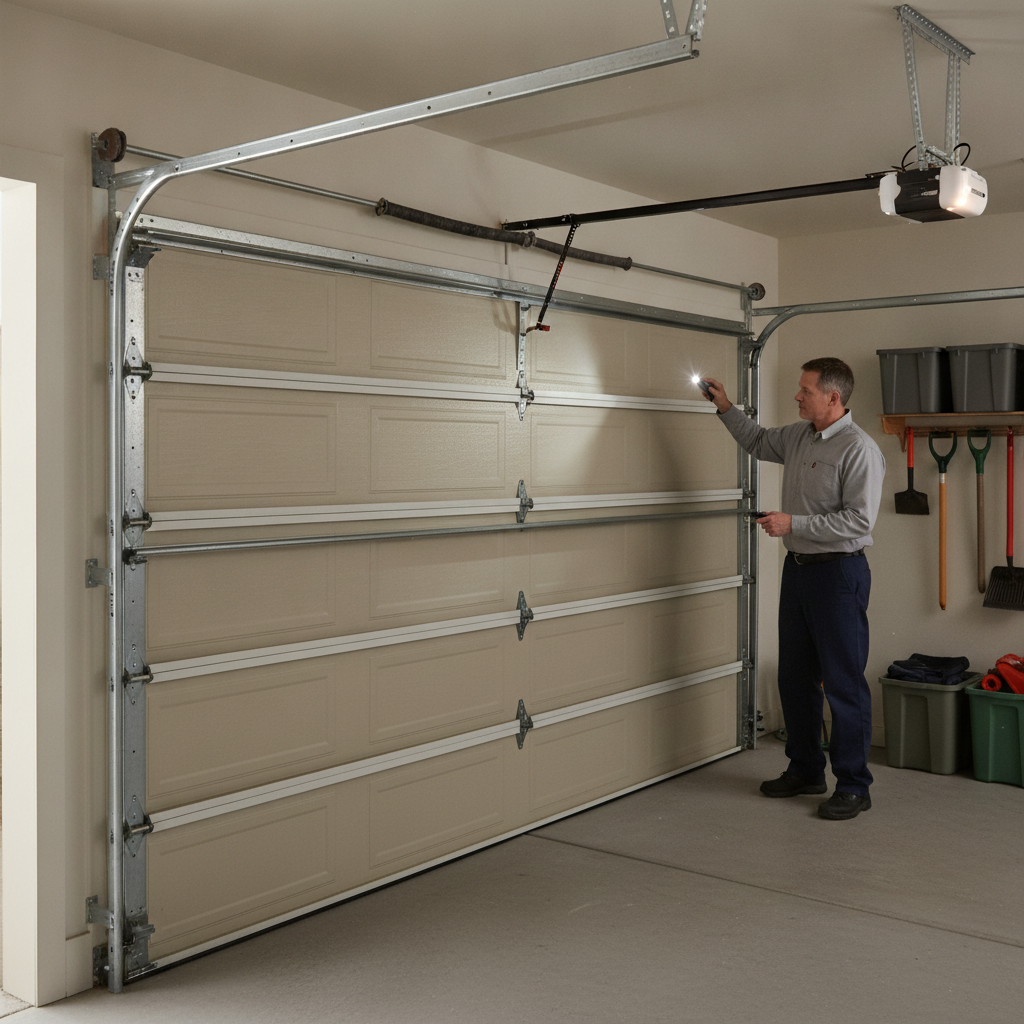
A typical garage door opener service schedule includes a professional inspection about once a year, plus simple homeowner safety checks monthly. Homes with heavy daily use, older openers, or doors exposed to Central Indiana weather may need attention more often. The goal is to confirm the door, springs, tracks, rollers, safety sensors, and opener work together safely.
Your opener should not be fighting the full weight of the door. If the door is out of balance or parts are worn, the opener can strain, run louder, or fail early. Regular service helps catch these issues before they become larger repair problems.
Recommended Garage Door Opener Service Intervals
For most residential openers, a yearly professional inspection is a practical baseline. During that visit a technician can check the opener, test safety systems, inspect door balance, and spot wear that may not be obvious.
The best interval depends on usage. A door used twice daily has different needs than one used many times per day. Busy households, rental properties, and detached garages used frequently often benefit from more frequent inspections.
A general schedule:
- Monthly: Homeowner visual checks and basic sensor observations.
- Every 3–6 months: Listen for new noises, inspect visible rollers and hinges, and check remote or keypad function.
- Annually: Professional opener and door system inspection.
- Sooner if needed: Arrange service if the opener strains, reverses unexpectedly, runs unevenly, or the door appears crooked.
What a Proper Opener Inspection Should Include
An inspection should cover the motor unit and the door it operates. Many opener problems begin with the door: worn rollers, damaged hinges, tight tracks, weak springs, or cable issues can make the opener work harder than intended.
A technician will evaluate mounting, rail or drive system, travel limits, force settings, safety sensors, wall control, remotes, wiring, and general operation. They may also inspect door sections, tracks, rollers, springs, and cables for related problems.
If your opener forgets remote or keypad codes, the issue may involve power interruptions, circuit board problems, remote batteries, or interference. For more detail, see Why Does My Garage Door Opener Lose Its Programming?.
Safety Testing Homeowners Should Not Ignore
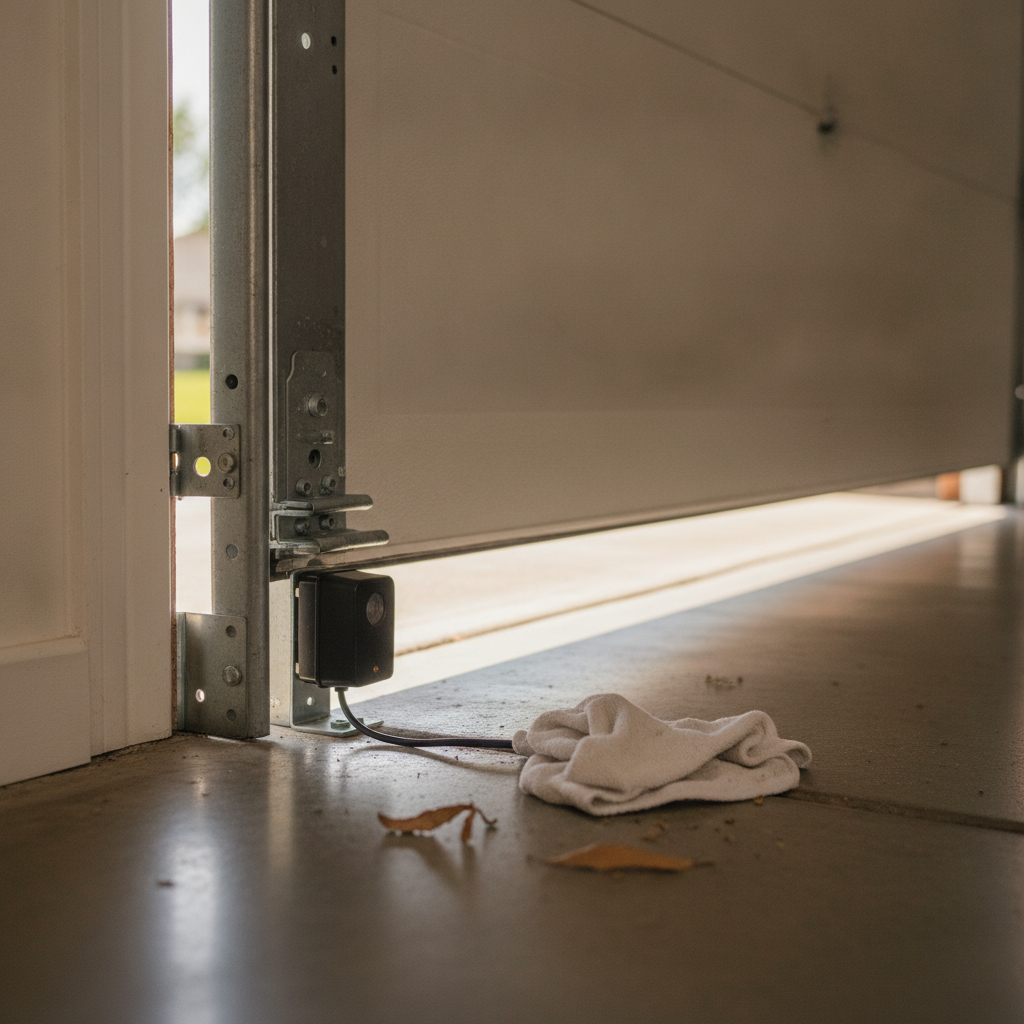
Modern openers include safety features that need periodic testing. Dust, vibration, and normal wear can affect sensors and auto-reverse systems.
Photo-eye sensors sit near the floor on both sides of the opening and should reverse the door if the beam is blocked. Homeowners can safely make basic observations:
- Check whether both sensor indicator lights are on, if present.
- Look for boxes, tools, leaves, or debris blocking the beam.
- Gently clean sensor lenses with a soft cloth.
- Notice whether the door reverses when an object interrupts the beam.
- Watch for blinking opener lights or repeated failed closing attempts.
Auto-reverse should cause the door to stop and reverse if it meets resistance. If a reversal test fails, stop testing and contact a technician. Do not increase force settings yourself — incorrect force adjustments can make the door unsafe.
Avoid standing under a moving door during any test. Keep children and pets clear, and stop using the system if the door seems unstable or unusually heavy.
Lubrication and Maintenance That Reduce Strain
Lubrication helps reduce friction, but it must be done correctly. The opener is only part of the system; rollers, hinges, bearings, and springs affect how hard the opener works. A binding door can make a healthy opener sound like it is failing.
Use only lubricant recommended for garage doors or by the manufacturer. Chain-drive openers may need light lubrication at the chain; screw-drive openers have specific needs; belt-drive belts typically should not be lubricated. Tracks are usually kept clean rather than greased, since grease attracts dirt.
Homeowner maintenance can include wiping tracks, checking for loose hardware, replacing remote batteries, and listening for changes in sound. Never adjust springs, cables, bottom brackets, or other high-tension parts — those require trained technicians.
Force Checks and Door Balance Matter
Force settings control how much resistance the opener tolerates before stopping or reversing. Too much force creates safety risks; too little causes nuisance reversals. Force issues are often symptoms, not root causes.
If the door is out of balance, has worn rollers, or spring problems exist, raising force settings may only hide the issue and increase strain on the motor, gears, belt, chain, or trolley.
Door balance is important. A properly balanced door should move reasonably freely when disconnected from the opener, but because springs are under high tension, homeowners should not attempt adjustments. Signs that force or balance need professional attention include:
- The opener hums but struggles to move the door.
- The door starts down then reverses without a clear obstruction.
- The rail flexes or the door moves unevenly.
- The motor runs but the door does not move normally.
If these symptoms appear, stop using the opener until the system is checked. Continuing to run a strained opener can damage components.
Signs Your Garage Door Opener Needs Service Soon
Not every problem means replacement; some fixes are simple. Still, schedule service if you notice:
- Grinding, squealing, rattling, or popping during operation.
- Slow movement compared with normal operation.
- Intermittent response from wall button, remote, or keypad.
- Lights flashing when the door will not close or the door reverses without obstruction.
- The door stops partway open or closed or the opener vibrates heavily.
Technology can also influence service decisions. If your opener works but lacks features you want, you may be able to upgrade it with smart controls depending on model and condition. See Can I Make My Existing Garage Door Opener Smart? for options.
If the door is visibly damaged, off track, hanging unevenly, or supported by frayed cables, do not use the opener. Keep people and pets clear and have the system inspected. The opener is not designed to force a damaged door back into place.
Frequently Asked Questions
Can I service my garage door opener myself?
You can perform basic checks: observe sensor alignment, change remote batteries, listen for unusual sounds, and keep sensors clear. A technician should handle force adjustments, electrical diagnosis, balance testing, and any spring or cable work.
How long does a garage door opener inspection take?
Inspection time varies with model and condition. A straightforward inspection may be brief, while diagnosing intermittent problems or strained operation can take longer.
Does opener maintenance help the garage door last longer?
Yes. The opener and door work as one system. Regular checks of rollers, springs, tracks, sensors, and opener settings make unnecessary strain easier to identify and correct.
When to Call a Garage Door Professional
Call a professional if your opener strains, reverses unexpectedly, makes new noises, forgets programming, or struggles to move the door. Also seek help if the door looks crooked, feels unusually heavy, has frayed cables, or appears unstable. These issues can involve high-tension parts, so stop operating the door until it is inspected.
Ultimate Garage Doors LLC helps homeowners, landlords, property managers, and businesses in Indianapolis and surrounding Central Indiana with opener repair, installation, safety checks, and maintenance. If your opener is overdue for service or showing signs of strain, contact Ultimate Garage Doors LLC to discuss professional service options for your door system.