
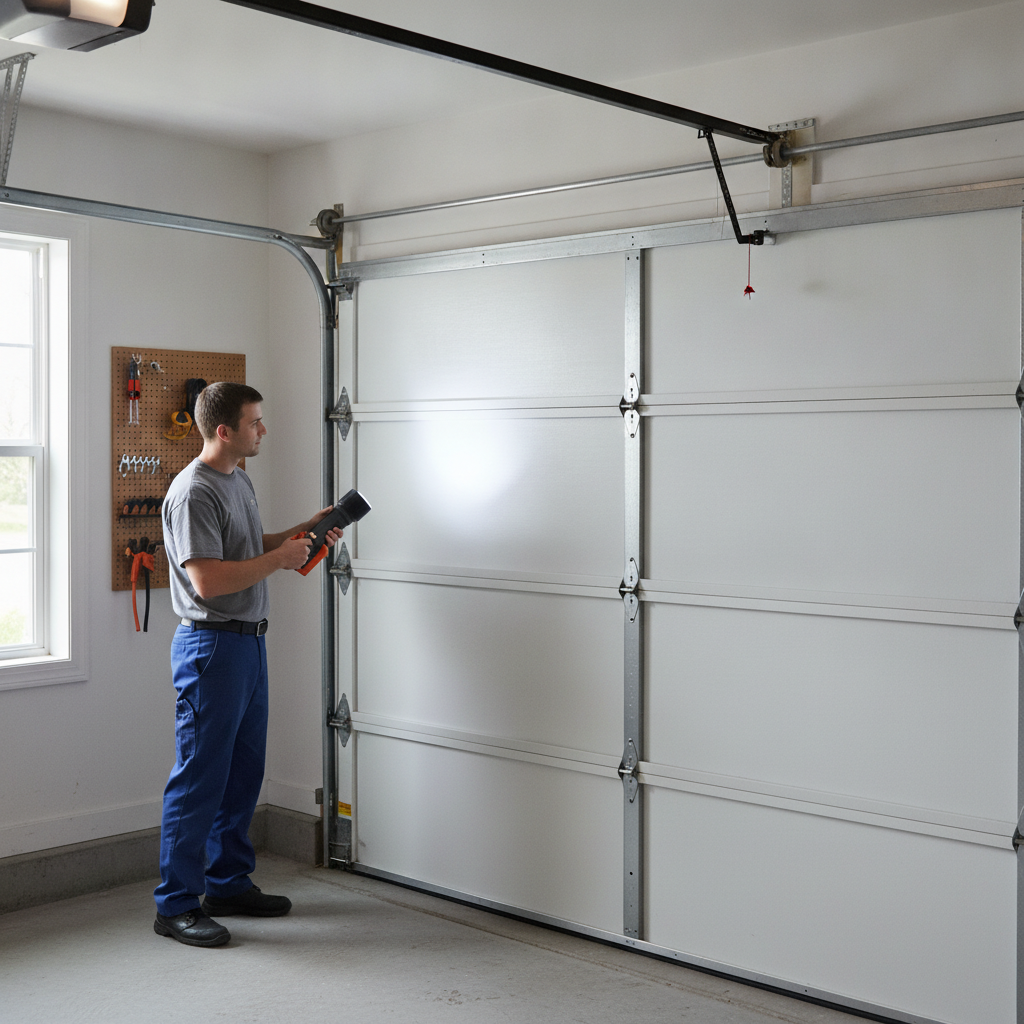
How long do garage door rollers last? In many homes, basic rollers may last several years, while higher-quality nylon or steel rollers with ball bearings can often last much longer with proper care. The exact lifespan depends on the roller material, how often the door runs, whether the rollers stay lubricated, and whether the tracks remain clean, straight, and properly aligned.
Rollers are small parts, but they have a big effect on how your garage door sounds and moves. Worn rollers can make the door noisy, shaky, or harder for the opener to move. In some cases, damaged rollers can also contribute to a door coming out of alignment.
How Long Do Garage Door Rollers Last in Normal Use?
There is no single lifespan for every garage door roller because homes use their doors differently. A detached garage opened a few times per week places far less demand on rollers than an attached garage used as the main family entrance.
As a general guide, simple plastic rollers without bearings tend to have the shortest service life. Steel rollers and nylon rollers with ball bearings usually last longer because they roll more smoothly and handle repeated cycles better. However, even a good roller can wear early if the track is damaged or the door is poorly balanced.
Roller life is often measured in door cycles. One cycle means the garage door opens and closes once. A household that runs the door six to eight times per day will wear rollers faster than a household that uses the door once or twice per day. Central Indiana weather can also play a role because moisture, dirt, salt residue, and temperature changes can affect metal parts and lubrication.
Roller Materials and Why They Matter
The material and design of the roller are major factors in how long it lasts. Two rollers can look similar at a glance but perform very differently over time.
Plastic rollers
Plastic rollers are common on some builder-grade garage doors. They are usually inexpensive and may work acceptably when new. However, they often do not include ball bearings, so they tend to drag more than they roll as they age. As a result, they may become noisy, loose, or uneven sooner than upgraded rollers.
Steel rollers
Steel rollers are durable and can handle heavy doors well. Many include ball bearings, which reduce friction during operation. However, steel rollers can be louder than nylon rollers, especially if they are dry or running through rough tracks. They can also rust if moisture and lack of lubrication become ongoing problems.
Nylon rollers
Nylon rollers are popular because they are usually quieter than steel rollers. Higher-quality nylon rollers with sealed or well-protected bearings can provide smooth operation for many years. They are not all the same, though. A nylon roller with more durable bearings will generally outlast a basic nylon roller without bearings.
What Shortens Garage Door Roller Life?
Rollers do not wear in isolation. They are part of a moving system that includes hinges, tracks, springs, cables, and the opener. If another part of the system is strained, the rollers may wear faster.
- Heavy daily use: More opening and closing cycles create more wear on the roller stem, wheel, and bearings.
- Lack of lubrication: Dry bearings and metal roller stems create friction, noise, and extra strain.
- Dirty or damaged tracks: Debris, dents, bends, or misalignment can force rollers to scrape or bind.
- Poor door balance: If the springs are not supporting the door correctly, the entire system works harder.
- Loose or worn hinges: Hinges hold roller stems in place. Worn hinges can let the door move unevenly.
- Moisture and corrosion: Rust can affect steel rollers, bearings, hinges, and fasteners.
Lubrication is helpful, but it cannot fix a damaged roller or a bent track. For example, if a roller has a cracked wheel or a loose stem, lubricant may reduce noise briefly but will not restore the part. Also, some roller bearings are sealed, which limits how much lubricant can reach the internal bearing surfaces.
It is also worth looking at the opener and door together. A struggling door can make the opener work harder, while opener issues can sometimes make door movement seem uneven. If you are comparing maintenance needs, this guide on garage door opener service explains how routine attention can help keep the full system operating more reliably.
Signs Your Garage Door Rollers May Need Replacement
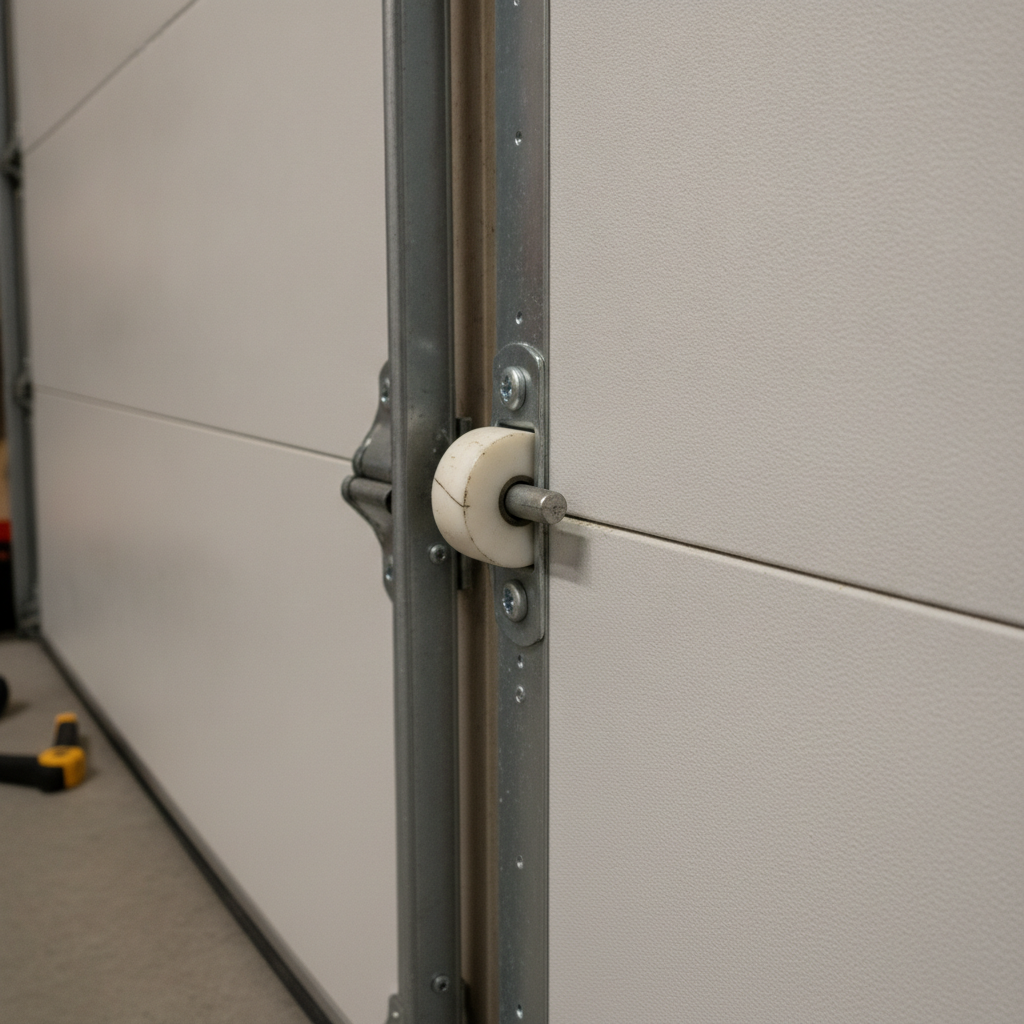
Roller problems often start with sound or movement changes. However, several garage door problems can create similar symptoms, so a professional inspection may be needed to confirm the cause.
Watch for these common warning signs:
- Grinding, squeaking, or rattling: Noise may point to dry bearings, worn wheels, loose hinges, or track issues.
- Jerky door movement: The door may shake or hesitate as damaged rollers pass through the track.
- Visible cracks or flat spots: Plastic and nylon rollers can chip, crack, or wear unevenly.
- Wobbling roller stems: A loose stem may not hold the door section steady during travel.
- Rollers sliding instead of rolling: This can happen when bearings are worn or seized.
- Door rubbing the track: Rubbing may indicate roller wear, track damage, or alignment trouble.
- Opener strain: The opener may sound louder or seem to work harder than usual.
If the door reverses unexpectedly, will not close, or behaves unpredictably, the opener’s safety system may also need attention. Homeowners replacing an older opener may find it useful to understand modern garage door opener safety features, especially if the door is already due for service.
Safe Checks Homeowners Can Make
You can inspect rollers without taking the door apart. Keep the door closed, stand to the side, and use a flashlight to look at the rollers and tracks. Do not place fingers inside the track, and do not loosen brackets, hinges, cables, or spring-related hardware.
Safe observations include:
- Look for cracked, chipped, or missing roller wheels.
- Listen for new grinding, popping, or scraping sounds during operation.
- Check whether the door shakes more than it used to.
- Look for heavy debris, rust, or visible dents in the tracks.
- Notice whether the opener sounds strained or the door moves unevenly.
Do not try to remove rollers from the bottom brackets. The bottom brackets are connected to the garage door cables, which are under high tension. Cable and spring-related parts can be dangerous without proper tools and training.
If the garage door is crooked, hanging, off track, or stuck partway open, stop operating it. Keep people and pets away, avoid standing under the door, and contact a qualified garage door technician. Forcing the door can make the damage worse and may create a safety risk.
How Lubrication and Track Condition Affect Rollers
Lubrication reduces friction between moving metal parts. On many doors, a garage door lubricant can be applied to roller stems, hinges, and bearings where accessible. However, the tracks themselves should not be greased. Grease inside the track can collect dirt and create buildup that interferes with smooth movement.
Track condition is just as important as lubrication. A clean, straight track gives rollers a smooth path. Meanwhile, a bent or pinched track can make even new rollers scrape, bind, or wear unevenly. If you see a visible track bend or the rollers are popping out, stop using the door and schedule service.
Door balance also matters. Springs carry most of the door’s weight. If the springs are weak, broken, or improperly adjusted, the rollers and opener may absorb extra strain. Because springs are high-tension components, homeowners should not adjust or replace them on their own.
Frequently Asked Questions
Can I replace garage door rollers myself?
Some upper rollers may look simple to remove, but roller replacement can involve unstable door sections and high-tension areas. Bottom rollers are especially risky because they are near cable brackets. Professional replacement is the safer choice.
Are nylon rollers better than steel rollers?
Nylon rollers are usually quieter, while steel rollers can be very durable. The best choice depends on the door weight, track condition, noise concerns, and roller quality. Bearing design often matters as much as material.
Will new rollers make my garage door quieter?
Often, yes. New rollers can reduce rattling and vibration, especially if old rollers are cracked or worn. However, hinges, opener parts, springs, and track condition can also affect noise.
When to Have a Technician Inspect Your Rollers
Roller wear is easiest to handle before it leads to bigger door movement problems. If your garage door is noisy, shaky, rubbing the tracks, or difficult for the opener to move, a technician can inspect the rollers along with the hinges, tracks, cables, springs, and opener.
Ultimate Garage Doors LLC serves Indianapolis and surrounding Central Indiana with garage door repair, maintenance, and replacement services. If you suspect worn rollers or the door no longer moves smoothly, request a free garage door estimate and get professional guidance before the problem worsens.