
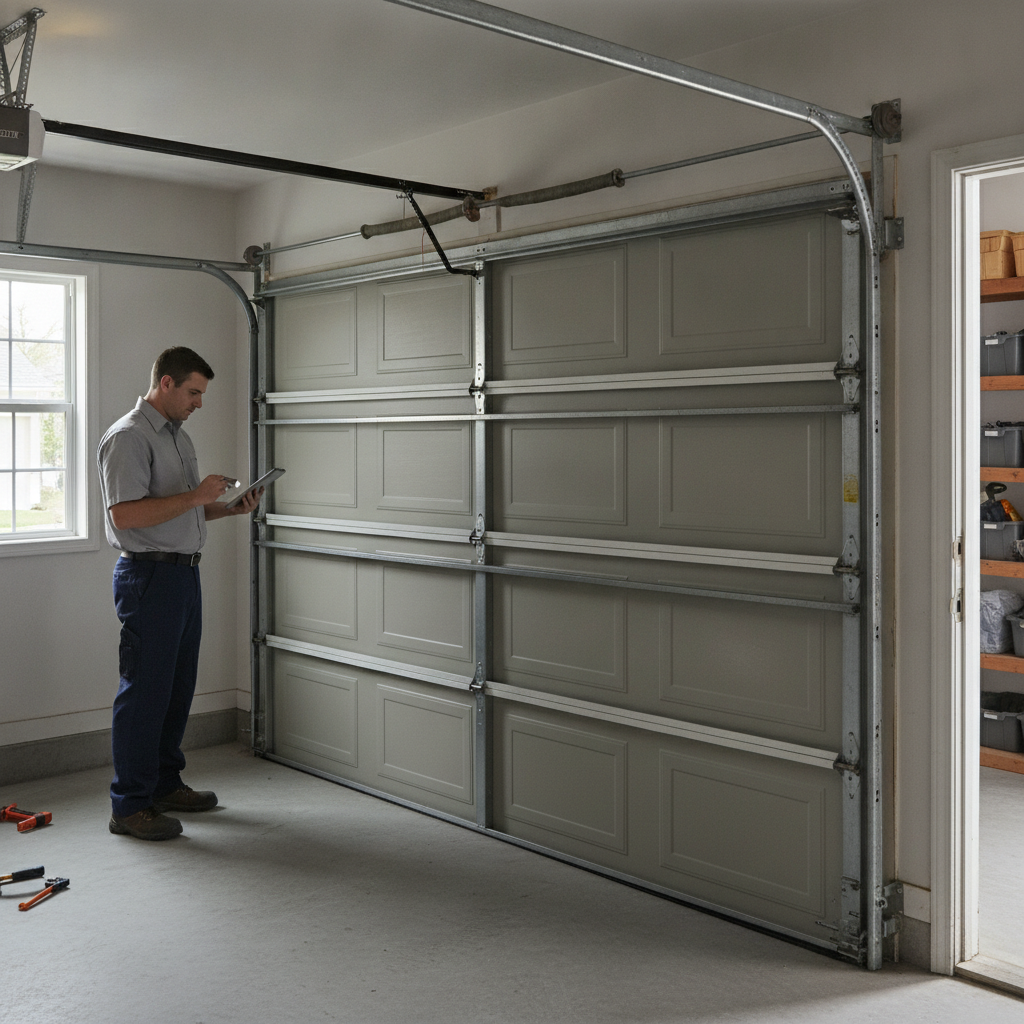
If you have garage door rollers coming off track, stop using the door until the cause is found. Rollers usually leave the track because something has shifted, worn out, bent, or taken an impact. The issue may look simple, but an off-track garage door can become unstable quickly. In many cases, the safest next step is a professional inspection before the door is operated again.
Rollers, tracks, hinges, cables, springs, and the opener all work together. Because these parts share the weight and movement of the door, one small problem can create a larger alignment issue. This guide explains the most common causes, what you can safely look for, and when repair should be handled by a trained garage door technician in Indianapolis or Central Indiana.
Common Reasons Garage Door Rollers Come Off Track
A garage door roller is designed to travel inside a metal track as the door opens and closes. If the roller no longer lines up with that track, it can pop out, bind, scrape, or cause the door to hang crooked. Sometimes the roller itself is the problem. Other times, the roller is showing the result of another issue elsewhere in the system.
The most common causes include:
- Bent or misaligned tracks that no longer guide the rollers correctly.
- Worn rollers with cracked wheels, damaged bearings, or loose stems.
- Loose hinges or track brackets that allow parts to shift under movement.
- Impact damage from a vehicle, lawn equipment, or another force.
- Door balance problems related to springs, cables, or other high-tension parts.
- Obstructions in the track that interrupt smooth roller travel.
Several of these issues can happen at the same time. For example, a vehicle bump may bend the lower track, loosen brackets, and damage a roller. As a result, the door may not close evenly even after the visible roller is pushed near the track again.
Bent Tracks and Impact Damage
Bent tracks are one of the clearest reasons rollers leave their normal path. The tracks must stay straight, secure, and properly spaced from the door. If a section bends inward, outward, or twists, the roller may no longer sit in the channel correctly.
Track damage often appears near the bottom of the door because that area is more likely to be hit. However, bends can also occur higher up if the door has been forced, the opener pulled against resistance, or the track hardware loosened over time.
Signs of possible track trouble include:
- A visible gap between the roller and track.
- Scraping, grinding, or popping sounds during movement.
- A section of track that looks twisted or crushed.
- A door that stops in the same place each cycle.
- Rollers that bind instead of turning smoothly.
Impact damage is another common cause of off-track rollers. A light bump from a vehicle may not seem serious at first. Meanwhile, the door may have absorbed enough force to bend a track, twist a section, or shift lower hardware. After an impact, the door may look mostly normal from the outside, while inside the garage one side may hang lower, a roller may be out of place, or a cable may look slack.
Do not try to force a bent track back into shape while the door is under load. The door may shift unexpectedly. If your garage door was hit, stop operating it, keep people and pets away, and avoid standing beneath it. A damaged door can move suddenly, especially if a roller, cable, or spring system is compromised.
Worn Rollers, Loose Hardware, and Balance Issues
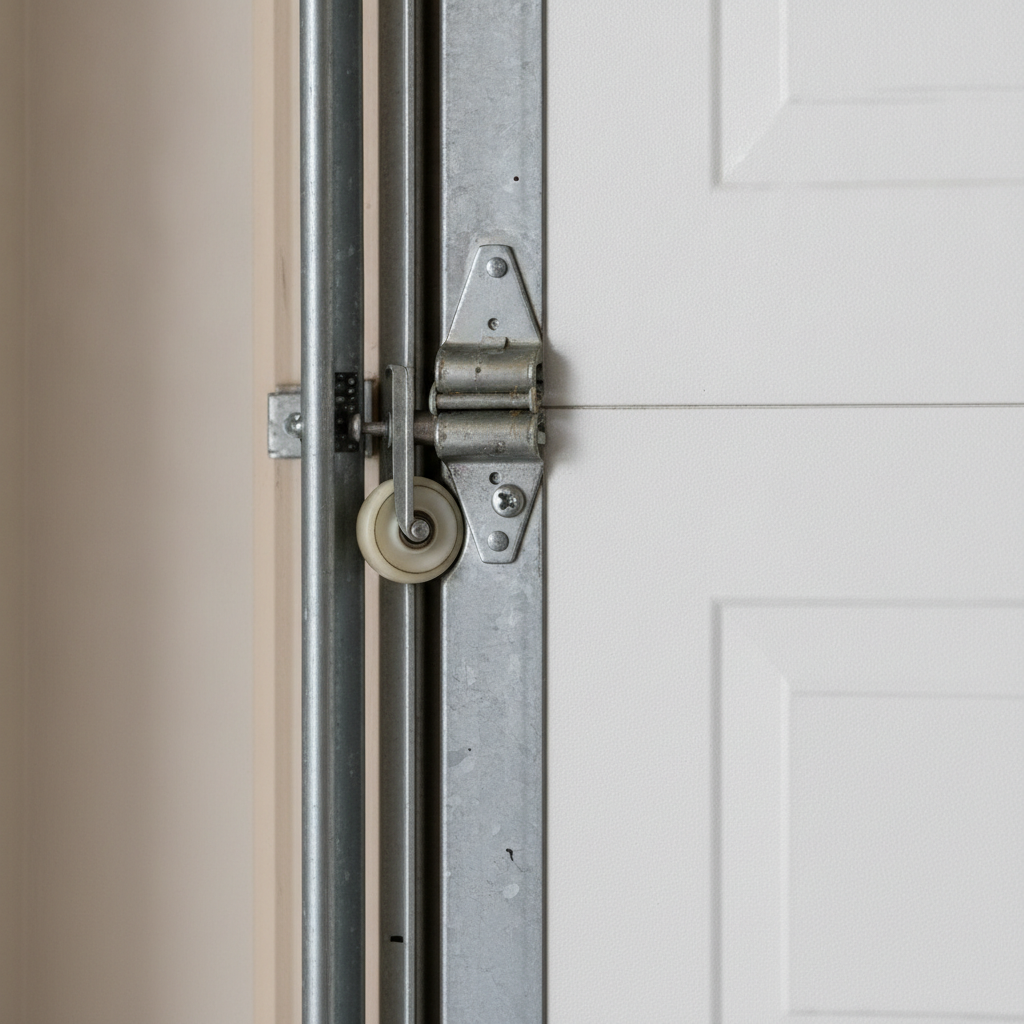
Rollers do not last forever. Over time, wheels can crack, bearings can wear, and stems can loosen. Once that happens, the roller may wobble instead of traveling cleanly inside the track. A wobbling roller increases friction and can eventually jump the track.
Different roller materials also affect noise, durability, and maintenance needs. If you are comparing replacement options, this guide to nylon and steel rollers explains the practical differences homeowners often notice.
Loose hardware can create similar symptoms. Hinges connect the door sections and hold many rollers in position. Track brackets secure the track to the wall or ceiling framing. If these fasteners loosen, the track or roller can shift just enough to cause trouble.
Common signs of worn rollers or loose hardware include:
- The door shakes as it moves.
- Rollers appear tilted or uneven.
- Hinges rattle, flex, or show cracks.
- The door sounds louder than normal.
- One side of the door rises faster than the other.
Door balance can also contribute to rollers coming off track. Springs and cables help control the door’s weight. If the door is not balanced, one side may pull harder than the other, creating uneven movement and extra stress on rollers, hinges, and tracks. Avoid removing hinges, brackets, cables, or bottom fixtures, because some of these parts are connected to high-tension systems.
Roller age can help explain recurring trouble. If the same door has had repeated roller issues, worn parts may be contributing to the problem. For more context on expected service life, review how long garage door rollers last and what affects their wear.
Why an Off-Track Garage Door Is Unsafe
An off-track garage door is more than an inconvenience. Garage doors are heavy, and their springs and cables help control that weight. If a roller leaves the track, the door may lose support on one side. As a result, the door can become crooked, jammed, or unstable.
The main safety concerns include:
- Sudden door movement: A stuck door may release unexpectedly.
- Cable problems: Slack or damaged cables may indicate a serious balance issue.
- Spring tension: Torsion springs and extension springs store force that should only be handled by trained technicians.
- Opener strain: Continuing to run the opener can worsen damage.
- Panel damage: A crooked door can bend sections or pull hardware out of place.
If the door is crooked, hanging, partly open, or visibly off track, treat it as unsafe. Do not pull on it, force it closed, or disconnect the opener while standing near the path of the door. Also, do not stand under an unstable door to inspect it.
Instead, keep the area clear and leave the door alone until it can be inspected. Safety should come before convenience, especially when cables, springs, or lower door hardware may be involved.
Safe Checks and Prevention Tips
There are a few safe observations you can make without touching high-tension parts. These checks can help you describe the problem clearly when you call for service. They should not involve forcing, lifting, bending, or disassembling the door.
From a safe distance, you can look for:
- Which roller appears out of the track.
- Whether the door is crooked or level.
- Visible bends, dents, or gaps in the track.
- Loose screws or brackets that are easy to see without touching them.
- Broken, cracked, or missing roller wheels.
- Slack cables near the sides of the door.
- Objects blocking the track path.
If you see a small object in the track and the door is fully closed, you may be able to remove the object without moving the door. However, if the door is hanging, crooked, or under tension, do not reach near the track, rollers, cables, or hinges.
Not every off-track problem can be prevented, especially when impact damage is involved. Still, regular maintenance can catch worn rollers, loose hardware, and track issues before they turn into a stuck door. Listen for new grinding, popping, or squealing sounds, watch whether the door moves smoothly, keep the track area clear of storage items and debris, and schedule service if the door shakes or hesitates.
Do not lubricate or adjust every part without understanding the system. Some components need appropriate lubrication, while others should remain clean and dry. Over-lubricating tracks can attract grime, which may interfere with roller movement. A professional maintenance visit can include roller inspection, hinge and bracket checks, track alignment review, safety sensor testing, opener evaluation, and door balance assessment.
Frequently Asked Questions
Can I put a garage door roller back on track myself?
It is not recommended if the door is crooked, hanging, heavy, or under tension. Off-track doors can move suddenly, and related parts such as cables and springs can be dangerous.
Why does the same roller keep coming off the track?
The roller may be worn, but the track, hinge, bracket, cable, or door balance may also be causing the repeated problem. A professional inspection can identify the source.
Should I use my garage door opener if a roller is off track?
No. Running the opener can bend tracks, damage panels, strain the motor, or make the door more unstable. Stop using the door until it is inspected.
When to Get Professional Help
Call a qualified garage door technician if a roller has left the track, the door is crooked, a cable looks slack, or any part of the system appears bent or damaged. These symptoms often involve more than one component, and safe repair requires proper tools and training.
Ultimate Garage Doors LLC helps homeowners, property owners, landlords, and local businesses in Indianapolis and Central Indiana with off-track doors, damaged rollers, bent tracks, and related garage door repairs. If your door is unsafe or keeps coming out of alignment, request professional garage door service before using it again.