
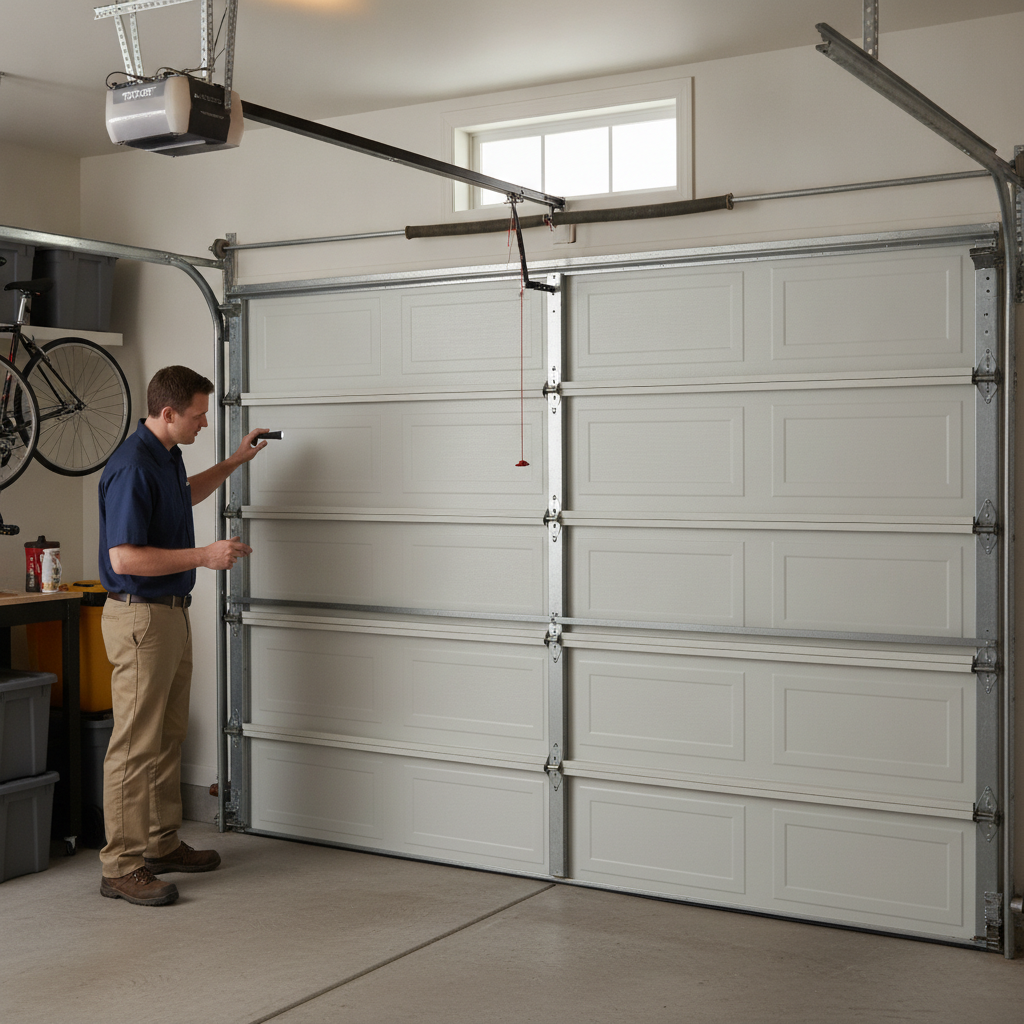
A basic garage door track inspection should be done visually about once a month, with a more detailed professional inspection about once a year for most homes. You should also check the tracks after a hard impact, unusual door movement, loud scraping, or any sign that the door is crooked. These checks help catch loose brackets, debris, roller problems, and track damage before they create bigger issues.
Garage door tracks guide the rollers as the door opens and closes. If the tracks are dirty, loose, bent, or out of alignment, the door may strain the opener or move unevenly. However, homeowners should limit their work to safe observation and light cleaning. Track adjustment, cable issues, spring problems, and off-track doors should be handled by a trained garage door technician.
Recommended Garage Door Track Inspection Schedule
For most Indianapolis and Central Indiana homes, a simple monthly visual check is a practical routine. You do not need special tools for this. Watch and listen while the door operates, then look over the visible track areas when the door is stopped and stable.
A deeper professional inspection is usually smart once a year. This is especially useful if your door is older, heavy, used many times a day, or exposed to moisture and temperature swings. Commercial properties, rental homes, and busy households may need checks more often because the door cycles more frequently.
- Monthly: Look for debris, loose-looking hardware, unusual gaps, scraping sounds, and uneven movement.
- Seasonally: Clean the track area, check for rust, and look for bracket movement or wall fastener concerns.
- Annually: Have a professional inspect track alignment, rollers, hinges, springs, cables, and opener operation.
- As needed: Stop using the door and call a technician if it is crooked, jammed, off track, or visibly damaged.
What Homeowners Can Safely Check
A safe homeowner inspection is mainly visual. Stand clear of the door path and never place your fingers inside the track while the door is moving. Avoid standing under a partially open door that seems unstable.
Start by watching the door from inside the garage. It should move smoothly without jerking, scraping, or shaking. The rollers should follow the tracks without popping, grinding, or leaving large uneven spaces.
Then look at the vertical tracks on both sides of the door. They should appear straight, secure, and free of heavy buildup. Check the curved track sections near the ceiling for dents, rub marks, or rollers that seem to bind as the door turns the corner.
Pay attention to these common warning signs:
- Scraping, popping, or grinding sounds near the track
- A door that looks crooked or hangs lower on one side
- Rollers that appear to wobble, drag, or leave the track
- Loose bolts, separated brackets, or track movement at the wall
- Fresh metal shavings, heavy rust, or visible bends in the track
- Gaps between rollers and track that appear uneven from side to side
A small amount of side-to-side roller movement can be normal because rollers need room to travel. However, a large or uneven gap may point to roller wear, track alignment trouble, or damaged hardware. If that is what you are seeing, this guide to a rollers and track gap explains what may be normal and what may need service.
Cleaning Garage Door Tracks Without Creating Problems
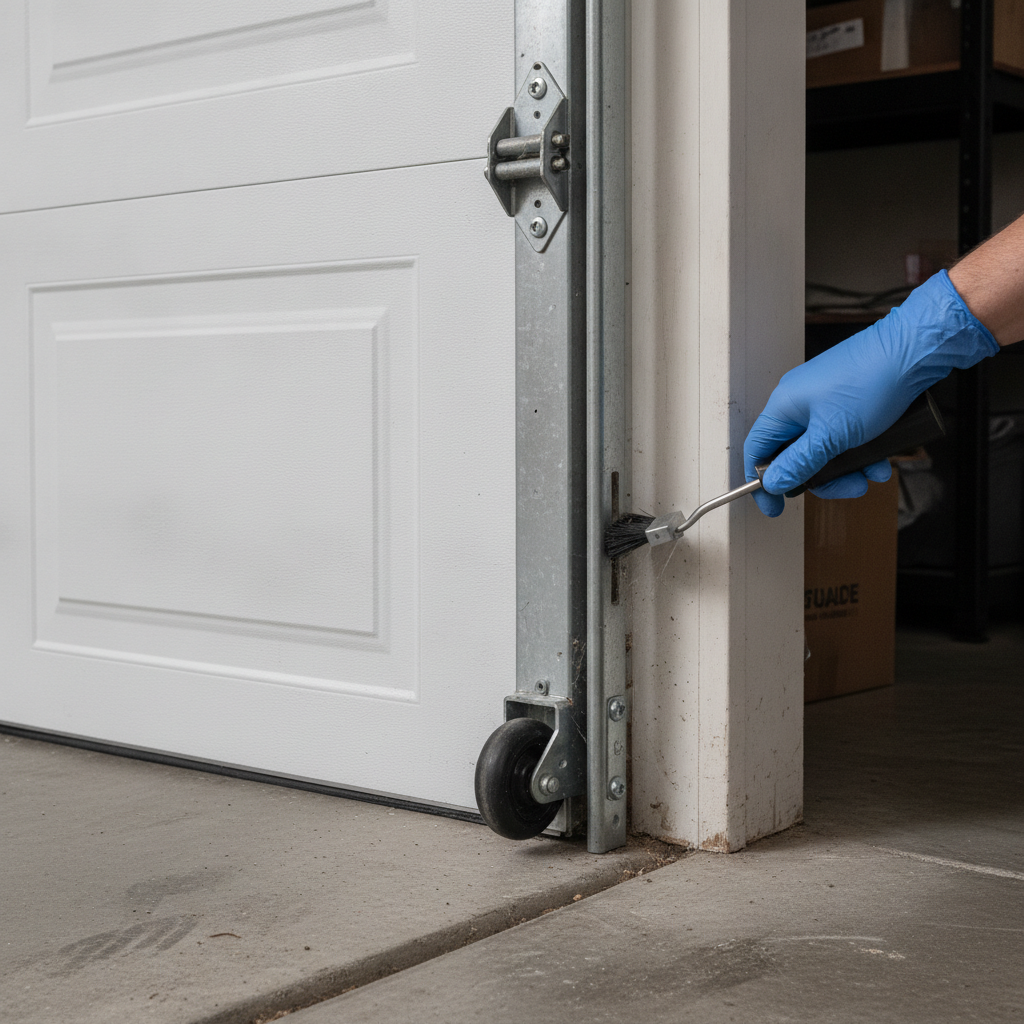
Clean tracks help rollers move more smoothly, but the goal is to remove debris rather than coat the track with heavy lubricant. Dirt, leaves, cobwebs, road salt, and hardened grease can collect inside the track. As a result, rollers may drag or make more noise.
Before cleaning, close the door if it is operating normally and stable. Wipe the inside of the track with a dry cloth or use a vacuum attachment to remove loose debris.
If grime is stuck, use a lightly damp cloth and mild household cleaner. Dry the track afterward. Avoid leaving thick grease inside the track because it can attract more dirt. Many rollers and hinges need proper lubrication, but the track itself should generally stay clean rather than greasy.
Do not clean or work near a door that is off track, hanging, crooked, or stuck under tension. In those cases, keep people and pets away from the opening. The door may shift without warning, and forcing it can cause more damage.
Checking Brackets, Fasteners, and Track Position
Garage door tracks are held in place by brackets attached to the wall framing and ceiling supports. During your visual check, look for brackets that seem pulled away, cracked, bent, or loose. Also look for shiny rub marks that suggest the rollers are pressing hard against one side of the track.
You can safely observe fasteners, but avoid major adjustment. Track position affects how the entire door travels. Moving one bracket without understanding the door balance, roller position, and opener force can make the problem worse.
Use caution if you notice a track that seems out of line with the other side. Worn rollers, loose hinges, a bent track, a shifted bracket, damaged panels, or cable trouble can all affect how the door moves.
If the track has a visible bend, dent, or twist, the repair approach depends on the severity and location of the damage. Some minor track damage may be serviceable, while other damage calls for replacement. For a closer look at that decision, see this explanation of whether a bent garage door track can be repaired.
Signs Professional Track Adjustment Is Needed
Professional track adjustment is needed when the door no longer travels safely and smoothly. This is not the same as wiping out debris. A technician can evaluate the track, rollers, hinges, cables, springs, opener, and door balance together.
Stop operating the door and contact a qualified garage door professional if you notice any of these problems:
- The door is off track or one or more rollers have come out of the track.
- The door is crooked, hanging, or stuck halfway open.
- The track is bent, separated from the wall, or visibly twisted.
- The door closes unevenly or reverses after binding in the track.
- The opener strains, hums, or pulls the door at an angle.
- Cables appear frayed, loose, tangled, or uneven on the drums.
- You hear a loud snap, bang, or sudden shift during operation.
These symptoms can involve high-tension parts. Garage door springs and cables support significant door weight. Do not try to force the door open, pull it back into the track, or remove brackets connected to high-tension components.
A technician can determine whether the track needs adjustment, repair, or replacement. They can also check why the track problem happened in the first place, so the same issue is less likely to return after the track is corrected.
Why Regular Track Checks Matter
Track problems often start small. A loose bracket may only create a slight rattle at first. A little debris may only cause a faint scraping sound. However, repeated operation can increase stress on rollers, hinges, opener parts, and door panels.
Regular checks also help protect your opener. Garage door openers are designed to guide a balanced door, not overpower a binding or damaged one. If the tracks create resistance, the door may reverse unexpectedly or the opener may wear faster.
Track inspections are also useful before seasonal changes. Central Indiana weather can bring humidity, freezing temperatures, wind, and road salt from vehicles. Moisture and grit can affect metal parts, especially near the bottom of the vertical tracks.
A simple monthly look gives you a baseline. Once you know how your garage door normally sounds and moves, it becomes easier to spot changes early.
Frequently Asked Questions
How often should I clean my garage door tracks?
Most homeowners should clean visible debris from the tracks every few months, or sooner if dirt, leaves, salt, or cobwebs collect. Keep the tracks clean, but avoid packing them with grease.
Can I adjust garage door tracks myself?
Minor observation and cleaning are fine, but track adjustment is best left to a professional. Poor alignment can affect door balance, opener operation, cables, rollers, and overall safety.
Is a noisy garage door always a track problem?
No. Noise can come from rollers, hinges, springs, opener parts, loose hardware, or the tracks. The sound and movement pattern help identify the likely source.
When to Get Professional Help
If your garage door tracks look bent, loose, misaligned, or damaged, stop using the door until it can be checked. Keep people and pets away from a crooked, hanging, or off-track door. Forcing the door can damage panels, rollers, cables, and opener parts.
Ultimate Garage Doors LLC helps homeowners, property owners, and businesses in Indianapolis and surrounding Central Indiana with garage door track concerns, roller issues, damaged doors, and preventive maintenance. If your door is not moving smoothly or you are unsure whether the tracks are safe, request a free garage door estimate for professional assistance.