
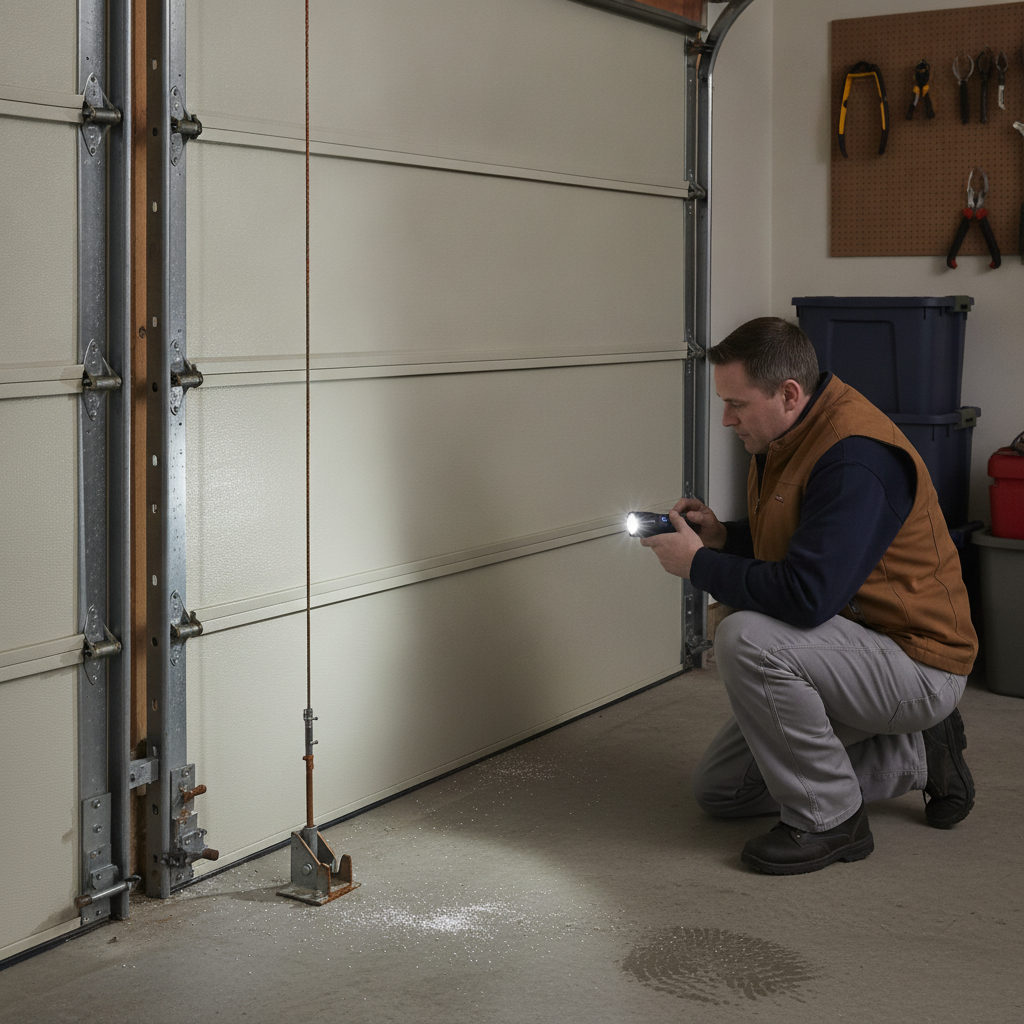
If your garage door cables are rusting, the most common reasons are moisture exposure, road salt, worn protective coating, poor drainage, and lack of preventive maintenance. Garage door cables are steel parts that help lift and support a very heavy door, so rust should not be ignored. Light surface rust may be a maintenance warning, while fraying, broken strands, or cables slipping off the drum can be a safety concern.
Why Garage Door Cables Rusting Happens
Garage door cables are usually made from braided steel wire. Steel is strong, but it can corrode when exposed to water and oxygen. If salt is also present, corrosion can happen faster because salt helps moisture cling to metal and speeds up the rusting process.
In Central Indiana, garage doors often deal with wet springs, humid summers, freezing rain, and road salt carried in by vehicles during winter. Water can drip from cars, pool near the garage threshold, or collect around the bottom of the door. Meanwhile, the cables sit close to the floor and lower door hardware, which makes them more exposed than many homeowners realize.
A cable does not need to be soaked every day to rust. Repeated dampness, condensation, or salt residue can gradually attack the metal. As a result, the cable may turn orange or brown, feel rough, or begin showing weak spots.
Common Causes of Rusty Garage Door Cables
Several conditions can cause or worsen cable rust. Sometimes more than one issue is involved, so the visible rust may only be part of the problem.
- Moisture from vehicles: Rain, snow, and slush drip from cars and trucks after they are parked in the garage.
- Road salt: Salt residue from winter roads can splash or drain onto the garage floor, especially near the door opening.
- Damaged cable coating: Some cables have a protective finish. Once that coating wears away, bare steel is more vulnerable.
- Poor drainage: Water that flows toward the door, sits near the tracks, or pools along the threshold can keep cables damp.
- Worn bottom weather seal: A cracked or flattened seal can let rain, snow, and debris enter the garage.
- High humidity: Garages with limited airflow can hold moisture, especially during temperature swings.
- Age and normal wear: Cables bend and wrap around drums during each door cycle. Over time, that movement can wear the surface.
Rust can also appear faster if the door is not balanced correctly. For example, a door with spring or track issues may place uneven strain on the cables. However, the exact cause should be diagnosed by a trained technician because several faults can create similar symptoms.
Why Rust on Garage Door Cables Matters
A garage door cable is part of the door’s lifting system. It works with the springs, drums, brackets, tracks, and other hardware to move the door smoothly. Because these parts carry high tension, a weakened cable can create a dangerous situation.
Light discoloration does not always mean the cable is about to fail. However, rust can eat into the small steel strands that make up the cable. Once those strands weaken, the cable may stretch, fray, bind, or snap. If you want a broader overview of cable lifespan, this guide explains how long garage door cables last and the factors that affect wear.
Rusted cables may lead to problems such as:
- A garage door that looks crooked or uneven
- Cables that appear loose, frayed, or kinked
- A door that jerks, shakes, or binds during movement
- Noises near the drums or lower track area
- A door that will not open or close fully
- Cables coming off the drum or wrapping unevenly
If the door looks unstable, stop using it. Keep children, pets, and vehicles away from the doorway. Also, avoid standing under the door or trying to force it open or closed.
Safe Checks Homeowners Can Make
You can make a few safe visual observations without touching the cables or removing parts. These checks are meant to help you describe the issue, not to repair it yourself.
- Look from a safe distance. With the door closed, check whether the left and right cables look evenly positioned.
- Check for color changes. Orange, brown, or blackened areas may indicate corrosion or built-up grime.
- Watch for fraying. Broken strands, fuzzy-looking wire, or unraveling are stronger warning signs than surface discoloration alone.
- Notice floor conditions. Look for standing water, salt residue, or damp areas near the tracks and door opening.
- Listen during normal operation. Grinding, scraping, popping, or sudden jerking can point to a larger door problem.
Do not pull on the cable, remove brackets, loosen hardware, or try to wind or unwind anything connected to the springs. Garage door cables and bottom brackets are under high tension. A sudden release can cause serious injury or additional property damage.
If a cable has already snapped or the door is hanging unevenly, avoid operating the door entirely. This article on what happens when a garage door cable snaps explains why a failed cable should be handled by a qualified garage door professional.
How to Help Prevent Cable Rust
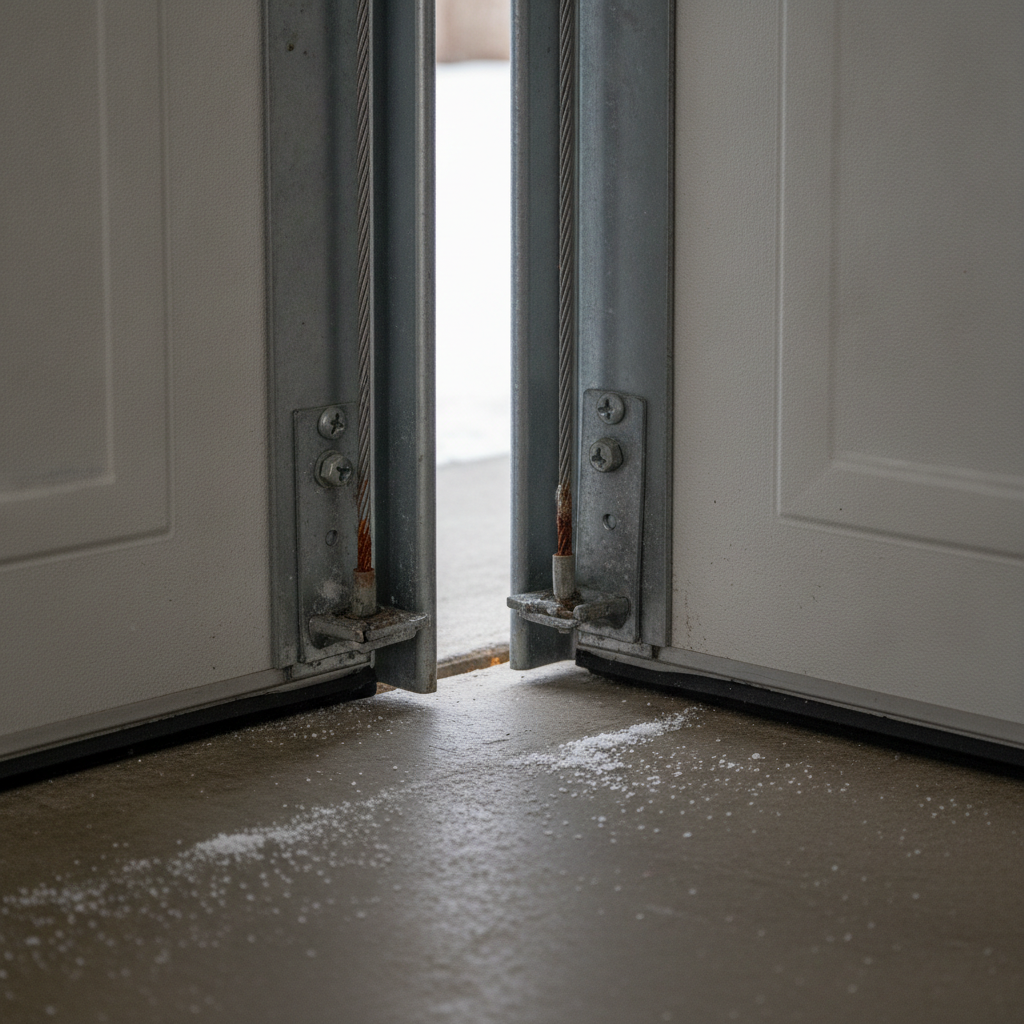
Preventive maintenance cannot stop every cable from aging, but it can reduce avoidable corrosion. The goal is to limit moisture, remove salt, and catch wear before it becomes a more serious problem.
- Keep the garage floor cleaner in winter. Sweep or rinse away salt residue when conditions allow, then remove standing water.
- Improve drainage near the door. Water should not flow into the garage or sit near the tracks after rain.
- Replace worn weather seals. A damaged bottom seal can let water, leaves, and road grit collect inside the garage.
- Reduce humidity when possible. Ventilation, dehumidification, or drying wet items outside the garage can help.
- Schedule routine door maintenance. A technician can inspect cables, rollers, springs, tracks, hinges, and balance.
- Address door movement issues early. If the door shakes, binds, or sits crooked, added stress may worsen cable wear.
Do not apply random oils or household products to rusty cables. Some products can attract dirt, interfere with grip, or hide damage during inspection. If lubrication is needed elsewhere on the door, a technician can recommend the correct product and location.
Also check the area outside the garage. A driveway slope, clogged drain, or low spot near the threshold can send water back toward the door. Therefore, solving a drainage issue may protect more than just the cables. It may also help the bottom seal, lower door panels, tracks, and concrete edge last longer.
When Rust Means the Cable May Need Replacement
Only a trained garage door technician should decide whether a cable can remain in service. That said, some symptoms deserve prompt attention. If you notice fraying, broken wire strands, severe rust, kinks, loose cables, or uneven door movement, stop operating the door and arrange an inspection.
Replacement is often considered when corrosion has weakened the cable, when the cable no longer winds correctly on the drum, or when another part of the system has damaged it. The technician may also inspect the springs, drums, rollers, tracks, and opener because cable wear can be related to overall door balance.
For commercial or high-cycle doors, rusted cables may require closer monitoring because those doors often move more frequently. Landlords and property managers should also take cable corrosion seriously, since a shared or rental garage door may be used by people who are unaware of the warning signs.
Frequently Asked Questions
Can I keep using my garage door if the cables are rusty?
If the rust is minor and the door operates normally, avoid panic but schedule a professional inspection. If you see fraying, loose cables, or uneven movement, stop using the door.
Can I clean rust off garage door cables myself?
You should not scrub, pull, disconnect, or treat garage door cables. They are part of a high-tension system, and surface cleaning may hide damage without solving the underlying issue.
Does road salt really affect garage door cables?
Yes. Road salt can speed up corrosion when it mixes with snow, slush, or water on the garage floor. This is common during Indianapolis winters.
Get Help With Rusted Garage Door Cables
Rusty garage door cables are a sign that moisture, salt, wear, or drainage may be affecting your door system. If the cables look frayed, loose, heavily corroded, or the door appears crooked, stop operating the door and keep people and pets away from it.
Ultimate Garage Doors LLC serves Indianapolis and surrounding Central Indiana with garage door repair, maintenance, and replacement services. If you are unsure whether your cables are safe, request a professional garage door inspection so a technician can evaluate the door and recommend the right next step.