
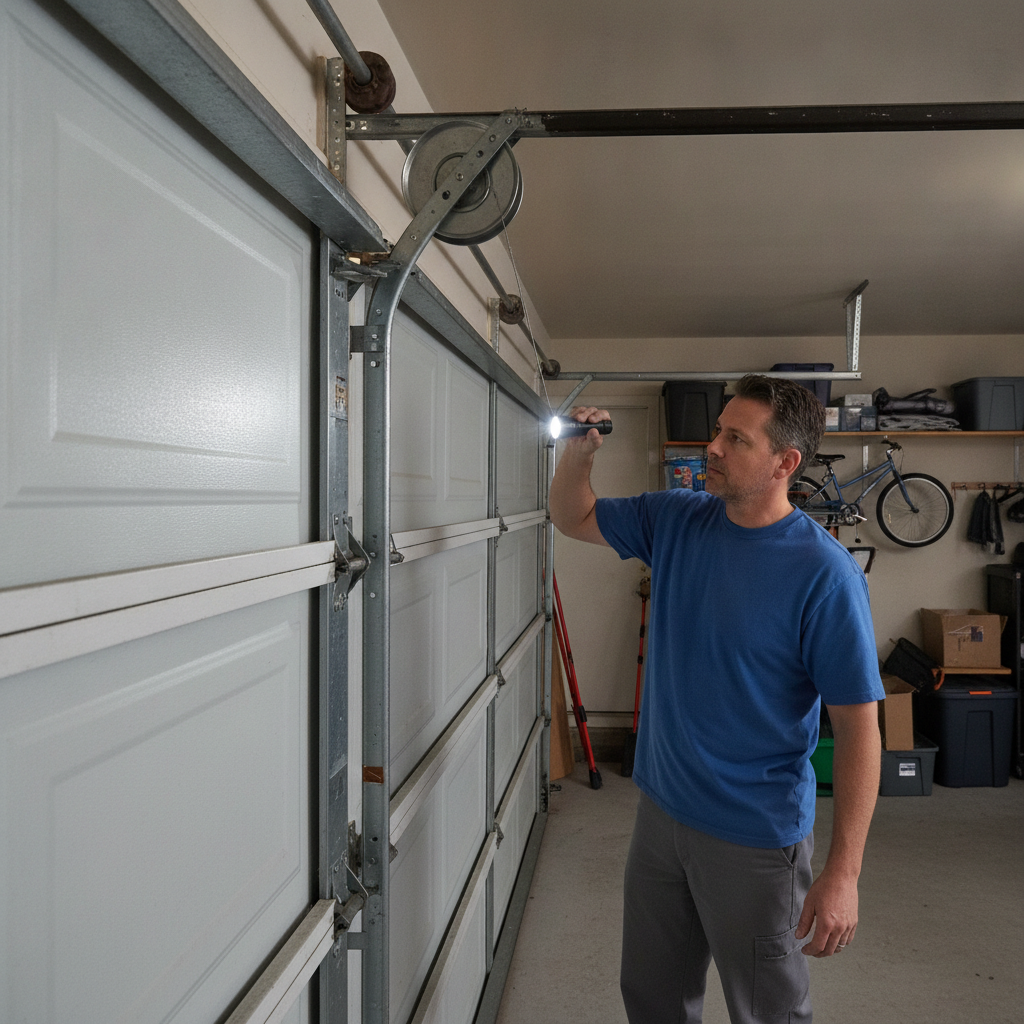
Frayed garage door cables should usually be replaced, not repaired. A cable that has broken strands has already lost strength, and patching it does not restore its original load rating. Because garage door cables work under high tension with the springs, this is not a safe do-it-yourself repair. If you notice fraying, stop using the door until a qualified garage door technician can inspect it.
Why Frayed Garage Door Cables Are a Serious Problem
Garage door cables help lift and support the weight of the door. They work with the springs, drums, bottom brackets, rollers, and tracks to keep the door moving evenly. On many residential doors, the cables wrap around drums near the top corners as the door opens and closes.
When a cable begins to fray, individual wire strands have started to break. That damage may look small at first. However, the cable is no longer in dependable condition because the remaining strands must carry more of the load.
A frayed cable can cause several problems:
- The door may lift unevenly or look crooked.
- The cable may slip, bind, or come off the drum.
- The door may jam in the tracks.
- The opener may strain because the door is no longer balanced.
- The cable may snap without much warning.
As a result, even minor-looking fraying deserves attention. A garage door is heavy, and an unstable door can move suddenly if a cable fails.
Can Frayed Garage Door Cables Be Patched?
In most cases, frayed garage door cables should not be patched, spliced, wrapped, clamped, taped, or otherwise temporarily repaired. Those methods do not return the cable to its original strength. They can also interfere with how the cable winds on the drum.
A garage door cable must be the correct size, length, and type for the door system. It also needs to move smoothly through each open and close cycle. A patched section can create a thick or uneven spot. That may cause the cable to stack incorrectly, rub against hardware, or jump out of place.
Replacement is normally safer because it removes the weakened cable and restores the lifting system with a properly matched part. A technician can also check whether the matching cable on the other side should be replaced at the same time. Since both cables usually experience similar wear, one damaged cable can be a sign that the other is nearing the end of its service life.
For homeowners in Indianapolis and Central Indiana, the most practical answer is simple: treat a frayed cable as a repair that needs professional replacement, not a temporary patch.
Why Cable Replacement Requires a Technician
Garage door cables are connected to high-tension parts. Depending on the door, that may include torsion springs above the door or extension springs along the horizontal tracks. These springs store enough force to help lift the door, and that force can be dangerous when parts are removed or adjusted incorrectly.
Cables also attach near the bottom brackets of the door. Those brackets are under tension when the system is assembled. Homeowners should not loosen, remove, or adjust them. The same caution applies to spring winding, cable removal, and any attempt to reset a cable on the drum.
A trained technician can safely evaluate the system and look for related damage. For example, a cable may fray because it rubbed against a bent track, worn roller, damaged drum, or misaligned bracket. If only the cable is replaced while the cause remains, the new cable may wear out early.
Professional service also protects the door itself. A cable repair is not just about installing a new length of wire rope. The door must be checked for balance, smooth travel, proper cable winding, and safe operation after the repair.
Common Causes of Frayed Garage Door Cables
Cables wear over time, but fraying often has an underlying cause. Some causes are gradual, while others happen after an impact or hardware failure.
Common causes include:
- Normal wear: Repeated lifting cycles slowly fatigue the cable strands.
- Rust or corrosion: Moisture can weaken the wire and make strands brittle.
- Misalignment: A cable that rubs against hardware may wear in one spot.
- Worn pulleys or drums: Rough or damaged surfaces can scrape the cable.
- Off-track movement: A door that shifts can put uneven force on the cable.
- Impact damage: A bumped or crashed door can kink, pinch, or overload a cable.
Rust is especially common in areas where moisture, road salt, or poor sealing affects the garage environment. If corrosion seems to be part of the issue, reviewing why garage door cables rust can help you understand how moisture and wear are connected.
Age also matters. Cables do not last forever, even when the door appears to operate normally. If you are unsure whether the wear is expected or premature, a guide on how long garage door cables last can provide useful context.
Safe Signs Homeowners Can Look For
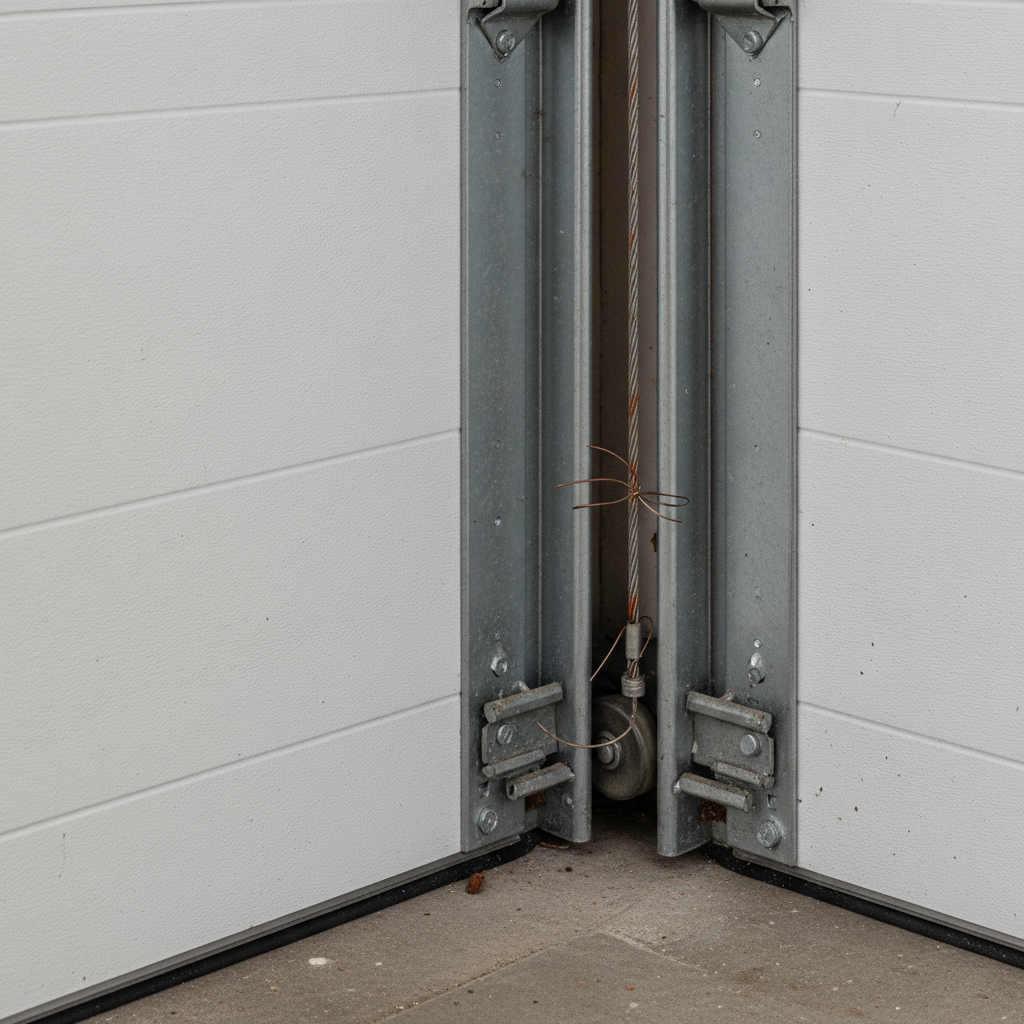
You can make simple visual observations without touching or adjusting the cable system. Keep the door closed if possible, stand clear of the door path, and do not place yourself under a door that looks unstable.
Signs of a cable problem may include:
- Loose strands or “hair-like” wires sticking out from the cable.
- A cable that looks thinner in one section.
- Rust, kinks, flattened spots, or unraveling.
- A crooked door when opening or closing.
- A gap where one side of the door sits higher than the other.
- A cable hanging loose near the track.
- A loud pop followed by a door that will not move correctly.
- The opener humming or straining while the door barely moves.
If you see any of these signs, do not keep cycling the door to “test” it. Continuing to operate the door can make the damage worse. It may also pull the door off track or damage the opener.
If the door is open and appears unstable, keep people and pets away from the area. Avoid standing beneath it. Do not try to pull the door down by hand, because the lifting system may no longer be supporting the door evenly.
What a Technician Checks During Cable Service
A garage door technician will usually inspect more than the visible frayed section. That is because cable damage can be a symptom of a larger issue within the door system.
During service, the technician may evaluate:
- The condition of both lift cables.
- Whether the cable is winding correctly on the drums.
- The torsion or extension spring setup.
- Door balance and whether the door feels too heavy.
- Track alignment and roller condition.
- Bottom brackets and other connection points.
- Signs of rubbing, binding, rust, or impact damage.
- Whether the opener was affected by the added strain.
This broader inspection matters because several faults can create similar symptoms. For example, a crooked door might involve a cable issue, a spring issue, a track problem, or a combination of parts. Therefore, a proper diagnosis is safer than guessing from one visible sign.
After replacement, the technician should confirm that the door opens and closes smoothly. The goal is not only to replace the damaged cable, but also to reduce the chance of repeat wear.
Frequently Asked Questions
Is it safe to use a garage door with a frayed cable?
No. It is best to stop using the door until it is inspected. A frayed cable can fail suddenly, and continued operation may damage other parts.
Can I replace just one garage door cable?
Sometimes one cable can be replaced, but many technicians recommend replacing both if they are the same age or show similar wear. An inspection can confirm the best approach.
Will a garage door opener work if a cable is frayed?
It may still run, but that does not mean the door is safe. The opener is not designed to compensate for a failing cable or an unbalanced door.
When to Get Professional Help
Call a garage door professional if you see fraying, loose cable strands, rusted cables, a crooked door, or a cable that has come off the drum. You should also get help if the door is stuck open, hanging unevenly, or making unusual noises after a cable problem appears.
Do not attempt to rewind cables, adjust springs, loosen bottom brackets, or force the door open or closed. These parts are tied to the door’s lifting system and can release force unexpectedly. Instead, keep the area clear and wait for a trained technician.
If you are in the Indianapolis area and suspect cable damage, Ultimate Garage Doors can inspect the door and explain the safest repair options. To get help with a frayed or damaged cable, request professional garage door service.